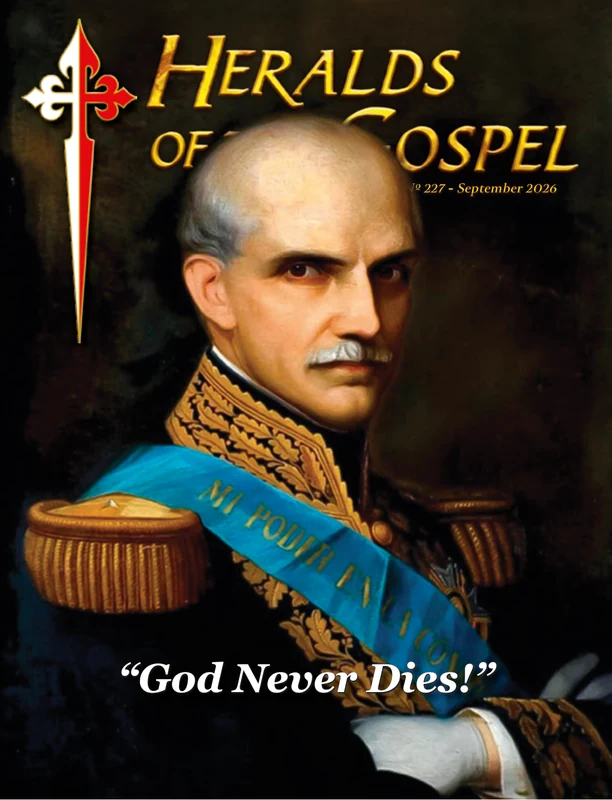
 Heralds of the Gospel Magazine, Vol. 20, nº 227, September 2026
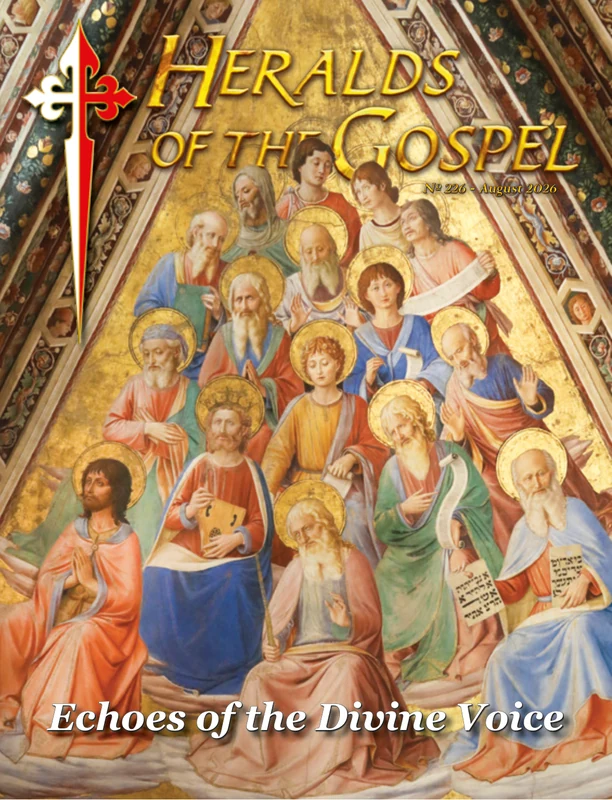 Heralds of the Gospel Magazine, Vol. 20, nº 226, August 2026
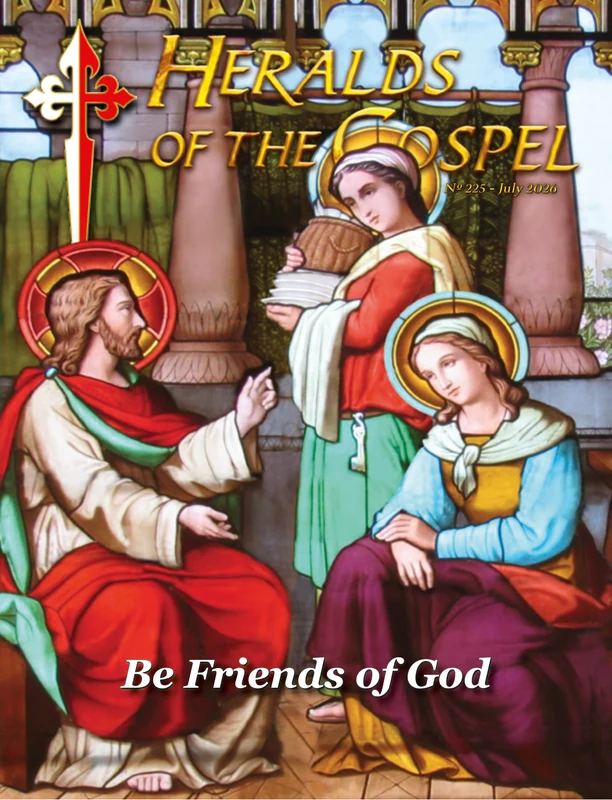 Heralds of the Gospel Magazine, Vol. 20, nº 225, July 2026
 Who are the Heralds of the Gospel?
 Help of Christians
 Christmas Carols







Two “brothers” sent by God
One day, while working in the laundry, the Carmelite Saint was called aside by Mother Agnes of Jesus, who read her a letter that had just arrived. It was from a young seminarian who, “inspired, he said, by St. Teresa, […] was asking for a Sister who would devote herself especially to the salvation of his soul, and aid him through her prayers and sacrifices when he was a missionary so that he could save many souls.”2 In return, he promised to always remember her in the celebration of the Holy Sacrifice, as soon as he was ordained. After this reading, what joy! Mother Agnes revealed to Sr. Therese that she was the one chosen to help the future missionary! Although feeling unworthy of this task, she accepted it promptly, expressing her satisfaction: “Mother, it would be impossible for me to express my happiness. My desire, answered in this unexpected way gave birth to a joy which I can describe only as that of a child. […]. Not for years had I experienced this kind of happiness. I felt my soul was renewed; it was as if someone had struck for the first time musical strings left forgotten until then.”3 From then on, St. Therese contributed to the fidelity of Maurice Bellière, then a seminarian and aspiring missionary, who, on the eve of her death, embarked for Algeria. Then, a few months later, Mother Marie of Gonzaga made her a second proposal: to also take charge of the spiritual and apostolic interests of another seminarian and future missionary, named Adolphe Roulland. Overjoyed, St. Therese gained a new “brother”!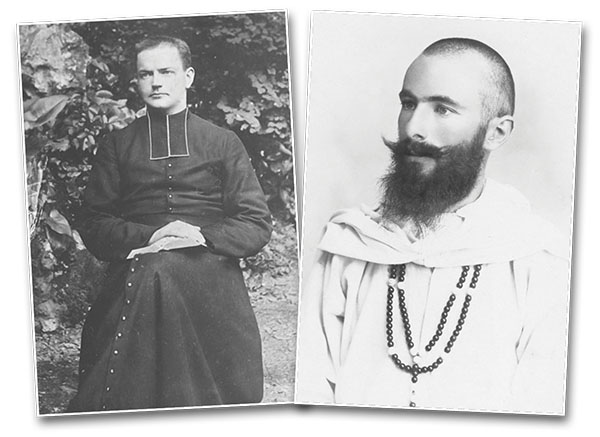 Therese’s entirely supernatural friendship with these two priests took deep root in her soul
At left, Fr. Adolphe Roulland; at right, Fr. Maurice Bellière
A union sealed years before
The union between Therese and Roulland, however, already had a very beautiful antecedent. On September 8, 1890, Therese had definitively left this world and by her religious profession had become the spouse of the King of Heaven. On that day, with all confidence, she particularly asked her Divine Spouse for an apostolic soul, because, not being able to become a priest, she wanted a priest who shared her thirst for souls to receive special graces in her place. Years later, the then Fr. Roulland told the Carmelite Saint that precisely on the date of her profession he had had doubts about his vocation and entry into the major seminary. While he was praying in the Chapel of Our Lady of Deliverance, he suddenly and definitively set himself on the path to the priesthood. In this way, a corner of the mysterious veil that hides the secrets of eternity was then lifted: Therese found the one for whom she had ardently prayed and could, united to him in a concrete way, set out to conquer souls. As she herself would later affirm, in this union Fr. Roulland played the biblical role of Joshua, who led the fight on the battlefield, while she rejoiced in being his little Moses, whose arms and heart, sustained by Christ, were continually turned towards Heaven in order to obtain victory.4 In fact, as soon as she received the news that Fr. Roulland, newly ordained, was destined to evangelize the province of Su-Tchuen in China, the Carmelite affixed a map of the Chinese territory to the wall of the room where she worked, so that she would never forget her part in this work.In her letters…
Therese’s friendship with these two priests, which was entirely supernatural, took deep root in her soul and was nourished by the frequent missives they exchanged. These have fortunately been preserved for posterity, and constitute treasures of holy teachings. When writing to Fr. Roulland, the Carmelite sought to encourage him to endure the sufferings associated with his apostolic work, which ranged from physical ailments to persecutions, always pointing out to him, with the wisdom proper to the humble, the high designs of God hidden behind such circumstances. Sometimes she would not hesitate to tell her brother missionary about some fact of her life or of the community in the Carmel of Lisieux, and she also made some unusual requests, such as that he send her a lock of his hair, to be kept as a relic when he received the palm of martyrdom… But perhaps even more touching are the letters to Fr. Bellière. Since he was very weak and frail, he did not hesitate to entrust himself entirely to the direction of Sr. Therese and take her as a spiritual guide. She, in her turn, noticing this disposition of soul and with deep insight into the interior of her “little brother” while he was still a seminarian, helped him to follow the dictates of her little way.…a treasury of good counsels!
On one occasion, this future priest, already aware that his spiritual sister had contracted a serious illness and was soon to leave for Heaven, exposed to her a difficulty that was afflicting him: without the contact he had with her, he would find himself deprived of the support he needed to persevere on the rough road of the cross… St. Therese replied: “When I shall be in port, I shall teach you, dear little Brother of my soul, how you must sail the stormy sea of the world with the abandonment and the love of a child who knows his Father loves him and would be unable to leave him in the hour of danger.”5 Transcending the limits of time, these words of St. Therese also teach us how necessary it is to have a filial and almost childlike confidence in our Divine Redeemer. From this trust springs that serenity which our soul so greatly needs in order to weather life’s hardships; if we have this, even lacking human help, we have nothing to fear. On another occasion, the seminarian Bellière confided to the nun that he had wasted “the beautiful years” of his youth, “those which Jesus loves more,”6 devoting to the world and to its follies the talents that God had lent him. Only at the age of eighteen had he received the grace of conversion. Because of these past faults, the future priest had a certain difficulty in believing in the merciful love of the Sacred Heart of Jesus, which makes Him forgive and forget our sins.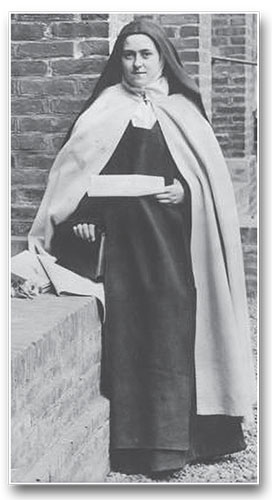 God sent her two “brothers” in answer to her desire to be a missionary
St. Therese of the Child Jesus, in July of 1896
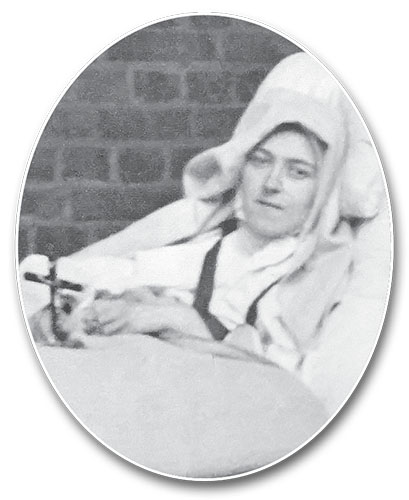 From eternity, she would continue to speak words of confidence in the hearts of her “brothers”
St. Therese a few days before her death
Fighting for souls, eternally!
Therese’s edifying letters ceased to be handwritten on September 30, 1897, and were dictated directly to the hearts of her devotees from Heaven. There, very close to her Divine Jesus, she continues for ever her mission of winning souls, favoured with a special impetrative power granted by Holy Church, which has proclaimed her Patroness of the Missions and Missionaries. As for us, whether we are part or not of this select group of workers in the vineyard of Christ, let us not hesitate to place ourselves under the protection of the great St. Therese of the Child Jesus. Let us earnestly ask her to conquer our souls completely for Our Lord and to teach us to be like children in His hands and true heirs of the heavenly Kingdom (cf. Mt 19:14)! ◊Notes
1 ST. THERESE OF LISIEUX. Story of a Soul. Translated from the Original Manuscripts. 3.ed. Washington DC: ICS, 1996, p 207.
2 Idem, p. 251.
3 Idem, ibidem.
4 Cf. ST. THERESE OF LISIEUX. Letter to Fr. Adolphe Roulland, Nov. 1, 1896. In: Letters of St. Therese of Lisieux, vol. II. Washington, DC: ICS, 1988, p.1018.
5 ST. THERESE OF LISIEUX. Letter to Fr. Maurice Bellière, July 18, 1897. In: Idem, p.1152.
6 BELLIÈRE, Maurice, Letter to Therese. June 7, 1897. In: Idem, p. 1125.
7 Idem, Letter of July 17, 1897. p. 1150.
8 Cf. Idem, Letter of July 21, 1897. p. 1157.
9 ST. THERESE OF LISIEUX. Letter to Fr. Maurice Bellière, July 18, 1897, In: Idem, p. 1153.
10 Cf. ST. ALPHONSUS MARIA DE LIGUORI. The Glories of Mary. Charlotte, NC: TAN, 2012, p.50.