 Heralds of the Gospel Magazine, Vol. 20, nº 227, September 2026
 Heralds of the Gospel Magazine, Vol. 20, nº 226, August 2026
 Heralds of the Gospel Magazine, Vol. 20, nº 225, July 2026
 Who are the Heralds of the Gospel?
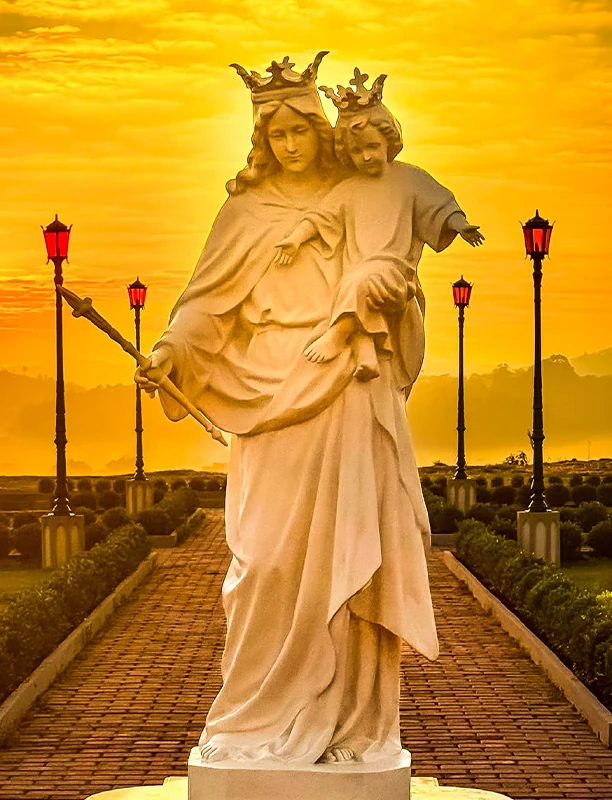 Help of Christians
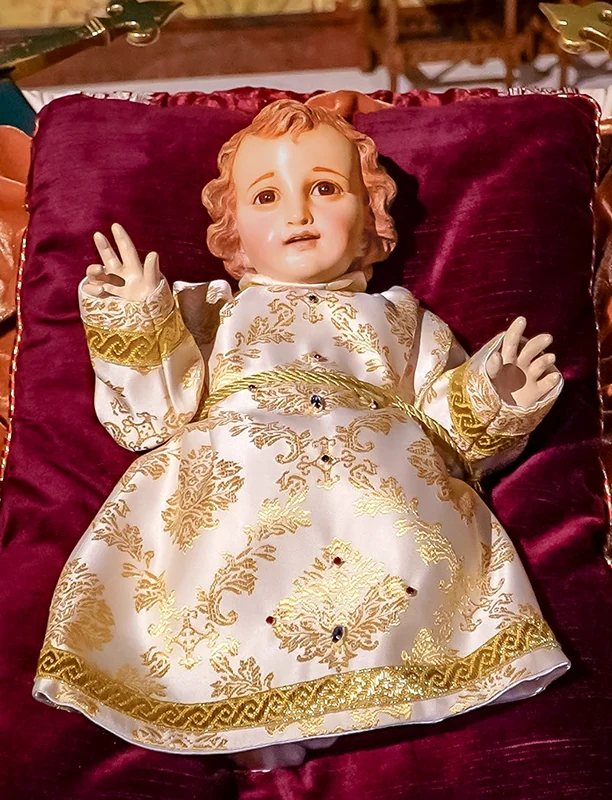 Christmas Carols







From the profane to the sacred, musical instruments help to create an ambience in keeping with the festive or recollected moments of liturgical acts, preparing souls for a loving encounter with God.
Musical instruments in the early Church
Musical instruments were very much present in Jewish worship, as is confirmed by such Old Testament passages as this: “Praise the Lord with the lyre, make melody to Him with the harp of ten strings! Sing to Him a new song, play skilfully on the strings” (Ps 33:2-3). Sacred Scripture also attributes to them a healing and exorcistic effect – it was the chords of David’s lyre that freed Saul from the evil spirit (cf. 1 Sam 16:16-23) – while their absence was considered an unmistakable sign of misfortune about to fall upon the chosen people: “And I will stop the music of your songs, and the sound of your lyres shall be heard no more” (Ez 26:13). “This Hebrew tradition relating to musical instruments did not, however, pass into the early Church; at least the apostolic writings and those immediately following make no reference to it.”1 Although Christians were aware of the Hebrew custom, its assimilation into divine worship was repudiated. Some authors claim that the cessation in the use of instruments was a prudent measure, to avoid drawing attention to places of worship in times of persecution. However, the main reason for their rejection seems to have been their use in idolatrous cults and pagan feasts: “They were probably banished from the temple for their profane, sensual and clamorous character,”2 Msgr. Mario Righetti declares in his famous History of the Liturgy. Clement of Alexandria argued that, in order to glorify God, Christians needed only one instrument, the Word, the bearer of peace.3 He saw “in the homophony of sacred chant an image and parallelism with the harmony of the universe and the heavenly spheres,”4 while the heterophony between chant and instruments was considered contrary to the unity of the Christian community. An irreconcilable separation was thus established in the early days of Christianity between sacred song and instrumental melodies. Perhaps this dichotomy originated from a divine impetus, which subdued the immoderate impulses of profane music to allow Gregorian chant to emerge and reach its full splendour, and its neumes to combine in serene and peaceful melodies. Only the organ was worthy to accompany the prayers of the Church starting from the seventh century,5 “since it is especially fitted for the sacred chants and sacred rites. It adds a wonderful splendour and a special magnificence to the ceremonies of the Church. It moves the souls of the faithful by the grandeur and sweetness of its tones. It gives minds an almost heavenly joy and it lifts them up powerfully to God and to higher things.”6Two parallel paths
The solid empire established by Gregorian chant in sacred music came under threat from the 11th century onwards by the wave of troubadours that arose in Europe, generating profound changes in human mentality.7 Not long after, “the figure of the saints faded away in the face of combats, and Marian cult gave way to ‘courtly love’. Little by little, Latin was abandoned in favour of the vernacular, accessible to all. Poetry and music gained a new popularity, fatally lacking to Latin ecclesiastical chant.”8 Born in the same cradle as profane songs, musical instruments progressed and were perfected, wrapped in worldly arms. They began to shine at feasts, their melodies blending pleasantly with the sentimental vanity of tournaments and popular games. With all the more reason, they were far from resounding in the churches...Sacred polyphony and the oratorios
Meanwhile, the history of sacred vocal music was following its course. From the Gregorian monody it evolved into counterpoint and the diversity of melodic lines. In the 16th century, ineffable beauty was achieved by composers such as Tomás Luis de Victoria and Giovanni Pierluigi da Palestrina, whose profound and recollected spirit saved sacred polyphony from the exaggerations to which it was exposed. George Frideric Handel, by Thomas Hudson
Seeking sapiential balance
Since they were already accompanying not only human voices, but also, in oratorios, the Word of God, musical instruments gradually passed from the theatre to the church, finally gaining citizenship in the heavenly Jerusalem. In the middle of the 18th century, Pope Benedict XIV confirmed that they supported liturgical singing.13 However, not everything in the art of sacred music had not entered into its proper balance, for during the 19th century, church use of orchestral music began to foment abuses, turning the house of God into a continuation of the theatre, compromising the sober and tranquil character of liturgical prayer and endangering the integrity of ecclesiastical singing.14 Now, abuse should not prevent use. To remedy this evil, the just prudence of St. Pius X exhorted that the choice of instruments, especially wind instruments, should be limited, judicious and proportionate to the environment, and that compositions should be of a serious and appropriate style, similar in all respects to those written for the organ,15 for there are some styles more suited to sacred worship than others. Moreover, “as the singing should always have the principal place, the organ or other instruments should merely sustain and never overshadow it.”16 Pius XII reinforced the need for this balance by teaching that “besides the organ, other instruments can be called upon to give great help in attaining the lofty purpose of sacred music, so long as they play nothing profane, nothing clamorous or strident and nothing at variance with the sacred services or the dignity of the place.”17Post-conciliar sacred music
The 20th century witnessed profound changes in the ambit of culture, and sacred music was unfortunately not immune to them. In its document dedicated to the Liturgy, the Second Vatican Council reiterates the admission into divine worship of other musical instruments besides the organ,18 while encouraging popular religious songs “so that in devotions and sacred exercises, as also during liturgical services, the voices of the faithful may ring out.”19 But it safeguards the integrity of Gregorian chant “as specially suited to the Roman Liturgy.”20 Chanting of the Liturgy of the Hours
in Mount Carmel House, Caieiras (SP)
Rich, profound and harmonic act of praise
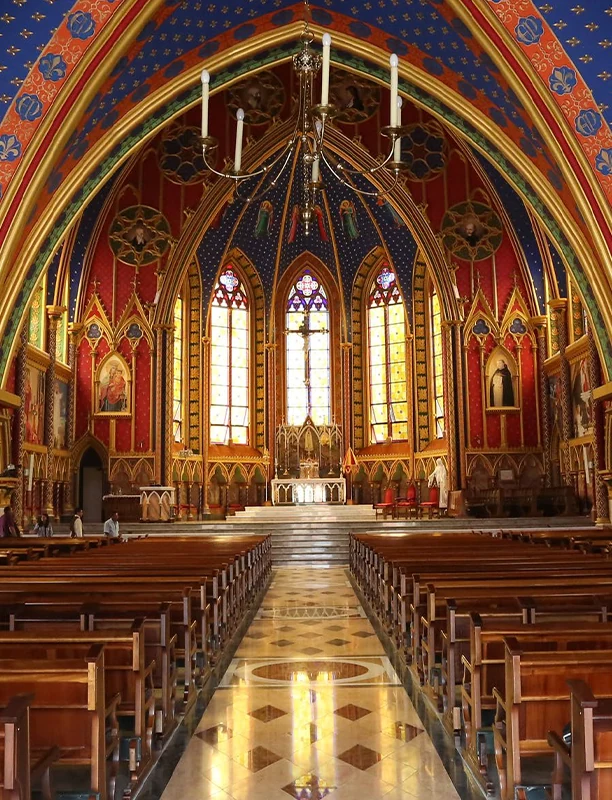
Finally, let us leave aside considerations of musical instruments in human history and look at them from the perspective of the Creator. “Instrumental music contributes, in an exceptionally effective way, to create an ambience in keeping with festive or recollected moments,”24 comments a contemporary author. It effectively prepares the soul to elevate itself to God, for a great orchestra resounding in prayer within the church can well symbolize the soul of the Church, rendering to the Creator a rich, profound and harmonious act of praise. In a musical ensemble, there are string and wind instruments. Among the latter, there is yet a very marked difference between wood and brass. Although the harmony of the ensemble is always better than the parts, nevertheless, how beautiful it is to hear each instrument separately, experiencing the uniqueness of the timbres and resonances expressing different states of soul. If an inspired composer were to set the gest of Elijah the prophet to music, he would certainly employ the gentle nobility of the woodwinds to convey the murmur of the light breeze that preceded his encounter with God (cf. 1 Kgs 19:12-13). If, on the contrary, he wished to musically portray the fire of the Lord that devoured the wood, stones, dust, water and the victim on the altar of Mount Carmel (cf. 1 Kgs 18:38), he would undoubtedly use the brass instruments, which resound as a manifestation of the implacable divine justice. On the other hand, only strings would be able to express the depth of the reciprocal affection between Elijah and Elisha when the chariot of fire carried away the master from the disciple (cf. 2 Kgs 2:11-12). However, when God speaks, only the organ is worthy to accompany Him. By bringing together simplicity and variety, this grandiose instrument forms a balanced, sublime and perfect ensemble of the most varied timbres and sounds. Musical presentation in the Basilica of Our Lady of the Rosary, Caieiras (SP), 19/5/2018