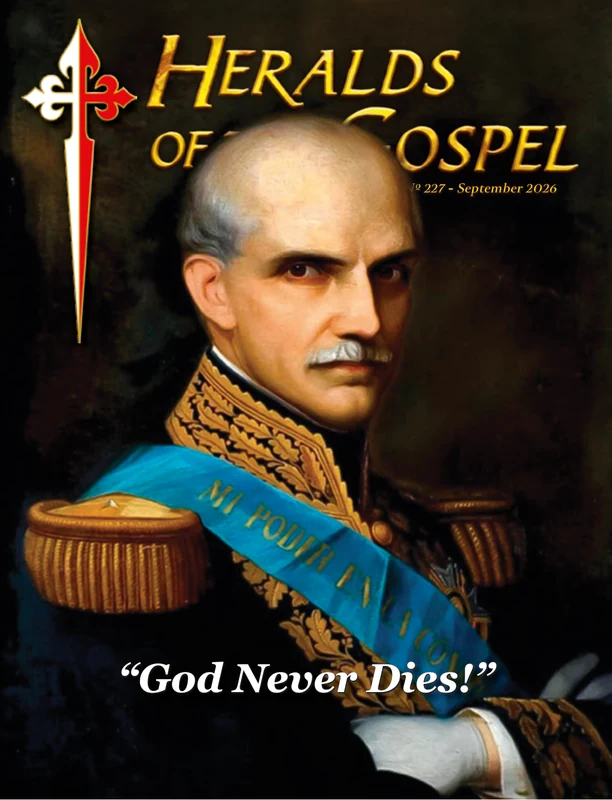
 Heralds of the Gospel Magazine, Vol. 20, nº 227, September 2026
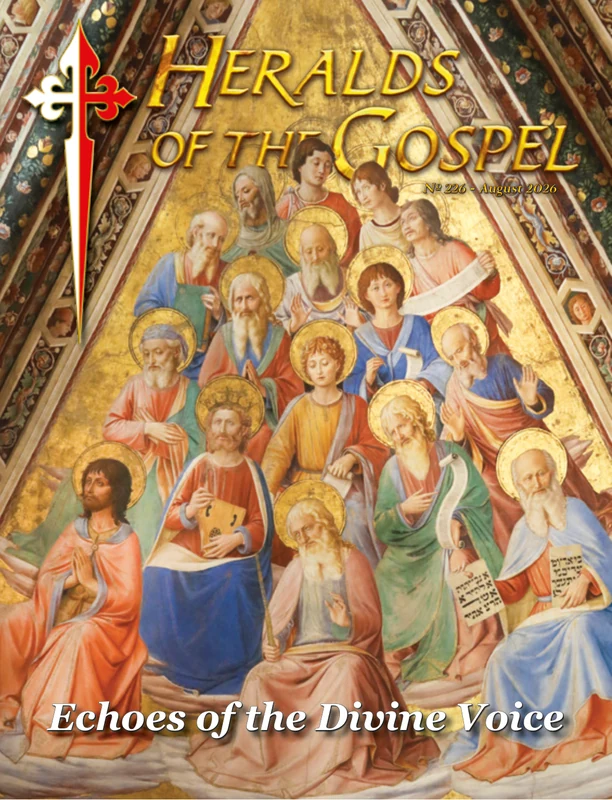 Heralds of the Gospel Magazine, Vol. 20, nº 226, August 2026
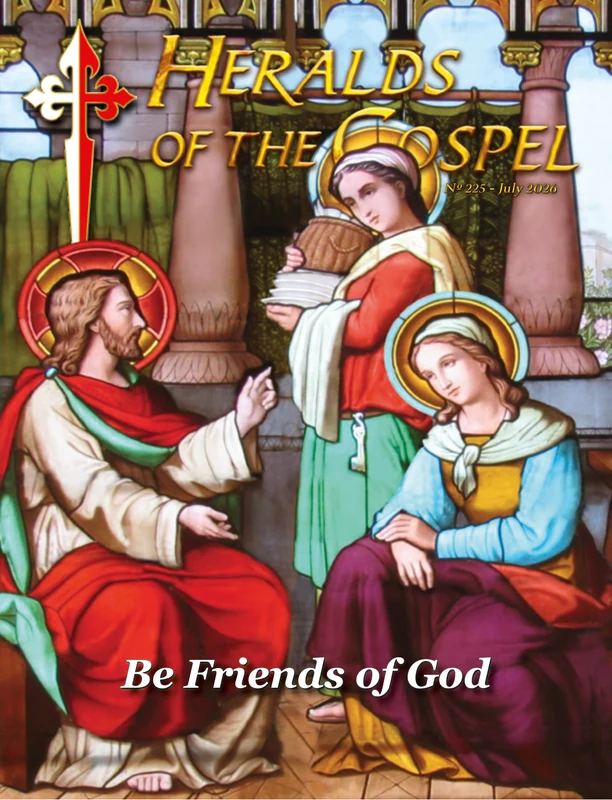 Heralds of the Gospel Magazine, Vol. 20, nº 225, July 2026
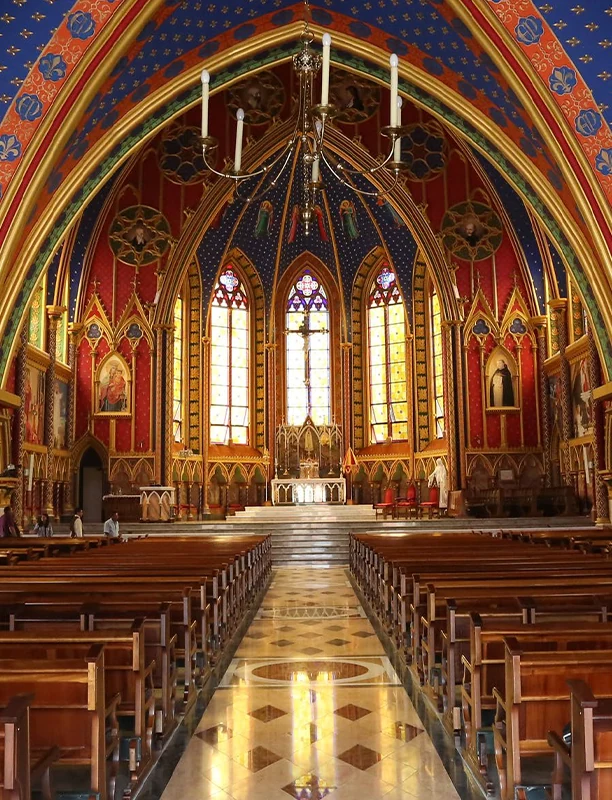 Who are the Heralds of the Gospel?
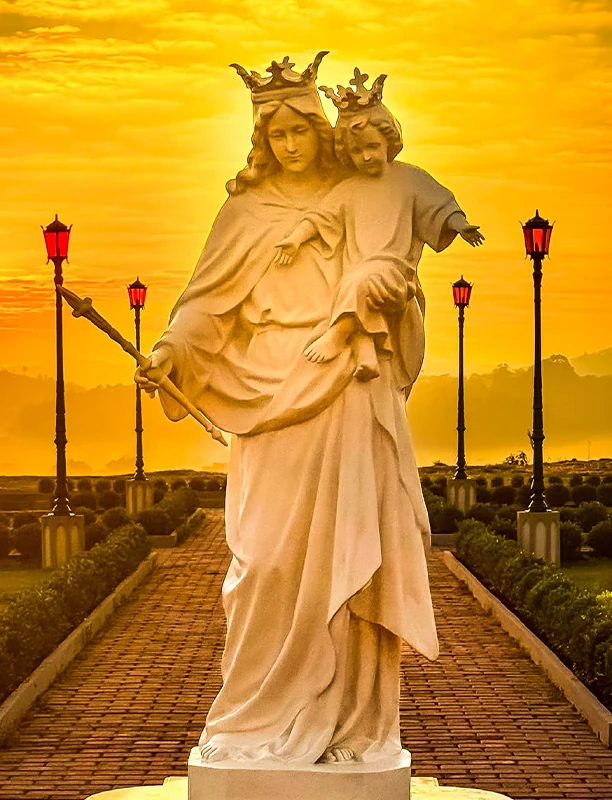 Help of Christians
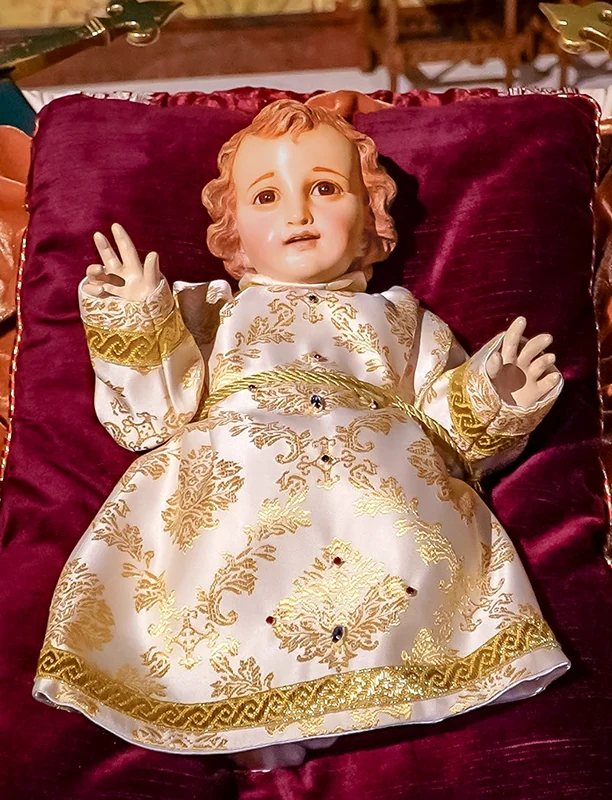 Christmas Carols







May 10 – 6th Sunday of Easter
Some authors refer to the passage taken from today’s Liturgy the “quintessence of the Gospel”; such is its depth and richness of meaning.
Shortly before, the Saviour had instituted the Apostles as priests, giving them His own Body and Blood as a sign of the covenant.
Then, He manifests Himself with special kindness, for the hour of His return to the Father had arrived. But would He leave His children orphans?
More than doctrines, the Divine Master reveals unconditional affection for His disciples.
In fact, when we love someone very much, we always seek their presence; the most heartrending moment in a friendship is when one party must be separated from the other, which is why farewells are typically poignant…
Although of divine nature, Jesus was also perfect man,1 acting humanly in everything except sin (cf. Heb 4:15). Therefore, in His farewell discourse, He expresses His best wishes for His disciples.
Furthermore, knowing the weakness and frailty of each one, He not only bids them farewell with emotional words, but promises them something that only God could conceive: “I will not leave you orphans; I will come to you” (Jn 14:18).
Jesus would never leave His children orphans, but it was nevertheless necessary to depart. How does He “resolve” this dilemma? Through the Advocate, the Holy Spirit, who will remain not only with the disciples, but also within them (cf. Jn 14:17).
And therein lies the essence of the mystical life: the presence of God within us.
Proof of the fulfilment of this promise is found in the first reading (cf. Acts 8:5-8, 14-17). The Samaritans, who had recently received the Word of God, then received the Paraclete, through the laying on of hands by Peter and John. It was a veritable new Pentecost!
Now, two thousand years have passed, and today that promise remains in us through the Spirit of adoption as children of God (cf. Rom 8:15). To benefit from it, an interior action is necessary above all: “to sanctify Christ as Lord in our hearts” (cf. 1 Pt 3:15).
This sanctification becomes effective through charity, “which binds everything together in perfect harmony” (Col 3:14), and which consists, above all, in fulfilling what Christ commands: “If you love Me, you will keep my commandments” (Jn 14:15); “Whoever has my commandments and observes them is the one who loves Me” (Jn 14:21).
Only if we observe His words can the Spirit of Truth dwell in each of us. Then we will not live as orphans: we will truly be children. And we are!
With unfathomable and infinite goodness, God wished to go even further in this promise of His paternal presence: He bequeathed to us the unfailing support of a Mother.
Let us trust in the protection of her who will always help us, praying that She safeguard our invaluable treasure of divine filiation and that, if we have the misfortune to lose it through sin, She may obtain reconciliation for us through the Sacrament of Confession.
And thus we will be able to exclaim with the psalmist: “Hear now, all you who fear God, while I declare what He has done for me” (Ps 66:16). He is my Father, Mary is my Mother; I will never be abandoned!