 Heralds of the Gospel Magazine, Vol. 20, nº 227, September 2026
 Heralds of the Gospel Magazine, Vol. 20, nº 226, August 2026
 Heralds of the Gospel Magazine, Vol. 20, nº 225, July 2026
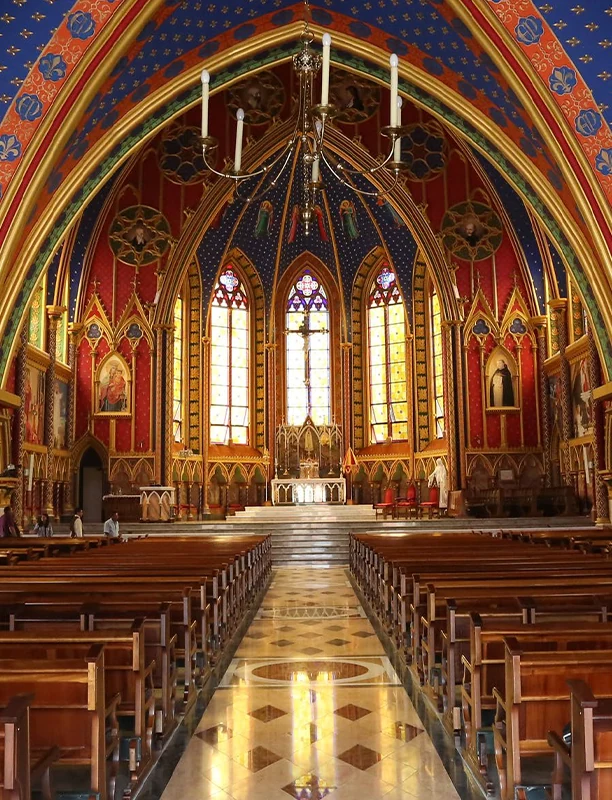 Who are the Heralds of the Gospel?
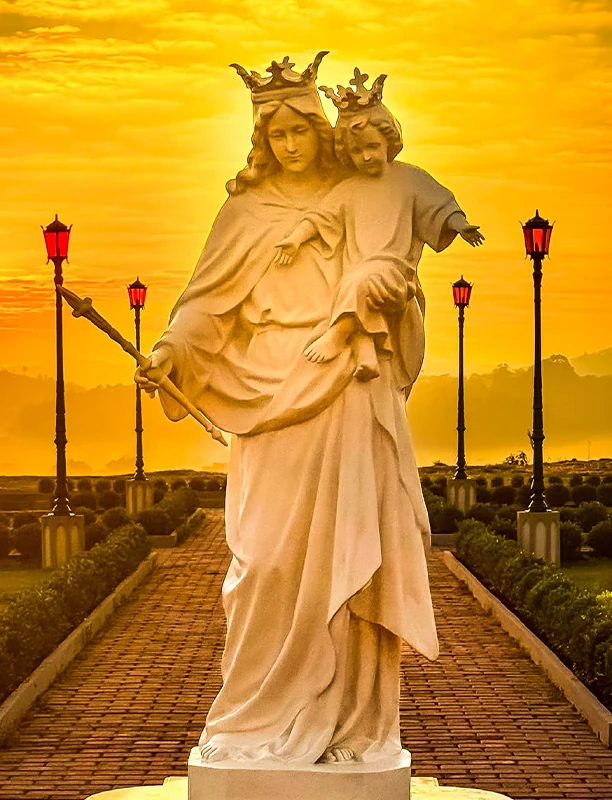 Help of Christians
 Christmas Carols






St. Thomas Aquinas’s childhood was not without a singular episode of “disobedience”… Once, as a little child, he happened to come across a small scroll.
Refusing stubbornly to let go of it, he wept bitterly as attempts were made to take it from him by force.
His poor nanny even resigned herself to bathing him with his little hand clenched… Later, his mother’s skill managed to uncover its mysterious contents. Two words: “Hail Mary”.
This simple incident, the account of which was gathered from family members by his first and principal biographer, William of Tocco, reveals the reason why the Angelic Doctor achieved brilliant victories amidst the myriad trials faced in this vale of tears.
He knew how to live out what he preached when commenting on the Angelic Salutation: “in every danger thou canst find a refuge in this same glorious Virgin”.1
To Mary apply the words of the wise man, for from her “hang a thousand bucklers” (Sg 4:4), as a remedy for manifold evils. Likewise, the Mother of God is a help in every work of perfection: “in me is all hope of life and of virtue” (Ecclus 24:25).
The saints possess grace not only for their own salvation, but also for that of many others. How many have been able to attain Heaven through the intercession of the founders of Religious Orders, such as St. Benedict, St. Dominic, and St. Teresa of Jesus!
Yet, above them all stands Our Lady, who has secured salvation for all mankind, for She, being truly the “full of grace”, gave birth to the Saviour of the human race.
Furthermore, Aquinas explains, God grants us grace “for two purposes, namely, the performance of good deeds and the avoidance of evil. As regards both, the Blessed Virgin received grace in the most perfect degree”.2
Indeed, She was not only preserved from original sin, but also repelled every sin during her life.
On the other hand, while every saint is distinguished by some particular virtue – be it humility, fortitude, mercy, etc. – in Mary’s life we have “an example of all virtues”.3
We find the virtue of humility exemplified in St. Francis of Assisi or St. Martin de Porres; nevertheless, in the Blessed Virgin we discover its fullness, for God “hath regarded the humility of His handmaid” (Lk 1:48).
While in St. Agnes and St. Lucy we have models of purity and virginity, we encounter their pinnacle in Mary, who said “I know not man” (Lk 1:34). For this reason, She was identified with the tota pulchra, the all-beautiful one (cf. Sg 4:7), in whom there is not the slightest blemish.
Indeed, Our Lady was and always will be called blessed by all generations (cf. Lk 1:48), not only by men, but also by the Angels, beginning with St. Gabriel who, bowing at the Annunciation, gave her the title par excellence: “Full of grace” (Lk 1:28).
By these words he meant to say: “I bow to Thee because thou dost surpass me in fulness of grace”.4
We, weak sinners, must learn to “disobey” like little Thomas, so that we may cling to this impregnable “tower of David” (Sg 4:4).
In dangers, in anxieties, in doubts, let us always turn to Our Lady, even if only by uttering her name: Mary!