 Heralds of the Gospel Magazine, Vol. 20, nº 227, September 2026
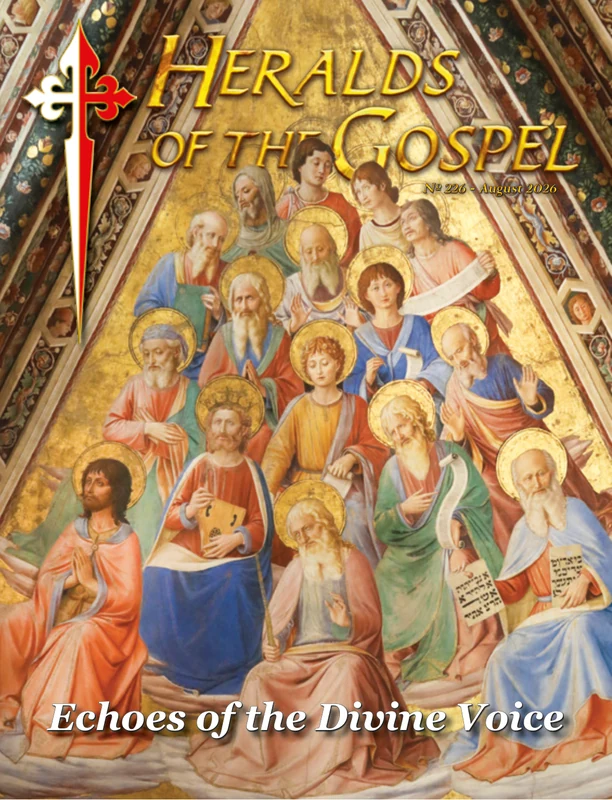 Heralds of the Gospel Magazine, Vol. 20, nº 226, August 2026
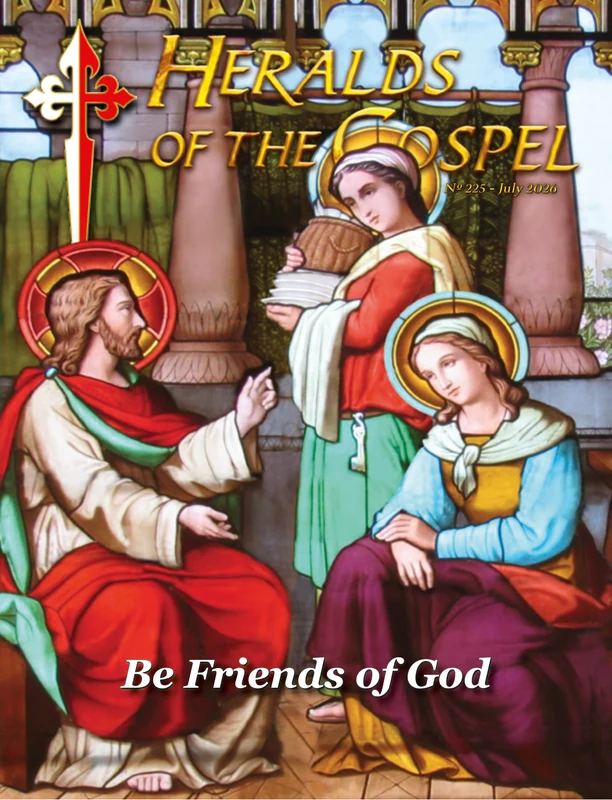 Heralds of the Gospel Magazine, Vol. 20, nº 225, July 2026
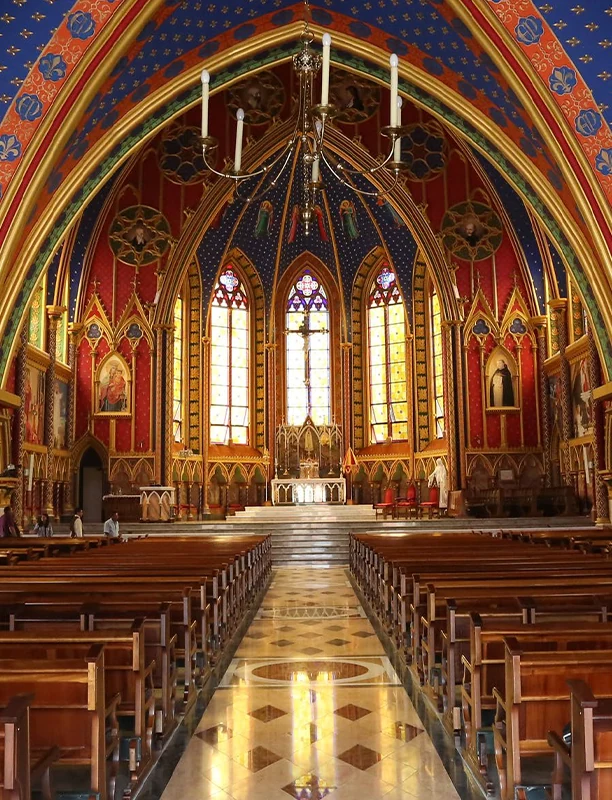 Who are the Heralds of the Gospel?
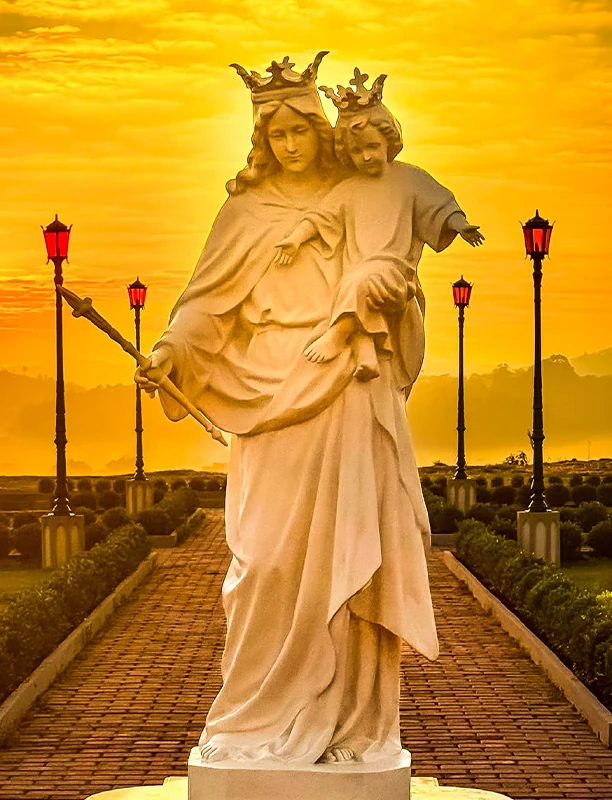 Help of Christians
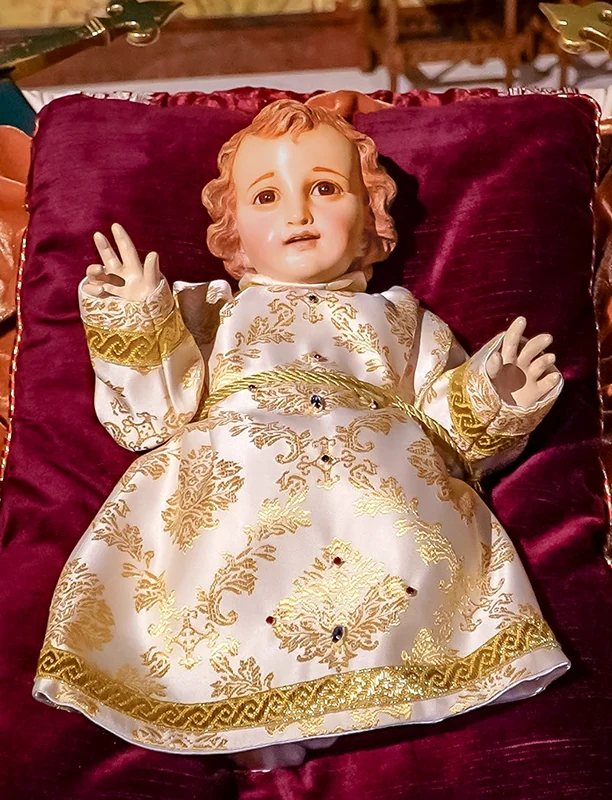 Christmas Carols








Every man has his own guardian
The Church reserves October 2 for the liturgical commemoration of the Holy Guardian Angels. The feast was first established in the 16th century, probably as a reaction to the newly invented Protestant theology, which denied this important belief.4 The doctrine regarding these celestial guardians, however, goes back to ancient traditions from the first centuries of Christianity, as well as being grounded in Sacred Scripture. One of the most explicit passages in this regard is found in St. Matthew’s Gospel: “See that you do not despise one of these little ones; for I tell you that in Heaven their Angels always behold the face of my Father” (Mt 18:10). Great Fathers of the Church have affirmed this belief. According to St. Basil the Great,5 certain Angels are placed at the head of peoples, while others accompany each of the faithful. St. Jerome,6 for his part, invokes the dignity of the human soul as one of the reasons why every man must have his own guardian from birth. And the great St. Augustine points out that the Angels “contemplate us pilgrims, have compassion on us and help us, by the Lord’s command, so that we may one day arrive at the common homeland.”7 However, it was only in the 13th century that a more detailed and thorough theological explanation was proposed on the subject. St. Thomas Aquinas formulated it in the first part of the Summa Theologiæ, reserving the whole of question 113 to deal with the guardianship of the good Angels. In eight articles, the Aquinate proposes theses of undeniable interest, many of which arouse curiosity. At what point does the Angel begin to guard man? Do Angels suffer because of the wickedness of their charges? Can they abandon them? Summarizing the articles in a few words, we may explain that, with regard to the first question, St. Thomas argues, in agreement with St. Jerome, that the Angels are assigned to guard men after they are born; therefore, it is most likely that, while in the mother’s womb, the unborn child is guarded by the mother’s Angel. Regarding the question of whether the Angels suffer due to the bad actions of their protégés, the answer is negative, since a being is saddened when an event occurs that is contrary to its own will, and nothing that happens in the world contradicts the will of the Angels, since it adheres perfectly to the order of divine justice and providence. With regard to the last question, the Saint affirms that the Angels never completely abandon their charges, just as God, whose ministers and instruments they are, never completely distances himself from anyone. The venerable theologian goes so far as to ask whether even the Antichrist (cf. 1 Jn 2:18; 4:3), when he comes, will have a Guardian Angel… He answers in the affirmative and explains: in this case, the Angel will at least help his ward not to do all the evil he desires, just as demons are prevented from doing so by good spirits.Cities and nations are also guarded by Angels
But it is not just individual human beings that the Angels look after. In this regard, it is again worthwhile to cull from the testimony of great authors: St. John Damascene8 believes that the Angels also guard parts of the earth, peoples and their territories; Clement of Alexandria affirms that “nations and cities are entrusted to Angels,”9 and St. Thomas himself speaks of a “guardianship of the human race.”10 St. Michael - Basilica of Notre-Dame de Fourvière, Lyon (France)
What does the Magisterium say about Guardian Angels?
Although not a dogma, namely a truth of Faith clearly defined by the Magisterium as such, the doctrine on Guardian Angels is found in the Catechism of the Catholic Church in the following terms: “From infancy to death, human life is surrounded by their watchful care and intercession. ‘Beside each believer stands an Angel as protector and shepherd leading him to life.’”12 It is worth remembering what Cardinal Ratzinger, a man known for his balance when considering matters of Faith, said when asked in 2000 about the Catholic belief in heavenly custodians. In his words, it “is very well founded […]. One of the intimate convictions that emerged from Christian experience is that, somehow, God places a companion at my side who has been assigned to me in a special way and to whom I am assigned.”13A deformed vision
Man has a clear need to represent, in human form, what he does not see, but believes. For this reason, artists from different eras have endeavoured to depict angelic figures in the form of visible beings, usually as winged men. In his Divine Comedy – which some have dared to call the Summa Theologiæ in verse – even Dante Alighieri emphasises this notion in one of the cantos of Paradiso: “To speak thus is adapted to your mind/ Since only through the sense it apprehendeth/ What then it worthy makes of intellect. On this account the Scripture condescends/ Unto your faculties, and feet and hands/ To God attributes, and means something else; And Holy Church, under an aspect human Gabriel and Michael represents to you/ And him who made Tobias whole again.”14 Nevertheless, more recent artistic schools often depict the Guardian Angels in the same way, which is quite characteristic: accompanying a child in danger of falling down a gorge or off a broken bridge. Comparing one of these scenes with another of a very different character – that of a tempter devil – Dr. Plinio Corrêa de Oliveira makes an important point: “By insistently representing the devil as intelligent, vivacious and skilful; and by always representing, as certain sugar-coated iconography does, the good Angels as soft, inexpressive and almost foolish beings, what impression is created in the soul of the general public? The impression that virtue produces weak-willed and dim-witted beings, and vice, on the other hand, forms intelligent and manly men.”15 This style of representation carries with it another serious drawback: it conveys the idea that the Guardian Angel is a watchman with merely material functions, without acuity or shrewdness, incapable of waging a battle for the spiritual benefit of his ward. Who would trust such a guardian? On the contrary, would we not want a solicitous and powerful guardian?“What patience I must have with you!”
St. Gemma Galgani, an Italian mystic born at the end of the 19th century, seems to have found in her heavenly companion just such a devoted guardian. And not only that: having been graced by God with the visible presence of her Guardian Angel, the Saint considered him an incomparable friend and loving protector. She even conversed with him and sought his advice countless times – always on spiritual matters, it should be said. Guardian Angel,by Jaume Huguet - Cathedral of Barcelona Museum (Spain)
They are our closest friends
We should, like this great Saint, have great reverence and respect for our Guardian Angels. St. Bernard exhorted his monks with these words: “Do not do before your Angels what you would not do in front of Bernard.”19 Detail of “Final Judgement”, by Fra Angelico - Gemäldegalerie, Berlin
Notes
1 Cf. ARISTOTLE. Ética a Nicômaco. L.VIII, n.2. 3.ed. Bauru: Edipro, 2009, p.237-238.
2 Cf. ST. ISIDORE OF SEVILLE. Etimologías. L.X, n.4. Madrid: BAC, 2004, p.793.
3 Cf. ST. THOMAS AQUINAS. Summa Theologiæ. II-II, q.23, a.1.
4 Cf. FERNÁNDEZ, Aurelio. Teología Dogmática. Curso fundamental de la Fe Católica. Madrid: BAC, 2009, p.602.
5 Cf. ST. BASIL THE GREAT. Contre Eunome. L.III, n.1: SC 305, 149.
6 Cf. ST. JEROME. Commentaire sur Saint Matthieu. L.III, c.18: SC 259, 55.
7 ST. AUGUSTINE OF HIPPO. Enarraciones sobre los Salmos. Salmo 62, n.6. In: Obras. Madrid: BAC, 1965, v.XX, p.572.
8 Cf. ST. JOHN DAMASCENE. La foi orthodoxe, c.17: SC 535, 231.
9 CLEMENT OF ALEXANDRIA. Stromata VII, apud BERNET, Anne. Enquête sur les Anges. Paris: Perrin, 1997, p.269.
10 ST. THOMAS AQUINAS, op. cit., I, q.113, a.3.
11 Cf. CLÁ DIAS, EP, João Scognamiglio. In the end, my Immaculate Heart will triumph! Nobleton: Heralds of the Gospel, 2017, p.19-24.
12 CCC 336.
13 RATZINGER, Joseph. Dios y el mundo. Creer y vivir en nuestra época. Barcelona: Debolsillo, 2005, p.115-116.
14 DANTE ALIGHIERI. A divina comédia. Paraíso, Canto IV. 5.ed. São Paulo: Editora 34, 2020, p.32-33.
15 CORRÊA DE OLIVEIRA, Plinio. O Anjo da Guarda é menos inteligente que o demônio? [Is the Devil More Intelligent than the Guardian Angel?] In: Catolicismo. Campos dos Goytacazes. Year IV. N.41 (May, 1954); p.7.
16 GERMANUS OF ST. STANISLAUS, CP. Santa Gema Galgani. 2.ed. Campinas: Ecclesiæ, 2014, p.205.
17 Idem, p.206.
18 Idem, ibidem.
19 BERNET, op. cit., p.257.
20 ST. THERESE OF LISIEUX. A mon Ange Gardien. Poésie 46. In: Œvres Complétes. Lonrai: Du Cerf; Desclée de Brouwer, 2009, p.735
21 CORRÊA DE OLIVEIRA, Plinio. O Anjo da Guarda, um príncipe celestial a serviço de cada um dos filhos de Deus [The Guardian Angel: A Celestial Prince at the Service of Every Child of God]. In: Dr. Plinio. São Paulo. Year I. N.5 (Aug., 1998); p.22.
22 ST. BERNARD OF CLAIRVAUX. Sermones sobre el Salmo 90. Sermón duodécimo, n.10. In: Obras Completas. 2.ed. Madrid: BAC, 2005, v.III, p.577.