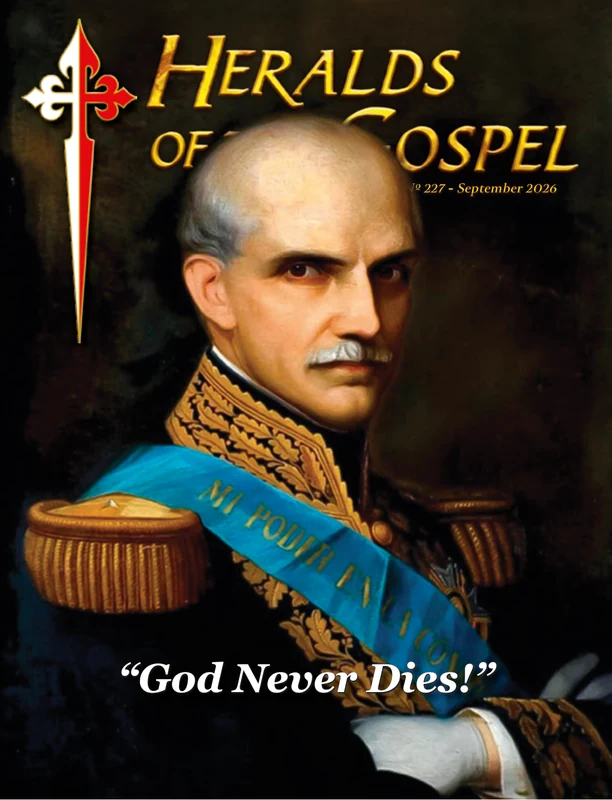
 Heralds of the Gospel Magazine, Vol. 20, nº 227, September 2026
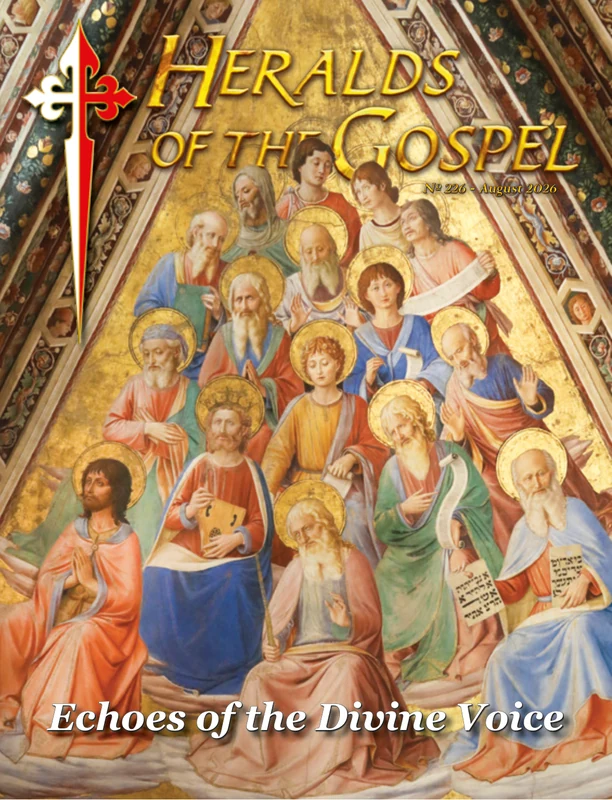 Heralds of the Gospel Magazine, Vol. 20, nº 226, August 2026
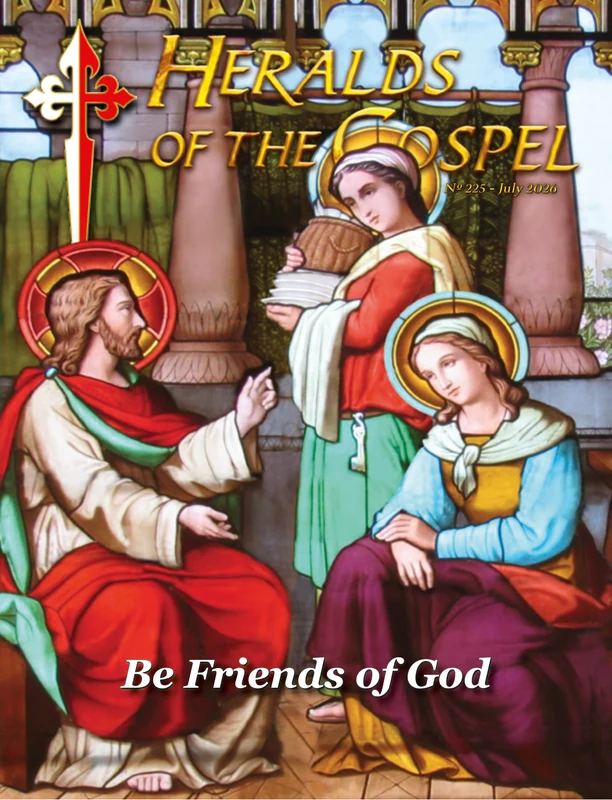 Heralds of the Gospel Magazine, Vol. 20, nº 225, July 2026
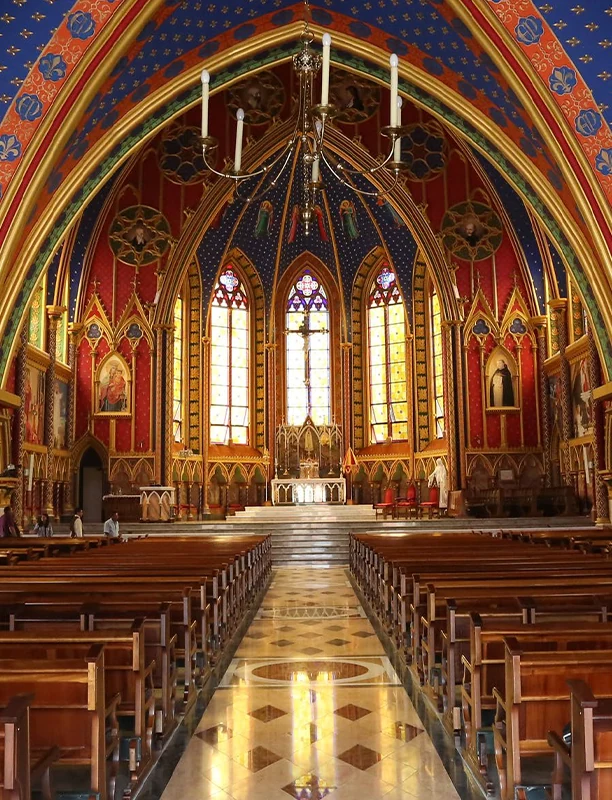 Who are the Heralds of the Gospel?
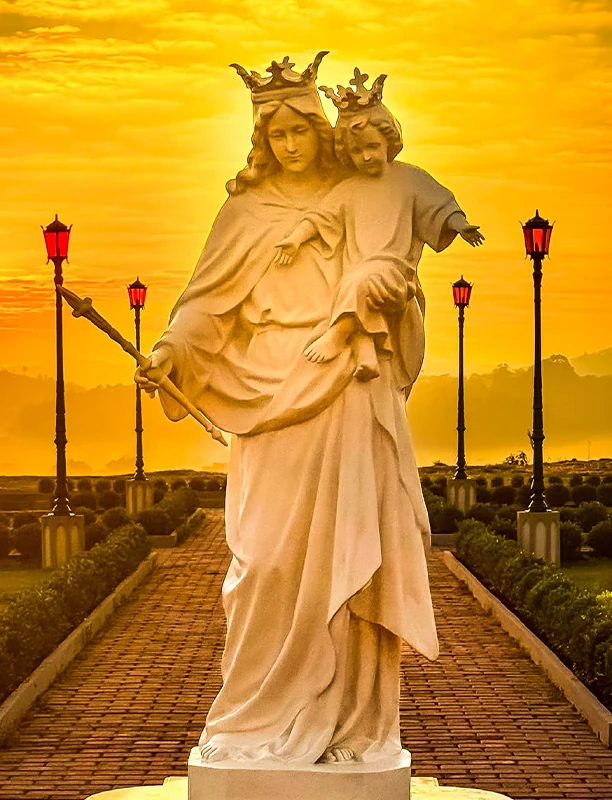 Help of Christians
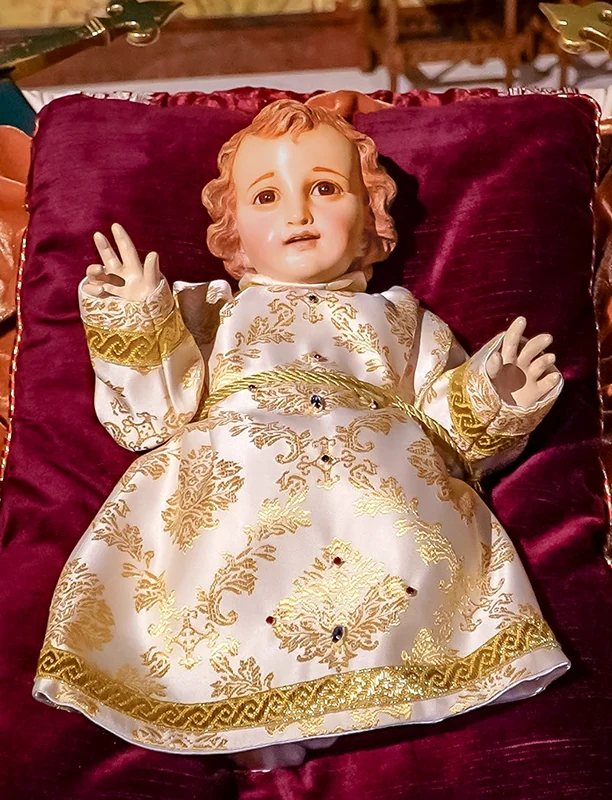 Christmas Carols






A sacred and privileged place
Ever since Pope Gelasius I authorized the dedication of the grotto where St. Michael the Archangel appeared as a place of worship in 493 and made his first visit to it, granting the indulgence of “angelic pardon,” several Roman Pontiffs have followed in his footsteps to venerate this sacred place. Among them are Agapetus I, Leo IX, Urban II, Innocent II, Celestine III, Urban VI, Gregory IX, St. Peter Celestine, and Benedict IX. Numerous saints have also come here in search of strength and consolation. I recall St. Bernard, St. William of Vercelli, founder of the Abbey of Montevergine, St. Thomas Aquinas, and St. Catherine of Siena. Among these visits, that of St. Francis of Assisi, who came here in preparation for Lent in 1221, remains justly renowned and memorable to this day. It is said that, considering himself unworthy to enter the sacred grotto, he stopped at the entrance and engraved the sign of the Cross on a stone. The lively and uninterrupted influx of pilgrims both illustrious and humble who, from the beginning of the Middle Ages to the present, have made this sanctuary a place of gathering, prayer and reaffirmation of the Christian Faith, demonstrates how the Archangel Michael – the protagonist of so many pages of the Old and New Testaments – is perceived and invoked by the people, and how the Church needs the heavenly protection of him who is presented in the Bible as the great combatant against the Dragon, the head of the demons. “Episcopal Procession to Mount Gargano”, by Master of Palaquinos - Art Museum of Philadelphia (Pennsylvania)
Defender of the divine rights and Patron of the Church
We read in the Book of Revelation: “Now war arose in Heaven, Michael and his Angels fighting against the Dragon; and the Dragon and his angels fought, but they were defeated and there was no longer any place for them in Heaven. And the great Dragon was thrown down, that ancient serpent, who is called the devil and Satan, the deceiver of the whole world – he was thrown down to the earth, and his angels were thrown down with him” (Rv 12:7-9). In this dramatic description, the sacred author presents us with the episode of the fall of the first angel, seduced by the ambition to be “like God”. Hence the reaction of the Archangel Michael, whose Hebrew name Who is like God? defends the uniqueness and inviolability of God.Other accounts from Revelation of the personality and role of St. Michael are eloquent, albeit fragmentary. The Archangel (cf. Jude 1:9) who vindicates God’s inalienable rights. He is one of the princes of Heaven, chosen to guard the people of God (cf. Dn 12:1), from whom the Saviour was to come. The new people of God is the Church. This is why she considers him to be her incomparable protector and champion in the fight to defend and spread the Kingdom of God on earth. It is true that “the powers of death shall not prevail against it” (Mt 16:18), as the Lord assures us, but this does not mean that we will be exempt from trials and battles against the snares of the evil one.The influx of pilgrims to the Sanctuary of St. Michael, from the Middle Ages to the present, shows how the Church needs his protection in her battles
A multi-millennial and ever-current battle
In this struggle, the Archangel Michael stands by the Church to defend her against the iniquity of the world, to help the faithful resist the devil who “prowls around like a roaring lion, seeking some one to devour” (1 Pt 5:8). St. Michael fights alongside the Catholics in the Battle of Siponto, by Juan de Sevilla
Excerpts from: ST. JOHN PAUL II. Speech to the population of Monte Sant’Angelo, 24/5/1987 – Translation: Heralds of the Gospel