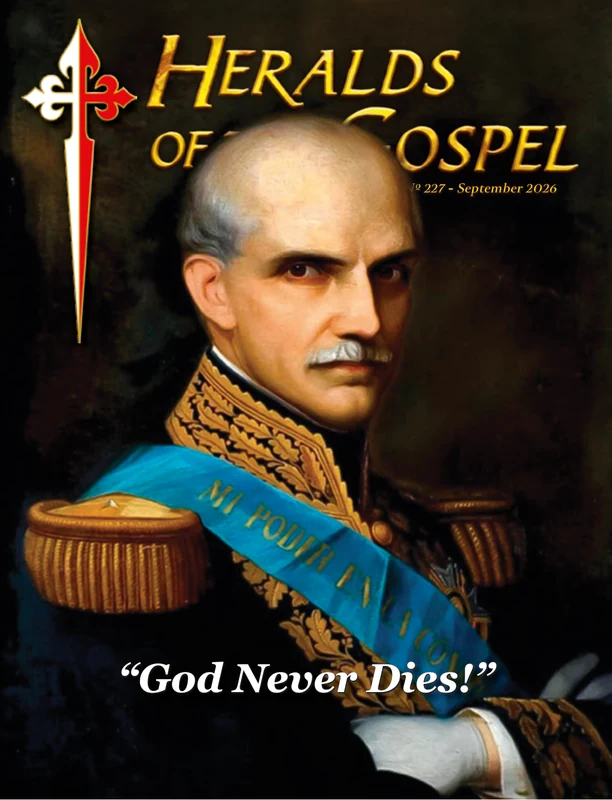
 Heralds of the Gospel Magazine, Vol. 20, nº 227, September 2026
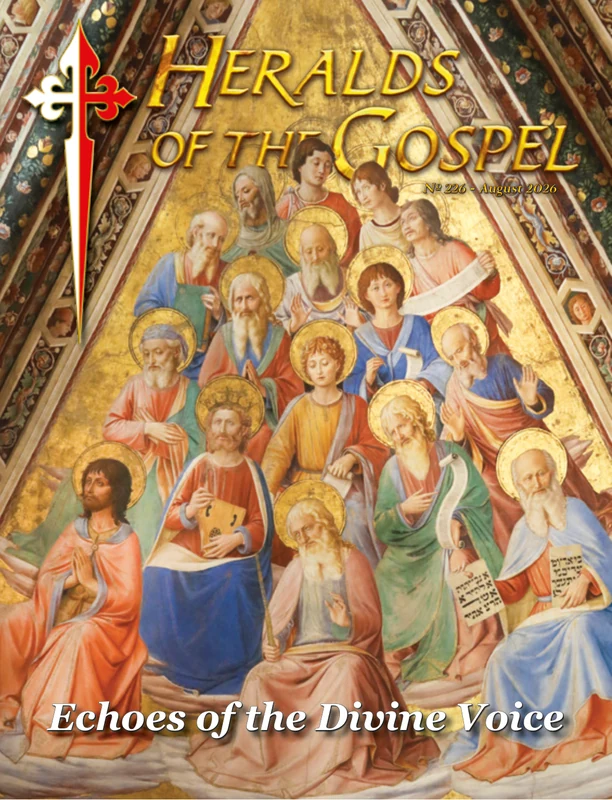 Heralds of the Gospel Magazine, Vol. 20, nº 226, August 2026
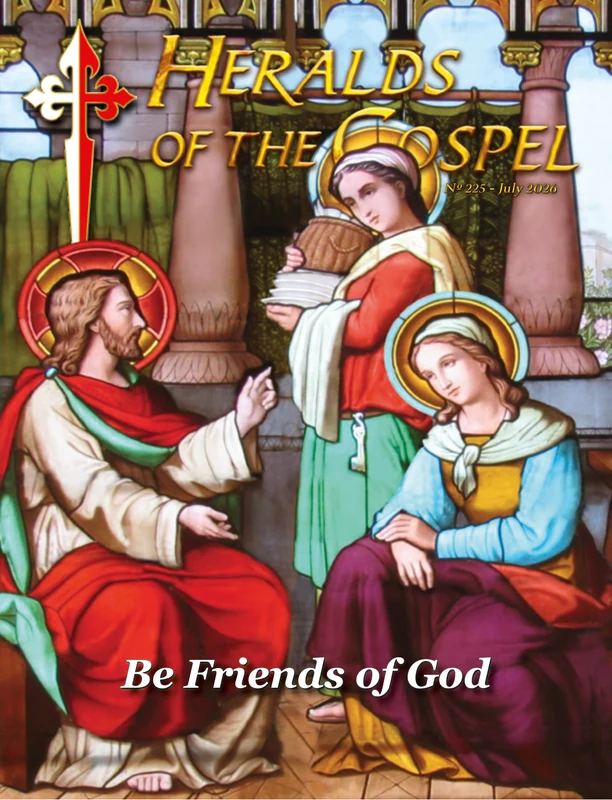 Heralds of the Gospel Magazine, Vol. 20, nº 225, July 2026
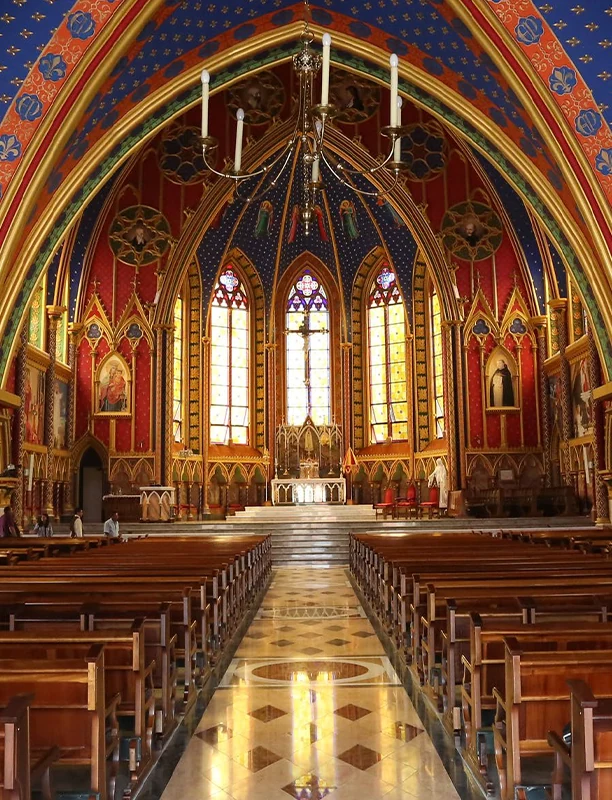 Who are the Heralds of the Gospel?
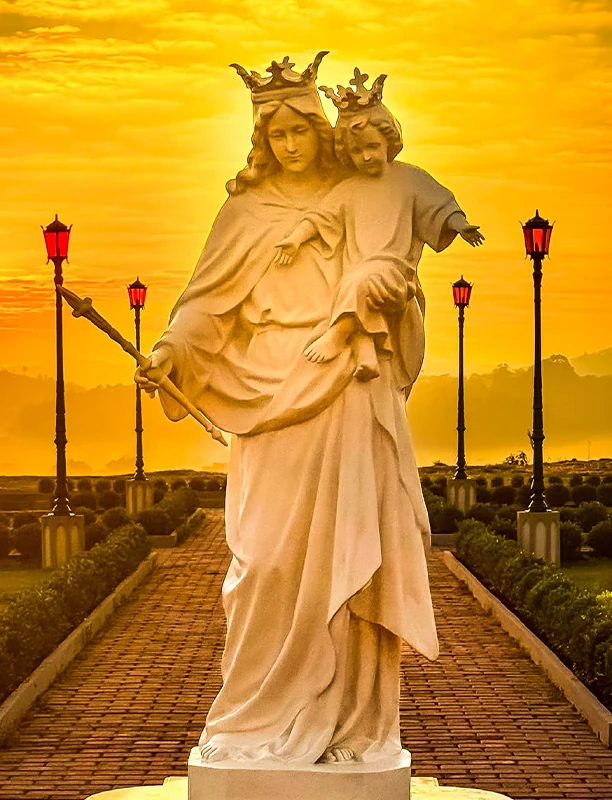 Help of Christians
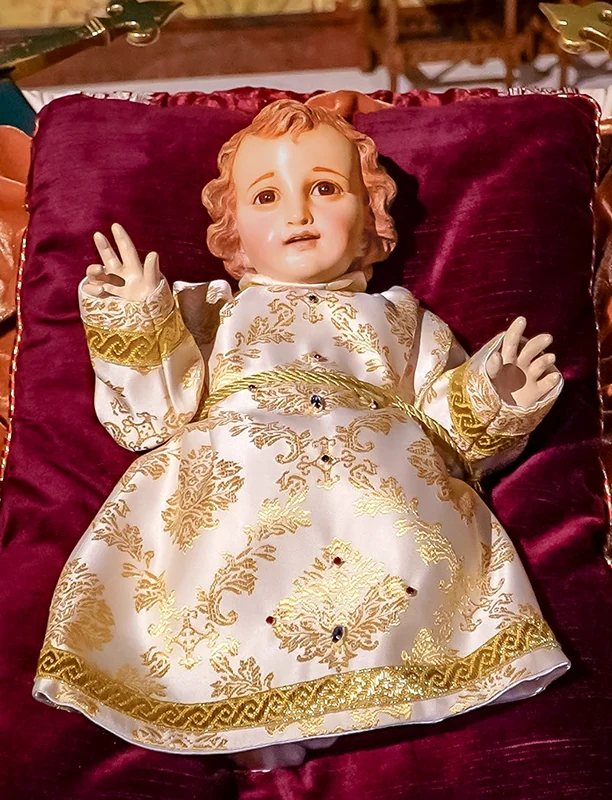 Christmas Carols






Innate moral law
Keen but discreet, respectful but persistent, encouraging or admonishing, this hidden voice tends to make itself heard not only when our lives are at risk, but in the most varied circumstances, especially at moments when we need to choose between good and evil. It comes from the innermost part of our own being. Philosophy teaches that each of us, from birth, has the natural law engraved in our soul, the self-evident principle of human moral activity,1 which enables us to distinguish by simple reason what is right from wrong, truth from falsehood,2 and by which we know what we should do and what we should avoid. This law – which is perfectly expressed in the revealed law, that is, in the Decalogue – was written by God on tablets not of stone but of flesh: our hearts. And the secret of a coherent and virtuous life lies in being faithful to this innate discernment.3 St. Paul sums it up well in his Letter to the Romans: “When Gentiles who have not the law do by nature what the law requires, they are a law to themselves, even though they do not have the law. They show that what the law requires is written on their hearts, while their conscience also bears witness and their conflicting thoughts accuse or perhaps excuse them” (2:14-15). There is, therefore, within us a kind of permanent and universal knowledge about the good we should do and the evil we should avoid, called synderesis. In the field of practical action, the “advice” of our reason – which approves or censures our intentions, acts and conduct or that of others – is called conscience. It is the conscience that “talks” to us at every moment, with the aim of guiding us towards our ultimate goal: sanctity.The mirror of the soul
The word conscience comes from the Latin conscientia, which means knowledge, notion or inner sense. It “is the most secret core and sanctuary of a man. There he is alone with God, whose voice echoes in his depths.”4 Just as a mirror reflects the physical state of a material body, the conscience “is the mirror in which one sees the exterior and interior state of man, that of his body and that of his soul.”5 In it “the soul, using the eyes of reason, sees […] its beauty or ugliness, its purity or its blemishes.”6 Conscience is thus the guide that shows us how to walk towards sanctity and how far we are from it. The clarity of the image we have of ourselves depends on the care we take in guarding against the blemishes of our faults. For just as dust and other residues stain a mirror and mar its clarity, sin dulls the conscience and does not allow us to accurately see the state of our soul. In fact, if we become accustomed to vice, the inner voice of our conscience will gradually become weaker and weaker, until it is almost extinguished. By losing that compass which points us in our true direction, we condemn ourselves to an unbridled decadence. In extreme cases, our spiritual “mirror” can become so blurred that we begin to regard our defects as wonderful qualities… Therefore, if we want to preserve our Christian sanity and journey towards Heaven, it is indispensable for us to cultivate a good conscience. This knowledge is immortal, for we will carry it into eternity; it “will unfailingly be the cause of each one’s glory or inexorable confusion, according to the quality of the things placed in it.”7The columns of our spiritual house
 “The Seven Virtues”, by Francesco Pesellino - Birmingham Museum of Art (Alabama)
 St. Bernard of Clairvaux - Provincial Museum, Pontevedra (Spain)
Let us pray and fight!
If, dear reader, we take care to observe this wise counsel, if we continually “cleanse” our souls by confessing our sins, by making satisfaction, by good works and especially by persistence in these works, we will undoubtedly attain the tranquillity of a good conscience, “to which God does not impute either personal sins, because he did not commit them, or those of others, because he did not approve of them.”13 It is a hard but fruitful battle! Let us pray, let us stand fast and let us fight: blessed are those who know how to approve or reprove themselves, “for he who displeases himself pleases God”;14 and those who please Him, even if they suffer misfortunes on this earth, will rejoice eternally in His presence! ◊Notes
1 Cf. ST. THOMAS AQUINAS. Summa Theologiæ. I-II, q.94, a.2.
2 Cf. CCC 1954.
3 Cf. CLÁ DIAS, EP, João Scognamiglio. Os princípios da ação moral: caminho seguro para chegar à santidade [The Principles of Moral Action: Sure Way to Reach Sanctity]. In: Lumen Veritatis. São Paulo. Year IV. N.13 (Oct.-Dec., 2010); p.12.
4 SECOND VATICAN COUNCIL. Gaudium et spes, n.16.
5 ST. BERNARD OF CLAIRVAUX. Tratado da consciência ou do conhecimento de si mesmo. Itapevi: Nebli, 2015, p.53-54.
6 Idem, p.54.
7 Idem, p.18.
8 Idem, p.27
9 Idem, ibidem.
10 Idem, p.29-30.
11 Idem, p.31.
12 Idem, p.33.
13 Idem, p.49.
14 Idem, p.65.