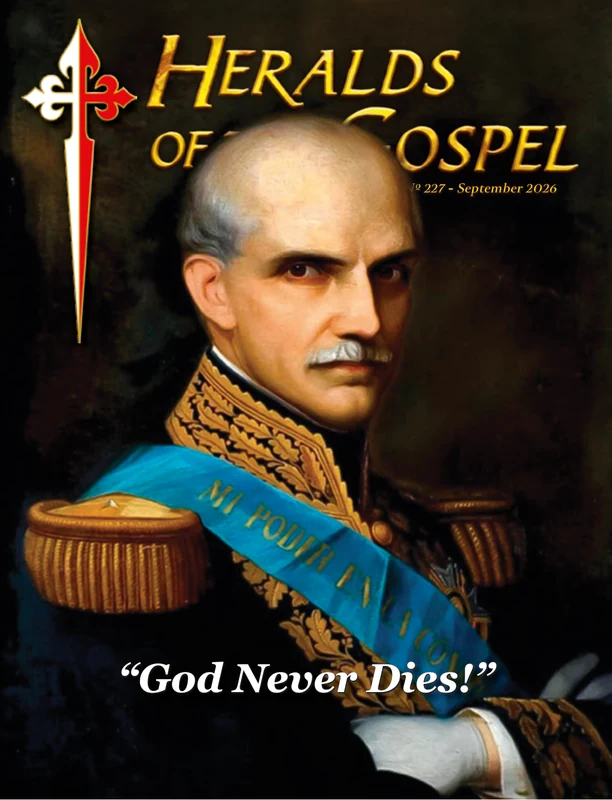
 Heralds of the Gospel Magazine, Vol. 20, nº 227, September 2026
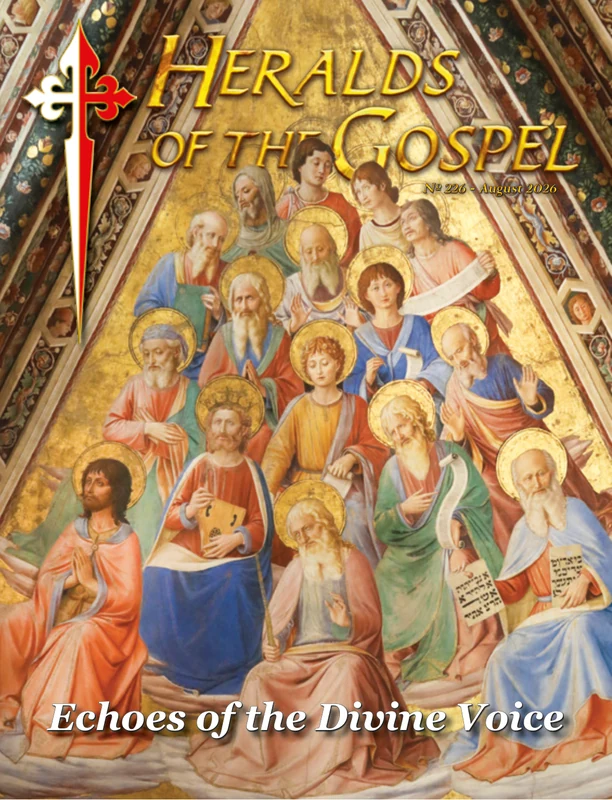 Heralds of the Gospel Magazine, Vol. 20, nº 226, August 2026
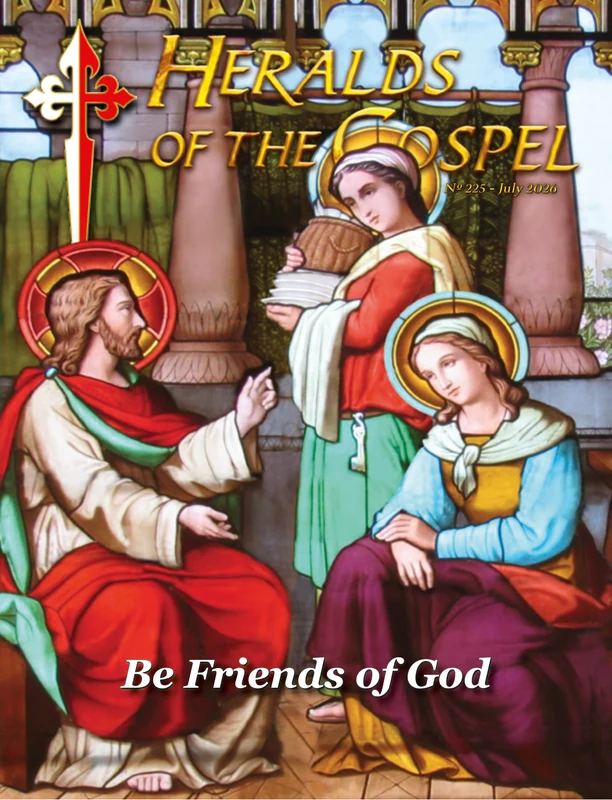 Heralds of the Gospel Magazine, Vol. 20, nº 225, July 2026
 Who are the Heralds of the Gospel?
 Help of Christians
 Christmas Carols







Family upbringing and marriage
Maria Victoria Fornari Strata was born in 1562 in the bustling city of Genoa. She was the seventh of nine children born to Girolamo Fornari and Barbara Veneroso, a couple known for their good morals and piety. Of an impulsive temperament, little Maria Victoria learned moderation, inspired by the example of her parents. It is said that she always showed exemplary zeal and great responsibility in the fulfilment of her obligations, which would be confirmed years later in the guidance of her Religious Order. She had an early desire to follow the consecrated life, but on the advice of her parents she married Angelo Strata at the age of seventeen. He was a devout man, and together they were able to reconcile their religious duties with the responsibilities of domestic life. They prayed the Rosary as a family every day and, as ardent devotees of the wounds of Christ, they sought refuge in them during the difficulties of marriage, of livelihood and of rearing their children.Loss of her husband and abandonment to Mary
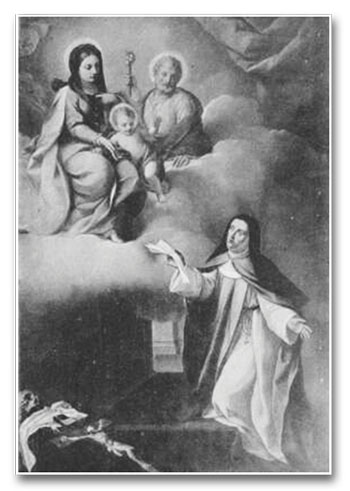
In 1587, after only eight years of marriage, her husband fell gravely ill and died within a few days. One of the most difficult phases of her life was beginning. Widowed at just twenty-five years of age, eight months pregnant and with five other children to care for, Maria Victoria felt emotionally weak and incapable of carrying out the mission that had fallen to her. She was able to face this tremendous ordeal by turning with confidence to the mercy of Our Lady. Once, while in her room, she knelt before a painting of the Blessed Virgin Mary with the Child Jesus, and tearfully begged Her: “O compassionate Virgin, I implore Thee as much as I know and can: by thy goodness, deign to take these children of mine as thy servants and children, for, being already deprived of their father, for my part they can also be called orphans and motherless.”2 While she was praying, the Blessed Virgin held out her arms to her, saying: “Have no doubts, for I will watch over not only your children, but also over you: this household will always be under my special care and protection. Rejoice and do not fear. I want only one thing from you; leave everything else to me: from now on, seek to love God above all creatures.”3 After such a consoling vision, she felt that the great anguish that was oppressing her had subsided and, filled with hope, she overcame the temptations of despair and sadness. Her response to Our Lady’s promise “was prompt and complete, and took the form of a vow of perfect and perpetual chastity, by which Maria Victoria pledged not only to renounce all human love but to reclaim a spiritual virginity.”4 Furthermore, she would no longer wear gold or silk dresses, and would abandon her worldly circles, devoting herself exclusively to the education of her children until such time as she could embrace the religious life in the cloister. However, her gratitude made her desire even more for the glory of the Almighty, and Our Lady inwardly assured her that this longing corresponded to the divine will: her children would also consecrate themselves to God, and she herself would serve Him by founding a new Order.A religious outside the cloister
 Blessed Maria Victoria Fornari Strata
Founding of the Order of the Most Holy Annunciation
Having set all of her children on the path of virtue, there was no longer anything to bind her to the world. The time had come to do what she had promised to the merciful Virgin. To this end, she could rely on the help of Fr. Zanoni, as well as the support of a couple from Genoese society, Stefano Centurione and Vicentina Lomelini, who, after a retreat, had also decided to embrace the religious state. Vincentina was to join Maria Victoria in the new foundation, on the advice of Fr. Zanoni, and Stefano, who was to be ordained a few years later, was to become her great benefactor. With a series of difficulties behind her, both material and ecclesiastical, the Order of the Most Holy Annunciation was founded on June 19, 1604, “under the obligation of exterior cloister and interior recollection, and dedicated in a special way to the adoration of the Incarnate Word and of the Blessed Eucharist.”5 Temporarily using a small building, the nuns would wear a white habit with a blue scapular and mantle, completed by a black veil. It is said that in order to overcome adversity, Mother Maria Victoria kept repeating “Mary of the Annunciation, Mary exalted, be always our Mother and Advocate.”6 In fact, problems were not long in coming. Stefano Centurione began to interfere in the running of the convent, encouraging the sisters to adopt the Carmelite rule, which would result in the loss of the characteristics proper to the new institute. This brought dissention and disunity among the religious, causing the foundress great suffering. Accustomed to entrusting herself to the Blessed Virgin as a child in her mother’s arms, Maria Victoria turned now to her intercession, as she had done after the death of her husband, hearing words of comfort from Her again: “What troubles you, Victoria? Why do you weep? This monastery is mine. It was I who established it, and I will take care of it. Have no doubt, everything will be rectified. I will be the Mother of all the nuns of this house and the Guardian of the entire Order.”7 Without Maria Victoria having to take any concrete measures, Our Lady began to move the souls of each of the rebels, making them understand that they should not change the original charism. On September 7, 1605, the religious made their solemn perpetual profession and received three new sisters.Mother of many daughters
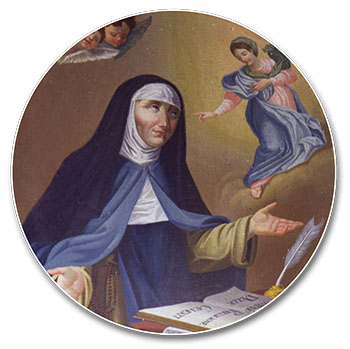 Our Lady manifests herself to Blessed Maria Victoria
Exemplary religious
On October 25, 1611, her term as Prioress came to an end, and the community, judging her tired and worn out by the obligations of the office, decided to elect another religious as Prioress. Thus began a new phase of heroism and pure love for the cross in her life. The new prioress, Mother Maria Giovanna Tacchini, treated Mother Maria Victoria with a harshness and distrust that served to further deepen her humility and submission. She seemed deliberately intent on mortifying the foundress, treating her as the least of the nuns and the most capricious novice. Yet her meekness in accepting the humiliations imposed on her was exemplary, to the point of edifying the others. One of the novices learned only years later that this religious of impeccable obedience was the very Foundress of the Order… Mother Maria Giovanna later recognized how unjust she had been towards Mother Maria Victoria, and that surely her fault had been permitted by God to further exalt the latter’s noble virtues and holiness. In fact, despite these trials, her generosity towards others – the gauge of true love of God – in no way lessened. During her time as infirmarian, she applied herself with outstanding diligence to the care of the others, never giving in to fatigue and devoting herself especially to those who had persecuted her most.“Everything passes and all is naught, except God”
 Convent of the Most Holy Annunciation and Incarnation, Serra Riccò (Italy)
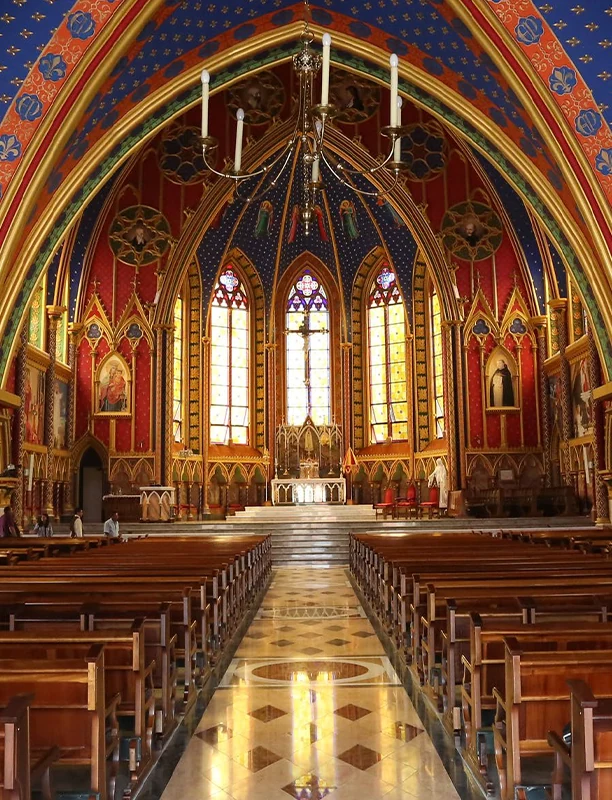
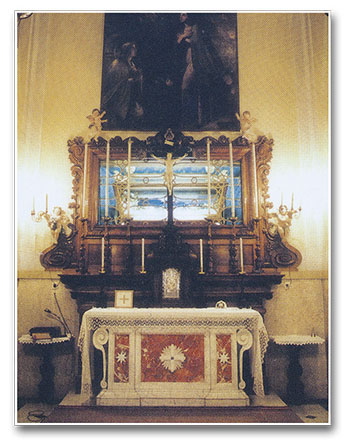 Church of the Convent of the Most Holy Annunciation and Incarnation,where the incorrupt body of Blessed Maria Victoria reposes
Notes
1 VITA DELLA BEATA MARIA VITTORIA FORNARI STRATA. Roma: Bernardino Olivieri, 1828, p.2.
2 LUPI, Angela. Due volte madre. 2.ed. Milano: San Paolo, 2000, p.36-37.
3 Idem, p.37.
4 Idem, p.38-39.
5 Idem, p.70.
6 Idem, p.89.
7 VITA DELLA BEATA MARIA VITTORIA FORNARI STRATA, op. cit., p.99.
8 LUPI, op. cit., p.107.