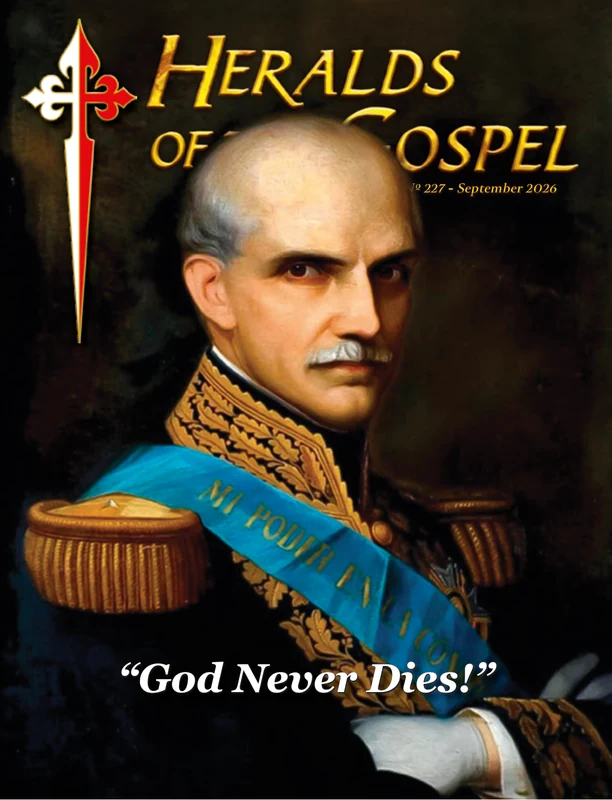
 Heralds of the Gospel Magazine, Vol. 20, nº 227, September 2026
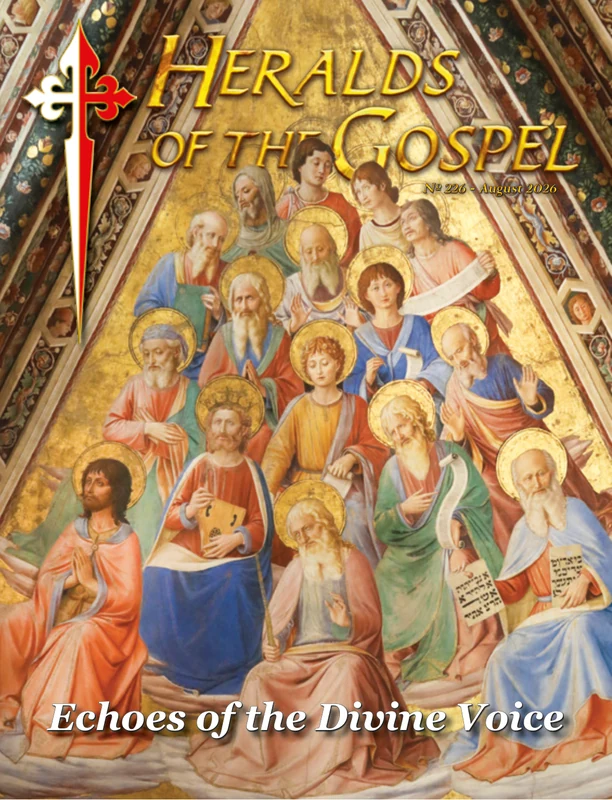 Heralds of the Gospel Magazine, Vol. 20, nº 226, August 2026
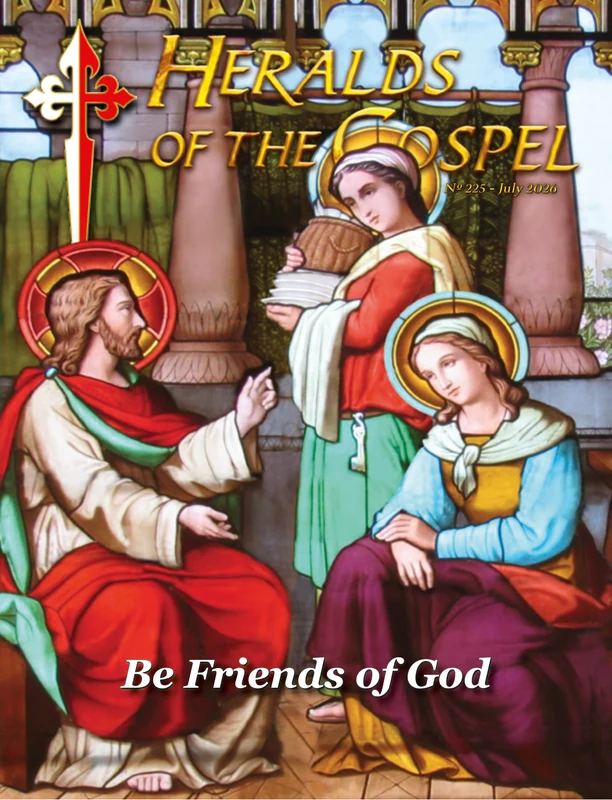 Heralds of the Gospel Magazine, Vol. 20, nº 225, July 2026
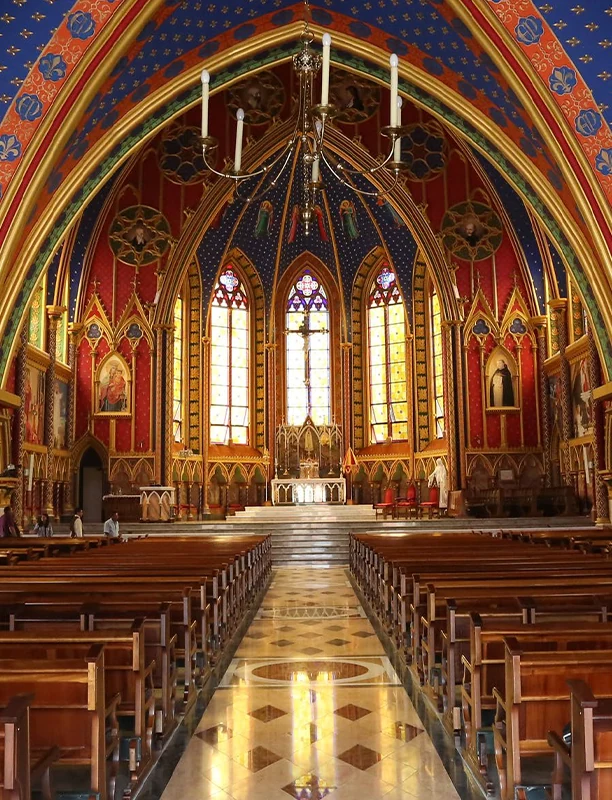 Who are the Heralds of the Gospel?
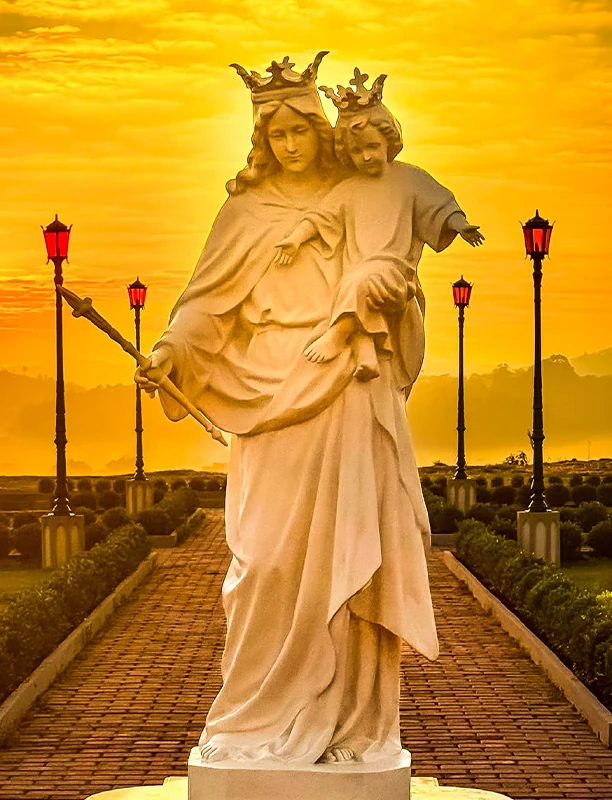 Help of Christians
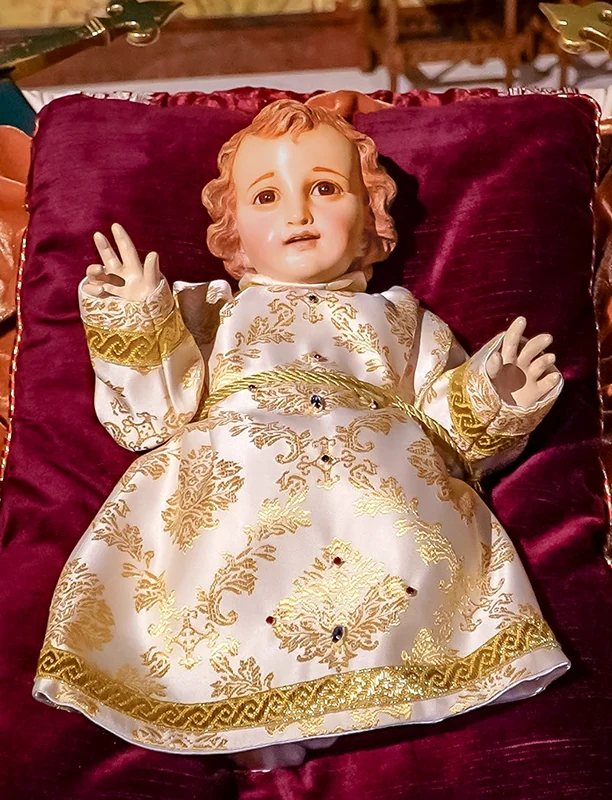 Christmas Carols






Dawn of a vocation
It was late on that February 11, 1876, the feast of the first apparition of Our Lady of Lourdes. At the home of the Joubert family, located on the arid plateau of Haute-Loire, relatives and friends were gathered to celebrate a birth. In the midst of the celebration, the mysterious and joyful ringing of bells was heard, continuing for several minutes. Not knowing the origin of the sound, everyone wondered what relation it might have to the birth of the child. The future would tell… From an early age, the girl manifested a cheerful, serene temperament. At the age of five, she left her parents’ care to be educated at the boarding school of the Ursulines of Monistrol, assuming its rigid discipline and austere abstinences with zeal. Together with the others, she always sought the last place and often received more reproaches than praise. In another school where she studied, one of the teachers, in order to test her character, accused her of faults that she had not committed. Nevertheless, she took the blame and did not allow bitterness to cloud the sky of her candid soul. These small sacrifices prepared her, unknowingly, for the great acts of generosity that she would one day be called to perform.Model of piety, virtue and modesty
Her devotion to Mary was evident, as one of her classmates testified: “Whenever she spoke of the Blessed Virgin, you could see Heaven in her gaze.”1 In May, a flower was given every week to the pupil with the best marks. During this month dedicated to Mary, Eugénie worked hard and was happy to offer Her four beautiful flowers. Although she was very little, when she ardently desired a grace, she prayed the whole Rosary for nine consecutive days, to which she added five sacrifices that were particularly difficult for her. And her heavenly Mother always responded. Later Eugénie would say: “I love Her because I love Her, because She is my Mother. She has given me everything; She gives me everything, and She still wants to give me everything. I love Her because She is all beautiful, all pure. I love Her and I want every beat of my heart to say to Her: My Immaculate Mother, You know well that I love You!”2 After completing her studies, she returned to her parents’ home where she dedicated herself to works of charity and piety, uncommon for her age. Sometimes she visited the sick in the town hospital, encouraging them with her innocent enthusiasm. Other times, she gave up desserts to be able to offer them to the poor. She loved to converse at length on spiritual matters with the sisters who looked after the hospital. At that time, she also dedicated herself to apostolate with children, teaching them the practice of prayer and catechism with that virtue that so attracts and calms little ones: patience. Her good manners were always edifying and her modesty perfect. What would the future hold for such a preserved soul? This was the question that many asked themselves. She, however, sought to abandon herself to the divine will, and trusted that the Good Jesus would show her the way forward: “I have not yet made any decision; I am looking for where Jesus wants me to pitch my tent.”3 And He would soon reveal it to her.A vocation takes shape
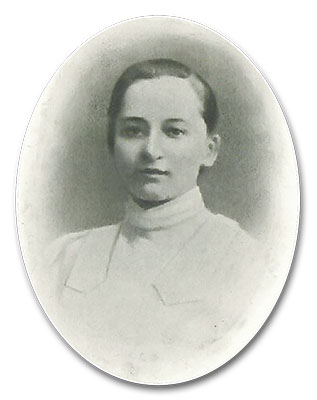 Blessed Eugénie Joubert in her youth
“To conquer oneself to the end”
“To conquer oneself, to conquer oneself until the end,” was her goal from the beginning of her postulancy. To this end, she set out on the path of perfection like a warrior entering the battlefield, as is well expressed in a short excerpt taken from her writings: “Combat laziness with generosity. Love even more. Sacrifice even more! I must not look at myself, but at the Heart of Jesus and the Heart of Mary. Nothing that love asks is insignificant.”7 From the very beginning, she showed remarkable seriousness and maturity, far exceeding what is typical for girls of her age. Hers was a way of being that had been forged by the responsibility of a high vocation and enlightened by a vision of life without sentimental illusions. Her gestures and words denoted “a soul that has striven to live with Our Lord in her heart.”8 She spared no effort to detach herself entirely from creatures in order to keep her heart free for God. One day during Lent when she was acting as porter, she saw a friend she had known in the past approaching, and she said: “It is in Lent, and visits are not allowed.” With these few words, she closed the door and her friend left without reply.Attracting Jesus’ gaze through humiliations and obedience
Part of the work of the Sisters of the Sacred Heart was to teach catechism to poor children with little education. In the vicinity of Le Puy-en-Velay, the results of this apostolate were excellent. The parish priest of Aubervilliers, wanting to see it bear fruit in the suburbs of Paris, an environment hostile to religion and very much in the thrall of socialist propaganda, called upon the Sisters. In 1896, seven of them answered the call, among whom was Eugénie, who had just professed her vows. It was an opportunity to prove her love, and she gave herself unreservedly to this mission for four years. Eugénie never spared herself from work; she gave classes all day long, sometimes until losing her voice. She had a special gift for captivating children, especially the rough and wild ones, who became docile and affable during her lessons. How did she manage? No one knows… Her seriousness imposed itself without being overbearing, and her sincere smile instilled confidence and respect. Gradually, she began to raise up little apostles. Once, one of her pupils – perhaps the most boisterous of all – gathered his companions in the street in front of a crucifix. He climbed up on a bench and, raising his voice, asked: “Who nailed Jesus to the Cross?” As no one answered, he continued: “It was we who caused Him to die because of our sins. We have to ask Him for forgiveness!” And the children knelt down to recite the act of contrition. In the midst of her apostolic activities, however, a holy concern troubled her: how could she become more united to the Sacred Heart of Jesus? The answer was not long in coming, for a hard trial was soon to begin.The ascent of calvary
In 1901, Eugénie returned to the house of the Congregation to continue her regular studies. During the preparations for the feast of the Sacred Heart in 1902, she felt a burning invitation to deepen her union with God. She wished to give everything to Jesus: her will, her freedom and even her life. On the evening of the feast, the symptoms of the illness that would carry her to eternity appeared, and the diagnosis came promptly: tuberculosis. The young nun was invited by Our Lord to self-immolation in an act of love and abandonment. Faithful to her Beloved, she would refuse nothing: “The cross is the most precious of all gifts, of all diadems. Our Lord loves me and wants to unite me to Himself. Answer: Fiat… […] I will be the little host and the Blessed Virgin will be the priest who will offer it according to Our Lord’s desire.”9 Her life underwent an abrupt change. Victim of a disease that gradually consumed her, the former intensity of her routine of study, work and apostolate gave way to a seeming inaction. To her bodily pains were added those of the soul. Could she bear the interior abandonment that visited her? What value was her vocation if she no longer had the strength to fulfil it? Nevertheless, having always been magnanimous in small, everyday tasks, at the moment of great adversity her generosity exceeded all expectations.Amidst suffering, intimate union with the Sacred Heart
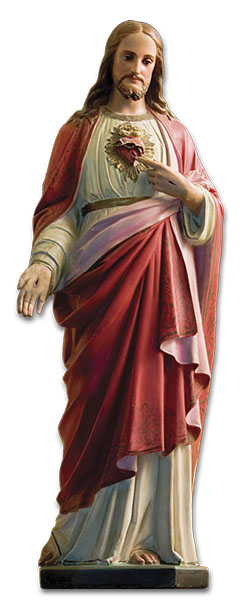 Sacred Heart of Jesus - Private collection
“Consummatum est”!
On June 18, 1904, Eugénie was confined to bed, never to arise again. The hemoptysis became continuous. Between each coughing fit, she kept murmuring “All for You, all for You…” On the 26th her condition worsened and she was given the Anointing of the Sick. The intensification of the pain did not dampen her spirits or cloud her hope. One of the witnesses to these moments wrote with admiration: “Our dear sister is enchanting on her deathbed. Peace and joy radiate around her.”13 Another of those present encouraged her to unite her sufferings to those of Jesus’ Passion, to which she replied: “I do this without ceasing in my heart. Suffering without the good God, I could not do it.”14 On July 2, after a period of prayer, Eugénie asked the time. It was ten o’clock in the morning. The answer made her smile broadly: it was exactly the day and hour when, nine years ago, she had answered the divine call to consecrate herself to religious life! The pains of her agony intensified and her life seemed to be hanging on a thread that refused to break. Between terrible bouts of suffocation, she said almost without a voice: “I can no longer… When will He come?” Our Lord demanded of her every last drop of suffering. At last, fervently kissing a crucifix and thrice pronouncing the name of Jesus, the twenty-eight-year-old nun exhaled her last breath, surrendering her soul to Him with whom she had become an intimate friend. It was the first Friday of the month, the day dedicated to the Sacred Heart of Jesus! Her life, simple and discreet on the surface, but permeated with mystical graces and acts of outstanding virtue, reveals the profound mystery of love that surrounds the Sacred Heart of Jesus. As God, He possesses all things and can do all things. Nevertheless, He desires souls to console Him and on whom He can pour out His goodness, souls who are His friends and are ready to give themselves entirely.◊Notes
1 UNE ÉPOPÉE DE VAILLANCE. La Servante de Dieu Sœur Eugénie Joubert. Liège: Saint-Gilles, 1927, p.9.
2 Idem, p.40.
3 Idem, p.17.
4 Idem, p.20.
5 Idem, p.24.
6 Idem, p.25.
7 Idem, p.32.
8 Idem, p.27.
9 Idem, p.72-73.
10 Idem, p.77-78.
11 Idem, p.79.
12 Idem, p.80.
13 Idem, p.105.
14 Idem, p.106.