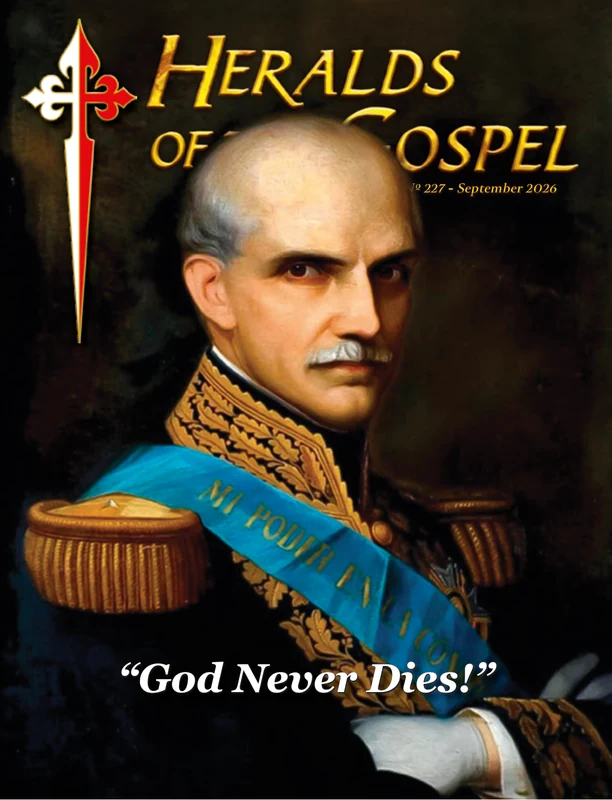
 Heralds of the Gospel Magazine, Vol. 20, nº 227, September 2026
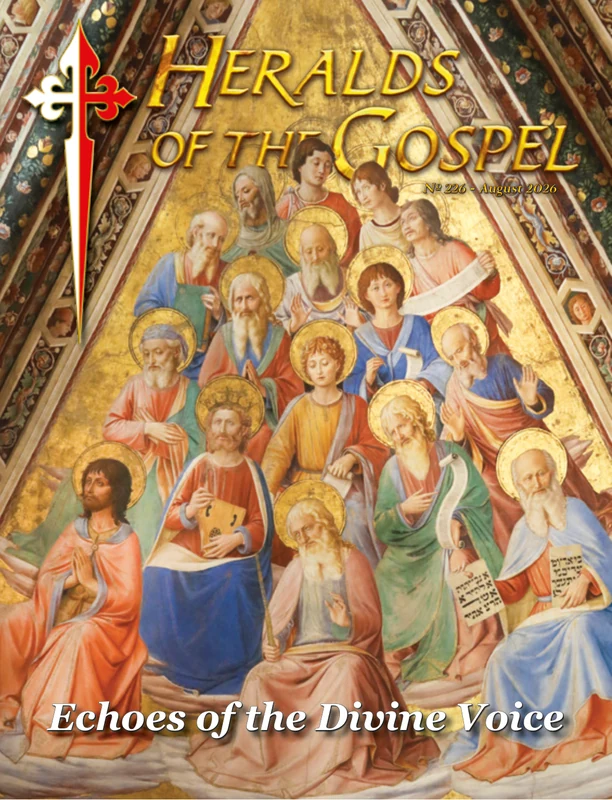 Heralds of the Gospel Magazine, Vol. 20, nº 226, August 2026
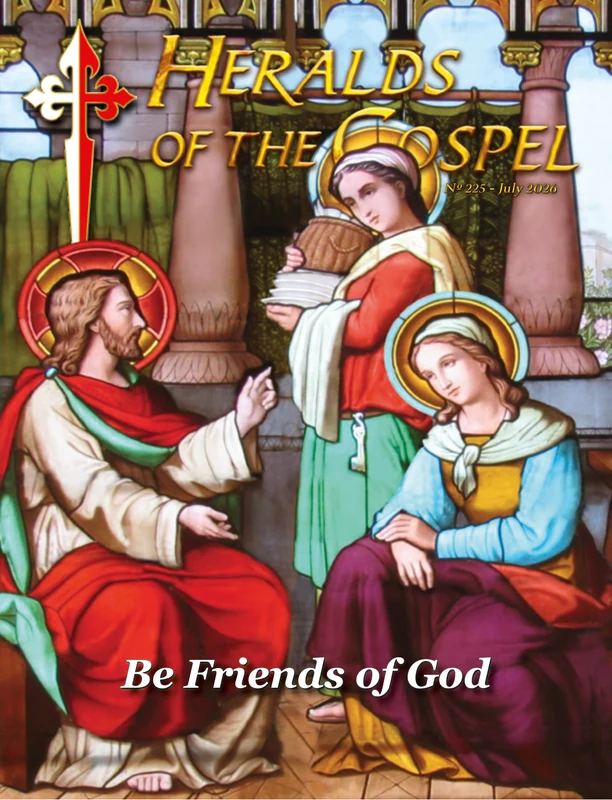 Heralds of the Gospel Magazine, Vol. 20, nº 225, July 2026
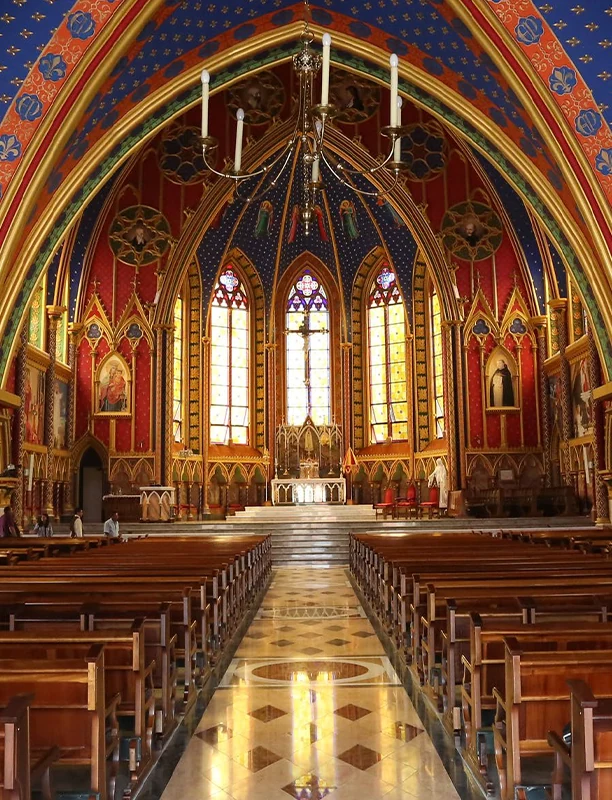 Who are the Heralds of the Gospel?
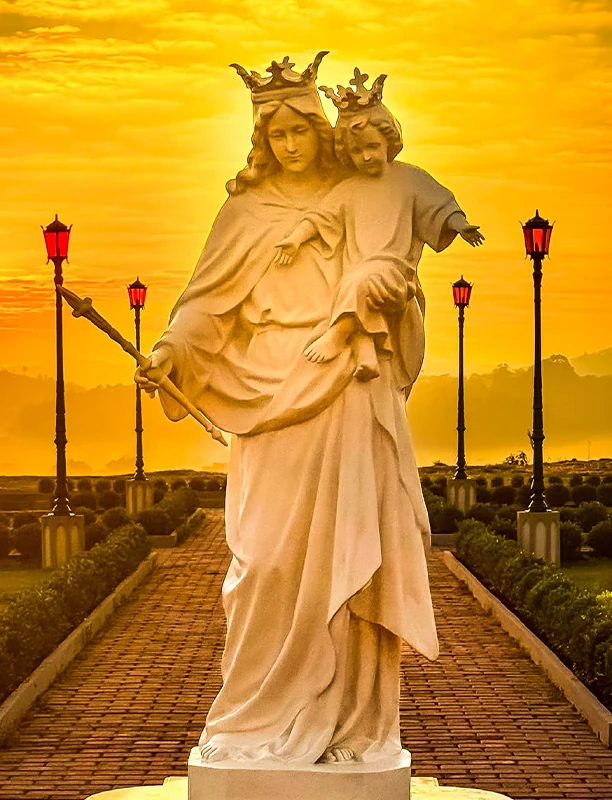 Help of Christians
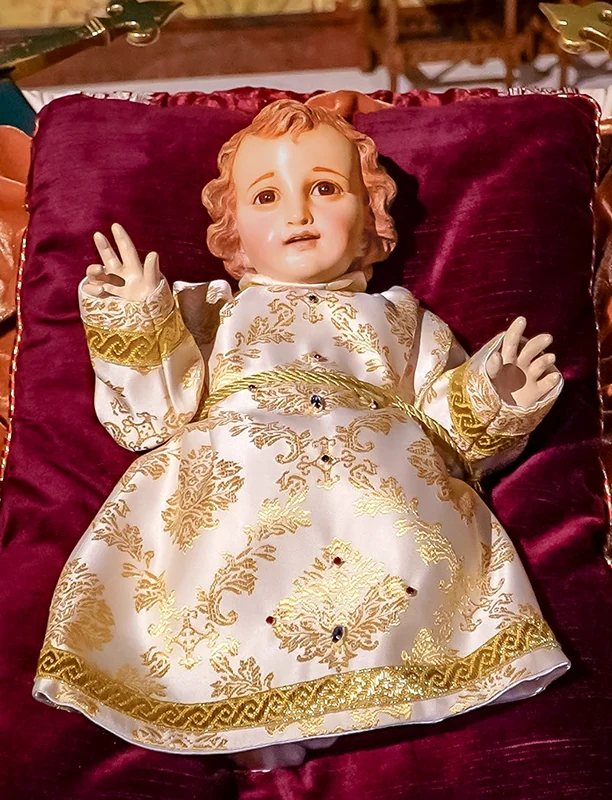 Christmas Carols






By some mysterious design, this aspect of His own Person seems to have been the one that Our Lord has most wanted to manifest in recent centuries: “meek and humble of heart.” Since the 17th century, when He appeared to St. Margaret Mary Alacoque, the Sacred Heart of Jesus has not ceased to reveal the mystery of His infinite mercy to chosen souls. And the beginning of the 20th century brings us an impressive example of this reality.St. Faustina was one of the souls chosen by God to reveal to the world the mysterious and infinite depths of mercy of the Sacred Heart of Jesus
A chosen soul
Helena Kowalska was born in the little village of Głogowiec, Poland, the third of ten children in a simple labouring family. From the age of seven, she felt the call to a religious vocation, but her parents opposed it. She also tried to hide this divine call in her own soul, resigning herself to remaining in the world. However, prompted by a vision of the suffering Jesus and His words of rebuke in questioning her: – “How long shall I put up with you and how long will you keep putting Me off?”1 – she made a firm resolution to enter the convent.
The image of the Merciful Jesus
At a certain point, Our Lord expressed to her that He wanted that an image of Himself be painted, and that a liturgical feast, a chaplet and a novena be established, all in honour of Divine Mercy. About the vision she had of the image on February 22, 1931, Faustina writes: “In the evening, when I was in my cell, I saw the Lord Jesus clothed in a white garment. One hand [was] raised in the gesture of blessing, the other was touching the garment at the breast. From beneath the garment, slightly drawn aside at the breast, there were emanating two large rays, one red, the other pale. In silence I kept my gaze fixed on the Lord; my soul was struck with awe, but also with great joy. After a while, Jesus said to me, ‘Paint an image according to the pattern you see, with the signature: Jesus I trust in You. I desire that this image be venerated, first in your chapel, and [then] throughout the world. I promise that the soul that will venerate this image will not perish. I also promise victory over [its] enemies already here on earth, especially at the hour of death. I Myself will defend it as My own glory.’”2Our Lord asked the Saint for the painting of an image according to the vision she was shown, promising special graces to those who venerate it

Two rays that shield souls
Regarding the two rays, Jesus communicates their meaning to St. Faustina, who writes in her diary: “The pale ray stands for the Water which makes souls righteous. The red ray stands for the Blood which is the life of souls. These two rays issued forth from the very depths of My tender mercy when My agonized Heart was opened by a lance on the Cross. These rays shield souls from the wrath of My Father. Happy is the one who will dwell in their shelter, for the just hand of God shall not lay hold of him.”4 The water that justifies souls is Holy Baptism, and the Blood recalls the Eucharist, which gives life to the soul. These two Sacraments are indispensable for every Catholic: the first opens the door to divine filiation, configuring us to Christ, and the second constitutes the source and summit of the Church’s life. It is through the reception of the Sacrament of the Altar that we perfect all that we received in Baptism.5The overflow of God’s love stamped on an image
Now, what was the Divine Redeemer’s deepest intention in having this image painted? He wanted to imprint on a canvas that which overflowed from His Heart: mercy. By contemplating the painting, people would remember Jesus’ promises and abandon themselves to Him with greater confidence. Our Lord associated this image with special promises of salvation, of great progress in the spiritual life and of a holy death, as well as other gifts that people might ask of Him: “By means of this image I shall be granting many graces to souls; so, let every soul have access to it.”6 And St. Faustina managed to fulfil Jesus’ wishes. During the triduum that preceded the closing of the Jubilee of the Redemption of the World, from April 26 to 28, 1935, the image, painted by the artist Eugeniusz Kazimierowski, was exhibited to the public for the first time at the top of a window in Ostra Brama – one of Vilna’s city gates and an important pilgrimage centre – and was seen by everyone. By “coincidence”, this solemnity fell on the Sunday after Easter, on which the Feast of Mercy was to be celebrated according to Jesus’ request to His confidante.7The Feast of Mercy
But Our Lord wanted an official feast in honour of His Divine Mercy. The Saviour revealed His wishes in this regard on a number of occasions:“I desire that the Feast of Mercy be a refuge and shelter for all souls, and especially for poor sinners. On that day the very depths of My tender mercy are open. I pour out a whole ocean of graces upon those souls who approach the Fount of My Mercy. The soul that will go to Confession and receive Holy Communion shall obtain complete forgiveness of sins and punishment. “On that day all the divine floodgates through which graces flow are opened. Let no soul fear to draw near to Me, even though its sins be as scarlet. […] Souls perish in spite of My bitter Passion. I am giving them the last hope of salvation; that is, the Feast of My Mercy. If they will not adore My mercy, they will perish for all eternity.”8 He also desired that priests preach about mercy from the pulpits on that day. Souls should feel, through the words of the holy ministers, the extent of God’s forgiveness for all sinners.The Feast and the chaplet of Divine Mercy were further means established by Our Lord by which to pour out His pardon upon sinful humanity
The Chaplet and Novena of Divine Mercy
On September 13 and 14, 1935, Jesus dictated the Chaplet of Mercy as a means of appeasing God’s wrath. The Lord Himself taught what should be prayed: “Eternal Father, I offer You the Body and Blood, Soul and Divinity of Your dearly beloved Son, Our Lord Jesus Christ for our sins and those of the whole world; for the sake of His sorrowful Passion, have mercy on us.”9 The prayer, which forms the heart of the Chaplet of Mercy, was to be recited according to the division revealed to God’s confidante:
“This prayer will serve to appease My wrath. You will recite it for nine days, on the beads of the rosary, in the following manner: First of all, you will say one Our Father and Hail Mary and the I Believe in God. Then on the Our Father beads you will say the following words: ‘Eternal Father, I offer You the Body and Blood, Soul and Divinity of Your dearly beloved Son, Our Lord Jesus Christ, in atonement for our sins and those of the whole world.’ In conclusion, three times you will recite these words: ‘Holy God, Holy Mighty One, Holy Immortal One, have mercy on us and on the whole world.’”10
Prayed with sincerity and humility, this prayer obtains abundant graces of conversion and a good death, which is necessary for every man in this land of exile.
The prayer, which forms the heart of the Chaplet of Mercy, was to be recited according to the division revealed to God’s confidante:
“This prayer will serve to appease My wrath. You will recite it for nine days, on the beads of the rosary, in the following manner: First of all, you will say one Our Father and Hail Mary and the I Believe in God. Then on the Our Father beads you will say the following words: ‘Eternal Father, I offer You the Body and Blood, Soul and Divinity of Your dearly beloved Son, Our Lord Jesus Christ, in atonement for our sins and those of the whole world.’ In conclusion, three times you will recite these words: ‘Holy God, Holy Mighty One, Holy Immortal One, have mercy on us and on the whole world.’”10
Prayed with sincerity and humility, this prayer obtains abundant graces of conversion and a good death, which is necessary for every man in this land of exile.
“An era in which the Sacred Heart of Jesus will most shine”
On October 5, 1938, Sister Mary Faustina of the Blessed Sacrament gave her soul to the Creator after enduring great suffering. With her holocaust, the cult of mercy began to spread and the Congregation of the Sisters of Merciful Jesus was born.11
In fact, mankind has never needed mercy as much as it does today. Our founder Msgr. João once commented: “The Sacred Heart of Jesus has a thirst to forgive and an infinite capacity to do so. But in order to do so, He needs people who are ‘in error, like St. Paul, in order to forgive them. […] And that is why the historical era in which the Sacred Heart of Jesus will shine most brightly will be ours.”13 This is the only condition that this Heart of goodness imposes in order for us to be objects of His love: to present our errors and run to Him with boundless trust, certain that He will receive us with overflowing mercy. ◊The Sacred Heart of Jesus thirsts to grant His forgiveness, and demands only that we show Him our errors and run to meet Him with complete trust
Notes
1 ST. FAUSTINA KOWALSKA. Diary, n.9. 3.ed. Stockbridge, MA: Marian Press, 2008. The other quotations from the Diary, all transcribed from the same edition, will be indicated only by the internal numbering of the work.
2 Idem, n.47-48.
3 Idem, n.49-50.
4 Idem, n.299.
5 Cf. BENEDICT XVI. Sacramentum caritatis, n.17.
6 ST. FAUSTINA KOWALSKA, op. cit., n.570.
7 Cf. Idem, n.89.
8 Idem, n.699; 965.
9 Idem, n.475.
10 Idem, n.476.
11 Among the revelations made by Our Lord to St. Faustina was that of founding a congregation whose aim would be to spread the cult of Divine Mercy. Sr. Faustina was unable to fulfil this wish of Jesus in her lifetime, but after her death, through the efforts of Blessed Michael Sopoćko, her confessor and spiritual director, the congregation began to develop and on August 2, 1955 it was canonically erected by the apostolic administrator of Gorzów Wielkopolski, Fr. Zygmunt Szelążek.
12 ST. JOHN PAUL II. Homily, 30/4/2000.
13 CLÁ DIAS, EP, João Scognamiglio. Homily. Caieiras, 12/9/2009.