 Heralds of the Gospel Magazine, Vol. 20, nº 227, September 2026
 Heralds of the Gospel Magazine, Vol. 20, nº 226, August 2026
 Heralds of the Gospel Magazine, Vol. 20, nº 225, July 2026
 Who are the Heralds of the Gospel?
 Help of Christians
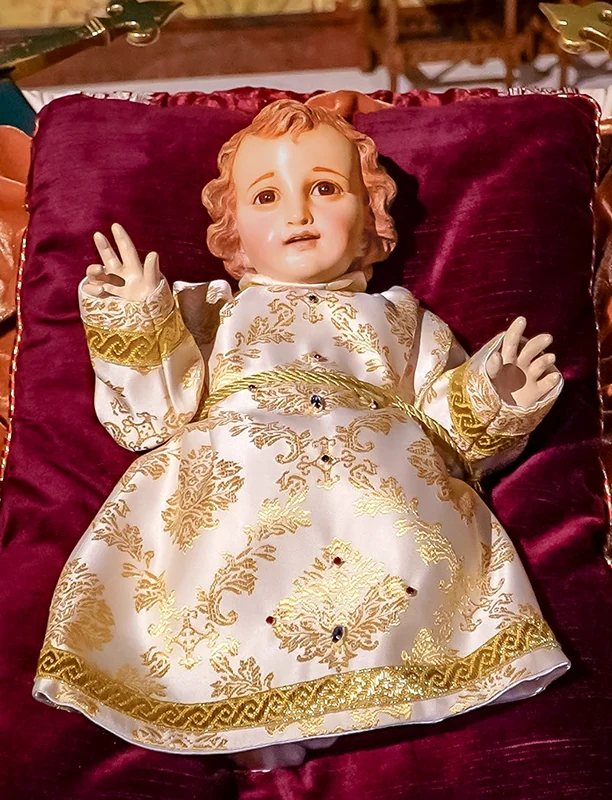 Christmas Carols









The concept of authority needs to be rectified
This story can leave a certain type of revolutionary mentality astounded. In fact, in the world, at school and even in our own families, our generation is instilled with a sense of dread towards any authority, making it extremely difficult to understand mercy. For example, when a child makes a mistake, the temperamental reaction of those in a superior position is usually to criticize and want to punish. Consequently, young people grow up with a psychological trauma and tremendous insecurity, to the point where if they make a mistake, they are easily discouraged and fall into pessimism, thinking that there is no solution for their life. Because the idea that is harboured in their soul is that God, being infinitely more than those who brought them up, will also trample them underfoot, wipe them out and destroy them if He finds any fault in them. And that is simply not true! A soul formed in this way has never come to know Our Lord Jesus Christ. That is why Dr. Plinio used to take the story of that little girl as an example, to convince people of the benevolence of the Sacred Heart of Jesus towards those who present themselves to Him as miserable; because it was when the mother acknowledged that her daughter had a clubfoot, as if asking for mercy, that the other lady decided to adopt her. In the same way, certain weaknesses move God in a special way to adopt us as His children.Because of a certain revolutionary mentality, our generation encounters an enormous difficulty in comprehending mercy
It is therefore necessary to reconstruct human psychology in the right way, so that when faced with an authentic authority set up by God, the normal reaction is one of complete trust. In holy people, the motive for mercy is not based on the virtue or merits of the other person, but comes from an “instinct” that loves because it wants to love, and is moved by shortcomings to help fix them! When someone fails out of weakness – and not out of malice or hatred of God, as in the case of a recalcitrant sinner – he shows that he is not strong enough and therefore needs to be the object of kindness. St. Thomas Aquinas1 raises the question as to which is the greatest of the virtues, and shows that in us creatures it is charity, because through it we are united to God, our Superior. But in God, who has no one above Himself, it is mercy.God is moved by our deficiencies, for someone who fails out of weakness shows that he lacks strength, and therefore needs to be the object of kindness
Love for the miserable
In fact, the Latin word misericordia comes from the composition of two terms: miser – miserable, and cor – heart, because of the relationship between the latter and affective sentiments. In other words, mercy is love for the miserable. Why? Precisely because of their misery.
Forget your faults and love with joy
That is why we must leave Confession with the absolute certainty that the moment the priest, lending his larynx and his voice to Our Lord, said “I absolve you of your sins in the name of the Father, and of the Son and of the Holy Spirit,” we were forgiven by Jesus Christ Himself, who promised: “If you forgive the sins of any, they are forgiven; if you retain the sins of any, they are retained” (Jn 20:23). And not only does He forgive us, but He no longer remembers our faults, as we find in that famous passage from the prophet Micah: “Who is a God like Thee, pardoning iniquity and passing over transgression for the remnant of His inheritance? He does not retain His anger for ever because He delights in steadfast love. He will again have compassion upon us, He will tread our iniquities under foot. Thou wilt cast all our sins into the depths of the sea” (7:18-19). Or as the Psalm says: “The Lord is merciful and gracious, slow to anger and abounding in steadfast love. He will not always chide, nor will He keep His anger for ever” (103:8-9).
So it is with us: the best way to progress in the spiritual life is to love! The more we love, the higher we will climb. And we must realize that when we have the misfortune of doing something wrong, and we kneel down to beat our breast – saying like the leper in the Gospel: “Lord, if you will, you can make me clean” (Mt 8:2) – the Sacred Heart of Jesus will rejoice, because He takes pleasure in converting someone who is miserable and, in this way, accomplishing something wonderful in us that would never be done if we were completely faithful. What a mystery of unimaginable love! Blessed are the “clubfeet”! Blessed is the “lame leg” that provides us with the easiest way to climb to the pinnacles of holiness! Using the phrase of an authoritative theologian, we might exclaim: “Blessed is sin, which has revealed to us, like nothing else, the incomparable love of God!”3The Sacred Heart of Jesus takes pleasure in curing and converting the miserable, thereby accomplishing something wonderful in them
Two paths: despair or confidence
In this sense, let us consider two sins that were committed on the same night: Judas betrays and Peter denies… Ah, precisely Peter, the Apostle who loved Jesus the most, who had promised never to abandon the Master! He, therefore, was the one who sinned the most after Judas, because the others ran away, but he formally denied Him, and three times! Nevertheless, Judas despairs and Peter obtains forgiveness. Why? Because he knew how to fix his gaze on the eyes of the Lord (cf. Lk 22:61-62). If Judas, too, after his betrayal, had sought out Our Lord on the Cross and, even without saying anything, only asked for forgiveness with sorrow deep within his soul, Jesus would have been capable of detaching His hand from the nail and saying: “My son, go, your sin is forgiven!”
Let us trust therefore in this goodness and forgiveness. We should not be disheartened by our faults and imperfections, but consider this very important point, which I emphasize incisively: our miseries win Our Lady’s compassionate gaze and move her to love us even more. Therefore, those who suffer under the weight of their faults: know that the Immaculate Heart of Mary groans even more to obtain for you the grace of forgiveness and the extraordinary liberality of Our Lord Jesus Christ. ◊Those who suffer under the weight of their faults: know that the Immaculate Heart of Mary sighs to obtain for you the grace of pardon
Excerpts from oral expositions given between 1992 and 2009
Notes
1 Cf. ST. THOMAS AQUINAS. Summa Theologiæ. II-II, q.30, a.4.
2 Cf. SISTERS OF THE VISITATION. Sister Benigna Consolata Ferrero. Washington, DC: Georgetown Visitation Convent, 1921, p.71.
3 CABODEVILLA, José María. Discurso del Padrenuestro. Ruegos y preguntas. Madrid: BAC, 1971, p.319.
4 MENÉNDEZ, RSCJ, Josefa. Un llamamiento al amor. 7.ed. Madrid: Religiosas del Sagrado Corazón, 1998, p.266; 405-406.