 Heralds of the Gospel Magazine, Vol. 20, nº 227, September 2026
 Heralds of the Gospel Magazine, Vol. 20, nº 226, August 2026
 Heralds of the Gospel Magazine, Vol. 20, nº 225, July 2026
 Who are the Heralds of the Gospel?
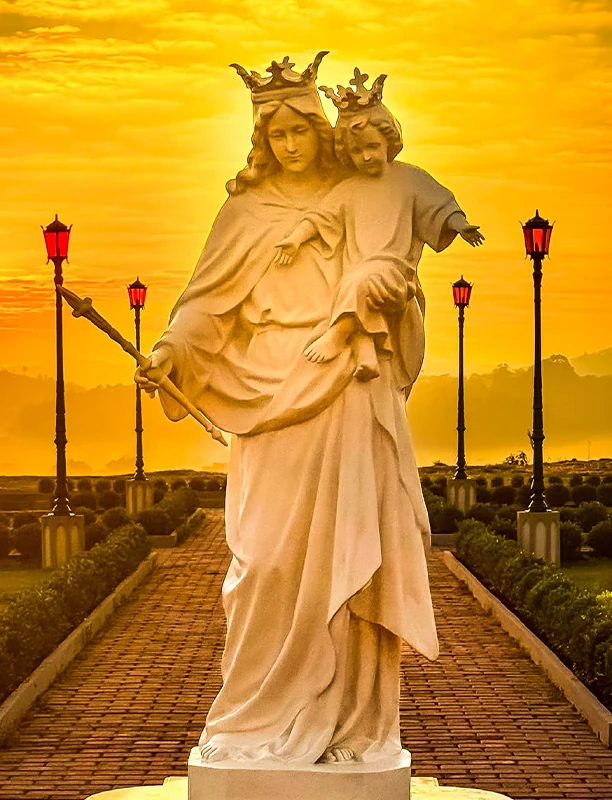 Help of Christians
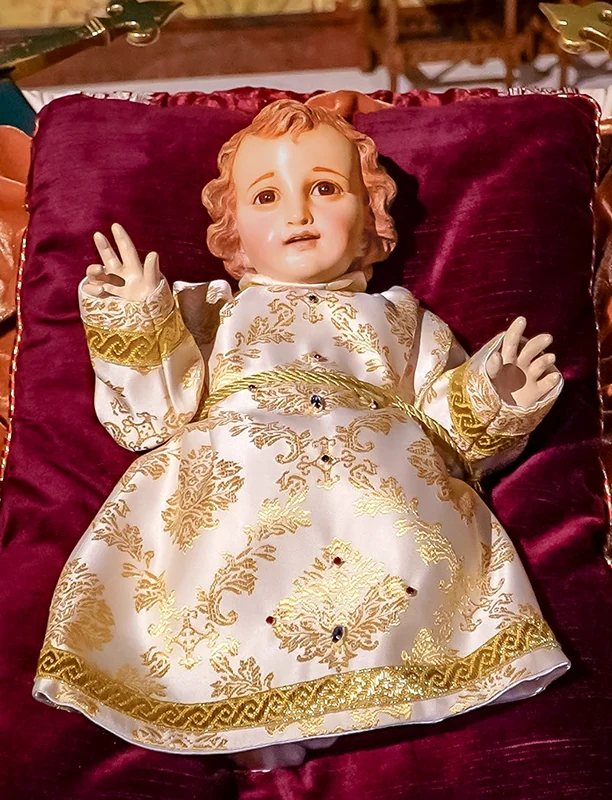 Christmas Carols






Source of Catholic intellectual life
Surpassing not only the human wisdom of the pagan philosophers, but the very wisdom of the Doctors of the Church who preceded him, he composed, among other works, the Summa Theologica, in which he catalogued all his victories over heresy, ignorance or sin. His doctrine has always been so pure that Holy Church points to it as the indispensable source of all truly Catholic intellectual life. If there was one intellectual who never bore the least taint of heresy, that intellectual was St. Thomas Aquinas. His Catholic sense was prodigious. First, he never clashed with the truths already defined by the Church in his time. Then, he resolved an endless series of questions on which the Holy Church had not yet pronounced herself, preparing and hastening, with his solution, the infallible pronouncement of the Bride of Jesus Christ. Finally, the characteristic and constant note of his life was such a submission to Catholic doctrine that, even if the Church should later define some truth contrary to that which St. Thomas taught, he would immediately make himself the humblest, the most loving and fervent advocate of the thought he had opposed and the most unyielding opponent of the error he had taught as truth.Admirable Catholic sense
Thus, St. Thomas fully realized the three degrees of Catholic sense. There are Catholics who think differently from the Church and whose faith is so weak that it is only with difficulty that they submit to her determinations. There are others who have no reluctance in admitting what the Church teaches, but who, when faced with a given problem, have difficulty reaching the true solution unless they are previously informed of Catholic thought. Finally, the highest degree consists in accepting all that the Church teaches readily and with loving ease, in being so imbued with the spirit of the Church that one thinks as she does, even though for the moment one does not know her pronouncement on a question. Ultimately it means thinking about matters that the Church has not yet defined in such a way that, when she does define them, one is ready to modify one’s opinion – which, in fact, will seldom be necessary, because one will have been able to intuit the Church’s thought in the great majority of cases. Thus, if there is one virtue in St. Thomas that we should admire and try to imitate, and which we should earnestly seek to obtain from God through the great Doctor, it is the virtue of Catholic sense.To detest heresy, as chaste souls detest impurity
We all know how we should love purity, and the magnificent promise the Lord attaches to it in the Sermon of the Beatitudes. Everyone is aware of the ardent predilection with which the Heart of Jesus loves those who have never stained themselves with the sin of impurity. To understand what purity means to Our Lord, it is enough to consider the love He bore Our Lady and St. John the Evangelist, the virginal Apostle. St. Thomas with the “Summa contra Gentiles” - Monastery of St. Dominic, Lima (Peru)
Unconditional obedience to the Throne of St. Peter
It is futile, however, to remain in generalities. In the age of confusion in which we live, it is not enough to speak of submission to the Church. It is necessary to be explicit, and to speak directly of papal infallibility. The virginal purity of our intelligence can only come from our loving and unconditional obedience to the Throne of St. Peter. If we are entirely with the Pope, we are entirely with the Church, with Jesus Christ and therefore with God. On the feast of the great Doctor, may our Catholic sense find support in ever more vigorous graces, and may these graces find, in our will, an ever more enthusiastic cooperation; this should be the practical conclusion of our meditation. ◊Taken from: Meditation on the feast of St. Thomas. In: Legionário. São Paulo. Year XIII. N.391 (Mar. 10, 1940); p.2