 Heralds of the Gospel Magazine, Vol. 20, nº 227, September 2026
 Heralds of the Gospel Magazine, Vol. 20, nº 226, August 2026
 Heralds of the Gospel Magazine, Vol. 20, nº 225, July 2026
 Who are the Heralds of the Gospel?
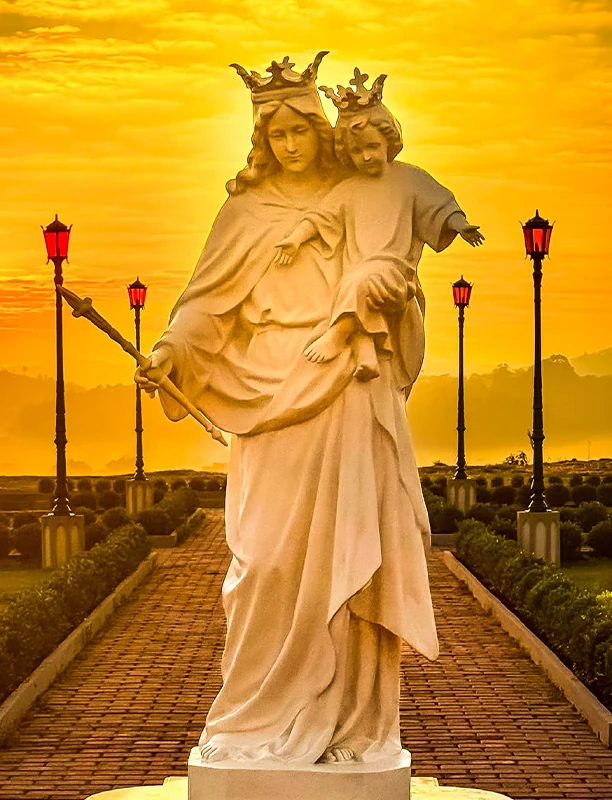 Help of Christians
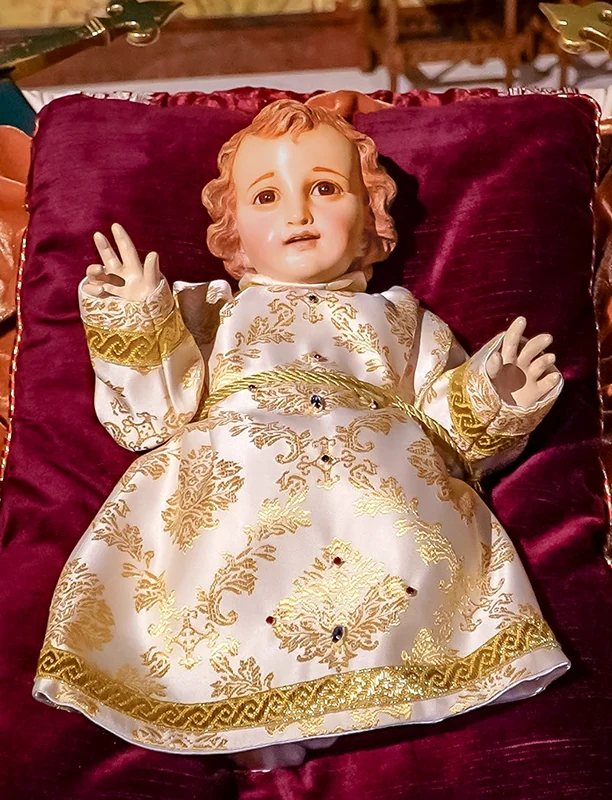 Christmas Carols






April 12 – 2nd Sunday of Easter
Among the countless eloquent expressions that French ingenuity has devised throughout the centuries to express certain attitudes of the human spirit, we find the following: “Si j’étais le Bon Dieu… – If I were the Good God…”
This refers to the age-old temptation that the human soul has to judge its own conceptions as superior to those of the Almighty Lord, a tendency that would lead us, if by some absurdity this were given to us, to “write” a history different from the one God intended.
This thought may well occur to us when we analyse the beginnings of the Church, as reflected in this Sunday’s Liturgy.
In the Gospel we find that handful of men, who were to preach the Gospel to every creature (cf. Mk 16:15), crushed by discouragement and fear, enclosed within the four walls of the Upper Room, lacking a communion of criteria – as demonstrated by the attitude of St. Thomas in doubting the testimony of his companions (cf. Jn 20:25) and fragile in faith…
How we would have imagined a more “perfect” nascent Church!
However, Our Lord gives us a lesson in omnipotence. Just as He entered that place despite the doors being “locked, for fear of the Jews” (Jn 20:19), there would be no insurmountable obstacle for Him when it came to guiding in its first steps the institution He had founded.
This is well proven by the first reading, in which we see that same little seed, seemingly so defective, after Pentecost.
The disciples’ cowardice turned into “exultation and sincerity of heart” (Acts 2:46), so that they came to be esteemed by the very Jews who had previously frightened them.
Disharmony gave way to “communal life,” by which “all who believed were together and had all things in common” (Acts 2:42, 44).
And those doors, closed by human fears and a narrow spirit of partisanship, opened with such faith, boldness, and desire for conquest that “every day the Lord added to their number those who were being saved” (Acts 2:47).
Yes… How different our criteria are from God’s! How different “our” foundation of the Church would have been from that which Our Lord Jesus Christ desired.
He wanted to demonstrate to us that it is normal for every divine work to be marked in its beginning and, above all, throughout its development, by difficulty and suffering, just as, in the second reading, St. Peter teaches the first Christians: it is “for a little while you may have to suffer through various trials” (I Pt 1:6).
In this way, the contrast between human contingency and divine omnipotence gives God the glory that is due to Him.
A beautiful lesson for us who so often choose, to guide us in our lives, criteria that are too personal and divorced from the divine designs.
Let us, then, analyse with supernatural eyes the circumstances that we must undergo, especially when they hinder us, considering that God always sends trials to sanctify us, as He did with His nascent Church and throughout all the centuries.