 Heralds of the Gospel Magazine, Vol. 20, nº 227, September 2026
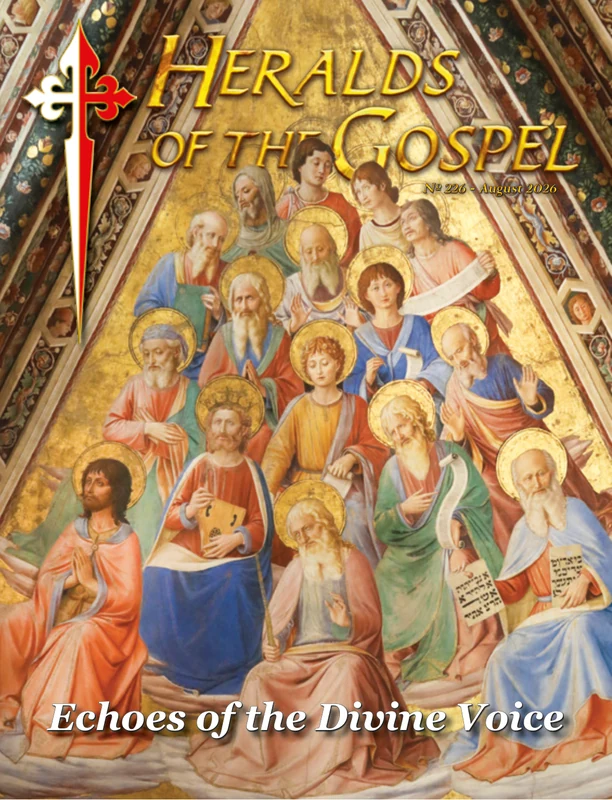 Heralds of the Gospel Magazine, Vol. 20, nº 226, August 2026
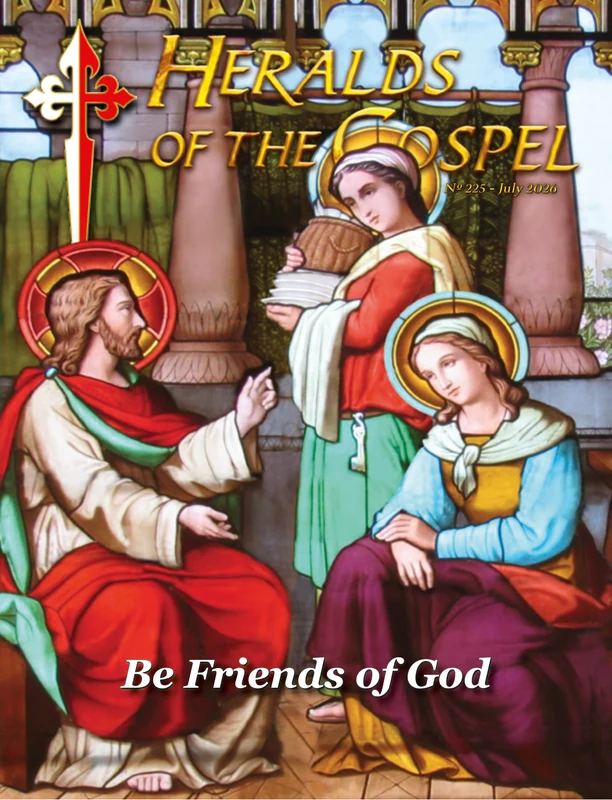 Heralds of the Gospel Magazine, Vol. 20, nº 225, July 2026
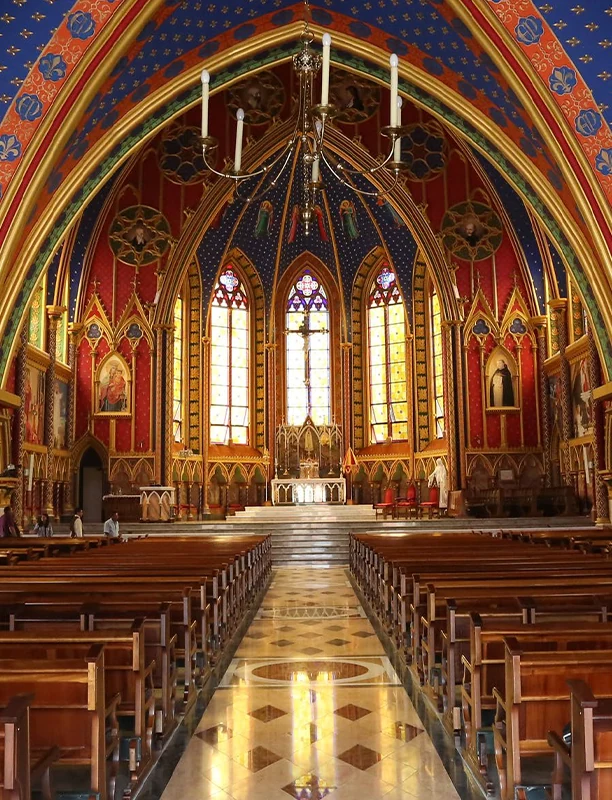 Who are the Heralds of the Gospel?
 Help of Christians
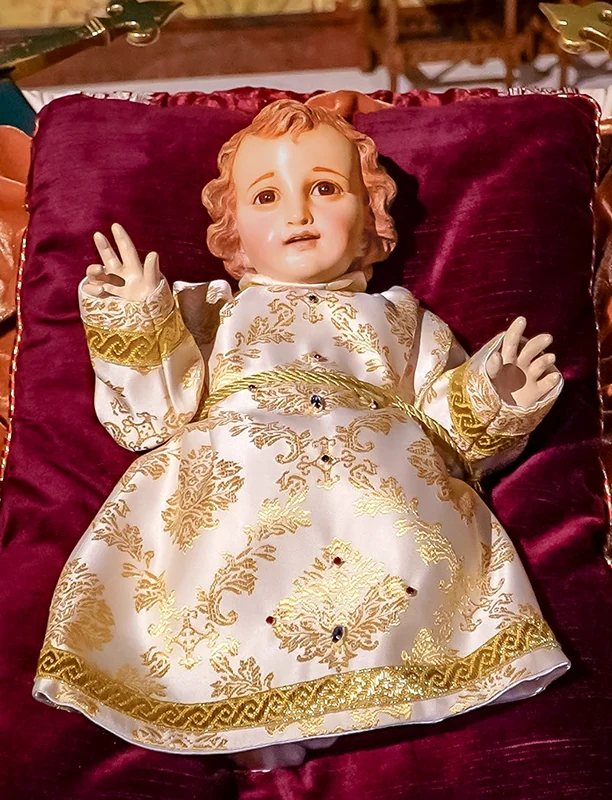 Christmas Carols







I noticed that when priests consecrate the Host, they drop a fragment from it into the
chalice. I would like to know what this means according to the Church and what your
impression was the first time you did it.
Javier Acuña Coello – Via email
This gesture originated in the early centuries of the Christian era. The rite, initially called fermentum, was an expression of unity between the Masses celebrated by the priest and the Bishop, especially that of Rome, the Pope. The Pope would send, through acolytes, a fragment of the Host he had consecrated, so that the priests could place it in the chalice they had consecrated, thus expressing that it was the same Eucharist.
Over time, this practice came to suggest other interpretations, without losing its original meaning of communion. It came to be called commixtio, that is, the mixing of the small fragment of the Holy Host inserted by the priest into the chalice with the consecrated wine. Its spiritual meaning is contained in the prayer quietly recited by the presider during the recitation of the Lamb of God: “May this mingling of the Body and Blood of our Lord Jesus Christ bring eternal life to us who receive it.”
By consecrating the host and wine separately, the Liturgy signifies the separation of the Body and Blood of Christ, that is, His immolation, sacramentally renewed – in an unbloody manner – in the Holy Mass.
However, Jesus Christ died and rose again, and it is the Risen Lord whom we receive in Communion. Therefore, when the priest performs the commixtio, he points to the Resurrection of the Saviour and our own, as suggested by the abovementioned prayer.
Personally, not only on the occasion of the first Mass, but in all those I have celebrated, the commixtio is a moment of special intimacy between the priest and Our Lord in the Blessed Sacrament.
Can a person who was baptized in an evangelical church, and who desires in their heart to follow the Catholic religion, be baptized through the catechumenate?
Lucio Couguil – Via email
Dear Lucio, essentially your question is: is Baptism administered by another Christian denomination considered valid by the Catholic Church?
Canon 869 of the Code of Canon Law clearly states that Baptisms conferred in non-Catholic ecclesial communities may be valid or invalid. Therefore, it is necessary to examine the matter – natural water –, the formula used – “[Name], I baptized you in the name of the Father and of
the Son and of the Holy Spirit” – and the minimum faith necessary for the realization of what the Church intends with the Sacrament – belief in the mystery of the Trinity, in the divinity of Our Lord Jesus Christ and in the mystery of Redemption.
The Catechism of the Catholic Church, in number 1256, teaches that “In case of necessity, any person, even someone not baptized, can baptize, if he has the required intention. The intention required is to will to do what the Church does when she baptizes, and to apply the Trinitarian baptismal formula.”
Given the seriousness of this question, the Church in the different countries, after careful analysis, determines in which Christian community’s Baptism is valid, in which it is dubious, and finally, in which it is certainly invalid.
For this reason, I advise you to seek guidance from your parish priest. If the validity of Baptism in another Christian denomination is confirmed, in the case of an adult, he will have to receive a simple Rite of Admission into Full Communion with the Catholic Church. In addition, if he is properly prepared, he may also receive the Sacraments of the Eucharist and Confirmation.
On the other hand, if the validity of the Baptism is doubtful, the Sacrament may be administered conditionally; however, if it is found to be truly invalid, Baptism will be administered in the usual manner.