 Heralds of the Gospel Magazine, Vol. 20, nº 227, September 2026
 Heralds of the Gospel Magazine, Vol. 20, nº 226, August 2026
 Heralds of the Gospel Magazine, Vol. 20, nº 225, July 2026
 Who are the Heralds of the Gospel?
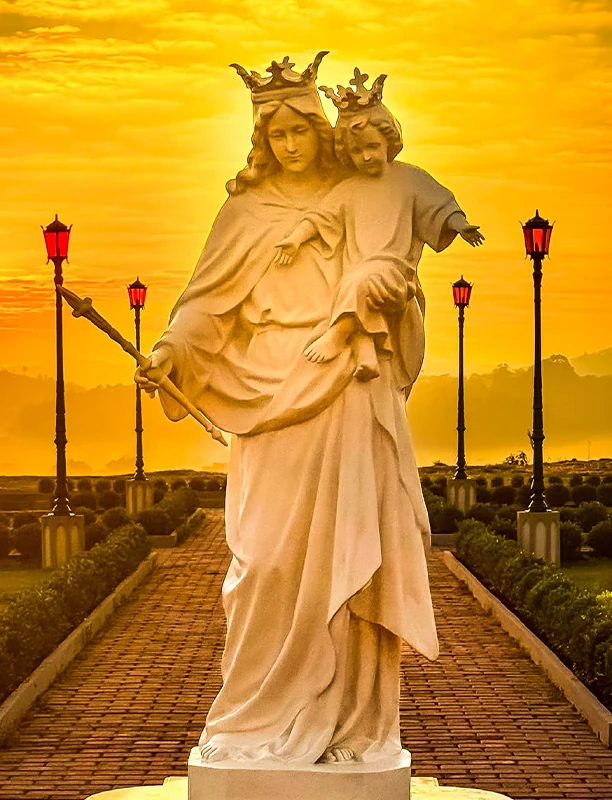 Help of Christians
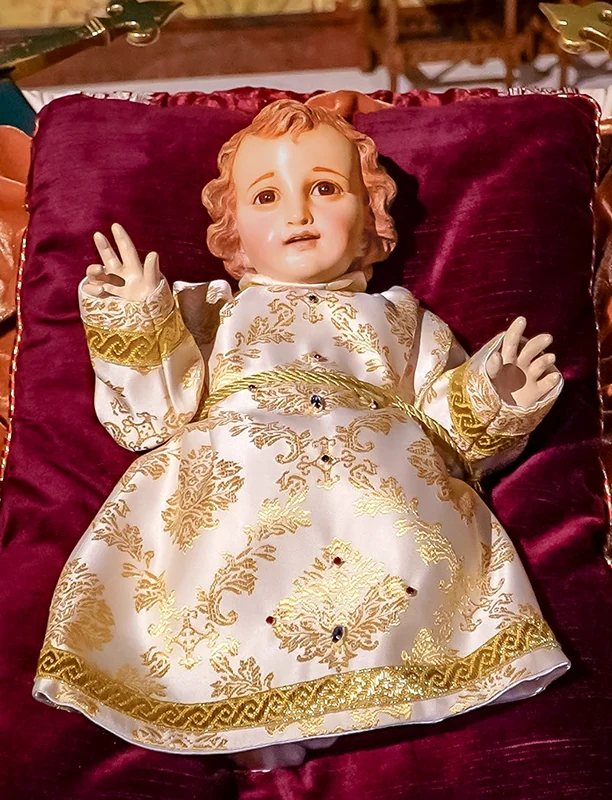 Christmas Carols








Born on April 22, 1876, on the first Saturday after the joys of Easter, Lucilia was the second of five children from the marriage of two cousins,1 Dr. Antônio Ribeiro dos Santos and Dona Gabriela Rodrigues dos Santos.
Descendants of old aristocratic families of São Paulo, Dona Gabriela and Dr. Antônio both counted “bandeirantes” 2 among their glorious ancestors.
Our Lady was her Godmother
On the twenty-ninth day of the month of June, in the year eighteen hundred and seventy-six, in this parish church, I baptized and anointed with the holy oils Lucilia, born on the twenty-second day of last April, the legitimate daughter of Dr. Antonio Ribeiro dos Sanctos and Dona Gabriela dos Sanctos Ribeiro. The godparents were Our Lady of Penha and Dr. Olympio Pinheiro de Lemos, all of this Parish.
Pastor: Angelo Alves d’Assumpção.
Thus reads Dona Lucilia’s baptismal entry in the parish registry of the main church of the city of Pirassununga. Following pious custom, her parents decided that she would be the goddaughter of the Queen of Heaven herself.
Throughout her long life, Dona Lucilia would always foster an affectionate and reverent devotion to her Godmother and would undertake several pilgrimages to the shrine of Our Lady of Penha, in the State of São Paulo, to confide to her the secrets of her tender heart.
The admiration of an upright soul
It was in 1873 that Dr. Antônio established himself with his family in Pirassununga to practice law there.
Decades later, when recounting childhood memories, Dona Lucilia would express her wonder at the contrast between the atmosphere of São Paulo society and that primitive rustic environment, competing for ground space with a tropical forest which was practically as wild as when Fr. Anchieta made his way through Brazil’s vast regions.
The placidness of little Pirassununga contributed to young Lucilia’s close observation and appreciation of her elders.
Her capacity to admire the qualities of others had its source in her virginity of soul, which she kept intact.
Reflecting on the inner qualities of those around her, she would instinctively mythicize them to such a point that her kindly eye was oblivious to anything that might not be virtuous.
Any faults she did notice in their conduct she deemed an exception. To her, these were like minute holes in a beautiful silken handkerchief; it was otherwise such fine silk…
A childhood illuminated by the figure of her father
Dr. Antônio was the object of her special enchantment and veneration. His wishes and preferences were law! The enthusiasm she cultivated for her father was not so much due to his natural qualities as to his virtues.
These values, so admired by little Lucilia would form her concept of existence; namely, that life should be woven with threads of outstanding dedication.
On the other hand, she gradually became aware that humanity in general was heading in a direction that clashed with this vision of the world.
Faced with this new perspective, her youthful soul would gradually become enriched with the lilac tones of suffering.
A family portrait illustrates this. Lucilia, yet a child, seems to be looking with sadness and little interest at the life that looms before her. While resigned, she seems to reject a world from which she did not expect much good, at that onset of the twentieth century.
The demise of the little lamb
It would be wrong to imagine that young Lucilia had any less admiration for her father’s sterner traits, including those applied to her own upbringing, than for his other qualities.
Until old age, she would tell the story of the beautiful little lamb she received as a present from her father. She used to wash and dry it, and would adorn it with colourful ribbons. She cared for it tenderly until the day that a slave respectfully confided to her:
“Little Sinhá,3 I would like to say something so you can prepare yourself. Sinhô [her father] is going to have the little lamb butchered tomorrow. I just wanted to let you know.”
She answered:
“But that’s impossible! You must be fibbing. Papa would never be so cruel!”
Smiling, he replied, “Little Sinhá, that is what is going to happen.”
Without wasting a moment, she went running to her father’s office, bathed in tears.
“Papa! Are you going to kill the little lamb? Did you really give this order? Can this possibly be true?”
“My daughter, it is true.”
“But why? He is so tame, so cute; I like him so much…”
“Don’t be naïve, Lucilia. One must face things as they are. This will help you to be rid of your sentimentality. Sentiment, yes; sentimentality, no.”
He was adamant. The next day, the little lamb was on the menu.
Dona Lucilia always saw this incident as proof of the goodness of her father, who used a hard remedy – overcoming even his own paternal affection – in order to cure her of the tendency toward sentimentalism in those days of romanticism.
The cloak of the gypsy chief
With scanty police patrols and almost non-existent public defence, the alarm shook up the whole of Pirassununga:
“The gypsies are coming! Lock up the children!”
The gypsies of those days practised a type of terrorism. They came to town peddling small merchandise, and when everyone was least expecting it, they would snatch one or two children and disappear.
If the family managed to recover the children, they found them mistreated, filthy, and sometimes sick.
While still a little girl, and panic-stricken at the thought of being kidnapped, Lucilia would observe the gypsies’ activities through a keyhole, in order to assess, at a distance, the intentions of her possible assailants.
It so happened, however, that Dr. Antônio had rendered legal services to a gypsy chief, who in turn became his friend and electoral campaigner. He started dropping by the office of Lucilia’s father, which was adjacent to the family residence.
Evidently, the intentions of a person who showed such goodwill were beyond suspicion, so the child began to lose her fear of this gypsy.
On one election day, when Dr. Antônio’s home and office teemed with political supporters, Lucilia discovered the chieftain’s cloak on the sofa in the foyer. It was a type of poncho lined with a red cloth which she thought very elegant.
Fascinated, she examined it closely, stroked it, and finally put it on, and began to promenade about the house with it.
Dona Gabriela was appalled when she saw her daughter wrapped in that cloak! She immediately removed it from her shoulders, warning her to never again touch so strange an object.
This quaint little episode exemplifies the ambience and the domestic adventures that marked that provincial life and filled Lucilia’s innocent childhood.