 November 2026, No. 229
 October 2026, No. 228
 September 2026, No. 227
 Who are the Heralds of the Gospel?
 Help of Christians
 Christmas Carols







The liturgical seasons we celebrate throughout the year allow the souls of the faithful to vividly experience the specific graces of the various events of salvation history commemorated in them.
Therefore, it is not merely – nor primarily – a mere recalling of past events, but rather a representation of them in the sense of making something once latent present again.
As we know, Advent points toward the event of the Nativity, as well as the Second Coming of the Lord – the Church’s great expectation.
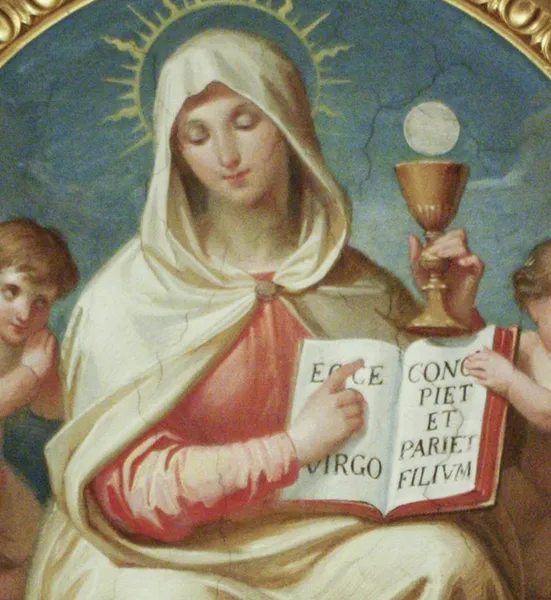
It is a deeply Marian season, for it was through Mary that Jesus came into the world – this world whose days will end at the close of time, when the Virgin’s Son comes to bring history to a close and judge the living and the dead.
Uncertainty is a striking characteristic of life in this valley of tears: unforeseen events, disappointments, dashed expectations, endless waits, or unpleasant surprises – all manner of contingencies.
Yet, in our daily lives, we possess one inescapable certainty: eternity awaits us, and will ultimately enfold us in its definitive embrace.
Indeed, we shall be placed either at the Supreme Judge’s right or left hand (cf. Mt 25:31–46), which implies only two options: elevation to Heaven to enjoy the beatific vision for all eternity, or the fatal plunge into hell. Tertium non datur: there is no third possibility.
Therefore, it is absolutely essential that we do not fail in our endeavour to attain glory; otherwise, we will have lived in vain, offending God and ruining His plan. It is a dilemma of utmost importance.
That is why this Sunday’s Gospel is so clear, concise, and insistent in urging us to keep unceasing watch, placing us in a state of constant vigilance.
Anyone who thinks that prayer alone suffices to obtain the graces we need from God is mistaken. In another passage of the Gospel, St. Mark himself records these words of the Lord: “Watch and pray that you may not enter into temptation; the spirit indeed is willing, but the flesh is weak” (14:38).
The well-known parable of the wise and foolish virgins offers a similar lesson (cf. Mt 25:1–13). Indeed, vigilance precedes the practice of prayer; the latter necessarily requires the caution of preparing the spirit so that prayer may be fruitful, rather than merely occasional or a matter of routine.
A lack of vigilance while awaiting the master – or, as another parable recounts, the failure to guard against the arrival of a thief (cf. Mt 24:43) – is what is highlighted in today’s Gospel:
“Watch, therefore; you do not know when the lord of the house is coming, whether in the evening, or at midnight, or at cockcrow, or in the morning. May he not come suddenly and find you sleeping” (Mk 13:35–36).
This state of being “asleep” refers not only to physical slumber but, above all, to a certain spiritual lethargy that weakens the spiritual faculties. It is a “sleep” often associated with relativism – a dictatorship that stifles spiritual combat and predisposes people to compromise with evil.
“Watch!” This is an invaluable counsel for every believer, every family, and every community. The Gospel for this First Sunday of Advent concludes: “What I say to you, I say to all: ‘Watch!’” (Mk 13:37).
“To all.” Therefore, it applies to you as well, dear reader of these reflections.