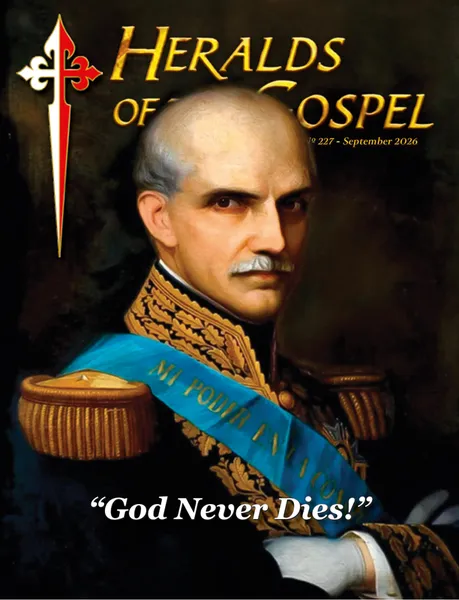
 Heralds of the Gospel Magazine, Vol. 20, nº 227, September 2026
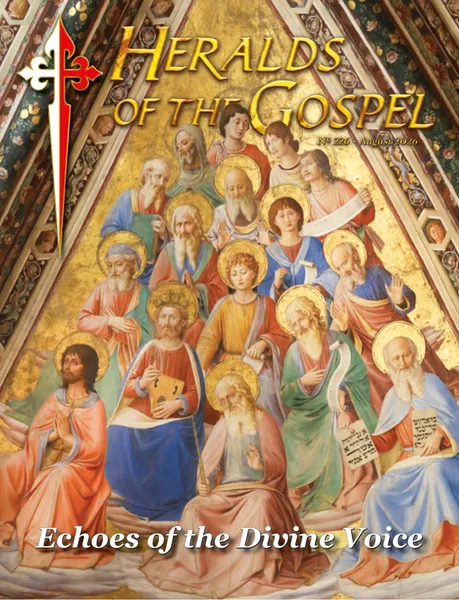 Heralds of the Gospel Magazine, Vol. 20, nº 226, August 2026
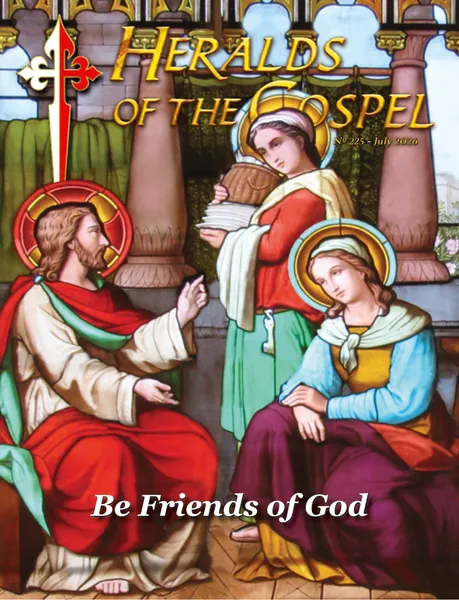 Heralds of the Gospel Magazine, Vol. 20, nº 225, July 2026
 Who are the Heralds of the Gospel?
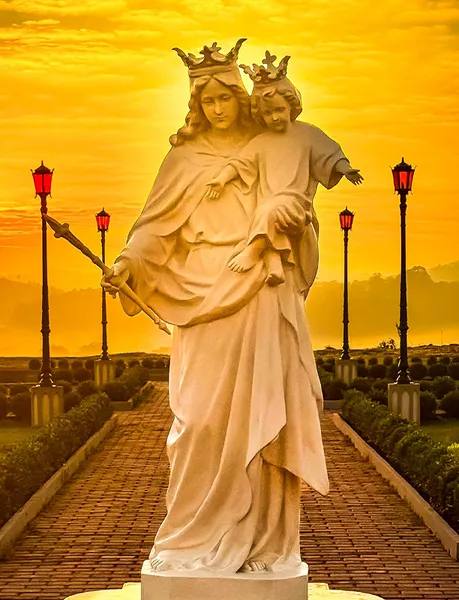 Help of Christians
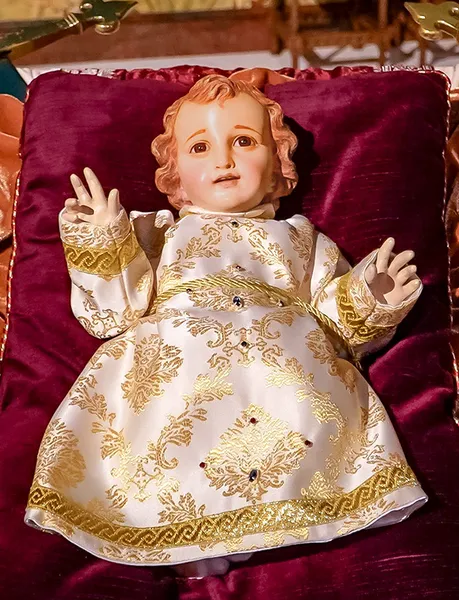 Christmas Carols








Stefan Zweig, the world-renowned Austrian writer, recounts in the preface to his book on Ferdinand Magellan what motivated him to study the adventures of the Age of Discovery and the Age of Exploration.
One day, comfortably settled on an ocean liner with all the amenities that a ship of that sort could offer, he was travelling to Argentina, where a group of friends awaited him. After seven or eight days at sea, the hours seemed endless and tedious to him.
As he observed the unhurried crawl of the hands on his watch, reflecting the ship’s slow progress across the sea, the famous writer was overcome by a sudden sense of shame. The mere comparison of his journey with that of a navigator from the Age of Discovery made him blush! He was on the most comfortable of crossings, aboard a splendid and luxurious ship, with every conceivable amenity. When the temperature dropped at night, all he had to do was press the button on the heater; when the weather became sweltering at midday, he had a fan and even a swimming pool at his disposal; the restaurant served appetizing dishes and exquisite drinks; if he wished to pass the time with some rewarding reading, there was a vast library; and there was no shortage of inviting areas for games and music.
In such comfortable surroundings, recalling the maritime expeditions of yesteryear was humiliating and even embarrassing for him: times when men like him would set sail in fragile caravels, determined to explore unknown seas, braving the elements and shortages of food and drinking water, on an adventure whose successful outcome was extremely uncertain.
An adventure of this magnitude was undertaken in 1610, by a young Jesuit priest named Peter Claver, who set out with the sole aim of saving souls.
“The hidden life”
Peter Claver was born in Verdú, Spain, on June 25, 1581. Some authors refer to the period between his birth and his profession of simple vows in the Society of Jesus, at the age of twenty-one, as his “hidden life”. This is due to the scarcity of information, documents and biographical accounts of his childhood and adolescence.
It is known, however, that the decisive event in his formation and the fulfilment of his vocation was his encounter with another member of the Society of Jesus, St. Alphonsus Rodríguez, who for forty-seven years held the humble position of porter at the Our Lady of Mount Zion School on the Spanish island of Mallorca.
A guide, master and role model
Alphonsus Rodríguez knew full well that holiness is the proper state of those who constantly do God’s will. Thus, the simplicity of his role, carried out with the utmost love of obedience, never constituted an obstacle for him to his highest ideal: to honour, love and serve the Creator.
Docility, submission and fidelity to his vocation characterized the man who would become Peter Claver’s mentor, guiding him along the path of imitating Christ.
So fruitful was the relationship between these two Jesuit saints that one of his biographers would affirm: “Without St. Alphonsus Rodríguez, St. Peter Claver could neither be explained nor would he have existed.”1 It is said that, when they met for the first time, the two embraced, unable to hold back their tears. It was St. Alphonsus who inspired, guided and even foresaw Peter Claver’s mission.
What was this mission?
Peter, “duc in altum”!
Peter Claver felt called to literally go out into deeper waters, following Our Lord’s mandate to the Prince of the Apostles: “Duc in altum!” (Lk 5:4). God was calling him to cross unknown seas and be a great fisher of men, in a continent full of difficulties.
However, it was not just an inner voice or prompting. His mission had been clearly expressed by St. Alphonsus Rodríguez, one day when the two were sitting in the shade of a tree in the schoolyard. His respected elder said to him: “How many idle people there are in Europe who could be apostles in America!” And, with tears in his eyes, he added:
“May the charity of God not fail to sail those seas that human avarice has already crossed. Are not those souls also worth the life of a God? Did He not also die for them? Ah, Peter, my most beloved son, why do you not also go and gather the Blood of Jesus Christ?”
For Peter Claver, it was evident that God was manifesting his will through these words of his teacher. However, speaking of America in those times caused astonishment even among the most daring missionaries. For this very reason, Alphonsus Rodríguez did not fail to encourage him: “He who does not know how to suffer does not know how to love, and there awaits you… Ah! If you only knew the great treasure that awaits you!”
A short time later, at the age of twenty-nine, Peter set sail from the port of Seville, bidding farewell to Europe on April 15, 1610.
The “voices” did not lie
Long and dangerous were the journeys in those days, but he arrived without major problems in Cartagena de Indias, in New Granada – present-day Colombia.
At the end of his life, St. Peter Claver revealed in confidence another part of his master’s prophecy. He affirmed, with joy at seeing it fulfilled, that his master had clearly communicated three things to him: the first, that his work would be directed primarily towards the Black people; the second, that it would take place in New Granada; the third, that it would specifically unfold in Cartagena de Indias.
At the beginning of the mission, something seemed to contradict the prediction, as he was first sent to Bogotá and then to Tunja. However, the two missions entrusted to him during this period totalled only three years of the more than forty he lived in Colombia. The “voices” of St. Alphonsus did not lie!
Returning to Cartagena, Peter soon began his apostolic work with the enslaved people brought from Africa.
After a period of uncertainty and discernment regarding his vocation to the priesthood, he received the Sacrament of Holy Orders on March 19, 1616, thus configuring himself to Christ, Priest and Victim. From then on, his apostolate would be much more effective and fruitful.
Freed from the worst slavery
We are at a loss for words to accurately describe the suffering endured on the slave ships by those human beings reduced to the state of captivity and servitude. However, by merciful divine design, the voyage over the Atlantic Ocean, like a new Red Sea crossing for them, would bring their liberation from another slavery: that of sin.
God – who draws good even from circumstances of calamity and misfortune – prepared a guide capable of giving them something they could not even imagine: divine life, through the waters of Baptism. On the shore, not far from the port, was Peter Claver awaiting the prisoners, who urgently needed healing for their bodies and, even more so, care for their souls.
When a ship arrived, he would immediately rush to it, accompanied by interpreters, carrying food, drink, and medicine. He would enter those wretched and nauseating holds without hesitation, with the intention of cleaning wounds, applying dressings and opening the hearts of those unhappy people to the grace of Christ. With affectionate words that filled them with confidence, he would gradually prepare those souls to receive Baptism and to resolve to lead a Christian life, founded on the practice of the Commandments.
Dead to himself, alive to God
Through Fr. Peter Claver, God revealed Himself to those poor exiles as a kind, welcoming, and merciful Father. The holy missionary baptized about three hundred thousand native Africans throughout his forty-four years of apostolic mission. His love for the Blessed Virgin also led him to preach devotion to the Holy Rosary with great enthusiasm, and he would personally make and distribute rosaries by the thousands every year.
His last four years on this earth were spent in the convent’s infirmary, his body practically immobilized by illness. He who, like St. Paul, had become all things to all people (cf. 1 Cor 9:22), spent his days in silent contemplation, abandoned and forgotten by men. One last suffering was still reserved for him: a hired ex-slave – such as those to whom he had dedicated his whole life –, designated as his nurse, behaved instead like a cruel executioner, treating him with extreme brutality and often depriving him of the necessary nourishment.
Until the end of his days, Peter Claver was a man dead to himself, to his preferences, his comforts and his personal glory. For him, as for the Apostle of the Gentiles, living for the sake of his captives was gain, and dying, an advantage that led him to Heaven (cf. Phil 1:21).
The news of his impending death seemed to awaken Cartagena de Indias from the supernatural lethargy in which it lay. People from the entire city – slaves and free men, rich and poor – gathered around the bedside where he lay dying to pay him their tribute of gratitude, showing the veneration due to a true saint.
Crowned with great merits, he departed this world for eternal beatitude on September 8, 1654, the feast of the Nativity of the Heavenly Lady whom he so loved. He left behind a body that seemed merely asleep, exuding a sweet and pleasant fragrance.
His life, a valuable legacy
Today, the epitaph Slave of the slaves, engraved on the altar that contains his mortal remains, reminds us that, to be great before God, man must serve others through charity, bearing in his flesh the sufferings of Christ (cf. Col 1:24).
How far the words suffering, cross, and sacrifice are from the modern vocabulary! Far, and even the object of aversion and contempt…
However, although contemporary life is full of pleasures, conveniences, and comforts, it will never cease to present moments of suffering, crisis, and perplexities.
If, in such times of adversity, we remember St. Peter Claver, we will have the courage and strength to embrace the Cross of Christ, to sacrifice ourselves unreservedly for the salvation of souls and, like him, to make ourselves slaves to one another through charity (cf. Gal 5:13).
Notes: