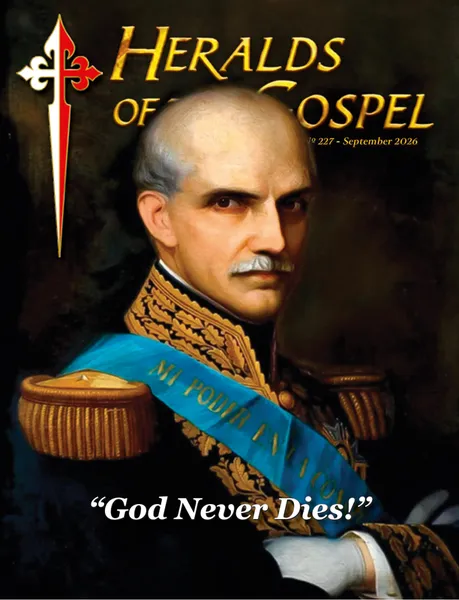
 Heralds of the Gospel Magazine, Vol. 20, nº 227, September 2026
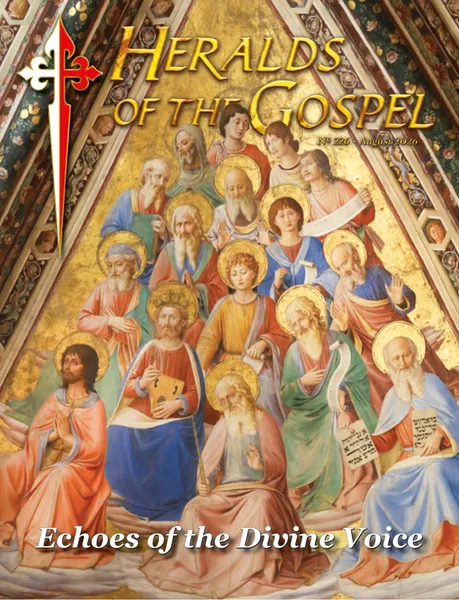 Heralds of the Gospel Magazine, Vol. 20, nº 226, August 2026
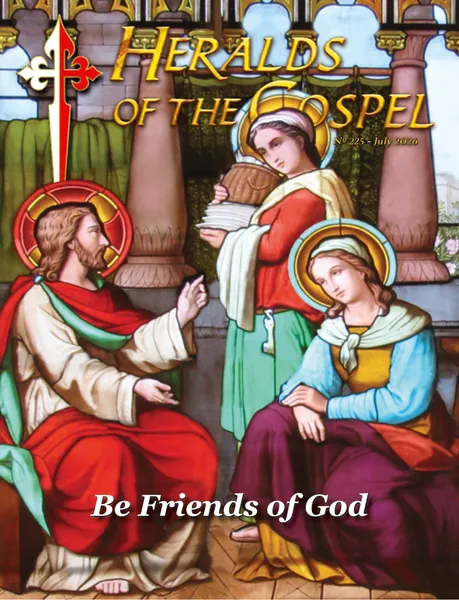 Heralds of the Gospel Magazine, Vol. 20, nº 225, July 2026
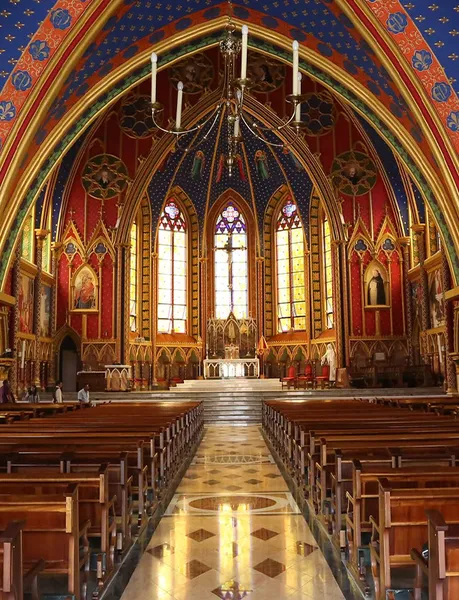 Who are the Heralds of the Gospel?
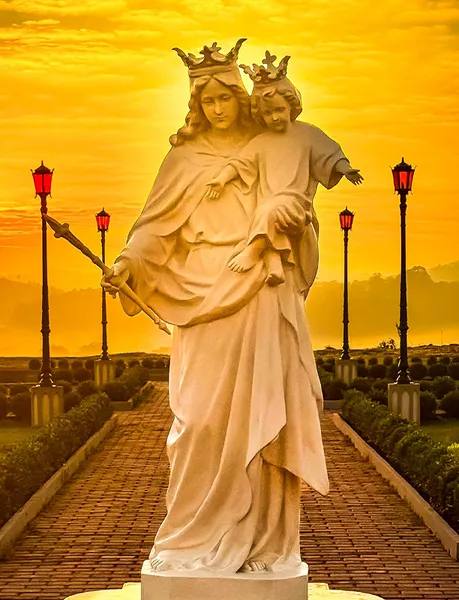 Help of Christians
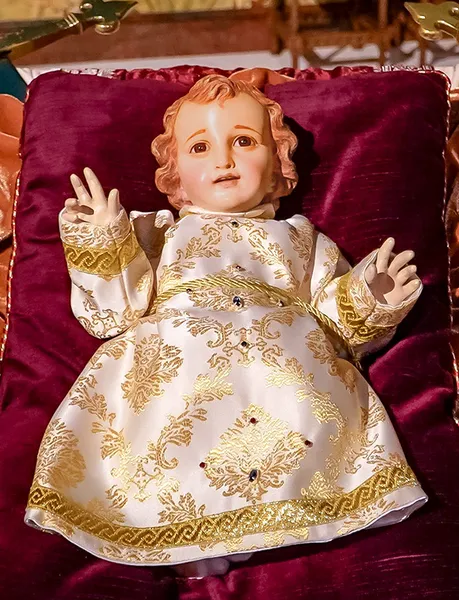 Christmas Carols









We may be stating the most obvious of banalities when we say that we are a long way – and how long! – away from the days when people used to write letters. But, the evident aside, let us consider the extent to which a letter can still be, even in this age of global and instant communication, an interesting subject for social and psychological analysis.
How can we comprehend the interior activity of those who wrote or received a letter, when we are so accustomed to the dizzyingly fast pace of communication in our daily lives?
“It was like an email of its day,” someone might say. But on closer examination, the comparison reveals more differences than similarities, and it is precisely this contrast that will help us understand the importance of writing and receiving letters in people’s lives before the digital revolution.
Without wishing to naively argue against the countless conveniences of modern means of communication, we venture this parallel in order to better understand people – both those of yesterday and those of today.
A letter reveals much more about its writer’s personality. Even today, graphology uses handwriting as a means of psychological insight. An unconscious seismograph, handwriting betrays emotions, temperament and even the deepest convictions, going so far as to reveal what lies between the lines…
In most cases, a mature thought – or at least those deep feelings that resist first impressions – was projected onto paper. It took time to sit down and write; it cost money to buy paper and ink. Nothing could be said in vain. Now, does not the ease of a “click” all too often give rise to useless and empty verbiage?
A letter was a real event. When it landed in the recipient’s hands, it carried, on the outside, the scent of the distances travelled, through so many perils, and on the inside, a trace of the sender’s presence. Our emails are certainly incomparably more versatile, but who would dare to claim that they possess the same poetry?
In former missives, one could truly speak of manuscripts; nothing between the soul and the paper anticipated the thought or directed it – not even an auto-correct function! At a natural pace, the thought flowed onto the paper and the heart sensed which words would resonate most deeply. What a gulf there is between autographs and automatisms…
When ideas were lofty indeed and sentiments deep, words alone could no longer convey their full meaning. People turned to poetry, which is almost a song. As St. Augustine said, “What is sung in the heart cannot be expressed in words. […] Let the heart rejoice without words, and may the immensity of joy know no bounds set by syllables.”1
* * *
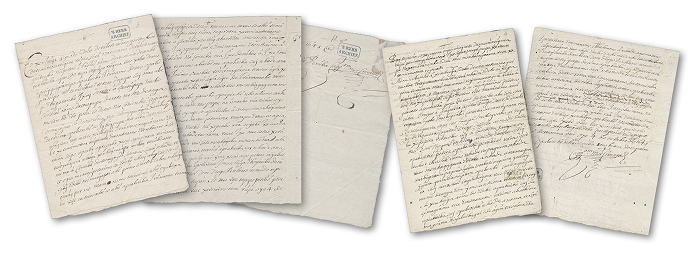
We invite reader to take a moment to look at the photographs of the letters on these pages. And, as a challenge, a question: is it possible to discern any characteristic of their author? Perhaps their social class, a psychological trait or the sender’s state of mind? To make it easier, we will give you a clue: these are letters written in the 17th century, in Brazil.
That didn’t help much? Nevertheless, it is surely the letter of a distinguished figure: a nobleman, a governor, a high-ranking military officer or an influential bourgeois. Who knows if it is correspondence from one settler addressed to another settler or to the Portuguese Crown… perhaps from a descendant of Pero Vaz de Caminha or… – I know! – from a Jesuit missionary!
On closer inspection, it is difficult to make out what they say, but their appearance leaves no doubt: they convey something of great intellectual, volitional, passionate and, we might emphasize, personal significance. The identity of their author, or authors, as well as the surprising context surrounding them, will be revealed in a forthcoming article.

Notes: