 Heralds of the Gospel Magazine, Vol. 20, nº 227, September 2026
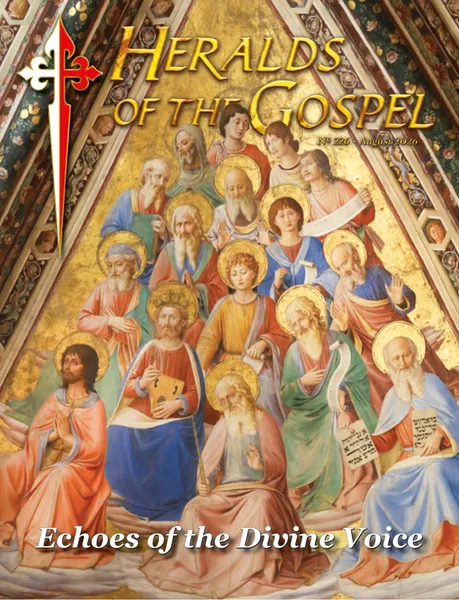 Heralds of the Gospel Magazine, Vol. 20, nº 226, August 2026
 Heralds of the Gospel Magazine, Vol. 20, nº 225, July 2026
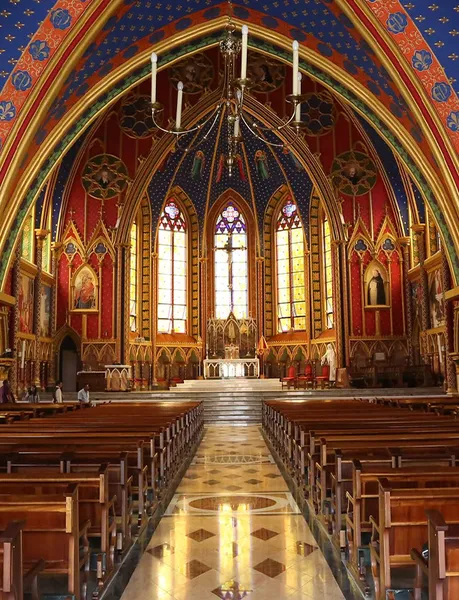 Who are the Heralds of the Gospel?
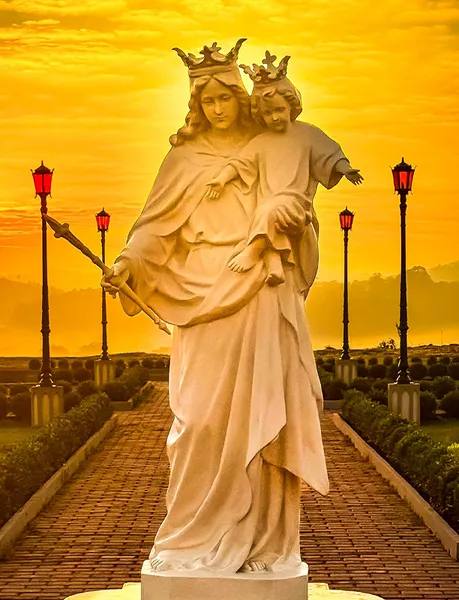 Help of Christians
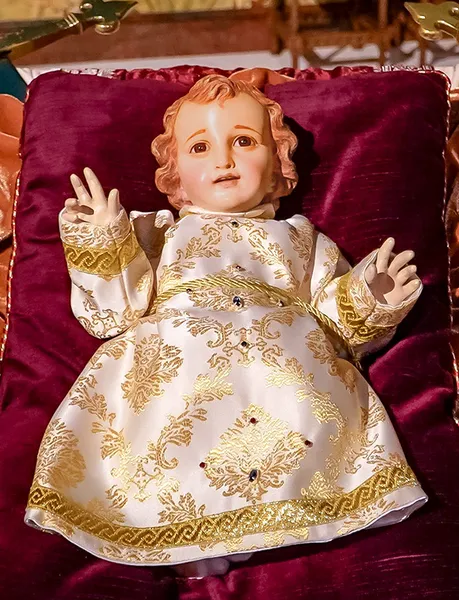 Christmas Carols







The Catechism of the Catholic Church teaches that
“God’s action is the model for human action. If God ‘rested and was refreshed’ on the seventh day (cf. Ex 31:17), man too ought to ‘rest’ and should let others, especially the poor, ‘be refreshed’”(CCC 2172).
For this reason, the Sabbath was observed in the Old Testament.
The Catholic Faith brings a new consideration: Jesus rose from the dead “on the first day of the week” (Mk 16:2), that is, on Sunday. Thus, “the day of Christ’s Resurrection recalls the first creation” and, being also the “eighth day,” because it follows the Sabbath, “it symbolizes the new creation ushered in by Christ’s Resurrection”; therefore, Sunday “for Christians has become the first of all days, the first of all feasts, the Lord’s Day” (CCC 2174).
Regarding the obligation to attend Holy Mass, the Code of Canon Law instructs that
“A person who assists at a Mass celebrated anywhere in a Catholic rite either on the feast day itself or in the evening of the preceding day satisfies the obligation of participating in the Mass”(CIC, can. 1248 § 1).
Furthermore, it is incumbent upon the faithful to set aside time for prayer and Sunday rest.
So, how should you proceed in your case, since you work “in a bakery that is open on Sundays”?
The Catechism also teaches: “On Sundays and other holy days of obligation, the faithful are to refrain from engaging in work or activities that hinder the worship owed to God, the joy proper to the Lord’s Day, the performance of the works of mercy, and the appropriate relaxation of mind and body,”but adds that “Family needs or important social service can legitimately excuse from the obligation of Sunday rest” (CCC 2185).
In this sense, in the Gospel of St. Luke, Jesus poses yet another unsettling question: “I ask you, is it lawful on the Sabbath to do good or to do harm, to save life or to destroy it?” (6:9). And St. Augustine clarifies that “holy leisure is longed for by the love of truth; but but the necessity imposed by love gives assent to undertake requisite business” (De civitate Dei. L.XIX, c.19).
Finally, allow me to give you some very concrete advice: when it is not possible for you to attend Holy Mass on Sundays or holy days of obligation, first look for alternative times on the same day, or even on the afternoon of the previous day.
Furthermore, if your employer is Catholic or sensitive to religious matters, discuss the possibility of granting you an adequate break to fulfil the Sunday obligation.
Still, if it is impossible to find time to fulfil the Sunday obligation, there is no reason to be distressed, since the imperative of supporting one’s family or caring for a sick person, among other examples, constitutes a sufficiently serious reason to dispense one from fulfilling this norm of the Church (cf. CIC, can. 1248, § 2).
However, for the proper formation of your conscience and to avoid laxity, I suggest you seek out your Bishop or your parish priest to explain the situation, as they may dispense you from the Sunday obligation in such cases, indicating as a substitute, for example, the practice of another pious work (cf. CIC, can. 1245).
As for Sunday rest, necessary for the body – physical rest – and for the soul – dedication to prayer and the study of Catholic doctrine and spirituality – try to do it on another day.