 Heralds of the Gospel Magazine, Vol. 20, nº 227, September 2026
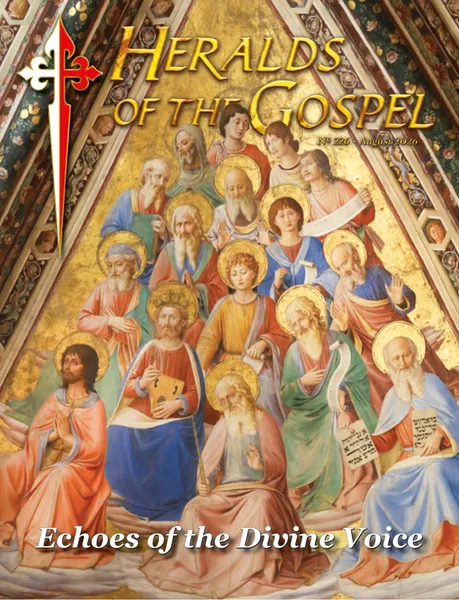 Heralds of the Gospel Magazine, Vol. 20, nº 226, August 2026
 Heralds of the Gospel Magazine, Vol. 20, nº 225, July 2026
 Who are the Heralds of the Gospel?
 Help of Christians
 Christmas Carols









The Gospel passage for this Sunday’s Liturgy is found between two excerpts that give it full meaning. First, the warning that precedes it: “it is not the will of my Father who is in Heaven that one of these little ones should perish” (Mt 18:14).
In dictating the norms for fraternal correction, on this Sunday, the Divine Master lists some powers conferred on His disciples: to judge public sinners, to bind and loose on earth and in Heaven, to infallibly intercede with God, and to make Him present where the faithful gather in His name. All these faculties, however, are ordained to the ultimate end of the Church: the salvation of souls.
This is so desired by God that, as the first reading of this Sunday attests, He imposes on Ezekiel the obligation to warn the sinner, for whose eternal salvation the prophet will be held accountable if he fails to act. Looking two verses beyond those designated for this Liturgy, we find: “As I live, says the Lord God, I have no pleasure in the death of the wicked, but that the wicked turn from his way and live” (Ez 33:11). This refers, therefore, to the fraternal correction prescribed in the Old Testament, aimed at changing conduct and consequently leading to salvation.
The driving force and the reason for this correction are indicated by St. Paul in the second reading: love, on which all the Commandments depend. How different this is from the contemporary mentality, which confuses love with passive acceptance of the errors of others! The present combination of sacred texts teaches the opposite: to love someone is to do everything possible so that divine designs may be fulfilled in them, above all helping them to avoid sin.
In the progressive way in which Jesus orders correction to be carried out, charity shines through: first, correcting alone, in private – “If he listens to you, you have won over your brother” (Mt 18:15). If he has failed to heed this secret admonition, the presence of witnesses may still convince the offender to abandon the wrong path. However, if even then he does not amend, then charity takes on a broader character: by virtue of justice, the obstinate culprit is punished and treated as a public sinner, in order to avoid scandal and dissuade the unwary.
The possibility of forgiveness, nevertheless, always accompanies the sinner, should he repent, which is the main goal of fraternal correction. The Divine Redeemer will speak of this unlimited forgiveness in the following passage, using the eloquent parable of the unforgiving debtor (cf. Mt 18:21-35).
Thus, through the arrangement of these Gospel passages, the Divine Master teaches us that fraternal correction is born from the desire to save souls and that it blossoms into forgiveness, both exquisite fruits of love, which, in turn, “is the fulfilment of the law” (Rom 13:10).