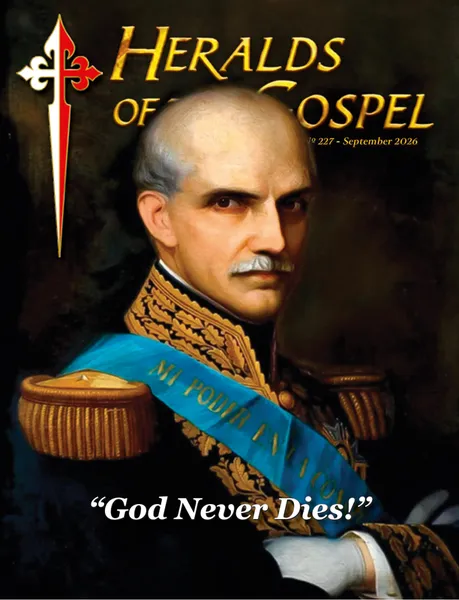
 Heralds of the Gospel Magazine, Vol. 20, nº 227, September 2026
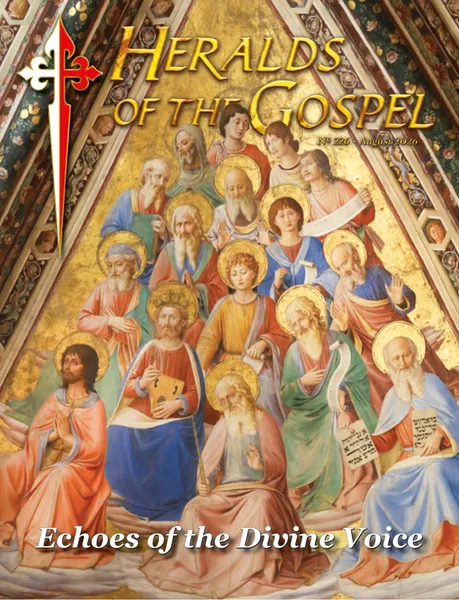 Heralds of the Gospel Magazine, Vol. 20, nº 226, August 2026
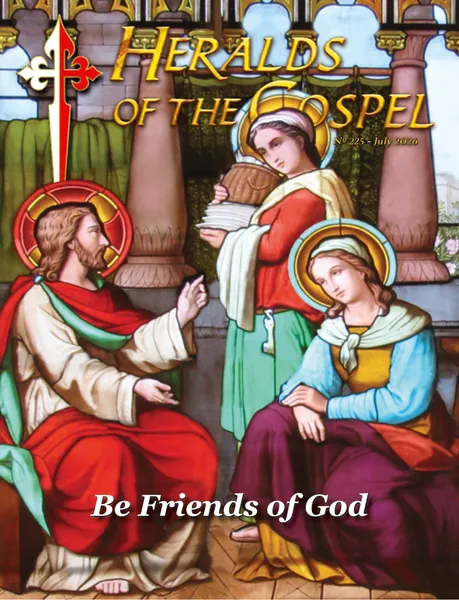 Heralds of the Gospel Magazine, Vol. 20, nº 225, July 2026
 Who are the Heralds of the Gospel?
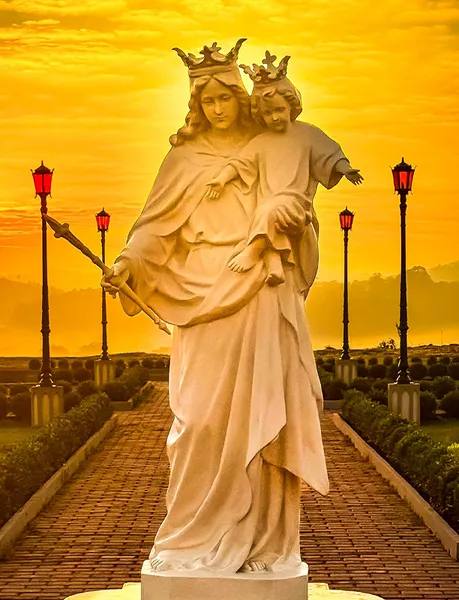 Help of Christians
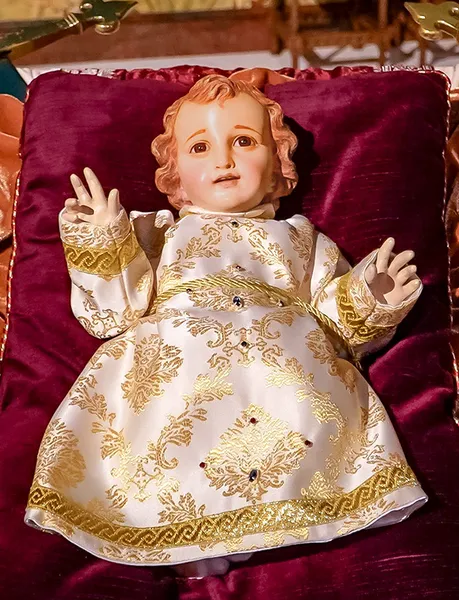 Christmas Carols








The maxim of the law of retaliation, “an eye for an eye, a tooth for a tooth,” governed the social relationships of ancient peoples. So great was its influence as a moral standard that even the chosen people – the receptacle of Revelation and messianic expectation – were themselves dominated by this mentality, to the point of neglecting the sublime precept of loving one’s neighbour as oneself, already prescribed by Moses (cf. Lv 19:18).
On the other hand, intimate communion with Christ led the Apostles to witness an unfathomable ocean of goodness towards all who approached Him with a contrite heart: lepers, the blind, and the paralyzed were healed, the possessed were freed, the dead were resurrected… Above all, sinners were forgiven, recovering friendship with God and, consequently, the invaluable gift of inner peace!
The Divine Master thus inaugurated a new paradigm in the relationship between God and men: “Learn from Me, for I am gentle and humble in heart” (Mt 11:29). This new model demanded a radical change of life from the Apostles, a true metanoia. It was a matter of conforming one’s own existence to the model of evangelical perfection, founded on the renunciation of self-love and entirely devoted to the glory of God and the good of souls.
It is in this context that the question of St. Peter, recorded in the Liturgy of this Sunday, is inserted: “Lord, if my brother sins against me, how often must I forgive? As many as seven times?” (Mt 18:21).
Our Lord’s answer is eloquent: one must forgive not only seven times, but seventy times seven! In that culture, the number seven symbolized fullness. The multiplication of these numbers emphasizes the need for unlimited forgiveness.
To illustrate this requirement, Jesus presents the parable of the servant forgiven a “huge amount” (Mt 18:24). The more precise Greek text speaks of ten thousand talents, an astronomical amount equivalent to hundreds of tons of silver or the salary for millions of days of work!… For the time, it was a debt impossible to pay back through human effort.
Something similar happens in relation to the Kingdom of Heaven: in the plan of salvation, every creature owes an unpayable amount to the Creator. Original sin and our faults, by offending the Infinite Being, also acquire infinite gravity. Only through the merits of the Most Precious Blood of the Redeemer, shed for love of humanity, is our debt paid and Paradise reopened. The non-negotiable condition for obtaining this forgiveness consists in imitating Christ, by forgiving – even if in an incomparably inferior way – those who offend us.
The same principle can be applied, mutatis mutandis, to the sad state of contemporary humanity.
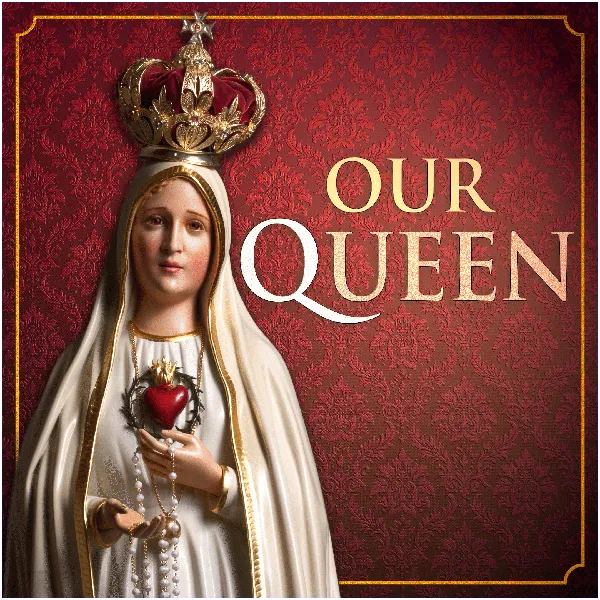
Only through an immense and gratuitous forgiveness from the Heart of Jesus, obtained through the supplication of His Most Holy Mother, will the world rise again, repentant, to the authentic Faith. The glorious promises of Fatima – “In the end, my Immaculate Heart will triumph!” – point to the Reign of Mary and of her Divine Spouse, as the full realization of the Son of God’s supplication to the Eternal Father: “Thy Kingdom come, Thy will be done, on earth as it is in Heaven” (cf. Mt 6:10).