 Heralds of the Gospel Magazine, Vol. 20, nº 227, September 2026
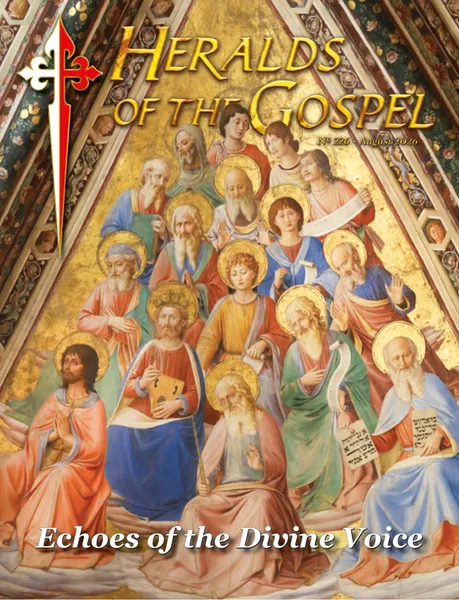 Heralds of the Gospel Magazine, Vol. 20, nº 226, August 2026
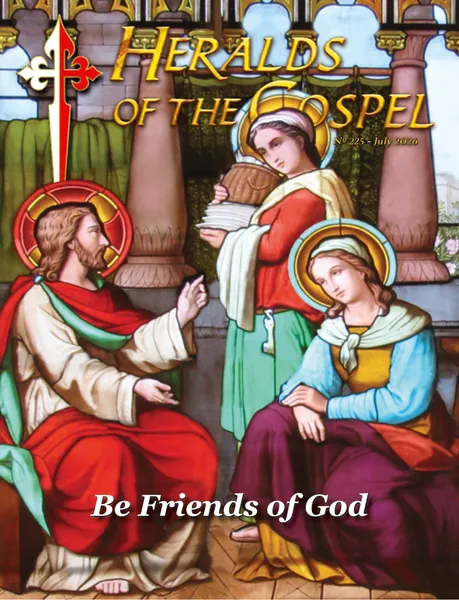 Heralds of the Gospel Magazine, Vol. 20, nº 225, July 2026
 Who are the Heralds of the Gospel?
 Help of Christians
 Christmas Carols







This Sunday’s Liturgy presents us with the passage from the Gospel of St. Matthew in which Our Lord Jesus Christ, after expelling the money changers from the Temple and responding to the Jewish leaders about His authority (cf. Mt 21:12-13; 23-27), gives a forceful warning to the high priests and elders: tax collectors and prostitutes will precede them in the Kingdom of Heaven. These sinners, in fact, believed in John the Baptist, while those hardened ones peremptorily rejected the Precursor.
The comparison is undoubtedly humiliating for those religious leaders. Why does the Lord use such harsh language? Lack of love? Quite the contrary: He treats them this way precisely because He loves them.
The Divine Craftsman loves His creatures (cf. Wis 11:24) and wants all men to be saved (cf. 1 Tm 2:4). The Holy Trinity has always known those members of the Sanhedrin, choosing them and creating them so that, as authorities of the chosen people, they might glorify God in their lives and unite themselves to Him. To this end, the Son would become incarnate and, “taking the form of a slave” (Phil 2:7), suffer the Passion and die on the Cross. There is no greater proof of love (cf. Jn 15:13).
Now, for God we are not mere numbers; we are children. Thus, as a good Father, the Lord adapts His teaching to the temperament, circumstances, and spiritual situation of each one, even in a reprimand.
We can see in the Holy Gospels various forms of correction. With some, Jesus uses harsh expressions: He rebukes Peter, calling Him “Satan” (Mt 16:23); He denounces the hypocrisy of the Pharisees, comparing them to “whitewashed tombs” (Mt 23:27) and “serpents, you brood of vipers” (Mt 23:33). With others, however, He is lenient: He forgives the adulterous woman, exhorting her not to sin again (cf. Jn 8:11); He teaches Martha not to worry about so many things, for only one thing is necessary (cf. Lk 10:41-42); He incessantly seeks to save even Judas, until the very last moment, questioning him about the betrayal in the Garden of Gethsemane (cf. Lk 22:48).
This infinite love cost the Redeemer His own Passion and ignominious Death. Given this, how do we act? Do we omit correction for fear of the consequences, for fear, for example, of losing a friendship? And, when we correct, do we truly seek the good of our neighbour, or are we merely venting our pride on them? Finally, do we humbly accept the corrections we receive, or do we rebel, or make excuses?
Let us pray to the Virgin Mary to intercede for us with her Divine Son, so that we may obtain superabundant graces to have a heart like His: full of love, selfless, strong, compassionate, patient, and humble. In this way, we will truly be able to share in “this mind among yourselves, which was in Christ Jesus” (Phil 2:5).