 Heralds of the Gospel Magazine, Vol. 20, nº 227, September 2026
 Heralds of the Gospel Magazine, Vol. 20, nº 226, August 2026
 Heralds of the Gospel Magazine, Vol. 20, nº 225, July 2026
 Who are the Heralds of the Gospel?
 Help of Christians
 Christmas Carols






Throughout the centuries, Our Lord Jesus Christ has gifted His Mystical Bride, the Church, with countless treasures: the seamless robe of unity, the pure white mantle of orthodoxy, the powerful sceptre of papal authority, and – the greatest of gifts – the crown of holiness.
This diadem is set in the pure gold of charity, and upon it sparkle rich and varied inlays: the pearls of virgins, the amethysts of ascetics, the sapphires of the Doctors… Nevertheless, among all these ornaments, a majestic ruby is outstanding: it is the blood of the martyrs.
“You are a martyr!”
A historical episode illustrates how highly the Church values this precious gem.
On March 24, 1934, Pope Pius XI received in private audience Bishop Teofilius Matulionis, a Lithuanian bishop who had been imprisoned in Soviet concentration camps.
At the very beginning of the encounter, interrupting the visitor’s genuflection, the Holy Father himself knelt and declared: “You are a martyr; you are the one who should bless me first.”1 As if this exceptional deference were not enough, the Pope even kissed the prelate’s forehead as a sign of remarkable esteem.
Although Bishop Matulionis had not strictly speaking shed his blood as a martyr, the sufferings he endured for his love of Christ and due to the hatred of the Faith of his persecutors constituted such a close analogy to martyrdom that they merited this recognition.
It is not without reason that the very name martyr is considered a supreme honour by the Church. An ancient ecclesiastical writer justified this with the famous expression: “The blood of the martyrs is the seed”2 of new Christians. But in what sense?
Stimulus for the fervent, courage for the wavering
First of all, the example of the martyrs encourages Catholics to holy emulation, to even greater progress in virtue, and to a commitment to the expansion of the Kingdom of God.
The year was 1220. Upon hearing of the renown for holiness and the account of the martyrdom of five Franciscan friars in Morocco, Ferdinand of Bouillon felt the call to become, like them, a son of St. Francis and to evangelize the pagans, so that he too might one day attain the palm of martyrdom. To those holy missionaries pertains the glory of having contributed, even after their death, to Ferdinand becoming the great St. Anthony of Padua!
On the other hand, the witness borne by the martyrs instils faith and courage in those who waver between fidelity to God and the seductions of the devil. In this sense, the acts of the martyrs are full of eloquent examples. Let us consider just one.
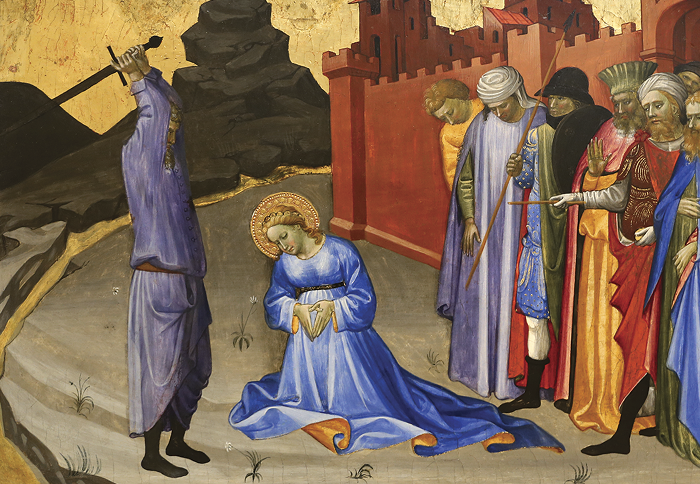
An ancient historical document recounts the atrocious and sublime martyrdom of some of the first Carthaginian Christians in March of 203. While they were still imprisoned, awaiting the day they would be thrown to the wild beasts, their fortitude impressed Pudens, the soldier in charge of the prison, who discreetly showed them sympathy. This proved to be the opening through which light would enter his soul…
Once in the arena, one of the condemned Catholics, named Saturus, after having passed unscathed through several attacks by the beasts, addressed the soldier thus:
“Even as I expected and foretold, I have up to this time felt the bite of no beast. And now believe with all your heart: for behold, I go out thither, and shall be ended by one bite of the leopard.”3
His prophecy fulfilled, Saturus, already drenched in blood, turned again to the one he wished to win over to Christ: “Farewell, and be mindful of my faith and of me; and let not these things disturb, but rather confirm you.”4 And, leaving him as an inheritance the relic of a ring dipped in his own blood, he went to present himself to the Lord.
Pudens the soldier, encouraged by this example, embraced the Faith. Later he would also attain the palm of martyrdom.
Silent and eloquent argument
Martyrdom – which etymologically means witness – speaks not only to the baptized; it is also an effective instrument for the defence of the Faith.
Upon considering the heroic martyrdoms of the first centuries of Christianity, Dr. Plinio Corrêa de Oliveira ponders the purpose of so much bloodshed:
“It was not just about being victorious, but about providing an apologetic argument for future centuries. What was this apologetic argument? [The martyrs] were the living witnesses to the veracity of the Gospel narrative. These witnesses, to prove that the Catholic Religion is true, allowed themselves to be repressed. […] From this was born Catholic Europe, the Middle Ages, Catholic Civilization.”5
Can a soldier be a martyr?
If martyrdom gives such great glory to the Holy Church, would it be lawful for a Catholic to defend himself against an unjust aggression? Would he be obliged to passively accept martyrdom?
Accepting martyrdom, in reality, does not necessarily mean inert resignation in the face of injustice. There are occasions when God asks for silence and sacrifice, but there are also circumstances in which grace leads us to say:
“No, sir! I feel honoured to be persecuted by you in this way, and I present myself with my head held high! […] I accept this humiliation with disdain, and I fight with my visor raised!”6
Indeed, even if the martyr does not utter words of rebuke to his tormentors, his silence constitutes an eloquent denunciation. The Christian tradition, in the writings of Tertullian, understood martyrdom as an eminent form of combat:
“We love suffering in the same way that the soldier loves war. […] The battle, for us, consists in being brought to court, so that there, risking our lives, we may fight for the truth. Victory consists in achieving that which we fought for: victory that brings with it the glory of pleasing God and the spoils of eternal life.”7
If Providence invites some to accept death rather than renounce the Faith, it calls others to defend it against impious aggressions. Medieval chivalry, for example, reflected this glory: martyrdom not as something to be suffered, but as something to be sought in the fight in defence of goodness.8
A combatant martyr
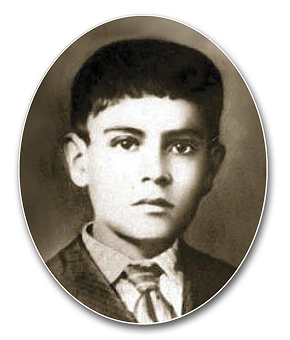
To harmonize these two seemingly antagonistic forms of heroism, one need only look at the example of St. José Luis Sánchez del Río. At fourteen, he enlisted in the Cristero Army to defend the freedom of the Church in Mexico, which was especially persecuted after the enactment of the so-called Calles Law in 1926.
In a battle in the city of Cotija, the young boy was surrounded and captured. Brought before the enemy commander, he declared: “General, know that I have been taken prisoner, not because I have surrendered, but because I ran out of ammunition, for if I had more, I would have continued fighting.”
After a brief captivity, José was submitted to torture. At eleven o’clock on the night of February 10, 1928, his executioners skinned the soles of his feet and made him walk barefoot across a stony terrain towards the cemetery. Upon reaching the grave destined for his burial, the soldiers inflicted further blows upon him, attempting to drive him to apostasy.
Frustrated in their attempts, the troop captain asked, in a mocking tone, if the little hero had any message to convey to his parents. Proudly, José Sánchez replied: “Yes, tell them that we will meet again in Heaven.” Then he asked to be shot with his arms outstretched in a cross. The response was immediate, furious, and merciless: a pistol shot to the temple.
In the martyrdom of the young Mexican, we can clearly see the truth of Dr. Plinio’s statement: “It is noble for a martyr to die with his eyes fixed only on God. It is also noble to die forgiving his tormentors. But it is noble to die fighting against them as well.”9 After all, since man’s life on this earth is a warfare (cf. Job 7:1); why should his death not be also be?
To deny any of these forms of heroism would be to deny the Catholic Church one of the many scintillations of the blood-red ruby in its crown.
Going back to the ruby
Now, what confers upon martyrdom that nobility which distinguishes it from all other forms of perfection? The martyr brings to its fullness the imitation of Our Lord Jesus Christ, which is the essence of holiness.
Love is repaid with love. If there is no greater proof of love than to give one’s life for a friend (cf. Jn 15:13), we well understand the praise made by St. Augustine: “They restored the price for which they were bought.”10 And further:
“‘If you sit at a great table, observe carefully what is served to you, for you also must prepare something like it’ (Prv 23:1-2). It is certainly a great table, where the lord of the table is Himself the banquet […] being Himself the host, Himself the food and drink. The martyrs, then, recognized what they ate and drank, so that they could give back in the same kind”.11
The blood of the martyrs does far more than merely engendering new Christians: it irrigates the entire Church. As living members of the Mystical Body of Christ, the sacrifice of these heroes of the Faith, united to that of the Redeemer, benefits all the faithful through the Communion of Saints. Thus, their witness is like the sap that nourishes and invigorates the baptized in a mysterious flow of grace. Such fruitfulness springs from a profound truth: if every Christian completes what is lacking in the Passion of the Lord (cf. Col 1:24), we can affirm that, in a special way, the blood of the martyrs is also the very Blood of Christ.
Notes: