 Heralds of the Gospel Magazine, Vol. 20, nº 228, October 2026
 Heralds of the Gospel Magazine, Vol. 20, nº 227, September 2026
 Heralds of the Gospel Magazine, Vol. 20, nº 226, August 2026
 Who are the Heralds of the Gospel?
 Help of Christians
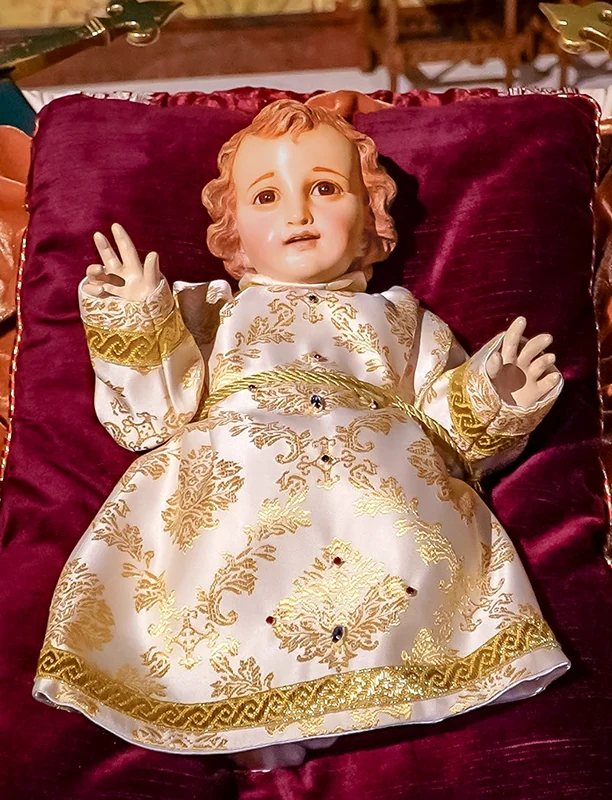 Christmas Carols






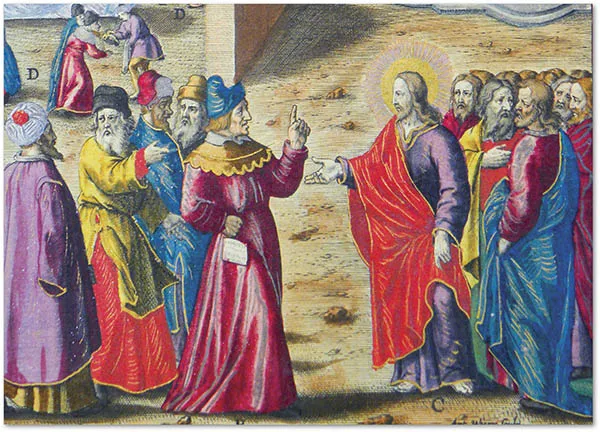
This Sunday, the Liturgy offers us a passage from the Gospel of St. Matthew, which narrates an encounter between Jesus Christ and the Pharisees. It was not the first time they had tried to trap Him. Despite so many rebukes received, they appear again before the Redeemer to ask Him: “Teacher, which commandment in the law is the greatest?” (Mt 22:36).
St. Thomas Aquinas remarks that, as well as being cavilling, the question was presumptuous, for “one ought not to ask about the greatest, who have not fulfilled the least.”1 Our Lord then answers: “You shall love the Lord, your God, with all your heart, with all your soul, and with all your mind. This is the greatest and the first commandment” (Mt 22:37-38). Regarding this, the Angelic Doctor comments:
“God must be loved as the first thing to be loved, since He Himself is the first end, whereas all other things are loved because of their end. Therefore, whoever loves God as an end, loves Him with all their heart.”2
The Saviour’s following words constitute more than an interpretation of the Law; it is a revelation of God’s own Being. Jesus not only unites the tablets of the Law with prophecy, but establishes charity as the core of the spiritual life: “‘You shall love your neighbor as yourself.’ The whole Law and the prophets depend on these two commandments” (Mt 22:39-40). In this regard, Aquinas3 clarifies that this “yourself” is not identified with selfishness, but indicates that one must love others as oneself by virtue of love for God. Pope Benedict XVI4 elaborates on this perspective in the encyclical Deus Caritas est, teaching that love for God and love for neighbour are fundamentally two sides of the same coin, inseparable and complementary. Whoever truly loves their neighbour loves God, and vice versa.
Our Lord is Love itself, who loved us first (cf. 1 Jn 4:19), to the point of giving Himself on the Cross as a friend (cf. Jn 15:13) and making us heirs of eternal blessedness. Jesus also draws us into union with Him, which becomes effective through charity, the bond of perfection (cf. Col 3:14). All other virtues are included in this one.5 To this end, it is fitting to follow the recommendation of St. Paul, that is, to become an imitator of the saints and of the Lord, “receiving the word in great affliction, with joy from the Holy Spirit” (1 Thes 1:6).
As we journey along this sometimes tortuous path, may our love for our neighbour not be a mere human endeavour, but a concrete reflection of the Father’s absolute love for each of us, purifying our understanding and our will, to prepare us for the beatific vision, where the supreme virtue – charity – will finally be the only Law that will reign eternally: “Love never ends” (1 Cor 13:8).
Notes:
 Msgr. João Scognamiglio Clá Dias, EP
 Fr. Roberto José Merizalde, EP