 Heralds of the Gospel Magazine, Vol. 20, nº 228, October 2026
 Heralds of the Gospel Magazine, Vol. 20, nº 227, September 2026
 Heralds of the Gospel Magazine, Vol. 20, nº 226, August 2026
 Who are the Heralds of the Gospel?
 Help of Christians
 Christmas Carols









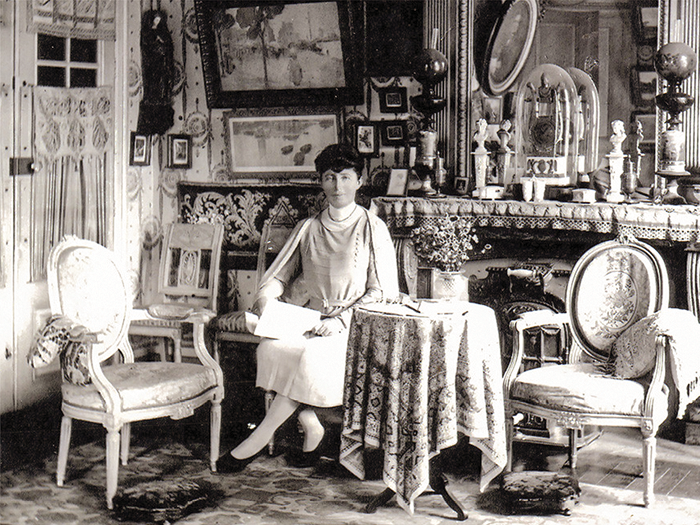
In the world of French entertainment in the early decades of the 20th century, the playwright and actress Gabrielle Bossis needed no introduction. Her charm, her verve, and an ineffable quality of her personality had already won over audiences in her homeland and promised her success abroad.
Gabrielle decided to dedicate herself to the performing arts in 1923, at the age of forty-nine, after an initial success with the young women of her parish, when she wrote and performed a play. Having perceived the blessing of Divine Providence in this fact, she resolved to use her talent to transmit a genuinely Catholic message to society from the stage. She wrote scripts with religious and moral content, made costumes, and played the main roles herself.
Far from indulging in the frivolity or worldliness that could be associated with the stage, Gabrielle made even greater progress in her spiritual life, as a result of the excellent Catholic upbringing she had received in childhood. Our Lord Jesus Christ had in her a humble servant, attentive to His divine will from childhood; and it was He who chose and prepared her to collaborate, through art, in His preeminent work: the salvation of souls.
Mystical relationship amid the active life
To crown this noble mission, the Saviour would later establish mystical conversations with her, in which He would reveal to her the tenderness of His love for mankind.
The first interior locution recorded by Gabrielle in her diary dates from August 22, 1936. She was aboard the transatlantic liner Île de France, which was taking her and her cast to Canada, when Our Lord spoke to her. “During the classical music concert,” she recounts,
“I offered Him, as if they were bouquets, the sounds and sweetness that emanated from it. He said to me gently, as He had done on another occasion: ‘Ma petite fille – My little daughter.’”1
The next day, while a makeshift altar was being set up on a piano, and she was thinking about the seagulls and aircrafts that land on some ships, she heard: “This time it will be Christ,”2 alluding to His imminent descent during the celebration of Holy Mass.
From then on, Gabrielle enjoyed a constant mystical communion with the Redeemer amidst the vicissitudes of her almost nomadic existence, which led her to cities in the Middle East and North America, as well as in northern Africa. The historian Daniel-Rops3 expressed admiration for the two facets of Gabrielle’s life: one, smiling, focused on others and dedicated to entertaining them; the other, deeply devoted to contemplation.
A unique vocation
Born into a wealthy family in Nantes, western France, on February 26, 1874, Gabrielle Bossis proved to be a shy and reserved child, although very inclined to communion with God. This inclination was gently encouraged by the Saviour Himself, as she came to understand years later, in an inner locution: “Do you remember that when you were little, I would say to you: ‘Tell Me what you did today’? But you did not believe it was my voice.”
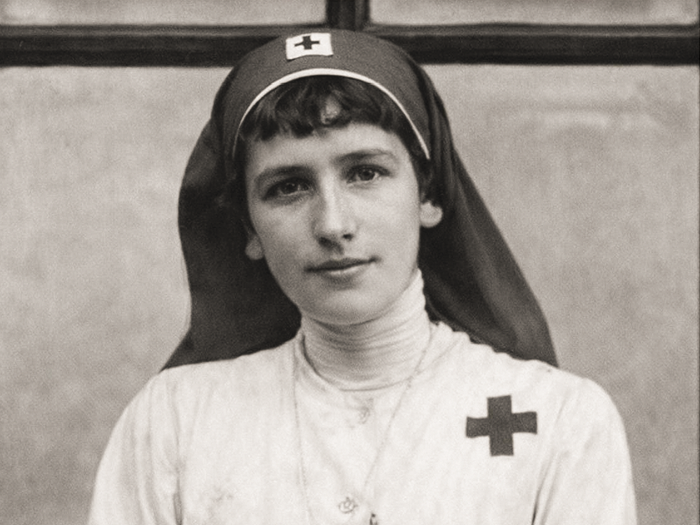
As she grew up, Gabrielle overcame her shyness so as to do good to others and radiate joy. Her reticence gave way to vivacity, making her graceful and captivating, with distinctions in music, painting, and sculpture. She served as a Red Cross nurse during the First World War, in addition to dedicating herself to catechesis and the making of liturgical linens.
Feeling drawn by God to a unique mission, she refused numerous marriage proposals, as well as an invitation from a Franciscan priest to become a Poor Clare nun. Later, she became a tertiary of the Order of St. Francis, living in the world a life of celibacy, detachment, and penance.
In her youth, she was unjustly considered frivolous, but she suffered patiently in the secret of her heart, enduring, as she later recounted, great interior sufferings. Regarding these trials, Jesus communicated to her years later:
“Others judge us, and this judgement is wrong, because they only see the exterior; a person judges himself inaccurately, because he looks only his interior, without considering the example he gives. Only I know each soul with exactitude.”4
Jesus’ appeal to souls
In her drama apostolate, Gabrielle began to learn from Our Lord that intimacy with Him can be maintained even in the most absorbing circumstances. In a theatre in Algeria, for example, He asked: “Why do you speak to Me as though I were so far away? I am very near… in your heart.”5
Thus, as her relationship with Jesus intensified, she became a more docile and effective instrument in His hands to transmit to souls an appeal from His Heart: that all should cultivate with Him an intimate and continuous relationship, based on tender reciprocity to His infinite love – a communion that is a prelude, already on this earth, to heavenly happiness.
Identifying Himself as a “Hunter of Hearts,”6 Our Lord encouraged Gabrielle to spread His appeal: “I have chosen you to witness how simple and joyful is the life of love, the language of love, the conversation of love”; And further: “Show that it is necessary to converse with Me. Do not leave Me alone in your hearts.”7
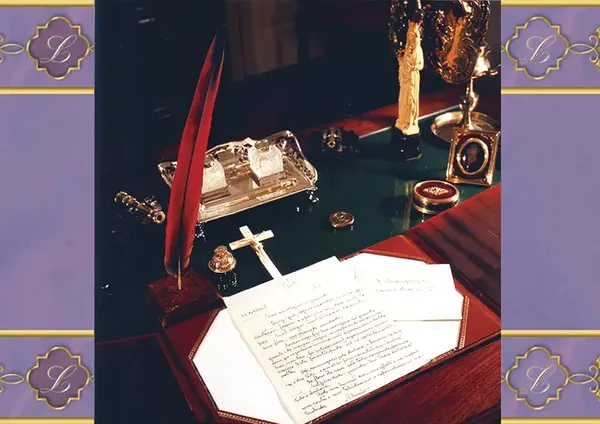
To make this message more widespread, Jesus asked her to transcribe the mystical conversations and publish them in a book. Thus, the words addressed to her would reach a multitude of souls, becoming a source of copious graces: “Ask that through this little book I may go about as I once did [on earth], healing and drawing people to Myself.”8
The first volume of her inner locutions was published anonymously in 1949, with a preface by the Bishop of Nantes, Dom Jean Villepelet. Today available in several languages, the work received from the author the evocative title: Lui et moi – He and I.

Faith, confidence and reciprocity
Throughout the seven volumes that make up this work by Gabrielle, Our Lord’s invitation to intimacy is repeated like a refrain: “Speak with Me, my little soul. Speak with Me. And our hearts will merge. Is that not the aim of my Christians?”9
A particularly eloquent episode, which occurred during a meal, clearly manifests the Saviour’s eager desire to be invoked by souls:
“At the Benedicite I said: ‘My Love, bless my meal.’ [He answered:] ‘If only because you said “My Love,” I will bless it. Do you know that I am more sensitive than the most sensitive of men, and that your tender and childlike words have great power over my Heart?’”10
Throughout the centuries, the infernal enemy has sought in every way to make humanity believe that God identifies Himself with a severe and distant being, more or less attentive to world events and completely indifferent to the private lives of men. During a conversation on March 20, 1947, Jesus showed Gabrielle how opposed this mentality is to the feelings of His Sacred Heart:
“When you give Me a token of your love, you fill Me with joy… If you only knew! I no longer feel a stranger, the ‘indifferent one’ that I am to most men… Understand Me better. Speak your innermost words. I will place them like a bouquet of myrrh upon My breast.”11
To grant the Redeemer this consolation, however, man must renounce the pursuit of spiritual progress based on his own merits and recognize himself as the object of gratuitous love. In short, he must allow himself to be loved, with humility and simplicity.
In another passage, Our Lord reveals that nothing wounds Him more than distrust and that indifference must be overcome with energy:
“My intimate friends, why? Why do you not invoke Me more forcefully in your interior life? If your faith were less close to unbelief! If your hope counted on My help! And if simply your love loved Me more. I would preside over everything in your day, and when night came, your eyes would close again contemplating My face. Do you know how to fall asleep like that in My arms? Do you want to learn more? Remember that it is necessary to recommence the effort many times. It is necessary to try to grow. It is necessary to be very careful not to be satisfied with yourself. But often, contemplate your misery and tell Me about it, just as you know it. Then, how compelled My Heart will feel to help you, since you will be very small, very weak. When you call upon Me, do not fail to give Me the most tender names. I will recognize your voice.”12
Finally, to dispel any remaining doubts that might assail souls, the Redeemer addressed Gabrielle with new words of encouragement. While she marvelled at the extraordinary speed with which the first edition of He and I had sold out, Our Lord intervened:
“Attribute this to my will, aided by that of the Sorrowful and Immaculate Heart of my Mother. And do you know what we are doing in writing these pages? We are dispelling the false idea that this intimate life of the soul is only possible for religious in the cloister. In reality, my secret and tender Love is for every soul that lives in this world. There is not one who does not have a mysterious yearning for it. And how true it is that each one wants to find an example to follow and the means to achieve this.
“Ah! My daughter, what joy for Me and for you if at last all people became my faithful friends, trustfully calling for Me and offering Me the most secret chamber of their hearts for my permanent abode! You can imagine what outpourings I would draw from their soul’s depths – there where so many things have been instinctively hidden, awaiting the coming of a friend worthy of their esteem.
“When they have understood that Christ, the Saviour, not only could be, but longed to be their unique Friend, this indescribable Friend, who begs and thanks; when they have glimpsed His joy at being welcomed by His creature – whom a false humility had kept at a distance – with what entirely new transports of enthusiasm do they fill their souls to the brim with love to honour the God who lives in them!”13
A message ever alive and relevant
After a life of faithfulness to God, marked by love for her neighbour, illuminated by hidden alms and countless sacrifices, hardships, and moral trials endured with joy, Gabrielle discovered advanced lung cancer which, after two months, ended her earthly life on June 9, 1950. Her grave is located in Le Fresne-sur-Loire, where the Bossis family had a summer home.
Her message of love and confidence in Jesus, however, remains alive and ever more necessary for the salvation of souls. May it find an echo in our hearts and transform our existence into a continuous act of gratitude and response to the torrents of affection that God bestows upon us at every moment.
Notes:

 Sr. Isabel Cristina Veas