 Heralds of the Gospel Magazine, Vol. 20, nº 228, October 2026
 Heralds of the Gospel Magazine, Vol. 20, nº 227, September 2026
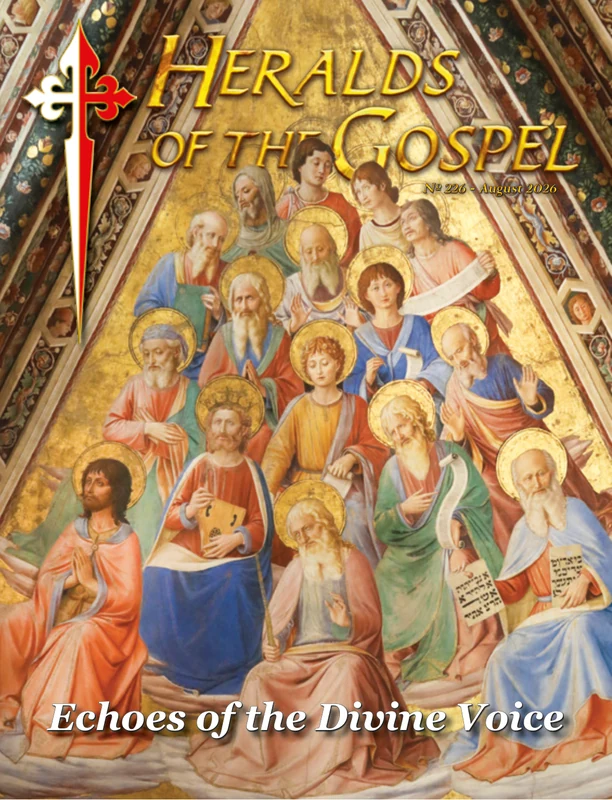 Heralds of the Gospel Magazine, Vol. 20, nº 226, August 2026
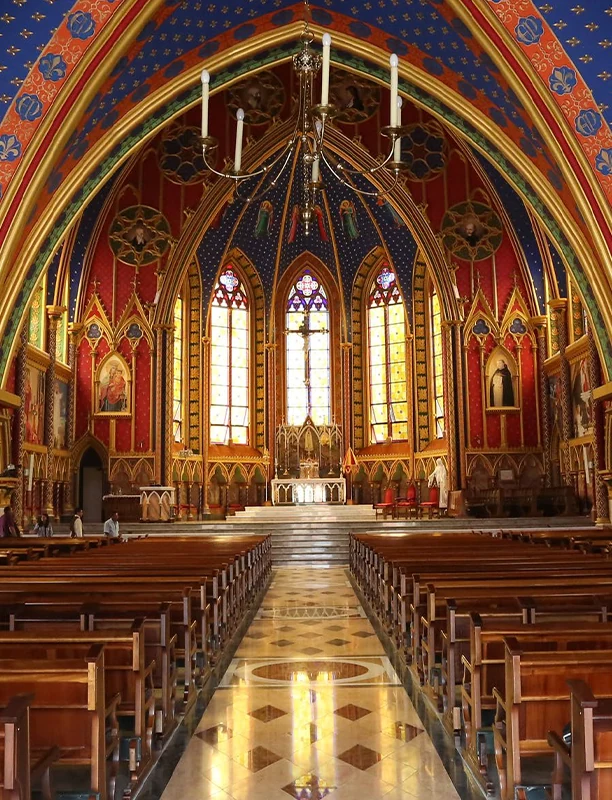 Who are the Heralds of the Gospel?
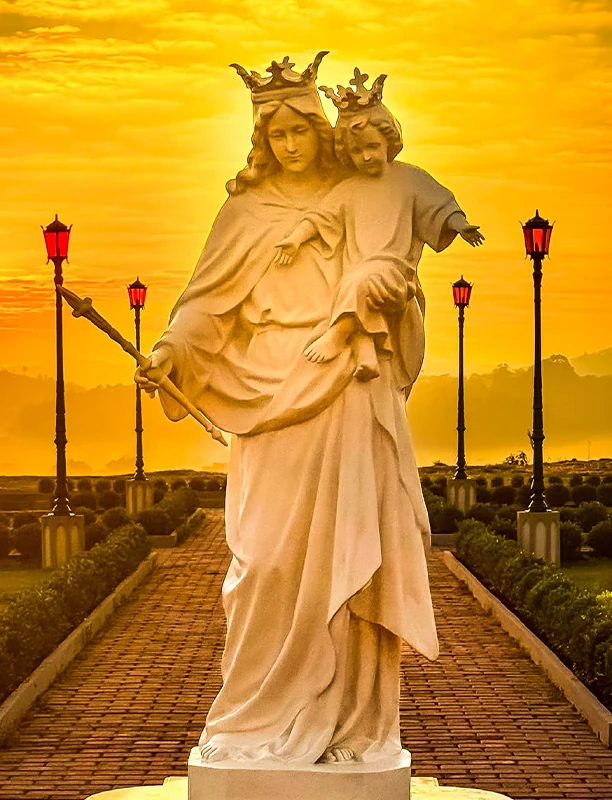 Help of Christians
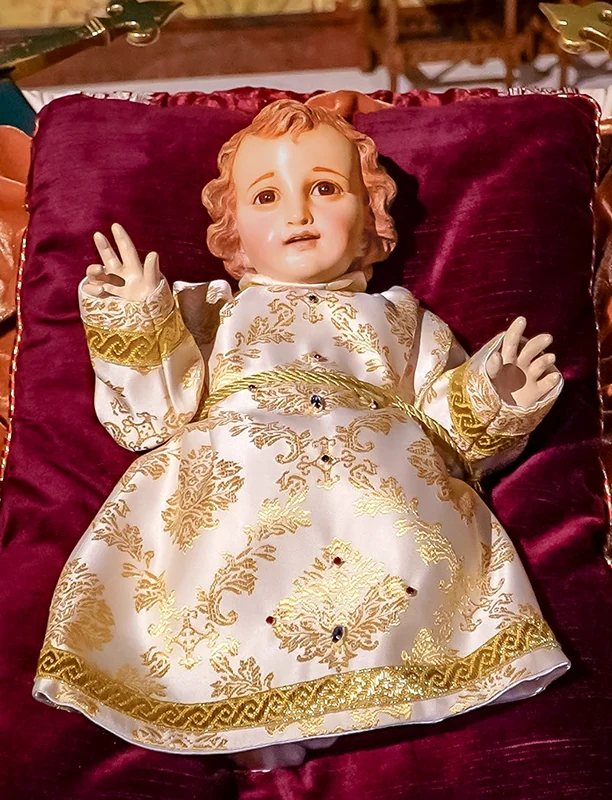 Christmas Carols






In the immense domain of creation, from the macrocosm to the microcosm – man – everything rotates around an axis. From this concept we derive expressions such as “out of orbit,” “revolving around the right axis,” “staying on track.” That the world suffers from a pivotal crisis – and is, to a large extent, “off track” – and that divine intervention is urgently needed to bring it “back on track” is a truth that needs no demonstration!
The parable of the wedding banquet seems to mirror the disorder of the current world: some do not heed the king’s invitation, others beat his ambassadors to death, a man enters the hall without the appropriate attire.
Although the primary function of food is the maintenance of life and physical health, it possesses, on a higher plane, the capacity to foster human conviviality and the practice of virtue. In Sacred Scripture, the Kingdom of Heaven is compared numerous times to a banquet. And Divine Providence willed that our need for food should prepare us for the Eucharistic Banquet, in which Jesus offers Himself to us as bread for the sustenance of our souls.
For millennia the Divine Craftsman elaborated the restoration His masterpiece, disfigured by the disobedience of our first parents, providentially preparing the nuptials of His Son with humanity. After the fall, at the root of which was the forbidden fruit (cf. Gn 2:16-17), the Lord educated the people through various perceptible signs, such as manna and ritual sacrifices. In the “fullness of time” (Eph 1:10), when iniquity reached its apogee, attempting to eliminate God Himself, He formed the New Eve, capable of conceiving the Eternal Word. It is at this moment that, through Mary Most Holy, the Mother of Grace, the Trinity offered to the baptized the renewed fruits of life and divine knowledge.
With the Eucharist, Christ grants to the children of Adam the “Bread of Life” (Jn 6:51), prefigured by the fruit of the “tree of life” (Gn 3:24) in the Garden of Eden and promised to the victor in the Apocalypse (cf. Rv 2:7).
In the parable, the wedding garment designates the white baptismal robe, which we need to keep spotless by means of a righteousness of life, the practice of good works, and the observance of the Commandments. At the banquet of the Holy Mass, when Christ gives Himself as food (cf. Mt 26:26), we receive the graces necessary to reach such a sublime goal.
It is therefore necessary to approach the Eucharist with the proper dispositions, for St. Paul warns that to eat the Flesh of Christ unworthily and to drink His Blood unworthily is to eat and drink one’s own condemnation (cf. 1 Cor 11:27-29).
If the Sacrament of the Altar is the centre of our existence, everything will revolve around the proper axis: first and foremost, our soul will, and consequently, so will everything related to it in the order of the universe.