 November 2026, No. 229
 October 2026, No. 228
 September 2026, No. 227
 Who are the Heralds of the Gospel?
 Help of Christians
 Christmas Carols
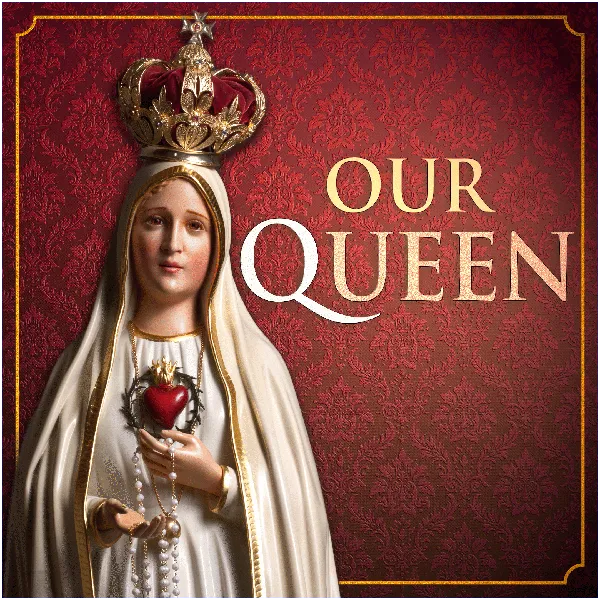







The Divine Redeemer is King by right acquired through His Passion, but He is also King by virtue of His omnipotence, exercising dominion over both Heaven and earth.
On earth, however, He does not impose Himself upon the sinners who reject Him; out of mercy, He grants them a time of grace for conversion.
This world is, therefore, like a stronghold that His faithful subjects are called to conquer. When Our Lord declared to the infamous Pilate, “My kingship is not of this world” (Jn 18:36), He was not pronouncing a definitive verdict; for He proclaimed that His universal Kingdom would indeed encompass the world, in fulfilment of the very prayer He addressed to the Eternal Father: “Thy Kingdom come” (Mt 6:10).
In part, this Kingdom has already arrived: it exists within the Holy Catholic Church, that immortal institution born from the side pierced by Longinus’ lance, as the King breathed His last upon the Cross.
Yet, will the definitive Kingdom ever come? Most certainly. The Lord’s Prayer – that perfect petition offered by the Son to the Father – is not conditional.
In the Old Testament, one can discern a foreshadowing of the Lord’s Prayer in the words of the Psalm: “When Thou sendest forth Thy Spirit, they are created; and Thou renewest the face of the ground” (104:30). There is also the promise made by St. Louis de Montfort1 regarding the future coming of the Reign of Mary.
Nevertheless, it appears that the fullness of Christ’s reign has yet to be realized in this world – not due to any lack of power on His part, but because of the contingency of creatures in fully conforming themselves to the Creator.
Jesus cannot be reduced to the level of a Herod, reigning over subjects who prefer to praise Barabbas. The fitting adornment for a king is to have subjects who match his greatness.
Had Our Lord assented to being crowned on Palm Sunday, He would have compromised His own majesty, for He would have been the Lord of criminals, opportunists, usurers, sinners, blasphemers, the sacrilegious, usurpers, petty politicians, cynics, the envious, slanderers, traitors, and conspirators…
He chose to be King to bring joy to His subjects, sparing no sacrifice to do so – to the point that the only request the Father denied the Son-King was: “if it be possible, let this cup pass from Me” (Mt 26:39). Such is the extent of God’s infinite love for mankind.
The perfect joy Our Lord desires for us consists in complete conformity with Him. Once this goal is reached, the Kingdom of Christ will be established, and His subjects will share in a somehow infinite jubilation – a mysterious and unfathomable marvel of God’s generosity, not yet fully unveiled by theology. This is what Jesus asks of the Father:
“That they may all be one; even as Thou, Father, art in Me, and I in Thee, that they also may be in Us, so that the world may believe that Thou hast sent Me. The glory which Thou hast given Me I have given to them, that they may be one even as We are one, I in them and Thou in Me, that they may become perfectly one, so that the world may know that Thou hast sent Me and hast loved them even as Thou hast loved Me” (Jn 17:21-23).