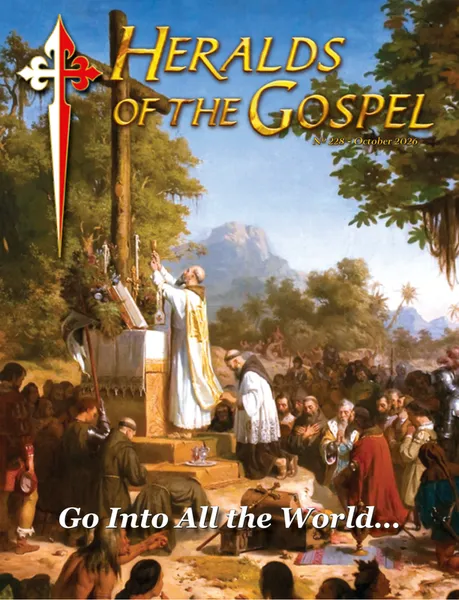
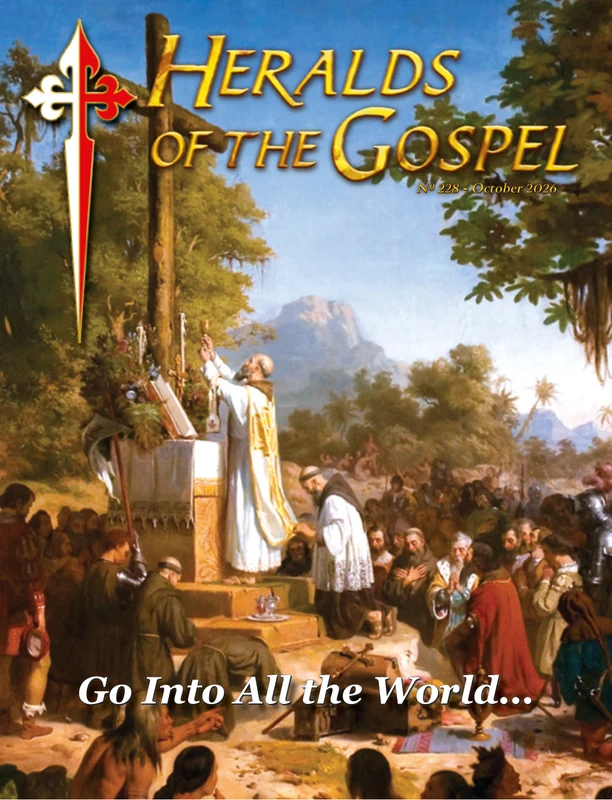
 Heralds of the Gospel Magazine, Vol. 20, nº 228, October 2026
 Heralds of the Gospel Magazine, Vol. 20, nº 227, September 2026
 Heralds of the Gospel Magazine, Vol. 20, nº 226, August 2026
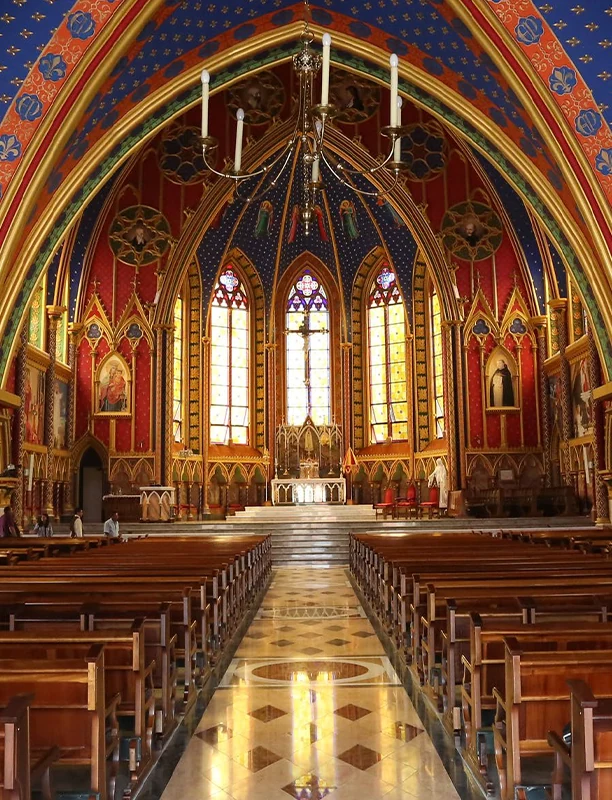 Who are the Heralds of the Gospel?
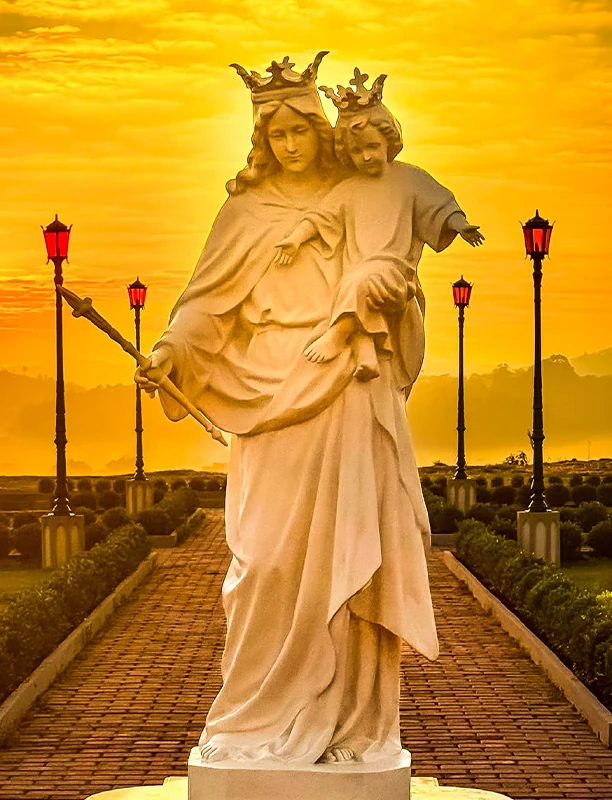 Help of Christians
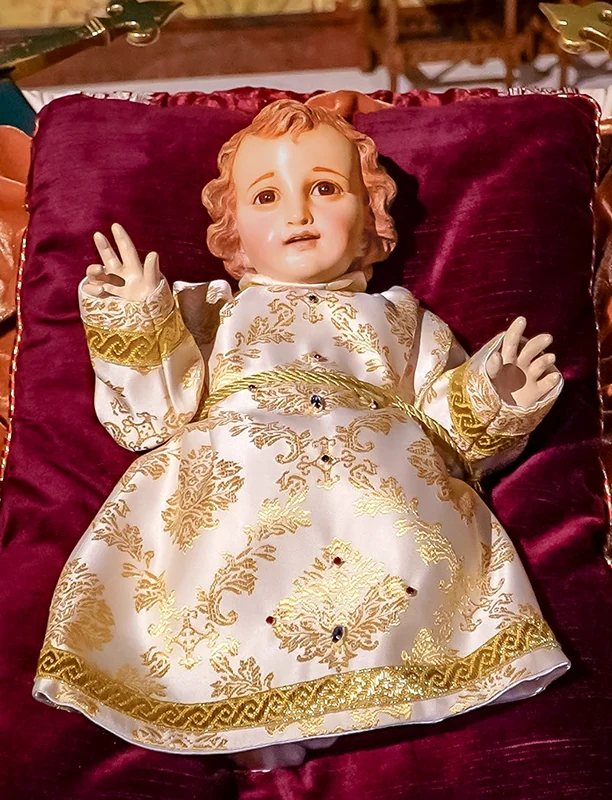 Christmas Carols
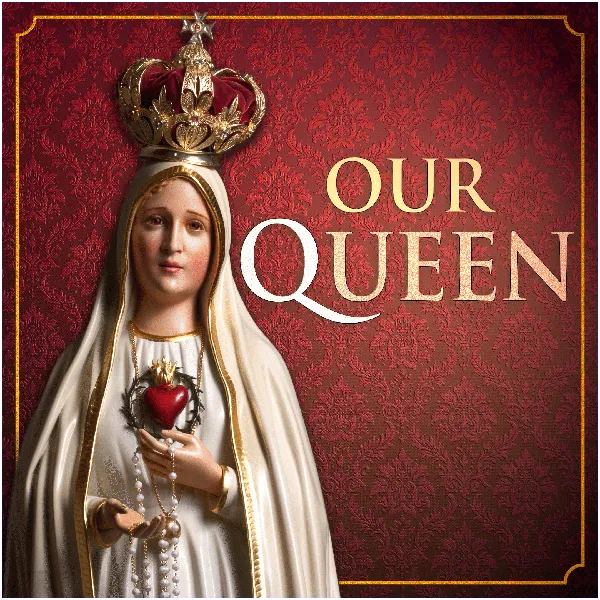







A mission continued through the centuries
Before He returned to His Father, Our Lord Jesus Christ addressed to His disciples the words: “Go into the whole world and preach the Gospel to all creation” (Mk 16:15). With these words He committed to them a duty, a momentous and a holy charge, that was not to lapse with the death of the Apostles but would bind their successors until the end of the world – as long, that is, as there remained on this earth men whom the truth might set free. […]
The Church, faithful to that divine mandate, has never ceased to dispatch to every corner of the world, couriers and ministers of the Divine Word, to announce the eternal salvation won by Christ for the human race.
BENEDICT XV. Maximum illud, 30/11/1919
Lasting fruit
The first evangelization took place above all in the region of the Mediterranean. In the course of the first millennium, missions setting out from Rome and Constantinople brought Christianity to the whole continent of Europe. At the same time, they made their way to the heart of Asia, as far as India and China.
The end of the fifteenth century marked both the discovery of America and the beginning of the evangelization of that great continent, North and South. Simultaneously, while the sub-Saharan coasts of Africa welcomed the light of Christ, St. Francis Xavier, Patron of the Missions, reached Japan.
At the end of the eighteenth century and the beginning of the nineteenth, a layman, Andrew Kim, brought Christianity to Korea. In the same period the proclamation of the Gospel reached Indochina, as well as Australia and the Islands of the Pacific. The nineteenth century witnessed vast missionary activity among the peoples of Africa. All these efforts bore fruit which has lasted up to the present day.
ST. JOHN PAUL II. Tertio millennio adveniente, 10/11/1994
The true Mother of all peoples and nations
The Church is a Mother – Sancta Mater Ecclesia – a true Mother, the Mother of all nations and all peoples, no less than of each and every human being; and precisely because she is a Mother, she does not and cannot belong exclusively to this or that people, nor to one people more than another, but to all of them equally.
She is a Mother and, consequently, cannot be a stranger anywhere. She lives, or at least, by virtue of her very nature, must live amongst all peoples; and, moreover, just as a mother, together with her spouse and her children, forms a family, so the Church, by virtue of an incomparably closer union, constitutes something greater and better than a family: the Mystical Body of Christ.
PIUS XII. Speech, 24/12/1945
The Church is truly Catholic
The Church can regard no one as excluded from its motherly embrace, no one as outside the scope of its motherly care. It has no enemies except those who wish to make themselves such. Its catholicity is no idle boast. It was not for nothing that it received its mission to foster love, unity and peace among men.
It realizes only too well the enormous difficulties of such a mission. It is well aware of the numerical disproportion between itself and the rest of the human race. It knows its own limitations, its own shortcomings and the failings of its own members. It realizes too that the acceptance of the Gospel does not depend on any apostolic endeavours of its own, nor on the existence of the right temporal conditions. Faith is a gift of God; He alone determines in the world the order and the time of salvation.
The Church does, however, realize that it is the seed, as it were, the leaven, the salt and the light of the world. Fully conscious of all that is new and remarkable in this modern age, it nevertheless holds its place in a changing world with sincere confidence, and says to men: “Here in my possession is what you seek, what you need.” Its promise is not one of earthly happiness, yet it nevertheless provides the best means for the attainment of earthly happiness, namely, light and grace. It then it teaches men about their transcendent destiny, and speaks to them of truth, justice, freedom, progress, concord, civilization and peace. The Church well knows the value of these things. It knows them in the light of Christ’s revelation.
ST. PAUL VI. Ecclesiam suam, 6/8/1964
The Church does not repress, but sanctifies native customs
The Church from the beginning down to our own time has always followed this wise practice: let not the Gospel on being introduced into any new land destroy or extinguish whatever its people possess that is naturally good, just or beautiful. For the Church, when she calls people to a higher culture and a better way of life, under the inspiration of the Christian religion, does not act like one who recklessly cuts down and uproots a thriving forest. No, she grafts a good scion upon the wild stock that it may bear a crop of more delicious fruit. […]
This is the reason why the Catholic Church has neither scorned nor rejected the pagan philosophies. Instead, after freeing them from error and all contamination she has perfected and completed them by Christian revelation. So likewise the Church has graciously made her own the native art and culture which in some countries is so highly developed. She has carefully encouraged them and has brought them to a point of aesthetic perfection that of themselves they probably would never have attained. By no means has she repressed native customs and traditions but has given them a certain religious significance; she has even transformed their feast days and made them serve to commemorate the martyrs and to celebrate mysteries of the Faith.
PIUS XII. Evangelii præcones, 2/6/1951
How to favour a people’s development?
A people’s development does not derive primarily from money, material assistance or technological means, but from the formation of consciences and the gradual maturing of ways of thinking and patterns of behaviour. […] The Church forms consciences by revealing to peoples the God whom they seek and do not yet know, the grandeur of man created in God’s image and loved by Him, the equality of all men and women as God’s sons and daughters, the mastery of man over nature created by God and placed at man’s service, and the obligation to work for the development of the whole person and of all mankind.
Through the Gospel message, the Church offers a force for liberation which promotes development precisely because it leads to conversion of heart and of ways of thinking.
ST. JOHN PAUL II. Redemptoris missio, 7/12/1990
May the world recognize in Christ the light that saves
Holy Father, make us one in Christ, rooted in His love that unites and renews. May all members of the Church be united in mission, docile to the Holy Spirit, courageous in bearing witness to the Gospel, proclaiming and daily embodying Your faithful love for all creatures. Bless all missionary men and women, support them in their efforts, and watch over them in hope! Mary, Queen of Missions, accompany our work of evangelization in every corner of the earth: make us instruments of peace, and grant that the whole world may recognize in Christ the light that saves. Amen.
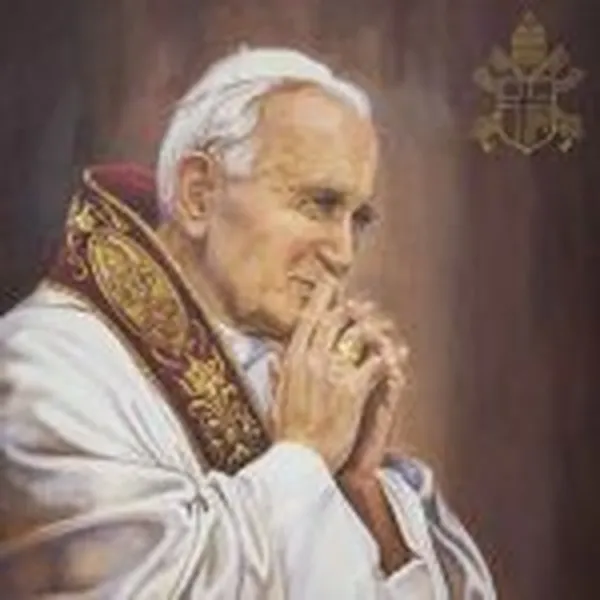 Pope St. John Paul II
 Msgr. João Scognamiglio Clá Dias, EP
 Santiago Ignacio Ramírez