 Heralds of the Gospel Magazine, Vol. 20, nº 228, October 2026
 Heralds of the Gospel Magazine, Vol. 20, nº 227, September 2026
 Heralds of the Gospel Magazine, Vol. 20, nº 226, August 2026
 Who are the Heralds of the Gospel?
 Help of Christians
 Christmas Carols








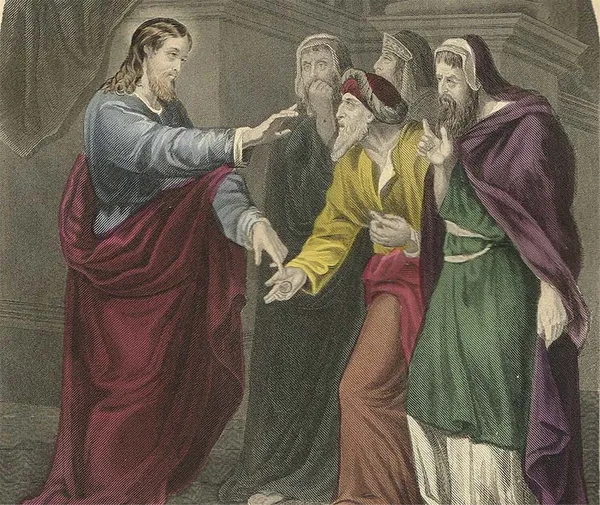
The One who spent His life doing good (cf. Acts 10:38) is now fighting His last battles before operating the Redemption. The hatred against Him reaches a apex, manifested in this Sunday Liturgy in saccharine terms: “Teacher, we know that You are a truthful man and that You teach the way of God in accordance with the truth” (Mt 22:16). The authors of this scheme are the Pharisees who, by sending their disciples to ensnare Jesus in some contradiction, ally themselves with their political enemies, the Herodians.
The Pharisees longed for liberation from all civil authority over the chosen people; the Herodians, on the contrary, had accommodated themselves to paying tribute to the Romans. Jesus thus finds Himself between two groups that, despite their differences, converge in the desire to eliminate Him.
Upon presenting a matter of conscience to Our Lord – “Is it lawful to pay the census tax to Caesar or not?” (Mt 22:17) – they seek to corner Him. In the Pharisaic view, the levy is owed to God, not to emperors. If Jesus defended the payment, He would incur popular hatred, being considered a false prophet; if He advised against it, He would be guilty of insurrection against Roman authority.
The subtlety of the question, hidden behind the mask of hypocrisy, demands a prodigiously perspicacious answer. Divine simplicity limits His response to asking for the object in dispute: “‘Show Me the coin that pays the census tax.’ Then they handed Him the Roman coin” (Mt 22:19).
At that time, the Romans granted subjugated peoples the favour of minting their own copper coins, featuring animal or plant figures; however, silver coins – the only ones accepted for paying tribute – circulated throughout the empire and bore the effigy of Caesar, crowned with laurels.
The truth of the facts is the perfect answer from Our Lord, for if, in theory, the Pharisees repudiated the tax to Caesar, in practice they used his currency unscrupulously… One hypocrisy after another! The definitive sentence of the Divine Master echoes through the centuries: “Then repay to Caesar what belongs to Caesar and to God what belongs to God” (Mt 22:21).
This divine teaching will span the centuries, for it establishes the necessary concord between the civil and ecclesiastical order: both derive from God and must converge towards the common good, attending to the spiritual and material needs of society. This harmony must begin within us, for we carry engraved in our being both the image of Caesar, manifested in our physical needs, and the image of God, as revealed at the beginning of creation: “Let us make man in our image, after our likeness” (Gn 1:26).
If we weep when we lose a valuable coin, should we not also lament when we disfigure the image of God imprinted on our soul? St. Augustine aptly summarizes it:
“As Caesar seeks his image in his coin, so God seeks His in your soul. ‘Render unto Caesar,’ He said, ‘the things that are Caesar’s.’ What does Caesar ask of you? His image. What does God ask of you? His image. But Caesar’s is in the coin, God’s is in you.”1
Notes:


 Msgr. João Scognamiglio Clá Dias, EP