 Heralds of the Gospel Magazine, Vol. 20, nº 228, October 2026
 Heralds of the Gospel Magazine, Vol. 20, nº 227, September 2026
 Heralds of the Gospel Magazine, Vol. 20, nº 226, August 2026
 Who are the Heralds of the Gospel?
 Help of Christians
 Christmas Carols







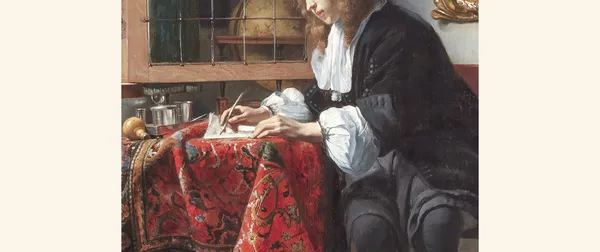
In a previous article,1 a challenge was launched to readers: to discover the author of the letters pictured once again on these pages.
The first revelation will undoubtedly override all initial hypotheses: the letters are not written in Portuguese, nor in English, nor in French or Dutch, but… in Old Tupi! For almost four centuries, these six manuscripts have been kept at the Royal Library of the Netherlands, in The Hague, and were translated by the philologist Eduardo de Almeida Navarro, with remarkable merit, only in 2022.2 It is to be hoped that the important historical context surrounding them will be known by a large part of Brazilians.
In 1624, the Calvinist Dutch, financed by the Dutch West India Company, attempted to invade Bahia and were repelled by a joint military force of Portugal and Spain – called the Luso-Spanish Armada – the following year. During this period, however, they had established relations with some of the indigenous people of Paraíba, the Potiguara – poti uara, in Tupi, shrimp eaters. Pedro Poti, along with twenty other indigenous people, left with the Dutch, abandoning the Catholicism in which they had been baptized and becoming radically Calvinist.
For the other Potiguara, this signified a grave betrayal of their people, of the Portuguese, and above all of the Catholic Faith – embraced by their parents – and reconciliation would only be possible, to some extent, when the conflict culminated on the battlefield.
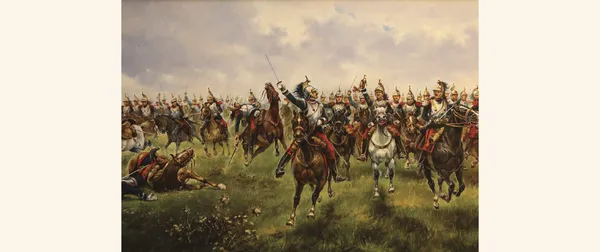
Five years later, the Dutch attacked the Captaincy of Pernambuco and conquered a large part of the northeastern coast, beginning twenty-four years of occupation. On June 13, 1645, the rebellion against Dutch rule began. Episodes marked by religious persecution and violence – such as the massacres of Cunhaú and Uruaçu, in present-day Rio Grande do Norte – intensified the break, and consolidated the resistance.
Among the commanders of the insurrection were João Fernandes Vieira, André Vidal de Negreiros, Antônio Dias Cardoso, Henrique Dias, son of African slaves, and Felipe Camarão. The latter was a Potiguara who had been invested with the title of captain-major of all the Indians.
It is in the context of this climax of history that our six letters are situated, dated from August 19 to October 21, 1645. Three of them are from Felipe Camarão. The authors of the other letters are Captain Simão Soares, Diogo da Costa, and Diogo Pinheiro Camarão. These missives share the same objective: to convince their recipients – especially Pedro Poti, who acted as an interpreter and mediated indigenous alliances – to abandon the enemy camp and return to their families and to the true religion.
They stand out not only for their distinctive handwriting, but above all for the nobility of sentiment and the depth of faith that permeate the text. The solemn and affable introductions are reminiscent of the epistles of the Apostle St. Paul. The delicacy of expression resembles that of St. John the Evangelist:
“May God Himself come with my little letter for your salvation, O my little brother Pedro Poti,” began the Indian Diogo da Costa. The concern is, above all, for the eternal salvation of his brother. Further on, he poignantly appeals to fraternal ties: “Leave, without thinking twice, as soon as you read this letter of mine. Why do you like bad men? And you don’t like me? Why?”
Felipe Camarão, captain-major of the Indians, wrote these lines to Pedro Poti on August 19, 1645, shortly after the Cunhaú massacre, when some indigenous people on the Dutch side, commanded by Jacob Rabi, had slaughtered a group of faithful together with the priest St. André de Soveral during a Mass, on which occasion one of the victims had his heart ripped out through his back: “I am sending you instructions again, because I truly love you. Why? Because I am, in truth, the true father of all, so that you may not lose your salvation.” In another passage, Felipe Camarão gives an insight into the chivalrous sentiments that characterized the people of Rio Grande do Norte and the deep friendship that existed between the Portuguese and the indigenous peoples: “If you do this for the King, it will be a very grand action on your part.”
These letters suggest the existence of several factors that diverge from the typical portrayal of Brazilian history. If these indigenous people were able to write with such fluency and elevation in their own mother tongue, in whose familiar embrace they found the best expressions for their feelings, this is largely due to a handful of heroic priests, such as St. Joseph of Anchieta, who in prior decades transmitted the Faith to them and offered them an alphabet and a grammar. On not a few occasions, the Church and civilization, upon encountering indigenous roots, respected them, protected them, and enriched them with new sap, so that they would produce sweet fruits that they would never have known, had they been abandoned in their primitive state.
The fact that the indigenous people had maintained more direct contact with the Portuguese for only a relatively short period of time – about a century and a half – makes this episode even more eloquent. In any case, it is only fitting to recognize the role of the priests, educators, and leaders who collaborated in this founding process of Brazil, especially in the Pernambuco Uprising, uniting, in different circumstances, combatants of European, indigenous, and African origin.
Notes:
 Angela Maria Tomé