 Heralds of the Gospel Magazine, Vol. 20, nº 228, October 2026
 Heralds of the Gospel Magazine, Vol. 20, nº 227, September 2026
 Heralds of the Gospel Magazine, Vol. 20, nº 226, August 2026
 Who are the Heralds of the Gospel?
 Help of Christians
 Christmas Carols






Every saint is a hero… but not a “superhero”. This seems to be worth clarifying at the beginning of an article in which we intend to discuss the life of St. Peter of Alcantara, because people of our century are unconsciously accustomed to conceiving great works in the way they are presented in Hollywood films: an outstanding main character, for whom everything goes favourably and who ends his epic with a huge smile as the famous happy ending.
The most curious thing is that, not infrequently, this superhero encounters dramatic situations in which an unprecedented strength is revealed in him, superior to that of other mere mortals, which allows him to perform incredibly strenuous feats… without any suffering.
This is an erroneous and even dangerous view; but unfortunately very widespread, even in Catholic circles…
If we bear this in mind, it will be easier to understand that when, in the year 1499, the birth of a boy was announced in the village of Alcantara, Spain, it was not a superhero, but a son of Adam, weak and sinful like us all, who came into the world. This newborn, however, aided by grace and crowned with countless sufferings, would become a great saint.
The boy, the youth, and the student
The name of this newborn was Juan. And, while it is true that he would live in the same century as the celebrated Juan of Austria, the victorious general of the Battle of Lepanto, it is no less true that he rivalled him, in his own way, in heroism.
Juan de Garavito y Vilela de Sanabria was the son of Catholic nobles, who knew the importance of instructing him in the Faith from childhood. This formation was of immeasurable value, for the young nobleman grew not only in age, but also in grace and sound convictions. His father, however, died very young.
As a young man, Juan entered the University of Salamanca. There, far from the common amusements of the youth of that time, the student’s recreation was to spend time in the presence of the Blessed Sacrament. In these silent colloquies, an uncertainty pursued him: what career to follow? He felt called to the priesthood; but should he be religious or secular? Conventual life greatly attracted him; However, like any human being, the glories of the world tempted him.
Although he consulted many holy men on the matter, none of them managed to appease his spirit. In the meantime, he returned to Alcantara for the summer holidays.
Finally, God answers his doubts
One day, once again at the foot of the tabernacle, Juan was praying. Perhaps he was asking the Lord what direction He desired for his life. Looking around, he saw two barefoot religious men, wearing brown habits and girded with a three-knotted rope. Anyone would have taken them for simple Franciscans. For Juan, however, they were God’s answer.
Moved by that breath of grace, the young student approached the friars and, opening his conscience, poured out the weight that oppressed him.
“Deus qui ponit pondus, supponit manum,”1 goes the Latin saying. Among those who heard his soul-searching narrative was Fr. Francisco Fregenal, superior of a Franciscan community. He was, therefore, precisely the one who could extend a hand and welcome him to the place that Providence had destined for him. As can be expected, the priest quickly realized it was a genuine and excellent vocation, and decided, without delay, to accept him into the friary at Manxaretes.
Leaving there, Juan de Sanabria rushed to settle his affairs in the world and, wishing to spare his family a commotion, left without warning. Everything was going very well, until his path was suddenly obstructed: there was a storm, and crossing the Tiétar River would be impossible for anyone… Anyone, except God!
Juan then implored the help of the Almighty and behold, for the first of many times, he began to fly!… After crossing the river and reaching the other bank, a whole life had been left behind; turning back was no longer an option for him.
Upon entering the friary, Juan de Sanabria “died” to give way to Friar Peter of Alcantara: a new man, with a new name, new apparel, a new home, and a new mission. This mission would soon become clear, for upon witnessing the troubles faced by the Franciscan Order, he understood what God was calling him to.
Between Observants and Conventuals
In the years following the death of St. Francis of Assisi, the Order of Friars Minor underwent numerous difficulties. A certain number of the religious were inclined to moderating the rule, especially regarding poverty. In fact, numerous concessions were made in this regard, such as those contained in the bull Ad statum ordinis, by Pope Martin V.
Over time, the rule was stripped of its original rigour in many points. A necessary adaptation, some claimed, to better conform to the world of that time.
However, there was no shortage of souls who would fight for strict observance:
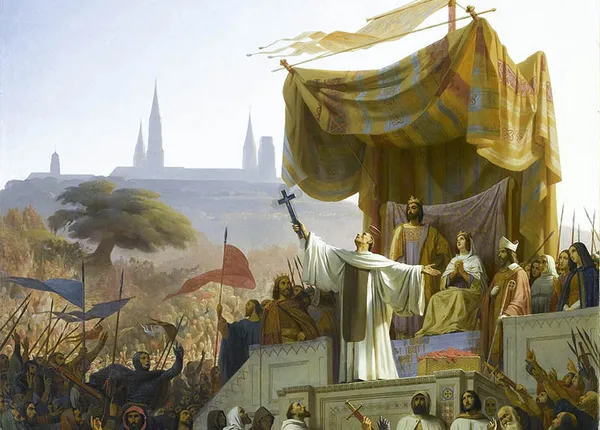
“It was then that, convoked by Bernardine of Siena, John Capistrano, Albert of Sartiano and James of the Marches, ‘the four pillars of observance,’ as they were called, a movement takes shape which, without quarrels and without scandals, unites by free adherence all the friaries desirous to live Franciscan poverty integrally.”2
These friars, supporters of the primitive rule, became known as observant; and those who adhered to the mitigated rule, as conventuals.
In the Extremadura region, when Friar Peter of Alcantara joined the Order, the Custody of the Holy Gospel was already formed, consisting of three friaries that remained from an attempted reform undertaken years earlier by Father Juan de Guadalupe. There, a spirit of greater austerity of life and a desire to faithfully fulfil the founder’s rule prevailed.
Some time later, the group of friaries that constituted the Custody of the Holy Gospel was elevated to the category of province, with the name of St. Gabriel, thus acquiring greater freedom of government within the Order itself. Friar Peter held various positions in this province until, in 1538, he was elected provincial minister. He then sanctioned constitutions of stricter observance and, to ensure their fulfilment, personally visited each of the houses.
After his term ended, the holy friar went to Portugal. There, he transformed the rugged Arrábida region into fertile ground for God. It was not without reason that the General of the Order, Friar John Calvo, was moved by seeing such heroism in those friars who lived in extreme conditions. That example was not only moving: it was above all attractive. To such an extent that one of the General’s companions, unable to resist, requested permission to remain there and, like him, many others were fascinated by this radical form of dedication to God.
The reformer
After these initial experiments, Friar Peter decided to carry out the mission to which he felt inwardly called. He was not content with the “semi-radicalism” prevalent in the Province of St. Gabriel; he wished to reform everything according to the original source, that is, according to the ideal of the founder.
This yearning was enough for the waves of persecution to rise against him, and even for his superiors and those closest to him to consider him mad and discredit his initiative…
Discouragement, however, was not in his vocabulary. Walking in the footsteps of the Poverello, Peter of Alcantara went to Rome to present to the Successor of Peter his intentions regarding the Seraphic Order. He did so with his hands on the Gospels and, before that new Francis of Assisi, Paul IV supported the undertaking. To make his reform possible, the Pope detached him from obedience to the superiors of the local Observance – who opposed its rigour – and integrated him into the jurisdiction of the Conventuals, whose Minister General offered the support and freedom necessary for the implementation of the strict primitive rule.
It would be very ingenuous to believe that this would resolve all disagreements. In fact, returning to Spain and resuming his apostolate, now under the authority of the Conventuals, it was not long before the General Commissioner of the Order in Spain summoned him to renounce his projects, accusing him of being “hypocritical, a visionary, reckless, exalted,”3 and a disturber of the peace in the province.
Overcoming these difficulties, that zealous friar accomplished a truly colossal work. New hermitages were founded, all animated by the radicalism that characterized him, and the Custody of St. Joseph was created.
The Saint of Alcantara’s ideal triumphed, but the attacks intensified.
He decided to return to Rome to once again seek the help of the Supreme Pontiff. Supported by Paul IV, who recognized his eminent virtues, the reformer was promoted to General Commissioner of the Reformed Friars Minor of Spain and, on May 8, 1559, the brief Cum a nobis conferred upon him the power to found friaries, custodies, and provinces anywhere in the world, in addition to granting him the faculty to choose three judges, who would resolve the disputes arising from the reforms.
By 1561 there were already nine friaries, enough to justify the erection of the Province of St. Joseph and, with that, the drafting of the constitutions. Finally, in 1563, Pope Pius IV, with the bull In suprema militanti Ecclesiæ, linked the “Alcantarines,” as they were called, to the branch of the Observant Friars, of which they would constitute the most vigorous part in the following centuries.
Eminent holiness
Much more could be said about the hardships of this ardent reformer; however, there is something more important to point out: his moral character.
Considering that all successes in the life of apostolate are due to a well-lived interior life,4 history proves how much Friar Peter stood out in this regard. His power of attraction, the numerous friaries he successfully founded, the miracles of conversion he performed in the confessional, all undoubtedly rested on an intense life of prayer, fasting, and penance.
How, however, to put this holiness into words? Perhaps the most faithful description is that of a saint who had the good fortune to know him closely: Saint Teresa of Avila, whose confessor was Friar Peter.
According to the Carmelite reformer, for forty years St. Peter of Alcantara slept only an hour and a half a night. And, this sacrifice not seeming sufficient to him, he always slept in a sitting position, in a tiny cell – a little less than 4-feet wide! –, which denied him any comfort. His diet could not have been more austere. It was common for him to go three days without eating; sometimes, he would go up to eight days without satisfying brother body!
St. Teresa recounts:
“Such was his mortification in his youth that, according to what he told me, he had spent three years in a house of his Order without recognizing any of the friars except by their voice, because he never raised his eyes. He did not know how to get to the places where duty called him, except by walking behind the other religious. The same happened to him on the roads. He never looked at any woman for many years.”5
A life of such penance and humility could not fail to attract the benevolence of God. As the Carmelite Saint relates, “his end was similar to his life, for he died preaching and admonishing his religious. When he saw that he was at his last, he said the Psalm: Lætatus sum in his quæ dicta sunt mihi;6 and, kneeling, he expired.”7
In numerous visions, St. Teresa saw him in heavenly glory.
Far removed from us?
Curiously, after finishing the account of the life of St. Peter of Alcantara, some readers may find themselves discouraged in the face of such extraordinary holiness. Indeed, discouragement can easily take hold of a soul when it encounters an ideal that at first glance seems unattainable. However, this is not the correct perspective. It would also be erroneous to consider that such great austerity was the fruit of a “supernature”. On the contrary: it is certain that holiness cost him dearly.
There is another harmful conclusion to combat: that of thinking that, to be holy, we must all sleep, eat, dress, etc., exactly as the Franciscan Saint did – or did not …
So, how should we proceed?
The answer is simple to formulate, although difficult to practise: we must do God’s will in our regard. Souls are different, and Providence has its own ways for each one. St. Thomas Aquinas made this clear to his confidants when he forbade them from undertaking overly austere sacrifices – although they did not even come close to those he himself practised. What the Lord asked of him was not the same as what he expected of his brethren.
Even so, in this diversity of paths that lead to holiness, some elements will always be present: suffering, prayer, confidence and struggle. In different forms and with unequal measures, they are found in the life of every Catholic and, if well employed, lead to the heavenly homeland.
Worldly people might judge this to be too sad an existence. But the story of St. Peter of Alcantara offers us the opposite conclusion. Alongside the rigorous austerity he imposed upon himself, Providence granted him remarkable gifts that surpass any human enjoyment: countless ecstasies, ineffable consolations, a clear conscience of a mission accomplished – all these were like magnificent oases in his life.
Furthermore, his very presence became a support for others, among whom we highlight St. Teresa, for in a soul so united to Him, God can work in a supremely excellent way.
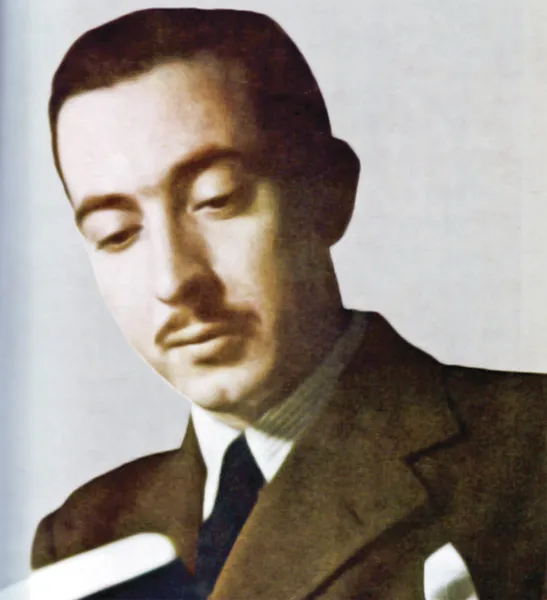
And there is something more, as Dr. Plinio Corrêa de Oliveira teaches:
“Having the strength of soul to endure disappointments, slander, frustrations, in short, everything that man can suffer in life, is true heroism. It is foolish to imagine that only those who fight with weapons in hand are heroes. […] We must understand that, in everyday life, we have opportunities to truly practise heroism.”8
This is precisely the lesson that the life of St. Peter of Alcantara offers us: when man renounces himself and puts himself entirely at the service of God, he becomes a true hero!
Patron Saint of Brazil
It was because of the testimony of so many virtues that this Spanish friar was canonized on April 28, 1669, and, due to the great devotion that the Emperor of Brazil, Dom Pedro I, had to him, he wished to entrust his domains to such a glorious intercessor. Thus, since 1826, the country has had St. Peter of Alcantara as its Patron Saint.
May he act, therefore, in the nation entrusted to him and, with even greater impetus than that demonstrated in life, and fight so that the Land of the Holy Cross9 may respond to its calling and be inhabited by heroes worthy of the name of Christians.
Notes:
 Sr. Clara Isabel Morazzani
 Sr. Carmela Werner
 Sr. Lucilia Virginia Bassi