 Heralds of the Gospel Magazine, Vol. 20, nº 228, October 2026
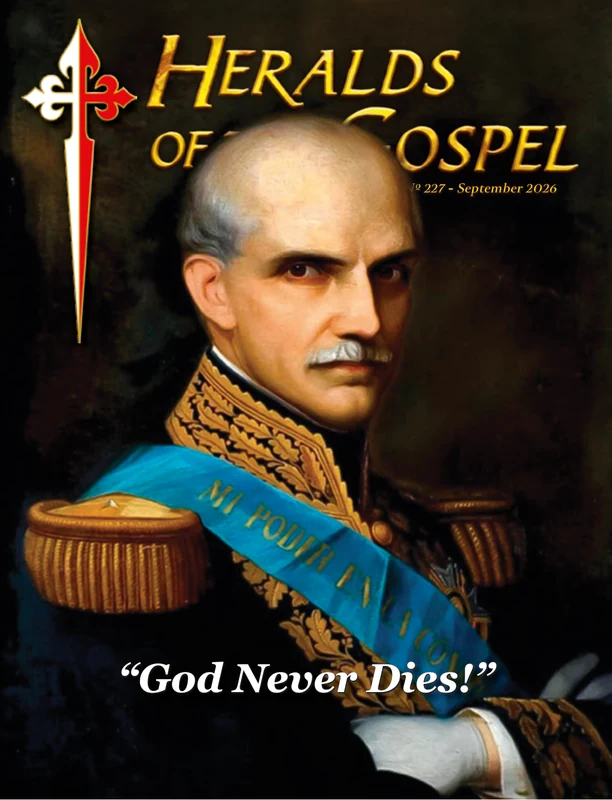 Heralds of the Gospel Magazine, Vol. 20, nº 227, September 2026
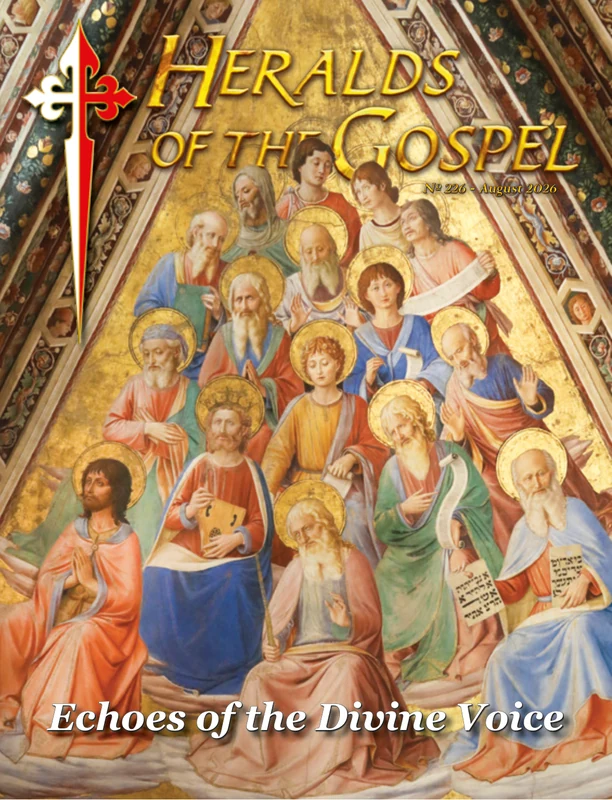 Heralds of the Gospel Magazine, Vol. 20, nº 226, August 2026
 Who are the Heralds of the Gospel?
 Help of Christians
 Christmas Carols








The words of the Divine Master to the Samaritan woman (cf. Jn 4:1-42), illuminated by the commentary of St. Thomas Aquinas (cf. Super Ioannem, c.IV, lect.3, n.624-630), are one of the most illustrative portraits of Johannine theology on salvation. The woman’s act of abandoning her water jar at Jacob’s well and running to the city of Sychar to proclaim Jesus as the Messiah is an eloquent symbol of the transformation that grace produces in the human soul.
The Angelic Doctor’s teachings on this episode highlight three aspects.
The first is the importance of detachment from the things of this world and its concupiscences. Indeed, the graces and gifts the Samaritan woman received in the encounter with Jesus led her to renounce her original intention to draw water, causing her to yearn only for the spring “welling up to eternal life” (Jn 4:14). Just as the brothers Peter and Andrew, as well as James and John, had left their nets upon hearing Jesus’ call (cf. Mt 4:18-22), similarly the Samaritan woman now abandoned her water jar, a symbol of her earthly concerns, to follow Christ.
Secondly, and as a corollary to the previous point, the Samaritan woman did not keep the treasure for herself, but assumed the role of a fervent evangelizer. Her charitable zeal was evident in her initiative to go out in search of her fellow countrymen: “[She] went away into the city, and said to the people” (Jn 4:28). In making her invitation to them, she was shrewd: “Come, see a Man who told me all that I ever did” (Jn 4:29), for “she clearly knew that if they drank from that spring, upon seeing Him, they would experience what she herself had” (n. 626).
As St. Thomas Aquinas observes, she did not immediately declare that Jesus was the Messiah, thus avoiding unnecessary rejections and hasty judgements. She cleverly raised the question – “Can this be the Christ?” (Jn 4:29) – while, at the same time, referring to credible and well-known facts, following the conduct of a true evangelizer by drawing those people not to herself, but solely to God.
Thirdly, the Samaritan woman’s testimony gained authenticity because it was born of humility. Jesus revealed that He knew her licentious life (cf. Jn 4:18), and she, far from resenting it, recognized the greatness of the One who called her to repentance. This attitude gave such strength to her words that her listeners even said: “It is no longer because of your words that we believe, for we have heard for ourselves, and we know that this is indeed the Saviour of the world” (Jn 4:42).
The Samaritan woman was transformed from a sinner into an ardent evangelizer. She emerges as a model for all those who, throughout the history of the Church, have rejected the illusions of the world to dedicate themselves exclusively to the salvation of souls. May this also be our purpose in life, so that, with fidelity, we may attain the eternal inheritance!


 Msgr. João Scognamiglio Clá Dias, EP


 Sr. Maria Cecília Veas