 Heralds of the Gospel Magazine, Vol. 20, nº 228, October 2026
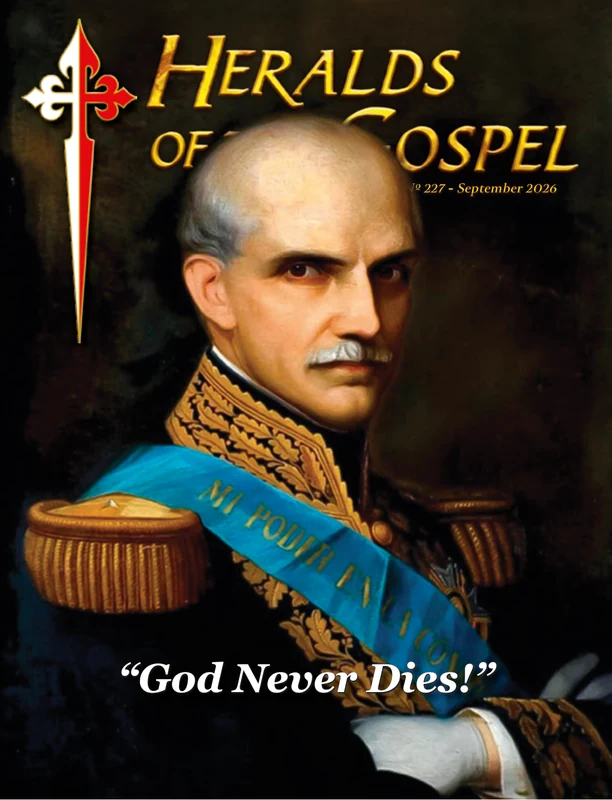 Heralds of the Gospel Magazine, Vol. 20, nº 227, September 2026
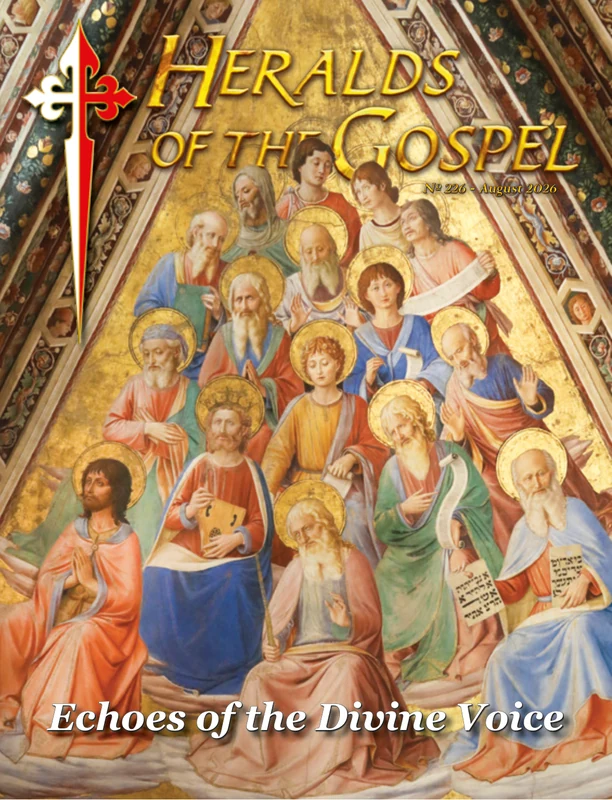 Heralds of the Gospel Magazine, Vol. 20, nº 226, August 2026
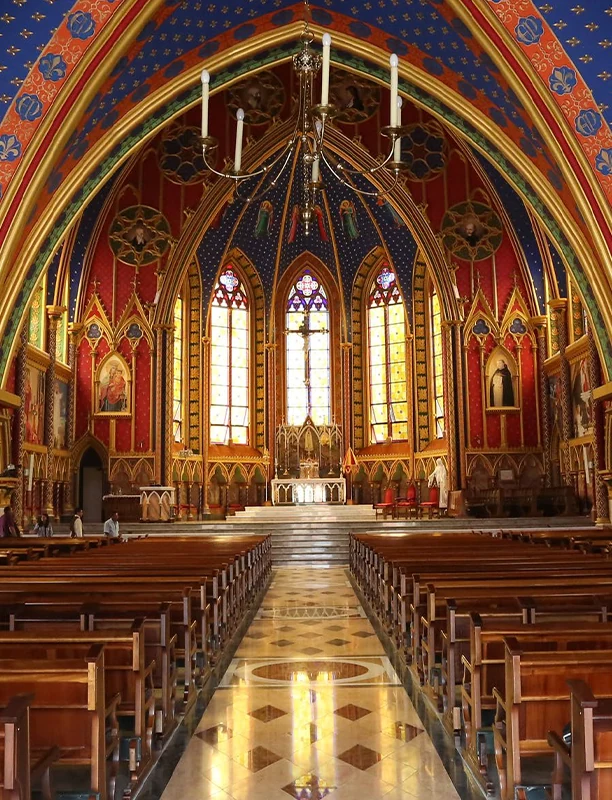 Who are the Heralds of the Gospel?
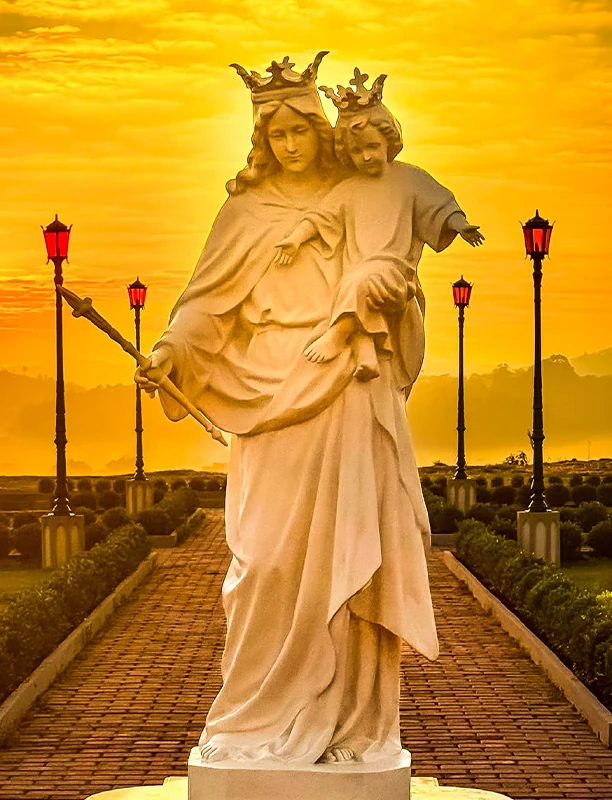 Help of Christians
 Christmas Carols








To have a better understanding of the One who is the example for all Christians, upon encountering the various traits of Our Lord Jesus Christ in the Gospels and the Tradition of the Church, it is important for us to analyse His conduct in depth, both according to His outward expressions – His voice, gestures, and gaze – and, above all, according to the manifestations of His spirit, the way He addressed people and the customs and traditions of life that He observed.
One of these aspects of Our Lord that draws our attention is the system of teaching He adopted during the three years of His public life: why did He dedicate His instruction to the “lost sheep of the house of Israel” (Mt 15:24)? Why did He begin His apostolate with the Jewish people?
St. Thomas Aquinas,1 when dealing with this particular, gives four reasons why it was fitting that the Divine Master should preach first only to the chosen people.
First of all, as St. Paul affirms (cf. Rom 15:8), to fulfil the promises made to the patriarchs and prophets in the Old Testament, that the Messiah would be born from their descendants. Secondly, because the Jews constituted the nation closest to the Divinity through faith and worship, and thus it was demonstrated that His coming was from God, who does everything with order and hierarchy. The third reason is of a diplomatic nature: if Our Lord had addressed the Gentiles and the Samaritans, He could have been accused of not caring about His own people. Finally, because it was on the Cross that He conquered dominion over the nations (cf. Phil 2:8-11; Col 2:11-15).
Therefore, although Jesus occasionally engaged in direct apostolate with some pagans – such as, for example, the Samaritan woman (cf. Jn 4) and the Greeks (cf. Jn 12:20-23), as well as the Roman centurion and the Canaanite woman, whose faith He praised (cf. Mt 8:5-13; 15:21-28) – we must consider that, until the Passion, Our Lord preferred to exercise His mission specifically among the Jewish people, because He had come “to His own” (Jn 1:11).
This does not mean that the Saviour rejected the Gentiles. On the contrary: having died on Calvary to save mankind, He desired that the Apostles, after His Resurrection, bring the light of doctrine to the whole world, so that the effects of His Most Precious Blood would penetrate souls and all humanity would benefit from the Redemption.
However, who could prove that the Word would spread throughout the world? There are certain works in history about which Providence offers no guarantees for success, but only somewhat cryptic indications, for if it gave clear proof, what merit would those who embraced the good cause have? Thus, in founding the Church, God granted graces to people of faith so that they might recognize it as an infallible institution, destined for total victory; for unbelievers, however, it was possible to harbour doubts.
Origin of the missionary nature of the Church
By sending His disciples to spread the truth to all peoples, the Redeemer showed His power, giving their preaching such great effectiveness that they ended up converting people who had never even heard of the Person of Jesus. There were twelve men, followed by seventy-two others, transformed from “poor men” (Ps 113:7) into true angels, endowed with the ability to cast out demons and perform great miracles!
At the same time, Our Lord gave the Gentiles the possibility of practising an act of faith greater than that of the Jewish people themselves because, without receiving the Gospel directly from His divine lips, but only through the testimony of others, they accepted it more than those who benefited from the signs and discourses He had given. “Blessed are those who have not seen and yet believe” (Jn 20:29).
Where did this first impetus for conquest come from?
It came from Above and had its origin in the love between the Three Persons of the Blessed Trinity. God brought forth the universe out of nothing to manifest outwardly this love which, from all eternity, is His life and happiness. And He created humanity in such a way that the Incarnation of the Word and the sanctification of souls by the Holy Spirit would be possible. Therefore, from the beginning of creation, the Lord is constantly in contact with men to make them aware of the truth and to save them.
The missionary nature of the Holy Church is based on this will of the Son and the Spirit to be sent – in Latin, missi – and on the Father’s design in sending Them.
Indeed, all our faith is based on and centred around Our Lord Jesus Christ, as He Himself affirmed: “He who believes has eternal life.” (Jn 6:47). Coming to earth, He brought us Revelation, for the very divine communications made in the Old Testament were given in view of the coming of the Messiah.
The Church, therefore, receives all its lifeblood from Christ, its Head, just as – according to the Church Fathers – the Moon receives all its light from the Sun.2 If the Sun were extinguished, the Moon would no longer shine, and the world would be plunged into darkness.
Thus, the Church is Holy because the Most Precious Blood of Jesus washes, waters, and anoints it, and the power of the Holy Spirit, who dwells in souls in the state of grace, vivifies and sanctifies it, giving the Mystical Body of Christ a strong, firm, and indestructible nature, worthy of Our Lord’s promise: “he who falls on this stone will be broken to pieces; but when it falls on any one, it will crush him” (Mt 21:44).3
Loving His Church, God grants the faithful special gifts and graces, from which then flourish the most magnificent works of virtue and truth, as well as so many riches and wonders of art. There is, therefore, no complete beauty born outside the Church. One may find some pulchritude, for example, in a Japanese pagoda or in certain buildings in India, or even in constructions like the Alhambra in Granada; but the beauties existing in cultures outside the Catholic Religion are always incomplete and improvable.
The purpose of the Church’s mission
What, then, is the purpose of the Holy Church’s missionary action?
Since our souls are the object of God’s infinite love, it is this same love that impels us to seek out all people, to bring them to be part of the great divine family. This movement resembles a circle that, starting from one point, returns to the place from which it started. Indeed, our origin is in the Blessed Trinity, and our ultimate end is the same Blessed Trinity.
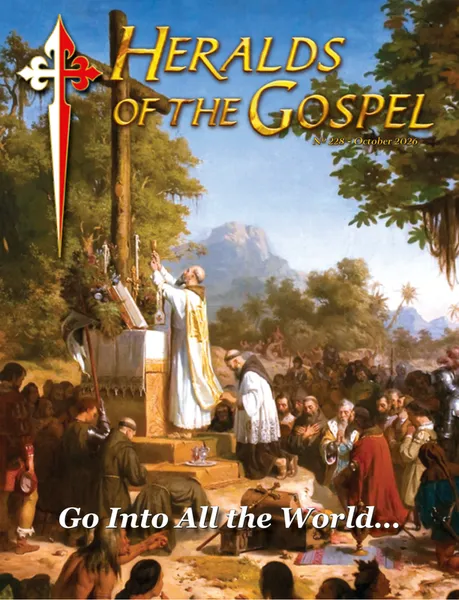
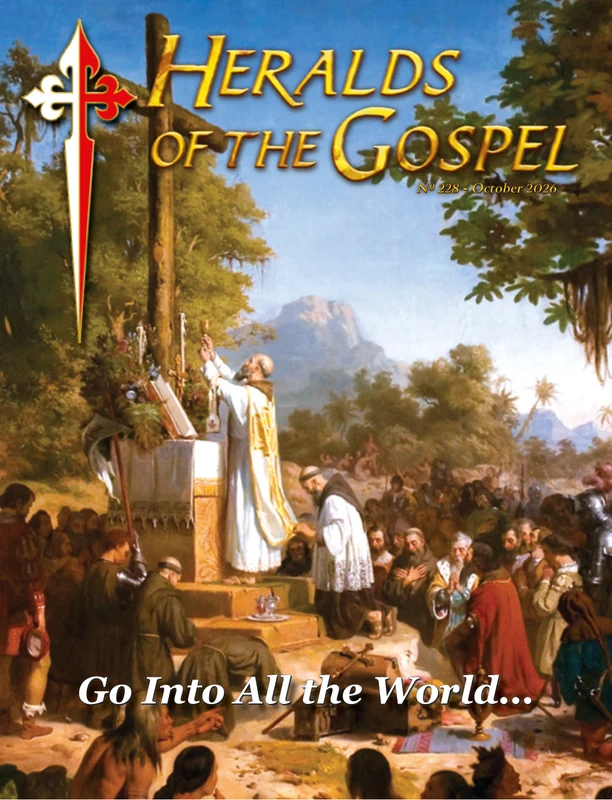
The Catholic nature of the Church – from the Greek katholikós, which means universal – comes from the necessity for the mission. The great Captain called Jesus Christ commands us with these words:
“Go, therefore, and make disciples of all nations, baptizing them in the name of the Father, and of the Son, and of the holy Spirit, teaching them to observe all that I have commanded you. And behold, I am with you always, until the end of the age.” (Mt 28:19-20).
We cannot restrict this promise of Our Lord’s abiding presence with us solely and exclusively to the Eucharistic Presence, since, for a long time, consecrated hosts were not reserved in the tabernacle, a custom that was gradually established in view of the need to bring viaticum to the sick. It is above all at the time of the apostolate that He makes Himself present, as He affirmed in another passage: “For where two or three are gathered in my name, there am I in the midst of them” (Mt 18:20).
Now, since the Church is universal, it must extend its roots to all ends of the earth, influencing environments, homes, and families with the “psychology” of the Gospel, so that we may understand that our individual vocation is also universal. We need to have the soul of an apostle to the point of desiring to convert all peoples.
Looking at each one of us, we see that we are but clay, but if we allow ourselves to be transformed by God, His love will make us great saints, and we will go out into the world inflamed with the desire to conquer the face of the earth for Our Lord, providing a pretext for grace to spread generously and bringing souls closer to the practice of the true religion, in the endeavour that all may walk towards perfection.
However, if we analyse the world, we will see that Jesus’ missionary mandate has not yet been completely fulfilled, for many peoples are yet to be evangelized.
Let us, therefore, be instruments docile to the breath of the Holy Spirit, making use of all the elements at our disposal and employing the gifts and qualities granted by Providence to make the Catholic Church known throughout the world.
What does it mean to evangelize “every creature”?
This leads us to another very important consideration. At the end of the Gospel of St. Mark there is a truly beautiful detail which has always caught my attention, and on which I have not found a single commentator focusing. This Evangelist, unlike the others, emphasizes the statement of Our Lord, already resurrected: “Go into all the world and preach the Gospel to every creature” (Mk 16:15).
Now, if He recommended announcing the Gospel “to every creature,” should we then preach not only to men and women, but even to inanimate and irrational beings? “Creature” includes stones and plants, birds and puppies… How can we make ourselves “heard” by them?
It seems to me that these words have a very interesting meaning with regard to the vocation of the baptized, whose actions aim to place Our Lord Jesus Christ at the centre of creation, so that it may be conformed to Him.
By sanctifying the soul and making it a participant in the divine nature, Baptism introduces into it the procession of virtues and gifts of the Holy Spirit, giving it a different vision of the universe and equipping it not only to control its passions and evil inclinations, but also to act upon the beings that surround it. Now, if man is linked to the five levels of creation – the mineral, the plant and the animal kingdoms, to the other human beings, and even to the Angels – then the effects of the Baptism received must be felt throughout the entire sphere that surrounds them, sacralizing and, so to speak, evangelizing even inanimate matter.
Thus, when a building is to be constructed, it is necessary to use engineering knowledge to make use of mineral elements – sand, bricks, iron, marble – in order to build churches, palaces or houses upon which the seal of the Gospel is imprinted. Because an arch, a column, a stained-glass window, a sculpture, a window, a door, a railing, the steps of a staircase, or even the colour of the ceilings, can be instruments used to speak of God. The modern spirit, on the contrary, focuses on constructing buildings quickly, aiming for functionality, with little concern for aesthetics. And the result are works contrary to the Gospel, more suited to preaching the axioms of hell.
In relation to a piece of land, one should strive to cultivate it to the point of transforming it into a magnificent garden, according to the spirit of Our Lord.
With regard to living creatures themselves, such as birds or butterflies, one should do everything possible to ensure that they have a good environment and multiply in such a way that they beautify the landscapes.
And so the Gospel must be preached constantly, not only in architecture or botany, but in cooking, in fabrics, in clothing, in vestments, in a beautiful organ, in harmonious singing – Gregorian or polyphonic –, in symbols, as well as in gestures, in demeanour, in the way of performing any kind of work, in ways of being and behaving, in relationships with others, in the administration of the Sacraments…
St. Paul himself affirms in his epistle to the Romans that creatures – that is, the whole universe – having suffered the mark of sin, groan for the day when they may receive the influxes of Redemption (cf. Rom 8:22-23). And the Thomistic view defends the thesis that at the end of the world, after the Judgement, the work created by God will reach a true apotheosis of splendour, as never before!4
Nothing, however, surpasses preaching through the practice of virtue, through which we strive for the world to be transformed into a true Paradise, where the principles of the Gospel and the sense of hierarchy are applied to everything that exists, to the contrary of egalitarianism, prosaism, and vulgarity.
In Heaven, nothing is crooked, broken, or ugly; on the contrary, everything is of unimaginable beauty. A single one of the celestial wonders would fill our eternity! God willed it thus so that the bodily senses will be in harmony with the soul, which will enjoy the supreme happiness of the beatific vision, which consists in seeing God face to face.
Excerpts from oral expositions given between 1992 and 2015
Notes:



 Editorial team