 Heralds of the Gospel Magazine, Vol. 20, nº 227, September 2026
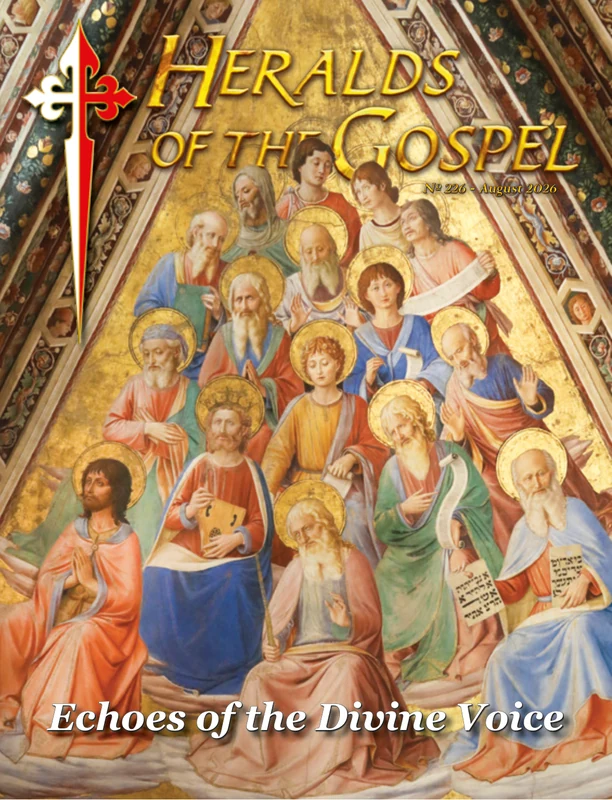 Heralds of the Gospel Magazine, Vol. 20, nº 226, August 2026
 Heralds of the Gospel Magazine, Vol. 20, nº 225, July 2026
 Who are the Heralds of the Gospel?
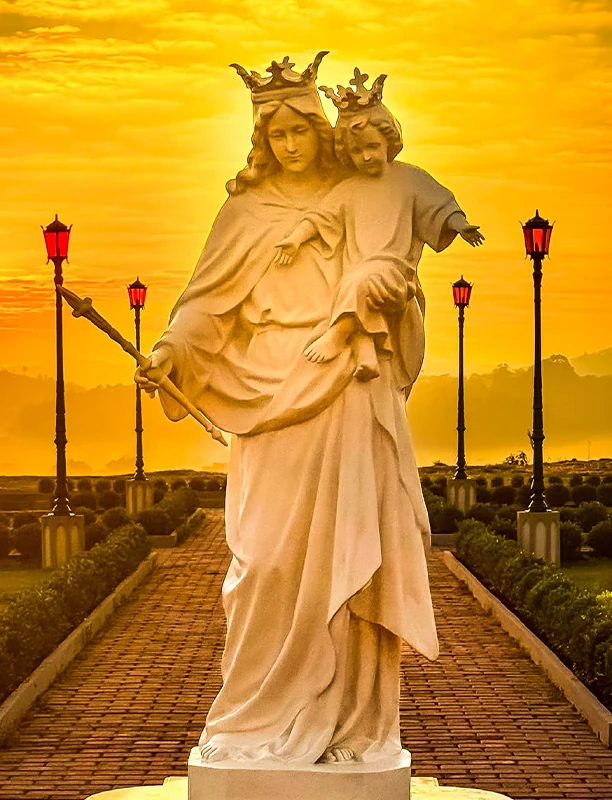 Help of Christians
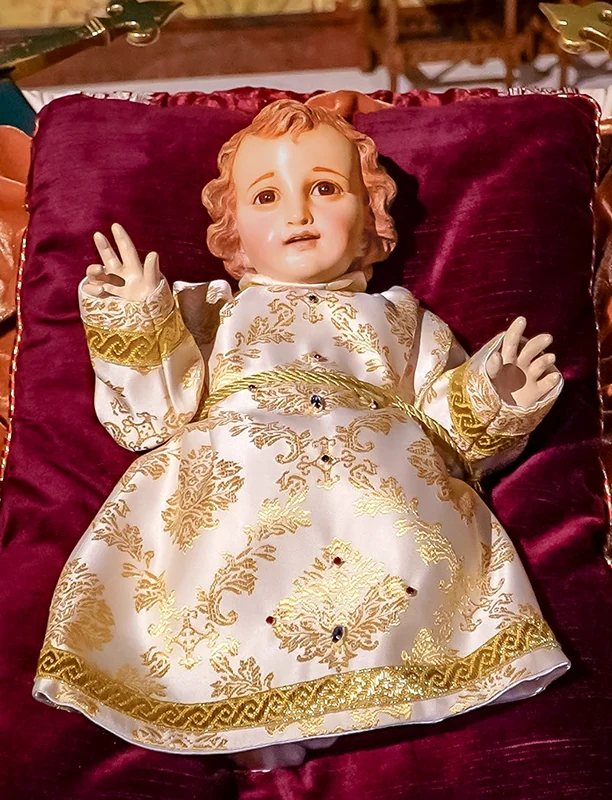 Christmas Carols









The Desire for Perfection
As I have already had occasion to comment, one of the precious fruits of Christian civilization was, in my view, the desire for perfection and balance applied to the most varied aspects of society, culture, art, etc., imbued with temperance and a Catholic sensibility.
In French, one would say the raffinement of all things. A refinement, a pinnacle of excellence and harmony that attains that form of full, consummate beauty, which no one dares to touch, because there is nothing to alter in it.
This characteristic stands out in a special way in two works born of the medieval soul and which, to this day, leave us filled with enchantment and admiration.
Beauty is contemplative
The first of these, a constant object of my praise and rapture, is the Cathedral of Notre-Dame de Paris.
In it—as is generally the case with Gothic architecture—I seem to see reflected the temperance that crowns the virtues and qualities of the righteous heart. Above all, in its façade, we can discern this mirror of all the good dispositions of the human soul.
The marvelous appearance of this temple is “exquisitely refined,” if we may put it that way, in the sense that it reveals to us a series of sentiments brought to their utmost refinement, coexisting gracefully on the same façade. And perhaps this is the aspect that draws me to it so much.
So, if we seek there an expression of Our Lady’s tenderness, we find it immediately. Or, if we wish to see something of Mary’s solemnity, there it is.
We also find in those exquisitely carved stones something of Her severity, counterbalanced by unfathomable goodness and mercy.
We also contemplate the royalty, the majesty of the Mother of God, shining through the richness of the carvings and engravings with which medieval artisans sculpted those images.
In short, Our Lady in action, in peace, in glory, in the radiance of all her virtues, is expressed on the façade of Notre-Dame. A refinement of splendor!
The stained-glass windows
Another treasure raffiné bequeathed to us by the Middle Ages is the fascinating art of stained-glass windows.
Yet another of those manifestations of untouchable balance, fixed forever in their perfection, magnificence, and beauty.
No one would dare alter a single detail of these admirable, exquisite stained-glass windows. For example, in the magical splendor of the Sainte-Chapelle, or in the rose windows of Chartres and Bourges—who would even think of tampering with them?
These are the kinds of achievements that have attained the utmost possible perfection within their genre, and any alteration they undergo signifies a step toward decay.
Let’s say, for instance, replacing the luminous polychromatic glass with some transparent glass reputed to be of excellent quality—with countless optical and practical advantages, etc., etc.—would be a disaster.
Why? Because stained glass represents such a synthesis—always prodigiously balanced—of diverse and bewildering colors that we find in them all the varieties, all the beauties that never tire, within a harmonious, serene, and tranquil unity, conveying to us a pleasant sense of fulfillment.
Thus, stained glass would be the ideal form of refinement.
And so well-proportioned that, within a single depicted scene in such a rose window, we find knights leaving their fortress, monks working in their abbey, and so on—and, in the midst of it all, a man wearing a green hat that no one would ever imagine anyone wearing.
However, the hue of that color, when struck by the sun, proves to be of such excellence that, even on that character’s head, it ceases to be ridiculous. On the contrary, it carries a certain splendor.