 Heralds of the Gospel Magazine, Vol. 20, nº 227, September 2026
 Heralds of the Gospel Magazine, Vol. 20, nº 226, August 2026
 Heralds of the Gospel Magazine, Vol. 20, nº 225, July 2026
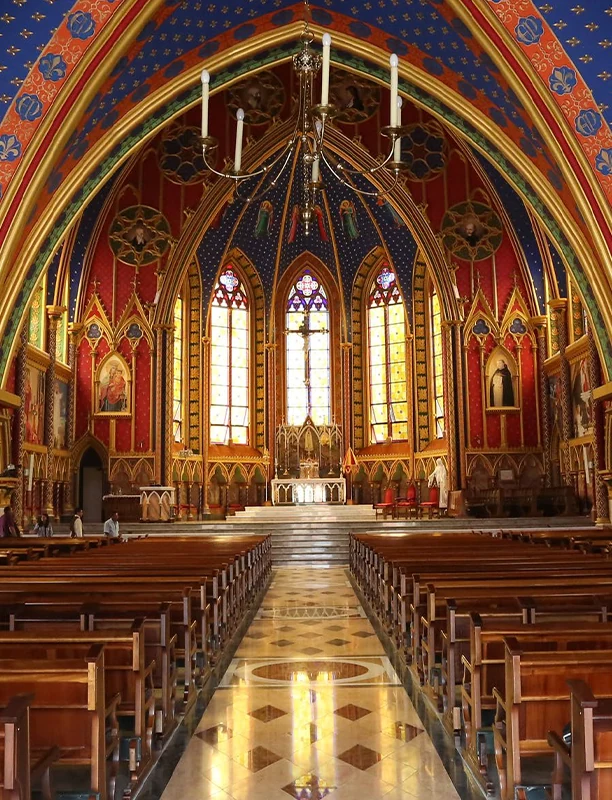 Who are the Heralds of the Gospel?
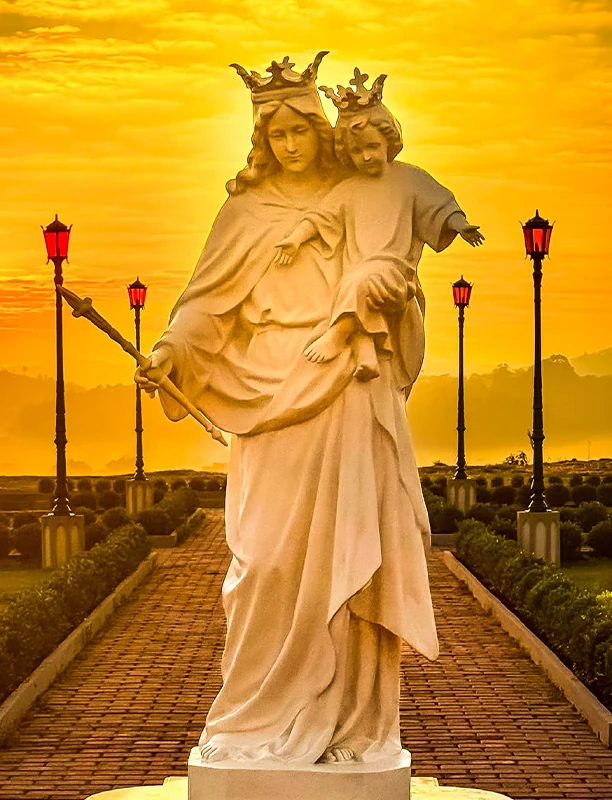 Help of Christians
 Christmas Carols







“Will you be the son I have in the depths of my soul?”
This in fact is what Dona Lucilia did with Dr. Plinio: having been called to protect, develop, and even to enrich his innocence, bringing him to his plenitude as the eagle did the eaglet, she supported, educated, encouraged and helped him until she perceived him to be entirely master of his own actions. Only then was her mind at ease as to his formation, but not as to vigilance, for she still kept out a watchful eye: “What direction is he taking? Where is he headed?” She manifested her expectations not only through her reprimands, but also by the way she treated him, which he would later define as “a contemplative solicitude,” imbued with the following sentiment: “‘This is my son. I have reason to hope that he will turn out to be certain ways and certain other ways… I will play with him, surrounding him with my affection, protecting him and seeking in him the preliminary signs of my hope. To what extent will it be realized?’ I felt myself spurred on by a hopeful enquiry, as from one who asked lovingly: ‘My son, will you be who I have in the depths of my soul?’” On another occasion, Dr. Plinio recalled: “Whatever she demanded of me was because the Law of God demanded it, and because God most high, most wise and most good would want things to be done in that manner. She wished for me to be as I should, not so that I might be a practical and useful son for her, but rather with the idea of having a son who would offer to God a sacrifice as it should be offered to Him.”She preferred to see him dead than gone astray
Although neither Dona Lucilia nor Dr. Plinio ever said as much to the author, it is clear that underlying her vigilance was not only the desire that he excel, but also the fear that her son, with the intelligence, aptitudes and distinction that were natural to him, would at some point become attracted to a career or to worldliness which would be the ruin of his virtue. An upright and innocent soul, Dona Lucilia possessed a clear understanding of the damage done to humanity by original sin, and it pained her greatly to see any lack of fidelity. It was the internal struggle of her life, along with the notions gained from what she had heard of numerous cases in society. This is why she feared that someone would exert a noxious influence on the boy, and she sought to protect his innocence to the utmost. She would pray a great deal for him, begging the Sacred Heart of Jesus to deliver him from the paths of evil. Dr. Plinio’s words confirm this: “She had been a most solicitous mother regarding my health, but several times when I was a young boy, at the time when the character is in formation, she would say to me with great tenderness: ‘I would rather see you dead than gone astray.’ It was as much as to say: ‘The times are bad and you are still quite young; nobody knows what a person is capable of when he is lost.’ [...] She would have given her life to prevent my death! But she would have preferred my death to seeing me in a state of mortal sin or of rupture with the Church.”Beseeching graces for her son’s perseverance
What strength was not added to the foundation of his faith and perseverance by the prayers of Dona Lucilia? One fact, which occurred repeatedly during Plinio’s adolescence, permits us to affirm it with confidence: every time she entered the Shrine of the Sacred Heart of Jesus, close to her house, she went to pray in front of a beautiful set of sculptures representing the Child Jesus in the Temple debating with the doctors, flanked by Our Lady and St. Joseph. What did she request there?
The finding of the Child Jesus among the Doctors of the Law - Sacred Heart of Jesus Shrine, São Paulo
Like a soothing and fragrant balm
It cannot be imagined how much Dona Lucilia prayed for Dr. Plinio… Always with much gentleness and respect. Years later, as an adult, on several occasions he would see her enter the room and draw close to him just as he was about to fall sleep. Amidst the drowsiness that overcame him, he would notice that she was praying, beseeching Our Lady’s support and help for him. Several decades later, Dr. Plinio would remember how this daily encounter would end: “After I had already fallen asleep, I would awake to her caressing me and making the sign of the Cross on my forehead before going to bed. I perceived something of her lofty spiritual purview flowing over me like a soothing and fragrant balm, which anointed me and did me good, soaking into me as oil into paper.” Following this, at times, she herself would turn off the bedside lamp, leave the room, and he would sleep remembering her physiognomy. ◊Taken, with slight adaptations, from: CLÁ DIAS, EP, João Scognamiglio. O dom de sabedoria na mente, vida e obra de [The Gift of Wisdom in the Mind, Life and Work of] Plinio Corrêa de Oliveira. Città del Vaticano-São Paulo: LEV; Lumen Sapientiæ, 2016, v.I, p.146-152