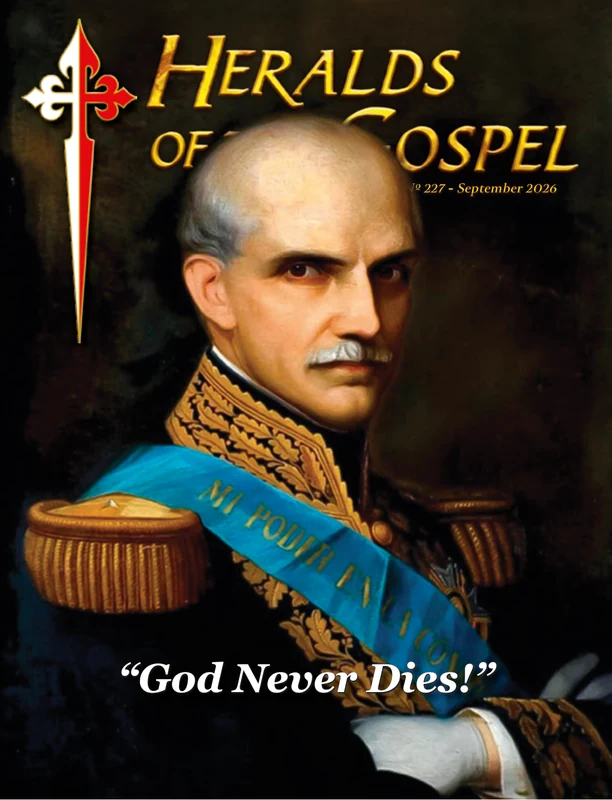
 Heralds of the Gospel Magazine, Vol. 20, nº 227, September 2026
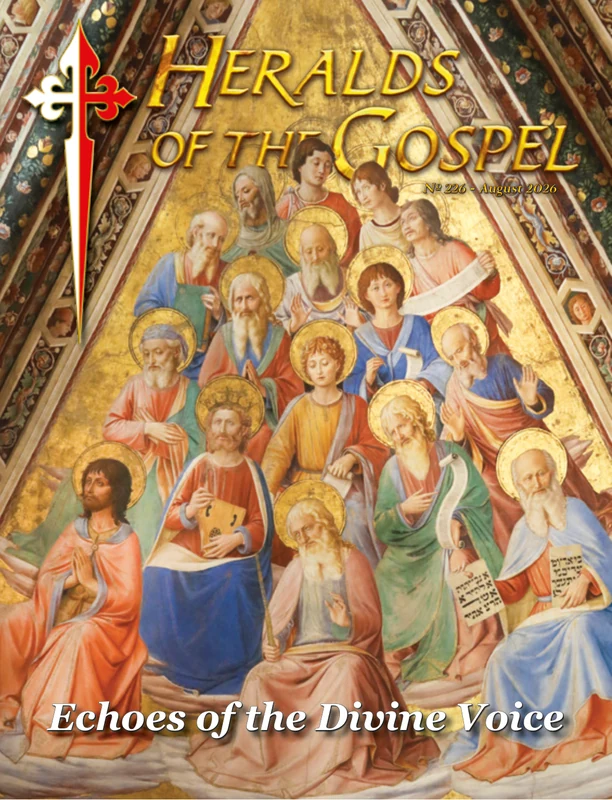 Heralds of the Gospel Magazine, Vol. 20, nº 226, August 2026
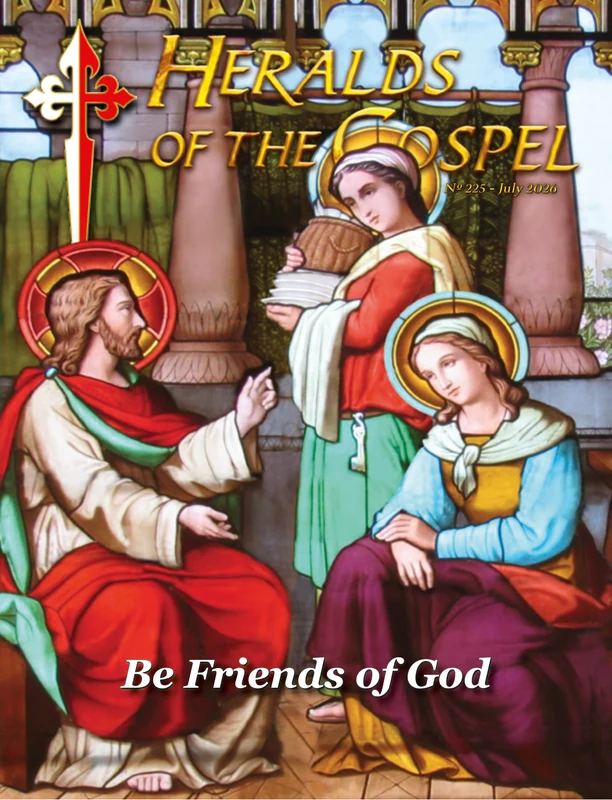 Heralds of the Gospel Magazine, Vol. 20, nº 225, July 2026
 Who are the Heralds of the Gospel?
 Help of Christians
 Christmas Carols







In those distant times when “the philosophy of the Gospel governed the states,”1 a supreme ideal arose, shrouded in the splendours of the legendary and embodied in men and women who, with virtues and epics, wrote some of the most beautiful pages of history.
Blessed were those days when children grew up enchanted by marvellous tales of warriors who set off for distant lands, willing to sacrifice their lives in defence of the weakest, even fighting terrible dragons.2
For the modern mentality, extremely materialistic, legendary would be synonymous with false.
Similarly, due to the increasing inability to understand symbolic language, today the word fantasy is usually associated with a confused conglomeration of images and plots, in a context that is often Gnostic, lascivious, egocentric, and disconnected from reality.
However, it is necessary to consider that the ancients lived immersed in an intrinsically religious environment, full of symbols that, according to Dr. Plinio’s commentary,3 are all the more artistic the more they express the essence of reality, while distancing themselves from its appearances.
It was a world in which poetry4 played a much more central role than one might imagine and, as a result of the contemplation of higher spheres, developed into the most varied artistic expressions, which, within the realm of language, formed myths and legends.
These were true parables directly linked to both spiritual and material realities – in a historical, moral, or purely metaphysical sense – interpretable from different perspectives and with diverse applications, including practical ones,5 in some cases serving as a vehicle to recall the springtime of childhood innocence.
Leaving behind the shadows of paganism, it fell to the bards – epic poets of yesteryear – to enrich the imagination of nascent Christendom, spreading the light of sublime figures, such as Charlemagne and his twelve peers.
And the Holy Church was soon raising to the honour of the altars those who – faithful to the spirit of authentic chivalry – embraced self-sacrifice to the very end.
Thus, reaching a pinnacle of sublimity, earthly crowns began to shine on the same brow as the diadem of exalted virtues, and to the vows of a religious was added that of never retreating on the battlefield.6
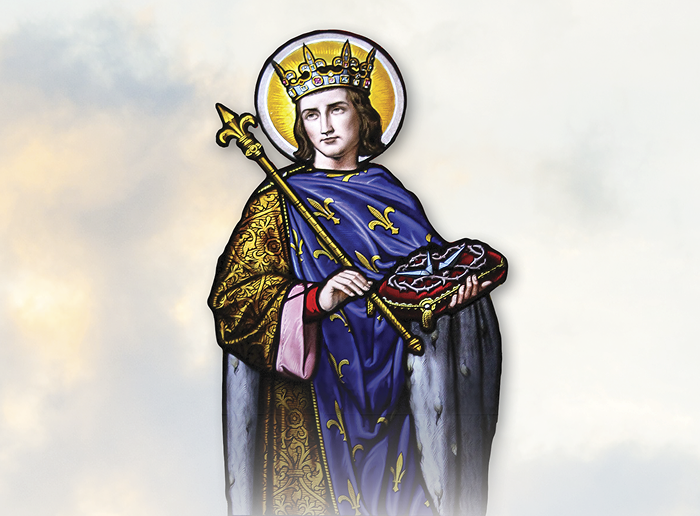
Embodying the legend and surpassing all fiction, the Orders of Chivalry were outstanding, along with figures such as St. Louis King of France, El Cid Campeador, St. Joan of Arc, and so many others!
The ideal of true heroism materialized in a Code of Chivalry that, based on the Catholic Faith, assumed as its supreme objective the duty to fight for the glory of God.
Consequently, from the sacred spirit that emanated from it arose ceremonies of unprecedented artistic refinement, permeating all social strata and reverberating throughout the following centuries in all those who claimed a title of nobility.7
But… as the first winds of Humanism blew, the desire to fight for the Holy Church and the common good was tainted by increasingly selfish romantic aims, leading chivalry to a sad decline.
Despite this, until recently, a knight was defined as someone who – in a vague reminiscence of its true origin – combined strength with gentleness, displaying a cordial and refined manner, befitting a man of faith.
From the most remote Antiquity, there has been a relationship of correspondence between the morality of civilizations and their legends, since these represent, sometimes in a hypertrophied way, the object of their admiration and, consequently, the most daring aspirations, fears, and tendencies of the human soul.
Aware of this reality, the Roman sage Seneca stated: “Long is the path of teaching through theories; short and effective, through examples.”8
And… what remains of these archetypes today? What models are exalted in our society as a point of reference for future generations?
In our neo-pagan and globalized world, the mass media and entertainment industry have taken advantage of the psycho-spiritual phenomenon of imitation to promote ideologies, human types, and customs increasingly detached from the Christian way of life.
It is up to each of us to ask ourselves: By what examples do I allow myself to be influenced? What human types do I allow to manipulate my children, who are so susceptible to these impressions? Who are, in short, their heroes?
Christianus alter Christus: the absolute archetype of every human being is none other than God made Man. Along with Our Lord, those who are fully conformed to Him also figure as models.
True heroes are, therefore, those who imitated the Knight par excellence, Jesus Christ crucified, victor over darkness, death, and sin.
Only the sublime and incomparable ideal of holiness can forge a society from which souls who thirst to imitate the Redeemer may arise, thus participating in the only authentic heroism: the heroism of the Cross.