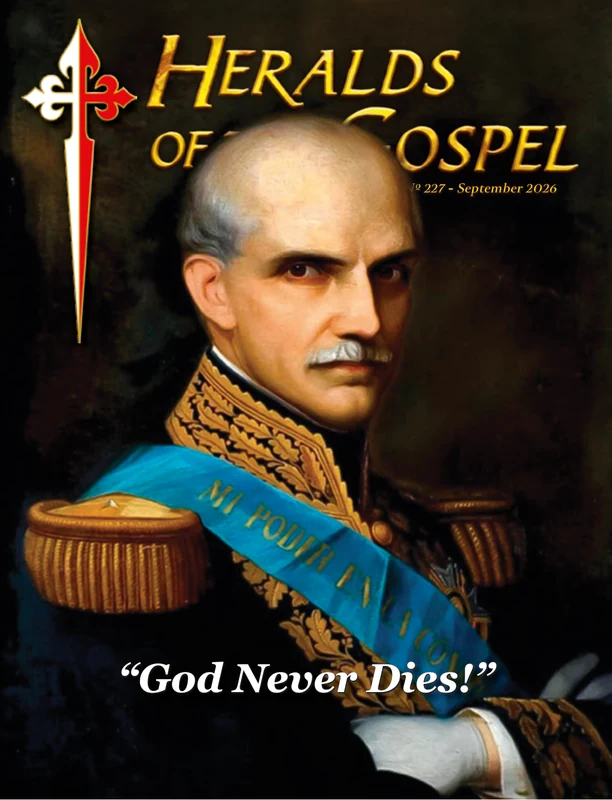
 Heralds of the Gospel Magazine, Vol. 20, nº 227, September 2026
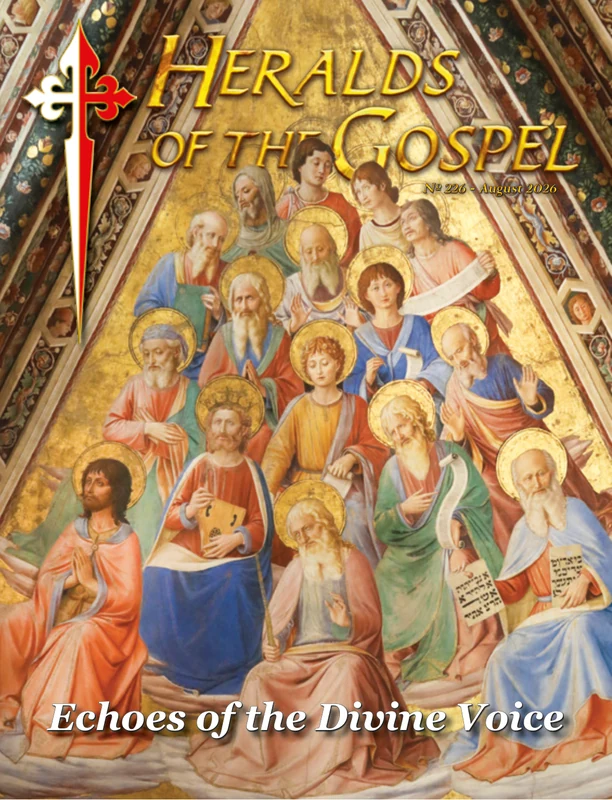 Heralds of the Gospel Magazine, Vol. 20, nº 226, August 2026
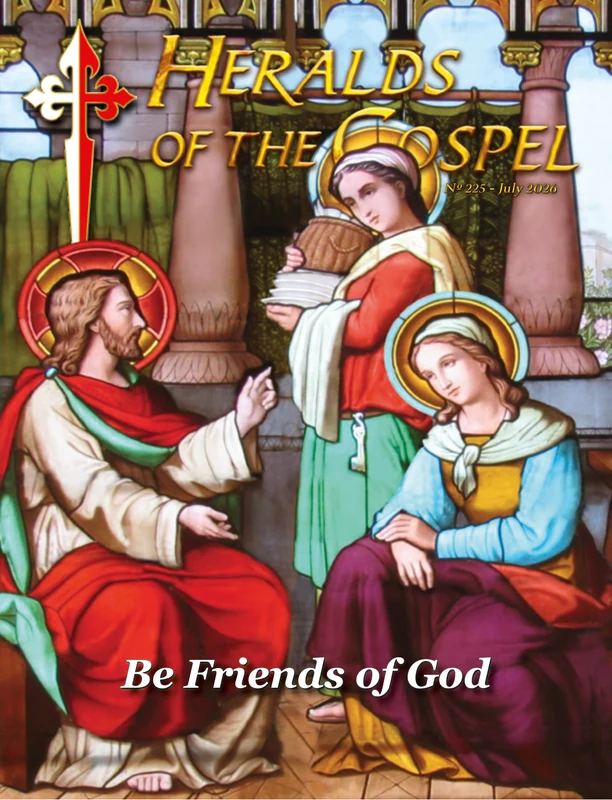 Heralds of the Gospel Magazine, Vol. 20, nº 225, July 2026
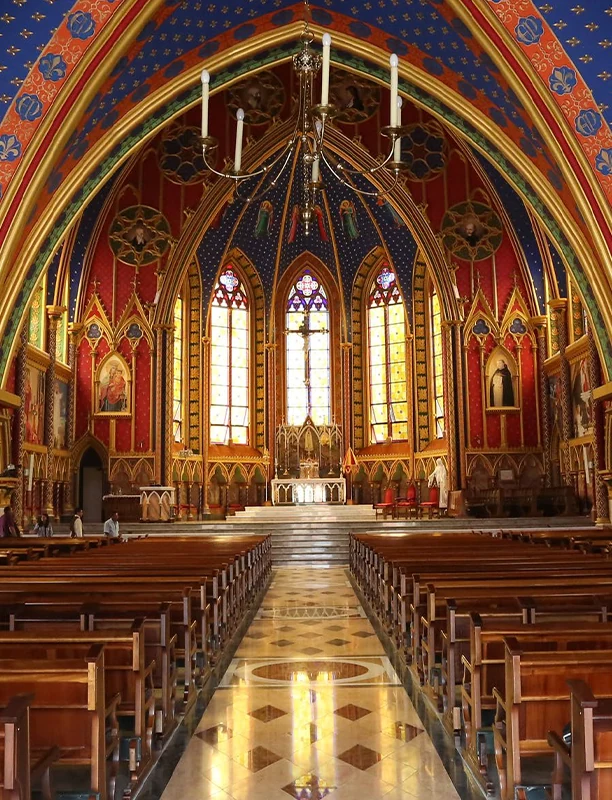 Who are the Heralds of the Gospel?
 Help of Christians
 Christmas Carols







August 30 – 22nd Sunday in Ordinary Time
(Jer 20:7-9; Ps 62; Rom 12:1-2; Mt 16:21-27)
The Divine Master questioned the Apostles about His identity, to which Peter promptly replied: “You are the Christ, the Son of the living God” (Mt 16:16).
Jesus then blessed him: “Blessed are you, Simon Barjona! For flesh and blood has not revealed this to you, but my Father who is in Heaven” (Mt 16:17).
Next, Our Lord reveals, for the first time, His Passion, Death, and Resurrection. The Gospel continues:
Then Peter took Jesus aside and began to rebuke Him, “God forbid, Lord! No such thing shall ever happen to You.” He turned and said to Peter, “Get behind Me, Satan! You are an obstacle to Me. You are thinking not as God does, but as human beings do” (Mt 16:22-23).
A severe rebuke to the first Vicar of Christ… Why? Although Peter – not yet a saint – had recognized the Master’s divinity through divine inspiration, he spoke like a man bound to worldly concepts.
He did not allow for suffering on the path of the expected Messiah, who would restore – in an earthly visualization – the prerogatives of Israel. Jesus, however, reveals the supernatural side of His coming: the redemption of humanity and the opening of the gates of Heaven.
Thus, the Divine Redeemer teaches us something crucial: caution is needed with personal speculations or advice that lead us astray from our spiritual duties, even if they come from a friend, for he will be a bad advisor, that is, Satan!
Jesus then exhorts: “Whoever wishes to come after Me must deny himself, take up his cross, and follow Me” (Mt 16:24).
“Denying oneself” means saying “no” to everything that I want but that God does not want, and accepting with gratitude what Providence has in store for us.
Such a task proves arduous. And Our Lord also knows this… for He invites us to follow Him on the way to Calvary. How to bring this resolution to fruition? Two points are fundamental.
First, to bear in mind that “love is the capacity of one person to suffer for another, with joy,” as defined by Dr. Plinio Corrêa de Oliveira.
Without a deep love for the Saviour – which is proven in the fulfillment of the Commandments and the practice of the virtues – we will not have the necessary courage to suffer for Him.
Second, it is essential to keep our gaze fixed on the promise of eternity, where Our Lord “will repay all according to his conduct” (Mt 16:27).
This is the key to accepting, with courage and faith, the trials He allows in our lives. Sufferings, when well accepted, purify us and prepare us for the enjoyment of endless happiness.
In the tribulations of the world, it is necessary to tread the Via Crucis already trodden by so many saints, now inhabitants of the Kingdom of Heaven.
Let us, therefore, beseech the Mother of Mercy for special graces to confide fully in her, who accompanied her Divine Son in the sorrows of the Passion and in the glory of the Resurrection.
This is the secret to true love on this earth and the seed of eternal happiness.