 Heralds of the Gospel Magazine, Vol. 20, nº 227, September 2026
 Heralds of the Gospel Magazine, Vol. 20, nº 226, August 2026
 Heralds of the Gospel Magazine, Vol. 20, nº 225, July 2026
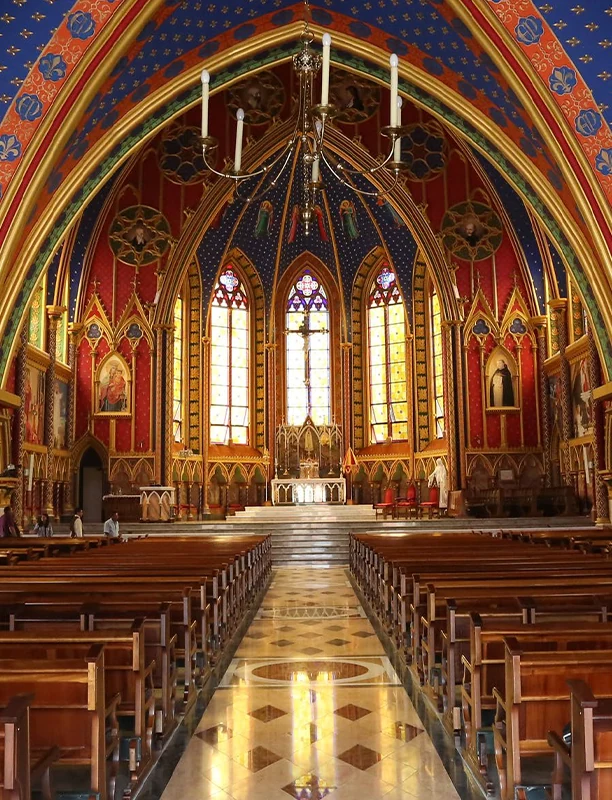 Who are the Heralds of the Gospel?
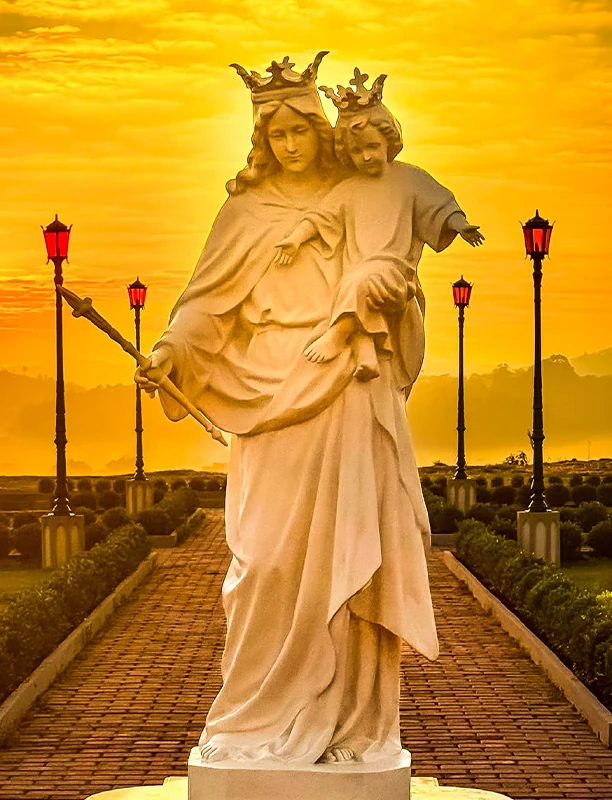 Help of Christians
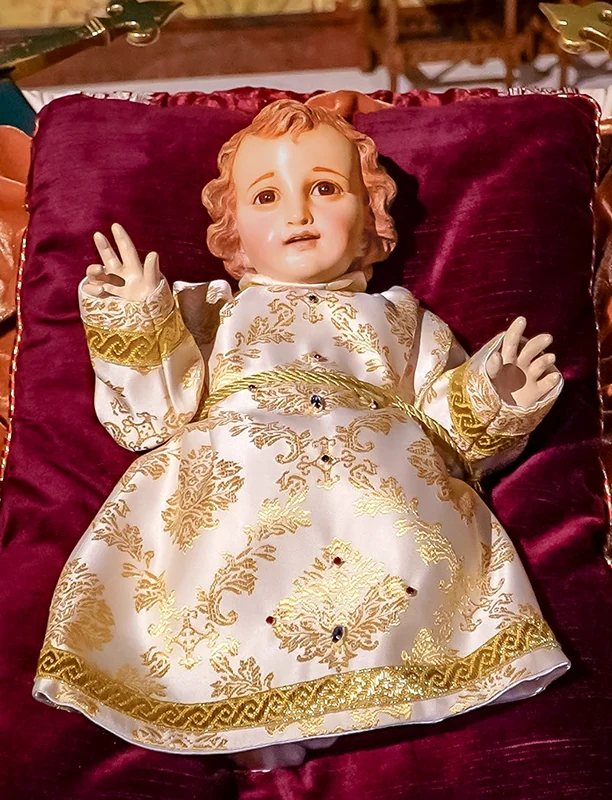 Christmas Carols









At the beginning of Lent, the procession of sinners would enter from the back of the church, reciting the “Miserere”. Inwardly crushed by their guilt, at the same time they felt the solace of the Judge’s own promise.
The Church was the centre of social life
Let us start by analysing what the cities were like at the time of its inception. From what remains of medieval cities in our days, or from what is portrayed of them in illuminations, we see that they were small, with narrow streets, in order to fit within the necessarily restrictive walls, so built to better defend the inhabitants from enemy attack. The houses were closely crowded, and as the upper floor projected somewhat over the street, someone reaching with outstretched arm from the window of one of these buildings could almost touch the facing house. In the centre of this organic tangle of buildings stood the bell tower of the church. Sometimes there were several – belonging to parishes, monasteries and convents – and the population congregated around them, for at that time whatever happened in church was the centre of social life.Perception of sinners in society
There were public sinners in those cities, guilty of notorious crimes, such as having killed someone during the year. Others had publicly blasphemed God and the Church, and continued in their obstinacy even after being reprimanded. There were also people or families openly estranged from the Church, who had stopped attending Mass and receiving the Sacraments. Medieval man’s concept of these sinners was as follows: “They are highly reprehensible. We should give them a wide berth, because an upright person does not associate with sinners, and when he needs to communicate with one, he does so with a certain distance and coldness. Until they repent and do penance, sinners are enemies of God and therefore of mankind.” Nevertheless, to such an extent was the Church at the centre of medieval society that even these people came to church on Ash Wednesday, partly because most of them knew they were on the wrong path and their conscience was burdened by living in that state which, however, they did not want to abandon. In addition to these, another kind of sinner participated in the Ash Wednesday ceremonies: those who denounced themselves as such. Sometimes men who were considered very virtuous would appear, accusing themselves of some fault. Remorseful for having been the object of honours and considerations to which they were not entitled, they now wished to receive the deserved contempt. To these two groups could be added yet another, of those whose sin was not notorious. They were persons who, having failed towards God interiorly, joined with the others to do penance and to make amends for their faults.“Approach the place where you will find forgiveness”
Thus, when the bells began to toll on that day convoking the people, the city’s inhabitants would leave their homes and head for the church. Let us imagine the sinners’ state of mind, walking down the street in groups alongside the innocent population. From afar, they could glimpse the church facade, adorned with Saints and Angels flanking an image of the Crucified One, or of Our Lord Jesus Christ giving a blessing, or perhaps a statue of the Virgin of virgins, conceived without original sin. With the bells still pealing, they arrived in front of the church. It rises imposingly, with a severe appearance, but at the same time it is so welcoming that it seems to say: “Come, children! You have sinned, but approach the place where you will find forgiveness; confess and repent.” They would enter and, after the ceremony, would retire to a specific place where they would do penance. All of this was entirely genuine because in the Middle Ages people had a deep sense of the gravity of sin. Chartres Cathedral (France)
God takes himself seriously
How can we keep alive this notion that countless circumstances seek to dilute in us? For a better grasp of the problem, I will ask a rather unusual question. What would my listeners think of someone who offered him the following accusation: “You are a frivolous character, who does not take himself seriously”? Such an insult could receive a slap for an answer! For a man like that is completely worthless. The first step for anyone who wants to be something in life is to take himself seriously. Now, how much more misplaced, if not to say blasphemous, would it be to ask the question: “Does God take himself seriously?” Obviously He does. He loves himself infinitely and with the same infinitude He takes himself seriously. Accordingly, when He establishes that the practice of a certain act constitutes a sin, those who commit this fault break with Him and become His enemies. God does not say something without it producing an immediate effect; He does not declare an enmity that is not authentic. If God were not infinitely serious, one might ask whether He exists.The seriousness of everything before God
It is with this seriousness, which participates in His infinite wisdom and holiness, that the Creator contemplates human actions. And before this seriousness, sin becomes extremely grave and profoundly execrable! Whoever commits it becomes more miserable. However rich one may be, by sinning he becomes the most unfortunate of men, for though he may possess all the earth can offer, he has nothing of what Heaven gives. What is more, divine punishment may come upon him at any moment in the form of an endless series of unforeseen disasters befalling him, or, worse still, with the punishments of hell, to which nothing on this earth serves as a term of comparison. There, the darkness is eternal; fire burns but does not illuminate. The worst torments continually plague the reprobates, who realize that they no longer have any recourse. The sinner has a vivid notion of having acted against God. He knows that he should never have committed that wrong, because God is infinitely holy, Good and True. He also knows that the tremendous wrath that falls upon him is the fruit of God’s infinite justice. Sinners in the Middle Ages had this notion, and so they went to church to ask forgiveness and do penance.A prayer dictated by God himself
Whoever has violated God’s Law must begin by acknowledging the evil he has done. To this end, the Church urges him to recite the Penitential Psalms,1 which invite him in a magnificent manner to sense the enormous gravity and malice of sin. God is so unfathomably good that He gave man the glory of being created in a state of trial so as to acquire merit. However, many abuse this freedom which has been granted them by sinning. But the Creator, instead of immediately exterminating them as the offence would deserve, “whispers” in their ears words apt to make them sense the wickedness of their deed and invite them to ask for forgiveness. Thus, He acts like a judge who, having received a criminal with an unspeakable majesty, with trappings of tremendous power and severity, sends someone to deliver a note to him that says: “If you ask for clemency with sincerity of soul and implore forgiveness using the terms found in this note, the judge sends word that you will be heeded!” Therefore, the sinner walks towards the Supreme Judge reciting a prayer He himself has dictated with a view to granting him forgiveness. No greater manifestation of mercy can be imagined than this! On Ash Wednesday, the procession of sinners entered from the back of the church, reciting the Miserere: “Have mercy on me, O God, according to Thy steadfast love; according to Thy abundant mercy blot out my transgressions” (Ps 51:1). Inwardly crushed by the infamy of their guilt and the grandeur of the Judge, they prayed to ask pardon. But at the same time they felt the solace of the Judge’s own promise, telling them: “Pray in this way, my son, strive to have these sentiments, and I will become your friend!” Here we see the magnificent equilibrium of the divine attitude. The Creator is ready to punish those who have offended Him, but preferring not to do so, He says to the man who has become His enemy: “You, my son, who are wicked: be good. Here are the words you must say. Through them My grace will work in your soul. Answer yes to my invitation and you will become whiter than snow.”Unshakeable confidence in divine pardon
All of this would not fit into an ejaculatory prayer. In praying the Penitential Psalms, the sinner asks God many times and in many different ways to grant him forgiveness. But after having repeated the words taught by the Judge, beseeching Him in a proper, correct and beautiful way, to attain the dispositions of the soul which would make him once again pleasing in His sight, the penitent is left in doubt as to whether he has been heeded. Why does God not grant him His forgiveness at once? Msgr. João imposing ashes on a Herald -
 Shrine of Our Lady of Good Counsel in Genazzano (Italy)