 Heralds of the Gospel Magazine, Vol. 20, nº 227, September 2026
 Heralds of the Gospel Magazine, Vol. 20, nº 226, August 2026
 Heralds of the Gospel Magazine, Vol. 20, nº 225, July 2026
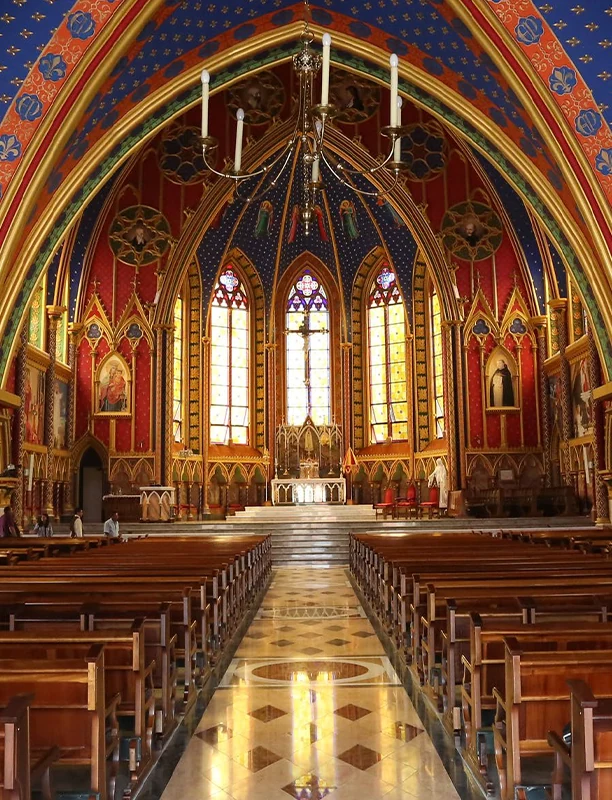 Who are the Heralds of the Gospel?
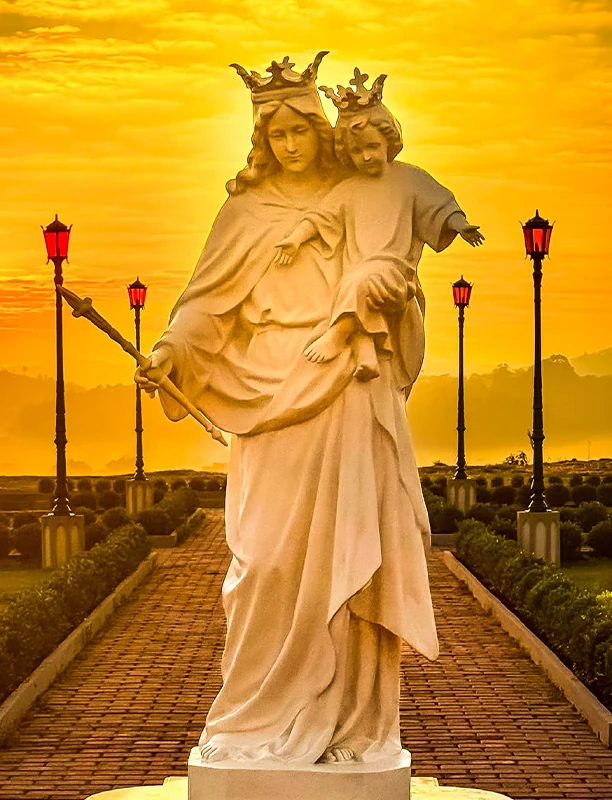 Help of Christians
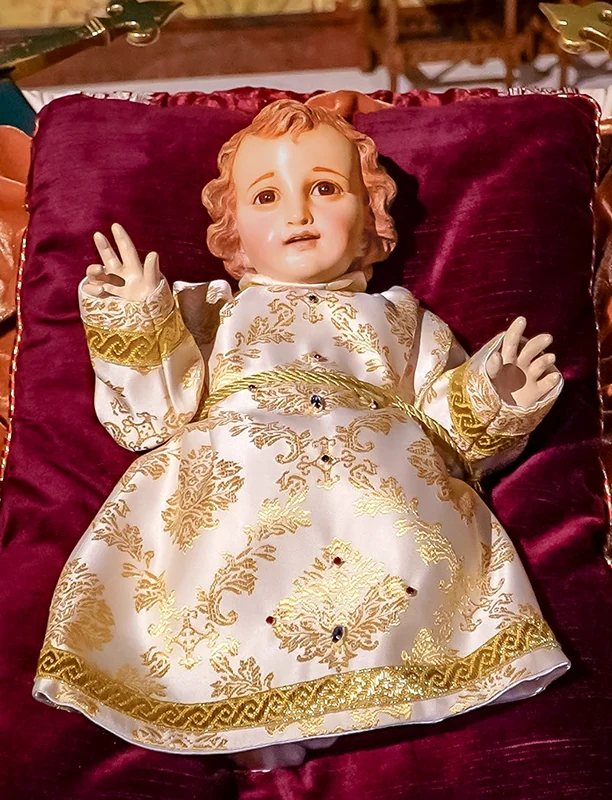 Christmas Carols







Jesus in His nobility and Kingship
On this path of Jesus’ discipleship there are two states, at first sight irreconcilable, which the Divine Redeemer harmonized wonderfully in His earthly life: nobility and poverty. Centuries will elapse before the example of the Creator’s unassuming embrace of poverty will ever be worthily praised. This will always be a fundamental virtue, particularly for those who enter the priestly or religious path. Christ gives His blessing - Sainte-Chapelle, Paris
The royal lineage from which Christ was born
When we contemplate the miraculous image of the Holy Shroud of Turin, we are struck by the majestic grandeur of the Man portrayed on it. Before Him we can join our voice to those of the centurion and his soldiers upon witnessing the events that followed the Resurrection, but making a small addition: “Truly, this was the Son of God and the Virgin Mary!” (cf. Mt 27:54). Indeed, in one of his epistles St. Paul mentions the good news that the Most High promised through the prophets, “concerning His Son, who was descended from David according to the flesh” (Rom 1:2-3). And it was through Our Lady that this last element of the promise was fulfilled. Mary gave the flesh of a King to the Son of God, for through Her the Messiah received the blood of the Davidic lineage. Something analogous may be affirmed about St. Joseph – prince of the house of David, and, according to some authors, the direct heir of the king-prophet6 – whom St. Bernardine of Siena7 holds to have been of such nobility that, in a certain sense, he provided temporal kingship to the Creator in the Person of Our Lord Jesus Christ.Nobility is not at odds with holiness
Pope Benedict XV8 also recalls that in the manger the loftiest majesty was allied with the most sublime virtue. The Divine Word, in becoming human within Our Lady, was not satisfied in possessing the highest nobility in the eyes of men, but He “clothed Himself in the holy flesh of the Holy Virgin,”9 according to the felicitous expression of St. Hippolytus. It was certainly befitting to God thrice Holy (cf. Is 6:3) to take on the most refined human nature, free from the effects of original sin. The Blessed Virgin, uniting in herself an illustrious earthly lineage with the most exalted virtue, provided the Eternal Word with the worthiest body. Therefore, since the Second Person of the Blessed Trinity was born of a family that was regal from an earthly and especially from a supernatural standpoint – having grown up in a modest home, it is true, but one that sheltered the archetypes of the human race, Jesus, Mary and Joseph – nobility cannot be considered a state on the periphery of holiness. On the contrary, it is like a fine perfume emanating from the virtuous soul, in which the dignity of divine life and grace shines forth.Jesus’ noble deeds
Gratuitous and utterly surprising, divine love never degrades man, but rather elevates and transforms him. Indeed, God’s charity is both noble and ennobling. This truth shines in a special way in the Saviour’s public life, during which He showed His untiring concern for those most in need, not only of material favours, but also of grace, of faith and of His love. For this reason, Jesus became the archetype of nobility, while at the same time, devoid of earthly riches, He also exalted the excellency of the spirit and the supremacy of virtue over worldly goods – a paradigm of the practice of the virtue of poverty. In the Divine Redeemer, we find the detachment of the servant united with the dignity of the King. The charity that Our Lord demonstrated in His public life was both noble and ennobling; it elevated and transformed those whom He helped
Jesus with the children - Church of St. Laud, Angers (France)
The true meaning of sanctity: to model ourselves after Jesus,
In the vocational itinerary of a priest, these words of the Divine Master certainly challenge him: “If you would be perfect, go, sell what you possess and give to the poor, and you will have treasure in Heaven; and come, follow Me” (Mt 19:21). Without a doubt, the poor have an important place in the Church. However, on the path of sanctity, the essential thing is to follow Jesus. If we take on models other than Him, the resulting work will always be sterile, if not tragic. Judas distanced himself from Christ in a pretended service to the poor (cf. Jn 12:4-5). Hiding his ambition behind it, he became involved in corruption and fraudulent dealings, until he finally betrayed the Master, selling Him for a vile price (cf. Mk 14:10-11). Among the various causes of the crisis of faith that assails contemporary humanity, does not the very strong temptation to relegate Jesus to a secondary plane also appear within the Church herself? “For you always have the poor with you” (Mt 26:11), Our Lord said when the disciples were indignant with St. Mary Magdalene for using a very costly perfume to anoint Him. She loved Jesus, followed Him and became conformed to His spirit, choosing the better part (cf. Lk 10:42). What was the result? For two thousand years she has attracted the prayers of countless faithful who ask for her heavenly intercession, among whom there is no lack of poor people. Since Mary followed Jesus, the poor followed Mary. If the universe is governed by wise laws, how could its Craftsman not be orderly and hierarchical, the perfect model of nobility?
Detail of the “Stefaneschi Triptych”, by Giotto di Bondone - Vatican Picture Gallery
Our Lord loved us nobly
If we observe that the universe is governed by sapiential laws, how could its Craftsman not be ceremonious, orderly and hierarchical? Birds sing sweet and joyful melodies; the whole of nature expresses art, harmony and colour, whether in the sky, the sea or the woodlands. When God took on flesh, would He not manifest in His voice, in His gestures, in His bearing and in His words that the origin of the beauty that embellishes creation is in Him? The stars twinkle gracefully, the aurora borealis colours the frigid air of snowy climes. Would not the eyes of the Saviour have been luminous with elevation, distinction and divine beauty? Christ exercised His ministry with nobility. In each healing and each miracle; in the house of the illustrious family of Lazarus or in the polemical discussions with the Pharisees; preaching the Sermon on the Mount or seated in intimate nocturnal conversation with Nicodemus; decorously arranging the precious sheet that had covered His Body in the tomb, after the Resurrection; on every occasion, Jesus acted with holy elevation. How beautiful it is to see in the minister of the altar a reflection of the Master’s excellence, especially in the performance of his priestly functions! It is not superficial finery or the rules of etiquette that reveal nobility, for it should spring from within. When the soul is ennobled, the outward demeanour comes as a mere consequence.Divine Model for all of society
Dr. Plinio Corrêa de Oliveira10 affirmed that the ideal human type for every social class is not a theoretical model, but a historical reality: it is the Person of Our Lord Jesus Christ. We can all attain high moral qualities that serve to perfect us. Above all, we must desire holiness, the unsurpassable nobility of soul that is fully developed in misfortune. Indeed, few things bring the moral profile of a truly noble person to the fore as does suffering lived with heroism. In such situations, spiritual qualities are refined that no riches can buy, nor any misfortune corrupt. Although these qualities are an indispensable part of the vocation of all men, they oblige the sacred minister in a special way. Like the Redeemer who embraced the cross and consummated His holocaust with divine grandeur to save mankind, the priest is called to be a faithful image of this love to society, which seeks in him the goodness, humility and elevation of Our Lord Jesus Christ. ◊Notes
1 BENEDICT XVI. Deus caritas est, n.7.
2 ST. THOMAS AQUINAS. Summa Theologiæ. III, q.73, a.3, ad 3.
3 LEO XIII. Allocution to the Roman patriciate and nobility, 24/1/1903. In: Acta. Romæ: Typographia Vaticana, 1903, v.XXII, p.368.
4 Cf. PIUS XII. Allocution to the Roman patriciate and nobility, 5/1/1941. In: Discorsi e radiomessaggi di Sua Santità Pio XII. Città del Vaticano: Tipografia Poliglotta Vaticana, 1960, v.II, p.363.
5 Cf. PIUS IX. Allocution to the Roman patriciate and nobility, 29/12/1872. In: Discorsi del Sommo Pontefice Pio IX. Roma: G. Aurelj, 1872, v.II, p.148.
6 Cf. ST. PETER JULIAN EYMARD. Mois de Saint Joseph, le premier et le plus parfait des adorateurs. Extrait des écrits. 7.ed. Paris: Desclée de Brouwer, [s.d.], p.59-62.
7 Cf. ST. BERNARDINE OF SIENA. Sermo II. In vigilia nativitatis Domini. In: Obras Completas. Firenze: Quaracchi, 1959, v.VII, p.19.
8 Cf. BENEDICT XV. Allocution to the Roman patriciate and nobility, 5/1/1917. In: L’Osservatore Romano (Jan, 6, 1917).
9 ST. HIPPOLYTUS. El anticristo, c.4, n.1. Madrid: Ciudad Nueva, 2012, p.54.
10 Cf. CORRÊA DE OLIVEIRA, Plinio. Nobility and Analogous Traditional Elites in the Allocutions of Pius XII. A Theme Illuminating American Social History. York (PA): Hamilton Press, 1993, p.192.