 Heralds of the Gospel Magazine, Vol. 20, nº 227, September 2026
 Heralds of the Gospel Magazine, Vol. 20, nº 226, August 2026
 Heralds of the Gospel Magazine, Vol. 20, nº 225, July 2026
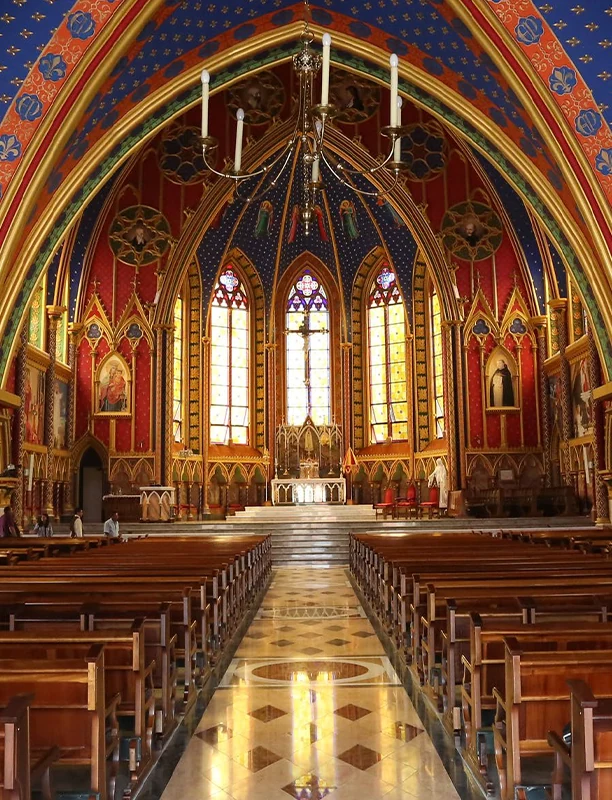 Who are the Heralds of the Gospel?
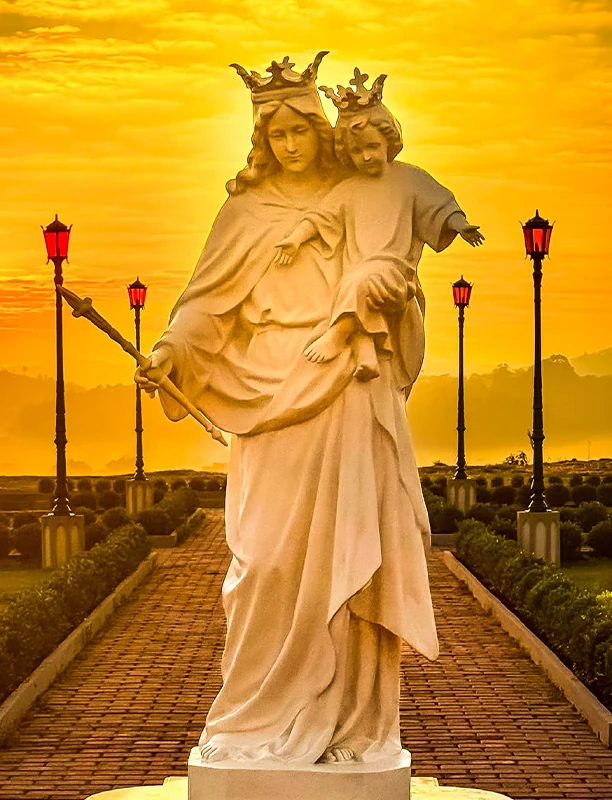 Help of Christians
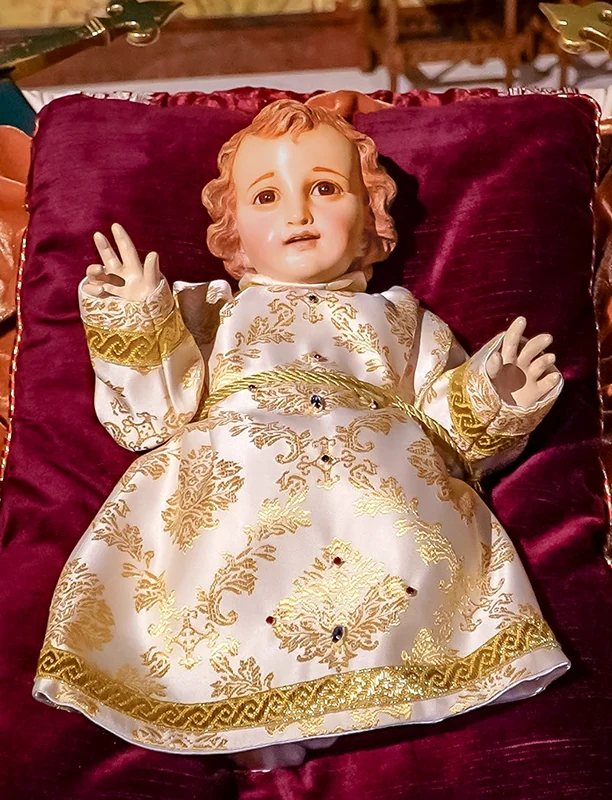 Christmas Carols






The doctrine on Mary Co-Redemptrix appears in an express and formal way in the Magisterium of the Church, through the Roman Pontiffs and the Second Vatican Council. This is the conclusion reached, after careful analysis, by one of the most outstanding theologians of the 20th century.
United to Christ in the triumph over the serpent
Pius IX: “The Fathers and writers of the Church, […] quoting the words by which at the beginning of the world God announced his merciful remedies prepared for the regeneration of mankind – words by which he crushed the audacity of the deceitful serpent and wondrously raised up the hope of our race, saying, ‘I will put enmities between you and the Woman, between your seed and her seed’ (Gn 3:15) – taught that by this divine prophecy the merciful Redeemer of mankind, Jesus Christ, the Only-begotten Son of God, was clearly foretold: That His most Blessed Mother, the Virgin Mary, was prophetically indicated; and, at the same time, the very enmity of both against the evil one was significantly expressed. Hence, just as Christ, the Mediator between God and man, assumed human nature, blotted the handwriting of the decree that stood against us, and fastened it triumphantly to the Cross, so the most holy Virgin, united with Him by a most intimate and indissoluble bond, was, with Him and through Him, eternally at enmity with the evil serpent, and most completely triumphed over him, and thus crushed his head with her immaculate foot.”2 It would be difficult to express with greater precision and clarity the doctrine of Marian Co-redemption in Jesus Christ, with Him and through Him. Roschini rightly observes: “To triumph with Christ, crushing the head of the serpent, is nothing other than to be Co-Redemptrix with Christ.”3Associated with the work of salvation of the human race
Leo XIII: “And truly the Immaculate Virgin, chosen to be the Mother of God and thereby associated with Him in the work of man’s salvation, has a favour and power with her Son greater than any human or angelic creature has ever obtained, or ever can gain.”4 “There stood by the Cross of Jesus His Mother, who, in a miracle of charity, so that She might receive us as her sons, offered generously to divine justice her own Son, and died in her heart with Him, stabbed with the sword of sorrow.”5 “As soon as, by the inscrutable plan of Divine Providence, We were raised to the supreme Chair of Peter […] Our thoughts turned spontaneously to the great Mother of God and her association with the Redemption of mankind.”6 “We recall other singular merits through which She shared in the human Redemption with her Son Jesus.”7 “She who was so intimately associated with the mystery of human salvation is just as closely associated with the distribution of the graces which for all time will flow from the Redemption.”8 Let us note in this text the distinction between the Redemption and its actual application. According to it, Mary is not only Co-Redemptrix but also dispenser of all the graces that come from Christ, as we will see in the next chapter. The encounter of Our Lady with Jesus on the road to Calvary - Church of Notre-Dame de Bom Secours, Montreal
Redemptrix with Christ and dispenser of His treasures
St. Pius X: “And from this community of will and suffering between Christ and Mary, She merited to become most worthily the Reparatrix of the lost world and Dispensatrix of all the gifts that Our Saviour purchased for us by His Death and by His Blood.”9 Benedict XV: “It is the common teaching of the Doctors of the Church that the Blessed Virgin Mary, apparently absent from the public life of Jesus Christ, was nevertheless at His side when He went to His death and was nailed to the Cross, and was there by divine disposition. For in communion with her suffering and dying Son, She endured sorrow and near death; She surrendered her rights as mother over her Son to obtain the salvation of men; and, inasmuch as it depended on Her, She sacrificed her Son to appease the divine justice, so that it can rightly be said that with Christ She redeemed mankind. For this reason, all the graces that we derive from the treasure of Redemption come to us, as it were, through the hands of the Sorrowful Virgin.”10 As the reader can see, the Pope affirms in this magnificent text the two great aspects of Mary’s universal mediation: the acquisitive (Co-redemption) and the distributive (universal distribution of all graces).The role of the Sorrowful Virgin next to her Divine Son
Pius XI: “The Sorrowful Virgin shared in the work of Redemption with Jesus Christ and, becoming Mother of the men entrusted to Her by the testament of divine charity, She embraced them as her children and defended them with all her love.”11 Our Lady standing at the foot of the Cross - Our Lady of the Lake University, San Antonio (Texas)
The Magisterium of Pre-Conciliar Popes
 Pius IX
Pius IX – Just as Christ blotted out the decree that stood against us, and fastened it to the Cross, so the most holy Virgin triumphed over the evil serpent, and crushed his head with her immaculate foot.
 Leo XIII
Leo XIII – As soon as We were raised to the supreme Chair of Peter, Our thoughts turned spontaneously to the great Mother of God and her association with the Redemption of mankind.
 Pius X
Pius X – From this community of will and suffering between Christ and Mary, She merited to become most worthily the Reparatrix of the lost world and Dispensatrix of all the gifts that Our Saviour purchased for us by His Death and by His Blood.
 Benedict XV
Benedict XV – In communion with her suffering and dying Son, She endured sorrow and near death; so that it can rightly be said that with Christ She redeemed mankind.
 Pius XI
Pius XI – The most benign Virgin Mother of God, who brought forth for us Jesus our Redeemer and offered Him as a Victim by the Cross, by her mystic union with Christ and His very special grace She likewise became and is piously called a Reparatress.
 Pius XII
Pius XII – By God’s will, in carrying out the work of human Redemption, the Blessed Virgin Mary was inseparably linked with Christ. Our salvation sprang from His love and sufferings, to which the love and sorrows of His Mother were intimately united.
Cause of salvation for herself and the whole human race
Second Vatican Council: Although the Second Vatican Council, due to its constant ecumenical concern, avoided the word Co-Redemptrix, so as not to offend the ears of the separated brethren, it clearly and unequivocally expounded the doctrine of Co-redemption as understood by the Catholic Church. Here are some especially significant texts of the Dogmatic Constitution Lumen Gentium: […] “Thus Mary, a daughter of Adam, consenting to the divine Word, became the Mother of Jesus, the one and only Mediator. Embracing God’s salvific will with a full heart and impeded by no sin, She devoted herself totally as a handmaid of the Lord to the person and work of her Son, under Him and with Him, by the grace of almighty God, serving the mystery of Redemption. Rightly, therefore, the holy Fathers see Her as used by God not merely in a passive way, but as freely cooperating in the work of human salvation through faith and obedience. For, as St. Irenaeus says, She ‘being obedient, became the cause of salvation for herself and for the whole human race.’”15 […] “She conceived, brought forth and nourished Christ. She presented Him to the Father in the Temple, and was united with Him by compassion as He died on the Cross. In this singular way She cooperated by her obedience, faith, hope and burning charity in the work of the Saviour in giving back supernatural life to souls. Wherefore She is our Mother in the order of grace.”16 As the reader can see, the Council expounds with all clarity the doctrine of the Co-redemption of Mary. […] The doctrine of Mary as Co-Redemptrix is thus expressly and formally set forth in the Magisterium of the Church through the Roman Pontiffs and the Second Vatican Council. ◊Taken from: La Virgen María. Teología y espiritualidad marianas. 2.ed. Madrid: BAC, 1997, p.140-149
What Does the Post-Conciliar Magisterium Say?
The Second Vatican Council clearly expounded the doctrine of Co-redemption, as did the principal Popes that followed it.
 Papal Mass on the Altar of the Chair, in St. Peter’s Basilica, before one of the sessions of the Second Vatican Council
 Paul VI
Paul VI – The post-conciliar renewal has considered the Blessed Virgin in the mystery of Christ, and, in harmony with tradition, has recognized the singular place that belongs to Her in Christian worship as the worthy Associate of the Redeemer.
 John Paul II
John Paul II – Mary, being conceived and born without stain of sin, participated in an admirable way in the sufferings of her Divine Son, so as to be Co-Redemptrix of humanity.
 Benedict XVI
Benedict XVI – We are accompanied in this itinerary by the Blessed Virgin who silently followed her Son Jesus to Calvary, taking part with deep sorrow in His sacrifice and thus cooperating in the mystery of the Redemption.