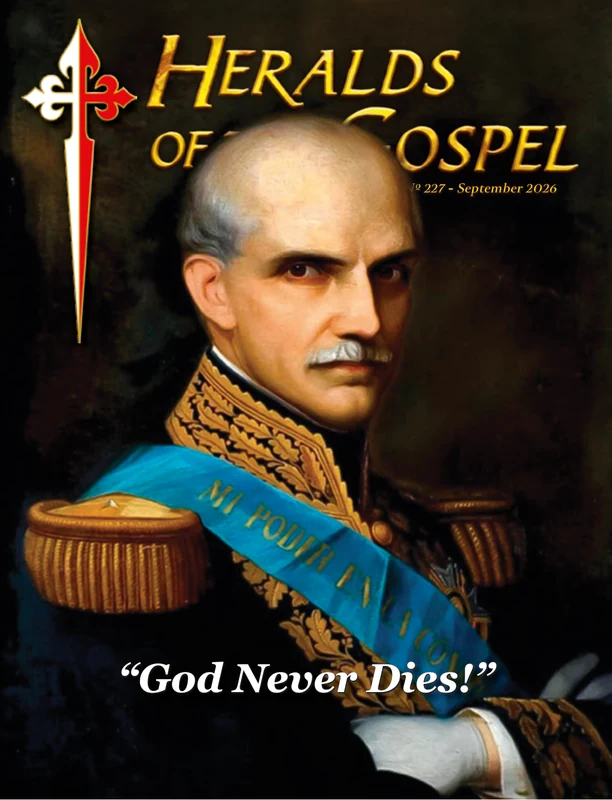
 Heralds of the Gospel Magazine, Vol. 20, nº 227, September 2026
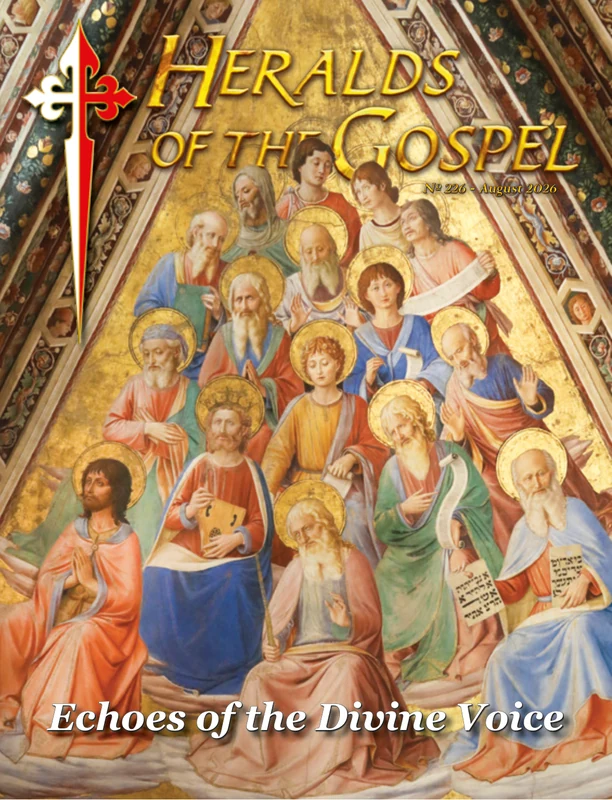 Heralds of the Gospel Magazine, Vol. 20, nº 226, August 2026
 Heralds of the Gospel Magazine, Vol. 20, nº 225, July 2026
 Who are the Heralds of the Gospel?
 Help of Christians
 Christmas Carols






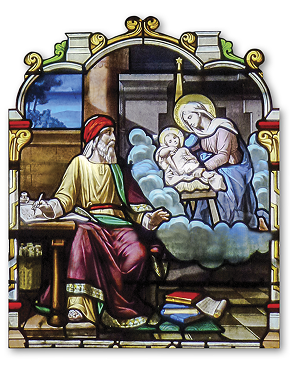
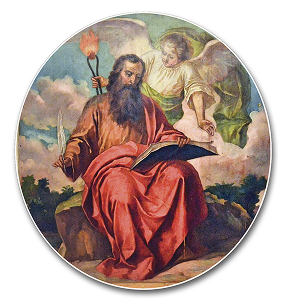
Praised by Sacred Scripture as a “holy prophet” and “faithful in the sight of God” (Sir 48:23, 25), Isaiah is recognized for the extensive duration of his public life and the rich content of his writings.
Considered the first of the four major prophets of the Old Testament, he was a key figure in Hebrew history and an ardent herald of messianic salvation. His name, quite appropriately, means God saves.
As is proper to the prophetic vocation, his predictions transcend the immediate context of his time: they apply to Our Lord Jesus Christ and the redemptive work He accomplished, as well as to the trajectory of the Holy Church.
His prophecies even shed light on our day and age.
A deeper look at his life and mission will help us to better understand his writings, frequently found in the readings of the Holy Mass and the Liturgy of the Hours, as well as reveal to us the grandeur of the plans that God charted for humanity.
The prophet of hope
Son of Amos (cf. Is 1:1; 2:1), Isaiah was born around 770-760 BC.
His writings and precise indications about Jerusalem suggest that he originated from the capital of Judah, as they denote a superior culture, unlikely to have been acquired in smaller cities.
His prophetic ministry began during the reign of Uzziah; in 740 BC – the year of the monarch’s death – the young prophet, around twenty years old, was already carrying out his mission in Jerusalem, also encompassing the reigns of Jotham, Ahaz, and Hezekiah.1
Isaiah lived in a turbulent period in Hebrew history involving the Syro-Ephraimite crisis and the invasion of Tiglath-Pileser III,2 king of the Assyrians. In his land, the Jews were in a state of great moral and religious laxity.
In this scenario, the prophet’s preaching takes on two aspects: encouraging the people against their enemies, with the promise of the Saviour’s life – this is the period of the prophecies about Emmanuel, the “God with us” (Is 7:14; cf. Mt 1:20-23) – and the vehement rebuke for the state of lack of love of the Lord.
Isaiah refers to God emphatically as “the Holy One of Israel” (Is 10:20), to exhort the people to be holy as He is holy.
In his oracles, the Lord is presented enveloped in majesty, enthroned as King of the universe and Judge of the nations and, in particular, of the chosen people.
Amidst words of fear and hope, the prophet encourages the descendants of David, summoning them to the paths of virtue; but he does not hesitate to announce the ruin of Israel and Judah as a necessary consequence of their infidelities.
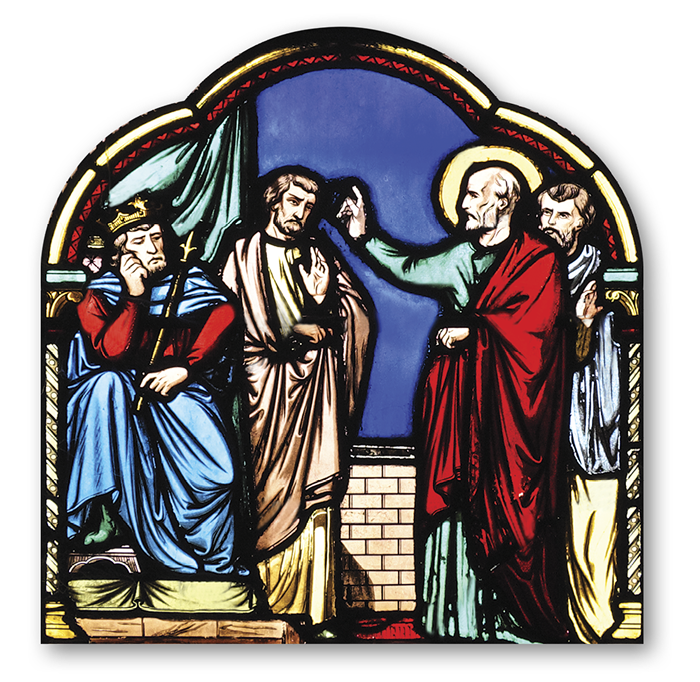
In the third chapter of his book, for example, he prophesies the anarchy that would be established in Judah at the time of the Babylonian invasion:
For, behold, the Lord, the Lord of hosts, is taking away from Jerusalem and from Judah stay and staff, the whole stay of bread, and the whole stay of water;the mighty man and the soldier, the judge and the prophet, the diviner and the elder, the captain of fifty and the man of rank, the counsellor and the skilful magician and the expert in charms.
And I will make boys their princes, and babes shall rule over them (Is 3:1-4).
Eternal prophecies
This was, in general terms, the historical context of Isaiah’s ministry. However, when reading his writings, one perceives that God had a broader intention with the prophet’s preaching.
His words have two levels of interpretation: one relating to the era in which he lived; the other, to the future.
The beginning of his prophetic mission is an example of this. In a mystical vision, a seraph touches his lips with a burning coal and sends him to prophesy.
The celestial messenger commands him to announce that, as divine punishment, the cities of the chosen people would be deserted, the houses empty, and the lands abandoned (cf. Is 6:11).
He concludes by stating: “And though a tenth remain in it, it will be burned again, like a terebinth or an oak, whose stump remains standing when it is felled. The holy seed is its stump” (Is 6:13).
This passage, in addition to applying to the actual situation of the Hebrews at that time, has a profound relevance to the future foundation of the Holy Church.
Our Lord Jesus Christ established His Church from the “remnant of Israel” (Jer 31:7), the “tenth” considered as His chosen people, and made “holy seed” to take root throughout the earth.
Another Isaian oracle clearly applies to the figure of the Messiah and the Church.
The prophet addresses Shebna, a minister of the palace, and announces to him that his powers would be transferred to Eliakim, son of Hilkiah (cf. Is 22:15-22), stating that he would clothe himself with his tunic and gird himself with his belt.
Finally, he prophesies: “And I will place on his shoulder the key of the house of David; he shall open, and none shall shut; and he shall shut, and none shall open” (Is 22:22).
St. Jerome3 comments that the name Eliakim means resurrected God or Resurrection of God.
The Holy Doctor relates the expulsion of Shebna from ministry to the transition from the Old Covenant to the Catholic Church, in which is the confession of the true Faith.
This key, the Saviour carried on His shoulders to the summit of Golgotha, and thus what He obtained at the price of His Blood, that is, the forgiveness of sins and other fruits of Redemption, can never be “shut”.
A forewarning to the Hebrew priesthood
This same prophecy goes on to warn about the decline of Hebrew priestly authority.
At the beginning of the passage, God commands: “Go, get thee in to him that dwelleth in the tabernacle” (Is 22:15 Vulgate), and describes the image of a peg driven into a firm place, a symbol of stability and honour.
Then, he announces: “In that day, says the Lord of hosts, the peg that was fastened in a sure place will give way; and it will be cut down and fall, and the burden that was upon it will be cut off” (Is 22:25).
Once again we find Isaiah’s words crowned with two parallel meanings, for this prophecy is also fulfilled, and perhaps even more fittingly, in the announcement of the Apostles shaking their sandals when faced with the rejection of their preaching in the name of Jesus (cf. Mt 10:14), as well as in the Saviour’s lament over the Holy City:
O Jerusalem, Jerusalem, killing the prophets and stoning those who are sent to you! How often would I have gathered your children together as a hen gathers her brood under her wings, and you would not! Behold, your house is forsaken and desolate. For I tell you, you will not see Me again, until you say, “Blessed is He who comes in the name of the Lord” (Mt 23:37-39).
St. Peter’s Church, Črnomelj (Slovenia)
“The glory of the Lord will be revealed”
Equally eloquent are the passages in which the prophet exhorts the Israelites to confidence, promising divine intervention in events, in their favour.
His descriptions transcend immediate chronology and extend, with admirable precision, to the foundation of the Holy Church: the new “chosen race” and “holy nation” (1 Pt 2:9) which, united by one Baptism and one faith, would become a visible sign of God’s glory among the nations, bringing to the whole world the joy of salvation and the forgiveness of sins.
In this sense, the exhortation overflowing with hope that opens chapter 40, and has been immortalized by the initial movements of Handel’s oratorio Messiah, is incomparable:
“Comfort, comfort my people”, says your God. Speak tenderly to Jerusalem, and cry to her that her warfare is ended, that her iniquity is pardoned, that she has received from the Lord’s hand double for all her sins.
A voice cries: “In the wilderness prepare the way of the Lord, make straight in the desert a highway for our God. Every valley shall be lifted up, and every mountain and hill be made low; the uneven ground shall become level, and the rough places a plain.”
And the glory of the Lord shall be revealed, and all flesh shall see it together, for the mouth of the Lord has spoken (Is 40:1-5).
Isaiah, a living prophecy
A distinctive characteristic of the prophetic office, also observed in figures like Hosea, is that the prophet’s life is a tapestry of symbolic signs.
God not only speaks through Isaiah; He makes him embody, in his own personal and family life, the substance of His message. The prophet himself becomes a living prophecy.
An example of this are the names Isaiah gave to his two sons.
One of them was called Shear-jashub, which means a remnant will return (cf. Is 7:3), a promise repeated several times in his prophecies regarding a chosen portion of the elect people who would survive divine punishment and be faithful to the Lord.
The other son was called Mahershalalhashbaz, which means quick theft, swift plunder (cf. Is 8:1).
Regarding him, God said to the prophet: “Call his name Mahershalalhashbaz; for before the child knows how to cry ‘My father’ or ‘My mother,’ the wealth of Damascus and the spoil of Samaria will be carried away before the king of Assyria”(Is 8:3-4).
However, much more than in the onomastics of his descendants, it was in his own life that Isaiah personified his prophecies, through what he suffered and the complete accomplishment of the divine will.
We find in his writings the famous oracle about the suffering Servant, a figure interpreted by Christian exegesis as the Messiah.
The Lord wished to crush Him with expiatory sufferings, consolidating a lasting lineage and successfully carrying out the designs of God (cf. Is 53:10).
The prophet not only foresaw this mystery but anticipated the Via Crucis of his Lord.
Indeed, by following a path of unwavering faithfulness, he suffered persecutions that culminated in martyrdom: according to tradition, he was sawn in half alive by order of King Manasseh, around the year 668 BC.
Isaiah thus fulfilled his vocation entirely, proclaiming the glories of the Saviour almost eight centuries before His birth.