 Heralds of the Gospel Magazine, Vol. 20, nº 227, September 2026
 Heralds of the Gospel Magazine, Vol. 20, nº 226, August 2026
 Heralds of the Gospel Magazine, Vol. 20, nº 225, July 2026
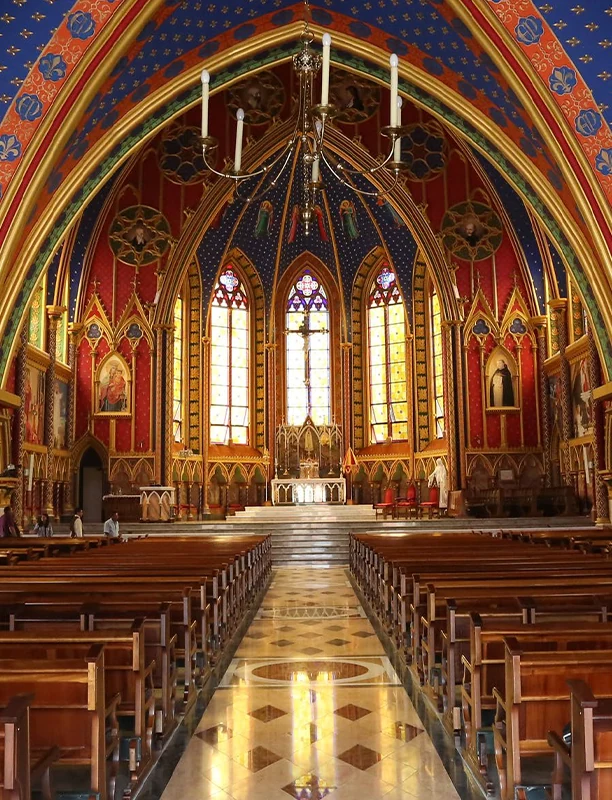 Who are the Heralds of the Gospel?
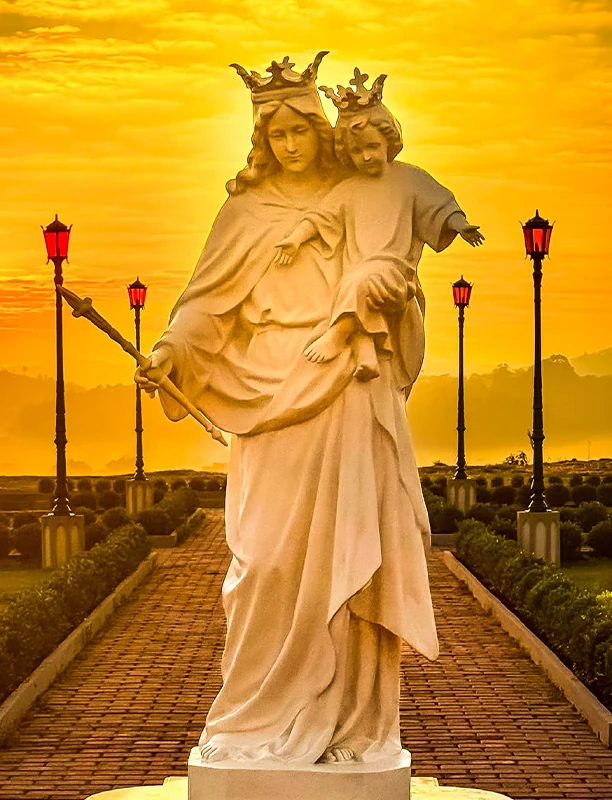 Help of Christians
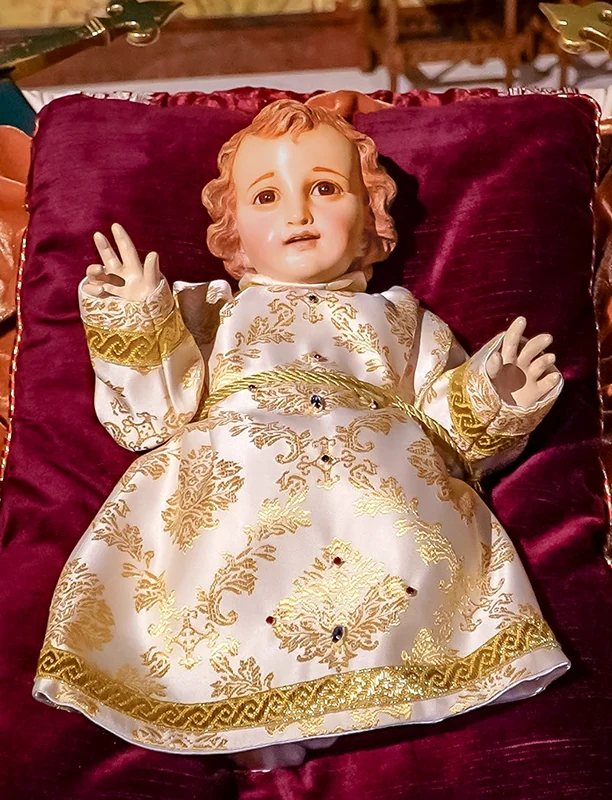 Christmas Carols
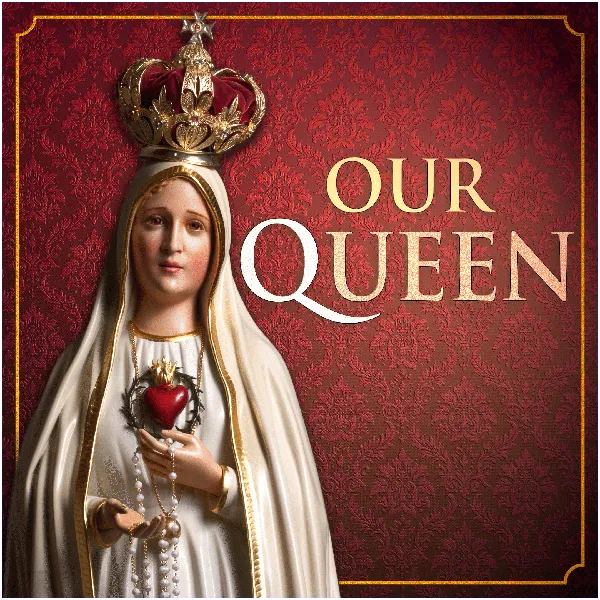







Unique and inexhaustible, the love of the Sacred Heart for each one of us was taken to unimaginable extremes. How can we fail, then, to have absolute trust in divine mercy, despite our miseries? Or perhaps even because of them?
Gospel - Solemnity of the Sacred Heart of Jesus
31 “Since it was the day of Preparation, in order to prevent the bodies from remaining on the cross on the Sabbath (for that Sabbath was a high day), the Jews asked Pilate that their legs might be broken, and that they might be taken away.
32 “So the soldiers came and broke the legs of the first, and of the other who had been crucified with him; 33 but when they came to Jesus and saw that He was already dead, they did not break His legs. 34 But one of the soldiers pierced His side with a spear, and at once there came out blood and water.
35 “He who saw it has borne witness—his testimony is true, and he knows that he tells the truth —that you also may believe. 36 For these things took place that the scripture might be fulfilled, ‘Not a bone of Him shall be broken.’ 37 And again another scripture says, ‘They shall look on Him whom they have pierced’” (Jn 19:31-37).
I – Unique and cherished children
In reflecting on the devotion to the Sacred Heart of Jesus—whose feast the Church commemorates on the Friday after the week of the Solemnity of Corpus Christi—there is a risk of greatly underestimating the treasure of goodness and mercy that this form of piety makes available to the faithful. The Heart of Jesus is the most authentic and substantial tabernacle of the three Persons of the Blessed Trinity and, as such, there is no better way to adore the Father, Son and Holy Spirit than through Him. The Sacred Heart of Jesus, invoked in the litany in His honour as “substantially united to the Word of God,” marvellously embraces both natures of Christ: the human and divine. It was fitting, then, that God come into contact with us through its mediation, respecting our proportions and placing Himself within our reach in a way that inspires our trust. Reciprocally, by adoring God through the Sacred Heart, we make use of the most privileged—the supreme—altar for our prayers to ascend to Heaven so that they will be received with absolute benevolence. The Sacred Heart is the symbol par excellence of God’s infinite love for sinners and the most moving expression of His capacity to pardon. Opening ourselves to the mercy that flows from this Heart is a sure source of salvation, for as Pope Pius XII stresses: “Assuredly, when He who is the only begotten of the Father and the Word made flesh ‘full of grace and truth’ (Jn 1:14) had come to men weighed down with many sins and miseries, it was He alone, from that human nature united hypostatically to the divine Person, Who could open to the human race the ‘fountain of living water’ which would irrigate the parched land and transform it into a fruitful and flourishing garden.”1 “Christ in Glory with the Saints” by Fra Angelico (detail) - National Gallery, London
God has loved us from all eternity
To more fully fathom the scope and value of this charity let us call to mind that it is eternal and not limited by time. Man is attracted or repelled only by objects of whose existence he is aware. However, this phenomenon occurs differently with God. St. Thomas affirms that “God knows all things; not only things actual but also things possible to Him and creatures [...] His glance is carried from eternity over all things as they are in their presentiality.”2 Therefore, the Creator loved us immeasurably even before bringing us into existence. From the world of divine possibilities, He chose each person in particular, and had us in mind in His Redemption. Because, adds the Angelic Doctor, “Although creatures have not existed from eternity, except in God, yet because they have been in Him from eternity, God has known them eternally in their proper natures; and for that reason has loved them.”3A primordial light for each human creature
Since God is the Supreme Good, when He loves a given being He projects something of His Supreme Goodness upon it, because “the love of God infuses and creates goodness.”4 Thus, it was given to each human creature to reflect some of His infinite perfections in a unique, distinct and personal way. The entire spiritual life should be ordered according to this gift bestowed by God, which enables each person to contemplate Him and reflect Him here on earth in a particular way. It is what Prof. Plinio Corrêa de Oliveira called the “primordial light,” that is, “the ensemble of God’s perfections corresponding to the most ardent point of each man’s application of the intelligence and will.”5 Through this prism, no individual is equal to another, for through this exclusive participation in the divine attributes, an extraordinary, personal and unique relationship is established between the Creator and us, which is our best preparation for eternal happiness. For God does not just love us according to the good He put in our human nature upon creating us, but also according to the state of perfection that we will have in the Beatific Vision—if we arrive there—purified by the Most Precious Blood of the Redemption. In summary, to the Sacred Heart of Jesus, each one of us is a child, an only child, the object of His immense love, long before we were born! It is from this perspective that we should examine the episode narrated by the Gospel of this Solemnity.II – The Heart That Loves Us to the End
Let us consider that to have carried out the Redemption, Jesus could have simply offered God the Father a gesture, a gaze, or a single word, since all of His acts have infinite merit. However, in His unlimited love for humanity stained by the sin of Adam, He wanted to suffer the ignominies of the scourging, the humiliations of the Ecce Homo, the exhaustion of the Via Sacra, and the torments of the Crucifixion until death. The Redeemer having surrendered His spirit (cf. Mt 27:50), and just when everything seemed to be finished, the Evangelist includes this relatively long passage in his narration, composed of seven verses, which is absent in the Synoptic Gospels, perhaps because St. John was the only Apostle present at the Cross, making him the sole eye-witness among the evangelists.Slow and painful death
31 “Since it was the day of Preparation, in order to prevent the bodies from remaining on the cross on the Sabbath (for that Sabbath was a high day), the Jews asked Pilate that their legs might be broken, and that they might be taken away. 32 “So the soldiers came and broke the legs of the first, and of the other who had been crucified with him.”
 “Calvary” - Benedictine Abbey of Subiaco (Italy)
“At once there came out blood and water”
33 “But when they came to Jesus and saw that He was already dead, they did not break His legs. 34 But one of the soldiers pierced His side with a spear, and at once there came out blood and water.”
The most sublime fountain of all time
Effectively, the Roman soldier’s spear opened the most sublime fountain of all time. In this way was fulfilled the ideal conceived by God for the creature water, so clearly delineated by Our Lord throughout His ministry: “On the water’s edge Jesus inaugurated His public life; the water of Cana served as the material for His first miracle; Jacob’s well is the place chosen for the vocation of the Samaritan woman; Jesus began with water, and with water He finished, the water coming forth together with blood from His side pierced with a spear. Water and blood, it is the twofold Sacrament of Baptism and of martyrdom. Therefore, let your thoughts be elevated from the natural realm to that of grace, in view of this water that purifies and makes fruitful everything in the two orders.9 Blood and water gushed forth from the pierced Heart of Jesus, and with them the Holy Church was born. “From His side, Christ formed the Church, as from Adam’s side was formed Eve,” St. John Chrysostom affirms.10 And St. Ambrose asserts: “Whereas ‘the first Adam became a living being, the last Adam became a life-giving spirit’ (1 Cor 15:45). The new Adam is Christ, and the side of Christ is the life of the Church.”11 Throughout Christ’s apostolic life, comments Fr. Monsabré, He manifested His plan to establish this perfect society of souls upon unshakeable foundations, “and when He gave Himself up to death, it was His beloved Church, His glorious Church that He wanted to bring forth pure and immaculate from His bleeding wounds.”12 As the Apostle affirms, “Christ loved the church and gave Himself up for her, that He might sanctify her, having cleansed her by the washing of water with the word, that He might present the church to Himself in splendour, without spot or wrinkle or any such thing, that she might be holy and without blemish” (Eph 5:25-27). It is the mystical marriage between Jesus and the Church—archetype of sacramental matrimony—from which all the children of God are born, generated by the water of Baptism and the blood of the Eucharist. [gallery columns="2" size="medium" td_select_gallery_slide="slide" link="file" ids="9556,9555"]The testimony of the evangelist
35 “He who saw it has borne witness—his testimony is true, and he knows that he tells the truth—that you also may believe.”
The death of the Lamb
36 “For these things took place that the scripture might be fulfilled, ‘Not a bone of Him shall be broken.’ 37 And again another scripture says, ‘They shall look on Him whom they have pierced.’”
 Detail of “The Last Supper” by Fra Angelico, Museum of St. Mark, Florence (Italy)
III – Confidence and Reciprocity
In His desire to redeem mankind corrupted by the sin of our first parents, Our Lord Jesus Christ shed His blood to the last drop on the Cross. Had it been necessary, He would have made this supreme sacrifice to save each one of us individually. From this holocaust the Holy Church was born, erected by Our Lord to restore and perfect the state of grace lost by man as a result of original sin. A perfect and visible society, she purifies souls through Baptism, administers the Sacraments to them and allows them to participate in the divine life, toward the goal of eternal happiness. Before such an ineffable manifestation of goodness, it is impossible for us not to feel loved by God, despite our miseries. Even if we have wallowed lamentably in the mire of sin, we can confide in the infinite merits obtained by the Most Sacred Heart of Jesus during His Passion, because in virtue of the primordial light He placed in our soul—a reflection of His own perfections—He will do everything to redeem us. Even our miseries offer the Sacred Heart of Jesus the opportunity to reveal His infinite goodness and His measureless desire to pardon; everything redounds to the greater glory of God. We should, then, be filled with confidence, dismissing any doubt concerning the Creator’s love for us. Yet we must ardently desire to surrender ourselves entirely into the hands of Divine Providence, never seeking personal benefit dissociated from the glory of the Most High, keeping in mind that any good we can envision for ourselves is nothing in comparison with the participation in the divine perfections He has reserved for us from all eternity. Thus, when we close our eyes to this world and are born into eternity, we will have an unimaginable essential and accidental glory—a participation in the very glory of God. Why? Because, as St. Augustine teaches, when God rewards us, He crowns His own gifts.16 Aware of this marvel, let us trust in this Most Sacred Heart that has loved us to the end, and who stoops the lowest to those creatures that are most in need of pardon. [gallery columns="2" link="file" size="medium" td_select_gallery_slide="slide" ids="9554,9553"]* * *
An indispensable complement to these considerations is a reference to her whose Immaculate Heart, according to the expression of St. John Eudes, is so united to her Divine Son’s that the two hearts form just one: the Sacred Heart of Jesus and Mary.17 Just as Our Lord in the Garden of Olives was mindful of all men, in the same way, the Mother of the Church must have foreseen, at that instant, all those who would make up the Mystical Body of Christ. The grandeur of the Immaculate Heart of Mary is a mystery that our intelligence cannot grasp. Undoubtedly, she prayed for everyone on Calvary. And today, from Heaven, she is attentive to the hardships and joys of each of her children, ready to aid us with indescribable affection, kindness and love. ◊