 Heralds of the Gospel Magazine, Vol. 20, nº 227, September 2026
 Heralds of the Gospel Magazine, Vol. 20, nº 226, August 2026
 Heralds of the Gospel Magazine, Vol. 20, nº 225, July 2026
 Who are the Heralds of the Gospel?
 Help of Christians
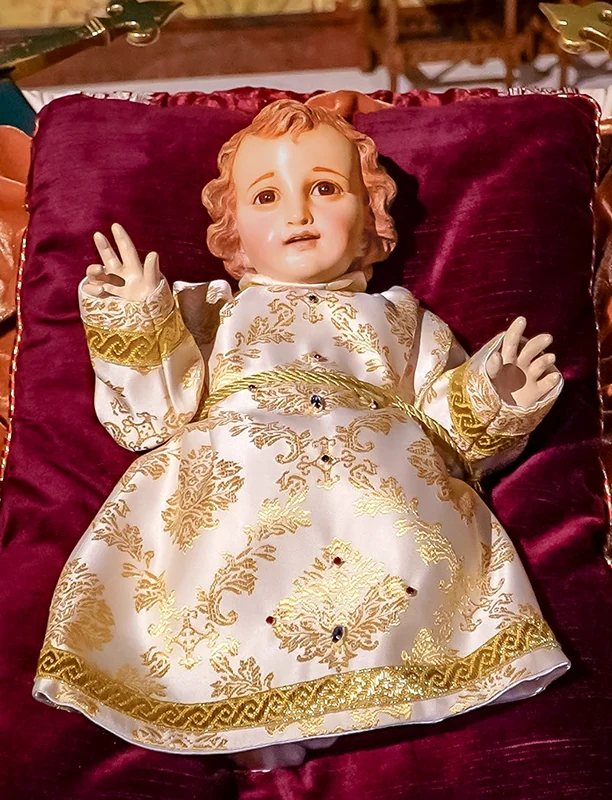 Christmas Carols









Obstacles in human nature to obedience
However, in human nature there are many obstacles to obedience. Often man does not want to obey because he has an innate tendency, disfigured by original sin, to do what he thinks he ought to do and not what someone else commands. Because of this, when he does not understand an order or does not agree with it; when it is a difficult order that obliges him to make a sacrifice that he deems unnecessary; when the sacrifice is necessary but disagreeable; or for all these reasons together, man is seized with rebellion and tends to rise up against the authority, saying: “I will show you how things should be done; I will not obey.” Then a harmful and dangerous situation arises: a crisis in the relationship between the one commanding and the one obeying. In this case, it is necessary that the authority understand that such a situation can have unexpected results. If he makes the order in a brutal manner, shouting – “I’m obliging you! Submit!” – it is possible that the problem will escalate and that the subordinate, injured by the remedy applied, will be driven to an outburst, a flight, a rupture or even an aggression. Such an outcome is not the victory, but the failure of authority.In general, the order is given for the benefit of the subordinate
This is even better understood since, in general, an order is given for the benefit of the one obeying, even if it is a sacrifice for him. For example, an authority sends a soldier off to war. On the surface this is not for his benefit, for he may return crippled, mutilated or may even die. However, in the natural order of things, when a country is attacked, all the eligible members of that nation must heed the call of the authority: take up arms and fight. Otherwise, the country will be destroyed. This is very well expressed in the Book of Maccabees (cf. 1 Mc 3:59): it is better for a man to die than to live in a land devastated and without honour, that is, in a land in which the inhabitants have no sense of honour, no sense of resistance to the point of blood, to keep the national flag flying and, above all, the sacrosanct standard of the Holy Roman Catholic Church, homeland of the souls of all the living. In this light, he who receives the order “Go and fight!” is a beneficiary. However, often he does not see it this way – it is difficult to imagine that all men would readily understand this, especially in the hour of danger – and he may rebel. If this happens, the only result that the authority – who is commanding for the common good and for the good of the individual – will obtain is to see evil take root in the latter’s soul. And his desertion will be an evil for the country, for every soldier who deserts subtracts from the nation a strength that belongs to it. The consequence is the failure of authority.The father-son relationship in commanding and obeying
In the face of the refusal or grudging acceptance of the one who obeys unwillingly, carelessly, or in a “minimalist” fashion, doing the very least possible, the authority has a moral and psychological problem that it must resolve. What is this problem? How to influence that subject so that he changes his mind, wants to do what he should do and not rebel against the will of the superior; and that a consensus is instead established between him and the authority. In this way, the relationship between the one commanding and the one obeying reaches the peak of its normality, which is the father-son relationship. A good father giving orders to a good son is discipline at its best. And one who exercises authority should do everything possible to establish this relationship with the subordinate. How can this be achieved? In the first place, the superior must make himself understood in every way – and I purposely say every way – so that the subordinate is disposed in such a way that the stirrings of non-conformity not arise in him, but that, on the contrary, he has joy and willingness of soul in doing what he must do.The collaboration of goodness and strength
 St. Stephen’s Cathedral, Vienna
Coronation ceremony of the Queen of England
This way of understanding authority, in the golden age of the Catholic monarchies in Europe, imparted a mixture of majesty and strength to all the ceremonies related to throne. As a reminiscence of these we have, for example, the coronation of the Queen of England. In the body of the church were the Anglican clergy in vestments loosely resembling those of the Catholic Church, and therefore somewhat beautiful. Special pews accommodated the nobles, all wearing crowns corresponding to their respective titles of nobility. Right in front of the altar were the thrones where the new queen and her husband would sit; to the right and left were the seats for the members of the English royal house. And there were also members of the royal houses of other European countries, who had gathered for the coronation. The ceremony was very beautiful and a great number of people attended it inside the spacious Westminster Abbey. The long procession accompanying the Queen from Buckingham Palace to the Abbey took place. The main figures of the ceremony passed by in traditional gilded carriages, with paintings, crystal windows, plumes and lackeys wearing tricorn hats. All along the route you could see European princes with their beautiful uniforms and decorations. There were also maharajas, sultans and other potentates from the still-mysterious world of the East, some of them in their own carriages. Then the eminent men passed, like Churchill and Eden, who had saved England during the Second War. There was enormous enthusiasm. Someone might say, “What is all this for?” To anoint – in the proper sense of the word, that is, to clothe with the oil of understanding, of admiration and corresponding love – the relations between a king and a queen on the one hand, and the people on the other; so that the latter understand what a king and a queen are, what it is to command and to obey. But also so that the king and queen would understand, when they saw the enthusiasm manifested from all sides, from the tall buildings of London full of people in decorated windows, who greeted them as they passed by. The common people filled the streets, even in the poorer neighbourhoods, pressing on every side, clinging to lampposts, perching on rooftops, and applauding endlessly. And the monarchs would wave.Love and admiration
What did this duality wish to say? It said: “We love one another; we comprehend what each one means to the other. The main foundation of our good relations is mutual love, and the reason why we love each other is that we understand, cherish and admire one another.” Where love admires, admiration loves, and good understanding is established. Where this mutual vision exists, this mutual understanding takes place, and institutions become solidly grounded. The basis of these good relations is love, and secondarily fear. There is love because there is understanding, and there is understanding because they have mutually been able to show one another their finest aspect. And that understanding endures for a whole reign. Let us say that the applause at the beginning of a reign continues until the death knell of its end. And at the beginning of the new reign, everyone prepares for new applause, and a new death knell, when it ends. It is a continuous wellspring of love, of admiration, of hope when a reign is born; of sorrow when it dies; of affection on every occasion. It makes the nation strong, like a tower erected in the midst of a plain; nothing can assail it. Nevertheless, this attitude should be present not only on special days, but also in everyday life. A king who employs a regal tone only at his coronation, but who has an uncouth manner day-to-day, is committing suicide and destroying step by step what he has built up on the first day of his reign. Moments of the coronation ceremony of Queen Elizabeth II on June 2, 1953 - Scenes from the documentary “A Queen is Crowned”
The sacrifice of enduring seriousness
The ancients expressed these truths – which I am trying to sum up with the grandiose scene of the coronation – in a thousand different ways in daily life. For example, in the way in which in countless homes all over Christendom, even as late as the middle of the nineteenth century, parents always blessed the food when it came to the table, whether in the poorest homes or in palaces. The father would sit first, then everyone would follow him. Next to him, on a less imposing chair, but in a more accessible place, sat the wife. They presided over the meal as they presided over the life of the family, as well as that mutual exchange of love and admiration that forms the essence of the good order of things. This presupposed a sacrifice on everyone’s part: that of an abiding seriousness. Never a silly, vulgar joke; especially never a dirty or immoral joke, au grand jamais, under no circumstances. There was, instead, an affable, pleasant conversation, in which each one told the news he knew, and everyone was interested in each other’s lives. It was a carefree conviviality which, on holidays, continued after the meal for as long as they wanted. Then the family dispersed; everyone went their own way, but with hearts full of love. This is the patriarchal family, the true basis of society. It shows us clearly what command is, for the son could be an adult, but when his father gave him an order, he obeyed happily because it was his father’s will.Authority should never seek personal advantages
In this atmosphere of affection and command, influence is exercised, which is the attitude of soul by which someone transmits not only a conviction but also a sentiment, a love; or communicates a hatred of evil, which at times is indispensable to know how to convey. Until there is a harmonious combination of love and hatred, one has not learned to command. A family meal - Royal Monastery of Brou, Bourg-en-Bresse (France)
Taken, with minor adaptations, from: Dr. Plinio. São Paulo. Year XV. N.174 (Sept., 2012); p.6-13