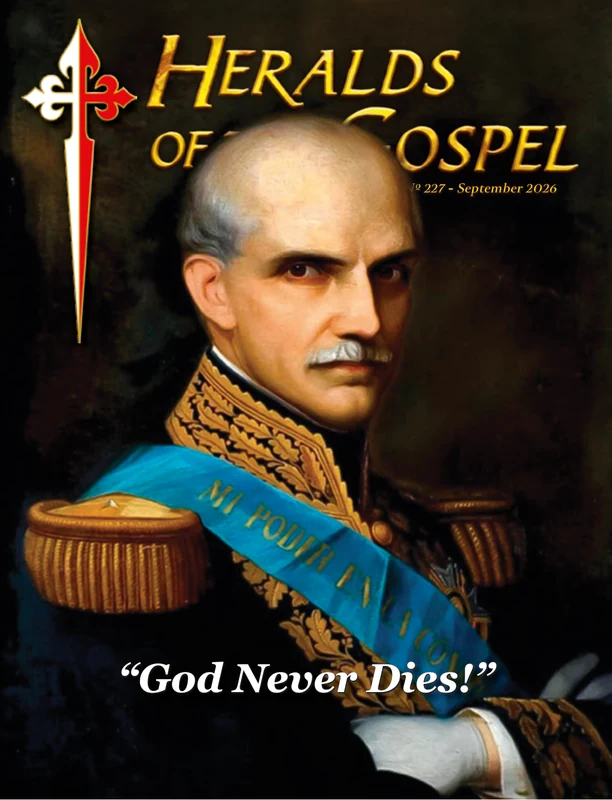
 Heralds of the Gospel Magazine, Vol. 20, nº 227, September 2026
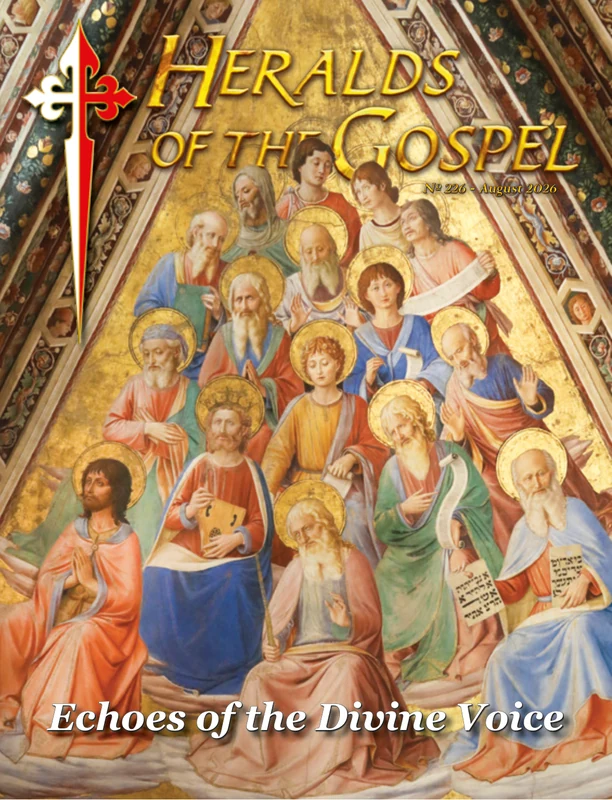 Heralds of the Gospel Magazine, Vol. 20, nº 226, August 2026
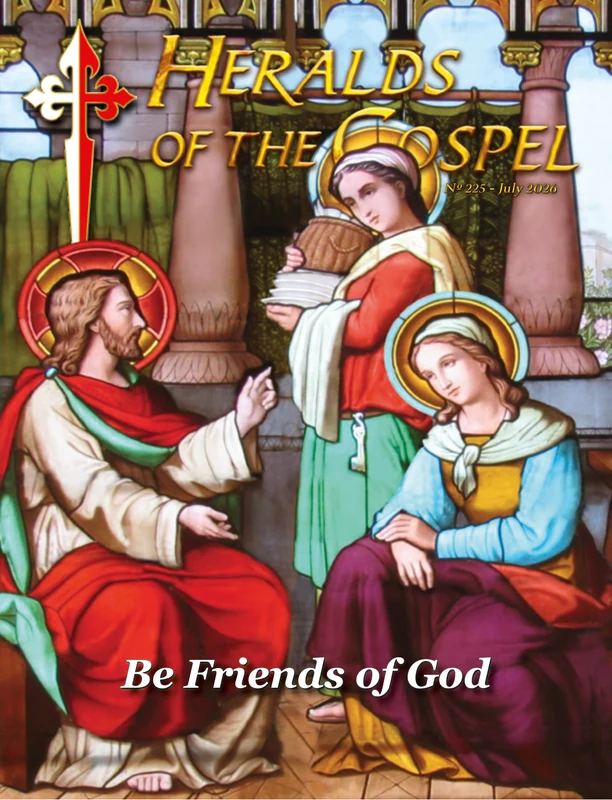 Heralds of the Gospel Magazine, Vol. 20, nº 225, July 2026
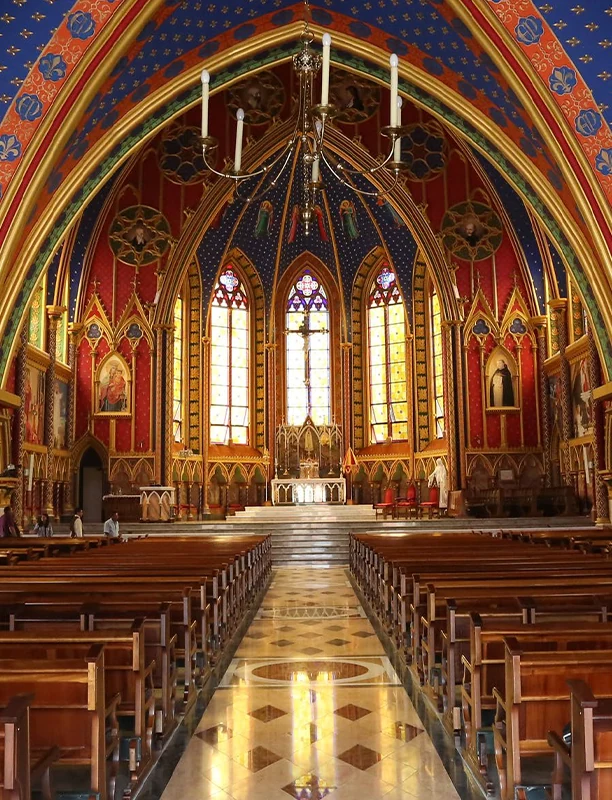 Who are the Heralds of the Gospel?
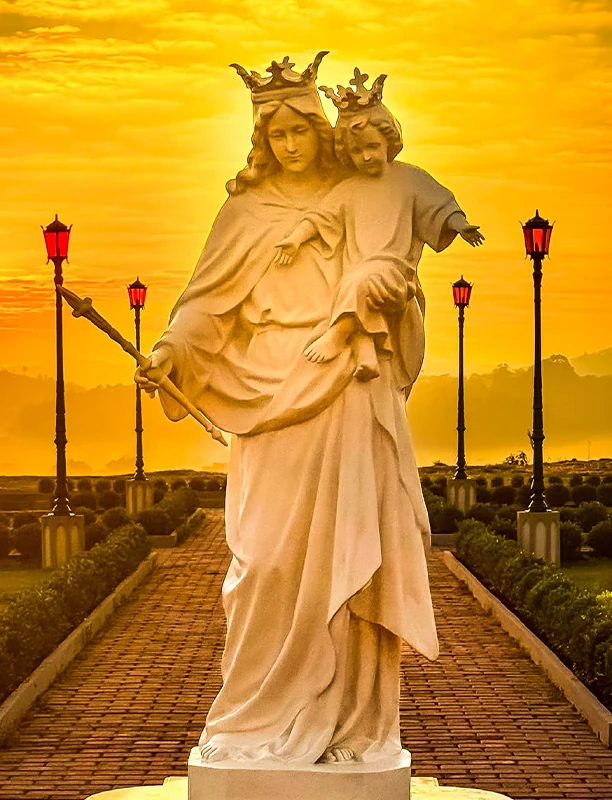 Help of Christians
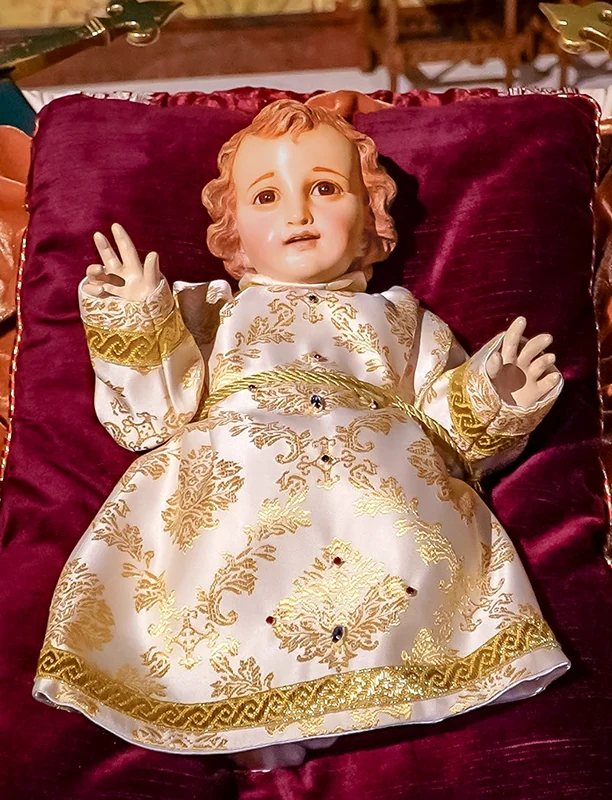 Christmas Carols





Endowed with charisms from early childhood
The mystical gifts the Italian saint received were abundant. This spiritual son of St. Francis, whose given name was Francesco Forgione, was born in Pietrelcina, a commune in the Province of Benevento, Italy, on May 25, 1887. From an early age, he showed great piety, as his mother, Josephine, tells us: “He committed no fault, he was not capricious, he was good and always obeyed. Every morning and evening he went to church to visit Jesus and the Virgin. […] He did not wish to play games with his peers because, as he said, ‘they are false, they speak dishonest words and blaspheme.’”1 Josephine also recounts the difficulties Francesco had in learning to read and write with his first teacher, a former priest who would later regret abandoning his vocation and die under the care of his former pupil. He declared that the boy would never learn anything. “My head may be good for nothing, but his, who lives in sin, is no better…”2 would be the innocent little boy’s reaction. When entrusted to another teacher, he learned so quickly that he soon progressed far beyond what was expected. From a very young age, he was the object of remarkable mystical graces, which he accepted naturally, thinking that everyone received such favours. He kept his innocence intact and, months before his sixteenth birthday, he entered the Capuchin Order. He was ordained a priest in 1910 and, from 1918, lived permanently in the convent of San Giovanni Rotondo, in Gargano, where he died on September 23, 1968. In the exercise of his priestly ministry, he would spend more than fourteen hours a day in the confessional, where he attended to penitents from different countries without ever having learned a foreign language. He prepared for this essential form of apostolate by waking up well before dawn and dedicating himself to prayer, in solitude and in the silence of the night, always before the Blessed Sacrament.A “gift from God”
On the morning of September 20, 1918, Padre Pio received the wonderful gift of the stigmata, wounds of supernatural origin that replicate the divine wounds of the Saviour. They remained visible and open, fresh and bloody, for exactly half a century. This extraordinary phenomenon caught the attention of his superiors, doctors, scholars and journalists and indeed all the ordinary people who, for many decades, went to San Giovanni Rotondo to meet the holy friar. In a letter to Fr. Benedetto, his spiritual director, dated October 22, 1918, Padre Pio recounts his “crucifixion”:
Padre Pio during August of 1919
Mystical discernment
Another gift of this Saint was an extraordinary discernment of spirits, as in “the supernatural knowledge of the secrets of the heart, communicated by God to his servants.”4 This ability to read the consciences of penitents was clear to those who approached him. Padre Pio saw when the faithful came to him out of mere curiosity and without repentance for their sins. Others were only in search of spiritual or temporal favours and he was not afraid to expose them, often in public. The friar who was porter at the church in San Giovanni Rotondo recounted the following episode: “[One] day, a merchant from Pisa came to ask him to cure his daughter. Padre Pio looked at him and said: “You are much sicker than your daughter. I see you are dead!” Very pale, the poor man stammered: “No, no. I feel that I am in perfect health!” “Really?” shouted Padre Pio, “You are a disgrace! How can you be well with so many sins on your conscience? I have discovered at least thirty-two!” Imagine the merchant’s astonishment! After Confession, he told anyone who would listen: “He knew everything! Even before I spoke, he knew everything about my life.”5 Another time, a priest, who had come from far away to meet him, approached him for confession. When he had finished relating his faults, the saint asked him: “My son, do you not remember anything else?” “Nothing else, Father,” the penitent replied sincerely. “Come on,” insisted the Capuchin, “try to remember.” But no matter how much he examined his conscience, the sinner was unsuccessful. Padre Pio then said to him with the utmost gentleness: “My son, yesterday morning your train arrived in Bologna at five in the morning. The churches were still closed. Instead of waiting, you went to the hotel to rest before Mass. You stretched out on the bed and fell asleep so deeply that you did not wake up until three in the afternoon, when it was too late to celebrate Mass. I know you did not do it out of malice, but it was a negligence that wounded and hurt Our Lord.”6Revelations and prophecies
In a letter to Fr. Augustine, from San Marco in Lamis, dated April 7, 1913, the saint says: “My very dear father, on Friday morning [March 28 of 1913], while I was still in bed, Jesus appeared to me. He was in a sad state and quite disfigured. He showed me a large crowd of priests, both religious and secular, among whom were several high ecclesiastical dignitaries. Some were celebrating Mass, while others were vesting themselves or removing their sacred vestments. […] “His gaze turned to those priests. Then, as if horrified and tired of looking at them, He looked away. After this He raised His eyes and looked at me and, to my dismay, I saw two large tears running down His cheeks. With an expression of great disgust, He drew away from that crowd of priests and exclaimed: ‘Murderers!’ “Then, turning to me, He said: ‘My son, do not think that my agony lasted three hours. No, because of the souls who have received the most from Me, I will be in agony until the end of the world. During my agony, my son, no one should sleep. My soul goes in search of a shred of human compassion, but – woe is Me! – I am abandoned under the weight of indifference. The ingratitude and sleep of my ministers make my agony even more intense. Alas, how little they correspond to my love! What grieves Me most is that they add contempt and disbelief to their indifference. Many times I have been on the verge of annihilating them, had I not been restrained by the Angels and by souls who are full of love for Me. Write to your spiritual father and tell him that you saw Me and heard from Me this morning. Tell him to show your letter to the father provincial…’ Jesus continued to speak, but what He said I could never reveal to any creature in this world.”7
Padre Pio hearing Confessions in San Giovanni Rotondo, around 1960
Victim of violent infernal attacks
Miraculous healings, bilocation, hierognosis, the gift of luminosity, and levitation… How many other countless gifts this Italian saint had that we could go on to describe. But how can we hope to fit all of God’s infinite gifts into a single article? Of course they were limited in Padre Pio’s soul, but they were nevertheless so abundant that we could say they were a reflection of God’s infinitude. There is, however, another sign that is essential to consider in his life: diabolical attacks. From childhood onwards, the holy priest had frequent dealings with the supernatural world, “and in his intimate life there was a constant coming and going of celestial characters: Angels, Saints, Our Lady, Jesus.”10 Secluded in the torricella, a small room in his house where he was isolated from his family, he received guidance, information and lifelong advice from his “invisible teachers”, which afforded him a maturity beyond his years and a deep knowledge of the sciences. However, in that same place, Padre Pio also fell victim to torments, both physical and spiritual, inflicted on him by the devil. They were fierce attacks, in which he appeared to the boy either in the form of horrifying animals or a wicked boy who attacked the saint. Satan made every attempt to prevent the little Forgione from becoming a priest and fulfilling his mission. For years, even in San Giovanni Rotondo, he was flogged by the devil every night. One of these attacks was described by a cellmate: “One night I was jolted awake by a deafening noise… I did not see what had happened because, terrified, I wrapped myself as tightly as I could in my blanket… I could hear the priest sobbing and pleading: ‘Madonna mia! … Our Lady, help me!’ I could also hear laughter and the sound of falling iron and chains being dragged. I remember that morning, in the light of a lamp, I could see the rods that held up the curtains completely twisted and scattered across the floor. He had a swollen eye and a bruised face.”11 Over the years, seeing that these attacks were not having the desired effect, Satan moved on to moral and psychological aggression, “creating absurd situations that were totally illogical. Even with all the signs of holiness manifested in him in such a striking manner through the stigmata, the miracles and mass conversions, the devil managed to get the Church to condemn him as a charlatan, suspend him from exercising his priestly ministry and keep him under house arrest for two years.”12
Incorrupt body of Padre Pio - Shrine of St. Pio of Pietrelcina, San Giovanni Rotondo (Italy)
Divine panoply
There is so much more that could be said about this unique saint, whose life could be likened to a panoply, in both senses of the word. His virtues and the exceptional graces he received constituted a complete armour for his soul, with which he faced the fiercest satanic attacks and the neo-pharisaism of his time. On the other hand, they are an extraordinary collection of the gifts that God is ready to pour out upon humanity, if it will begin to believe and to live in the “invisible world” of St. Pio of Pietrelcina, the sunflower of God. ◊Notes
1 PREZIUSO, Gennaro. Padre Pio. El apóstol del confesionario. 2.ed. Buenos Aires: Ciudad Nueva, 2011, p.19.
2 WINOWSKA, Maria. Padre Pio, o estigmatizado. Porto: Educação Nacional, 1956, p.8.
3 CESCA, Olivo. Padre Pio, o Santo do terceiro milênio. 7.ed. Porto Alegre: Myrian, 2020, p.119.
4 ROYO MARÍN, OP, Antonio. Teología de la perfección cristiana. Madrid: BAC, 2006, p.918.
5 WINOWSKA, op. cit., p.49.
6 Cf. Idem, p.205-206.
7 ST. PIUS OF PIETRELCINA. Cartas do Padre Pio. Dois Irmãos: Minha Biblioteca Católica, 2022, p.55-56.
8 ROYO MARÍN, op. cit., p.916.
9 RUFFIN, C. Bernard. Padre Pio. A história definitiva. Dois Irmãos: Minha Biblioteca Católica, 2020, p.375-376.
10 CESCA, op. cit., p.23.
11 Idem, p.104.
12 Idem, p.355.