 Heralds of the Gospel Magazine, Vol. 20, nº 227, September 2026
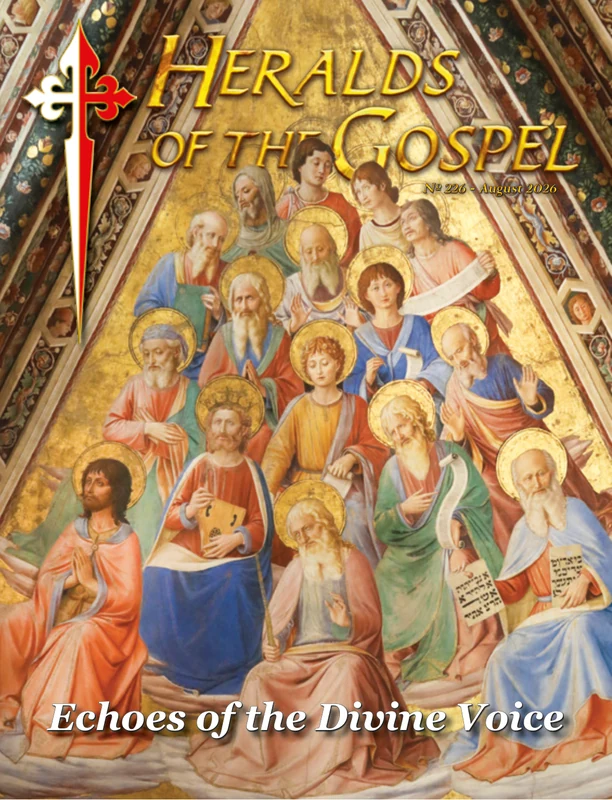 Heralds of the Gospel Magazine, Vol. 20, nº 226, August 2026
 Heralds of the Gospel Magazine, Vol. 20, nº 225, July 2026
 Who are the Heralds of the Gospel?
 Help of Christians
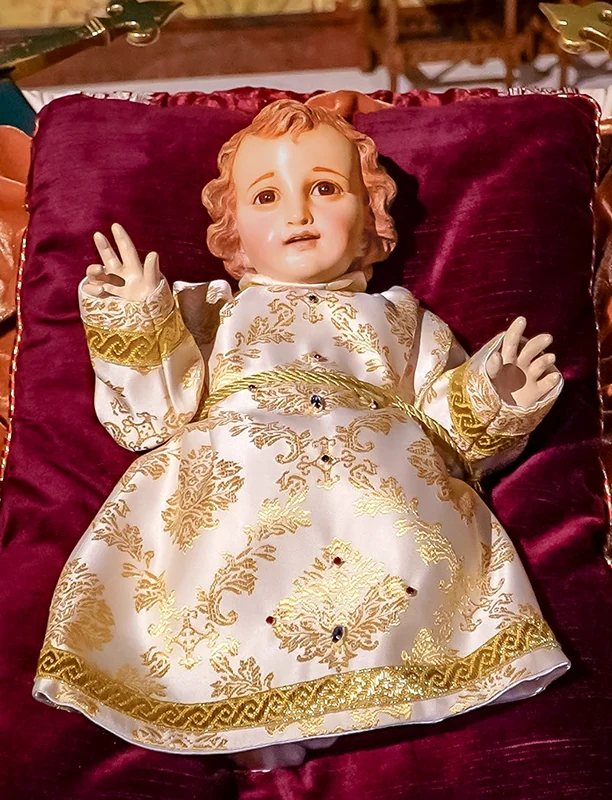 Christmas Carols









August 16 – 20th Sunday in Ordinary Time
(Is 56:1, 6-7; Ps 66; Rom 11:13-15, 29-32; Mt 15:21-28)
There is something enigmatic in this Sunday’s Gospel. A Canaanite woman – therefore not Jewish, a pagan – cries out after Jesus, imploring the liberation of her daughter, tormented by a demon. Our Lord, however, does not answer…
She becomes so insistent in her plea that the disciples themselves intercede with the Master. And He seems to refuse to perform the miracle: “I was sent only to the lost sheep of the house of Israel” (Mt 15:24).
Far from becoming discouraged, the pagan woman redoubles her boldness by prostrating at the divine feet of the Saviour, who again puts her to the test: “It is not right to take the food of the children and throw it to the dogs” (Mt 15:26).
Suspense… Will Jesus, for the first time, deny the appeal of an anguished soul? Will He act with prejudice, discriminating against a pagan woman?
No, because the woman, prostrate, humbles herself and begs for only a crumb… Compassionate, because of the mother’s great faith, Our Lord frees her daughter.
In the Canaanite woman’s actions, it can be noted that the Master leads her on a journey from paganism to the manifestation of faith, passing from darkness to light.
After recognizing Jesus’ messiahship – “Lord, Son of David” (Mt 15:22) – she asks for compassion.
Even after a certain initial distancing, she prostrates herself before Him, assuming an attitude of humility, of recognition of the Redeemer’s superiority, of adoration… It was not enough to have Him as Messiah, it was necessary to recognize Him as God.
Indeed, she had already abandoned paganism, for she prostrated herself before the true God.
Our Lord, however, makes His mission clear: He calls first the children of Israel – even though they have gone astray.
It is then that she begs for the crumb, as if to say: “Accept me, Lord, among those who have You as their master, even if it be only like one of the little dogs. I want to belong to You, and receive whatever You give me.”
In view of this: a miracle! Healing and liberation for the daughter, and at the same time, confirmation of a faith so new, yet so deep!
Now, in this scenario, did Jesus show prejudice?
The prophet Isaiah clarifies, in the first reading, that the house of God “shall be called a house of prayer for all peoples” (Is 56:7). All? Yes, provided that whoever goes up to the house of God respects justice and practises righteousness.
Anyone who desires the miracles of the Divine Thaumaturge – regardless of their situation – should proceed like the Canaanite woman: leave the darkness and seek the Light; prostrate themselves before the Saviour, but also respect the law and live according to the justice that He Himself taught us.
On the part of the Redeemer, there will never be partiality. However, those who do not want to abandon the darkness or paganism with its works distances themselves from the Master, and it is they who show prejudice – towards the Person of Jesus, the true God.
Let us imagine the fate of the Canaanite woman if she had not sought the Lord… What would her situation be? She would have remained in the darkness of paganism, and her daughter would still be tormented by the devil. Let us do as she did, without fear of “prejudice”: let us seek Him!