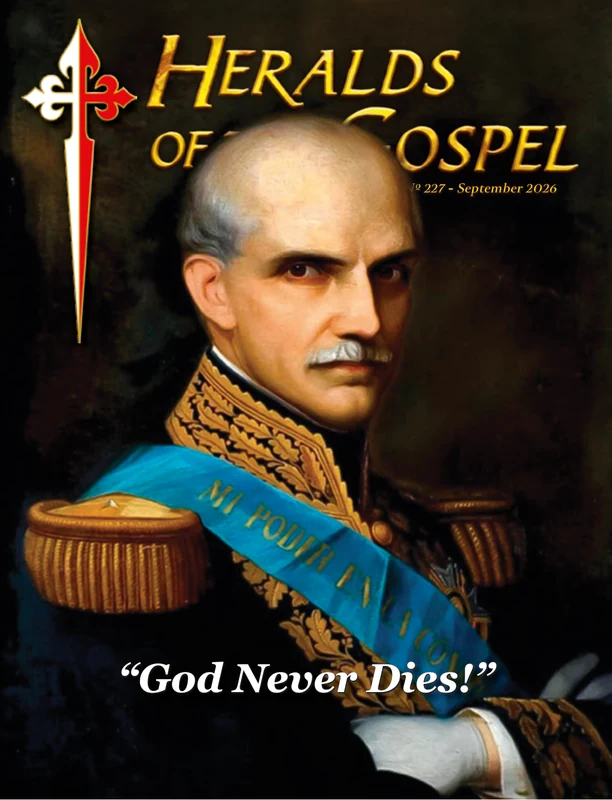
 Heralds of the Gospel Magazine, Vol. 20, nº 227, September 2026
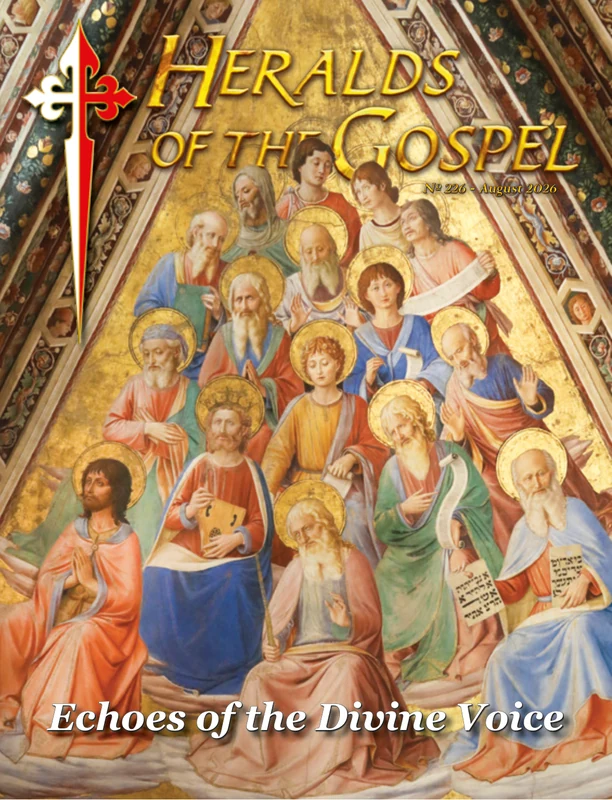 Heralds of the Gospel Magazine, Vol. 20, nº 226, August 2026
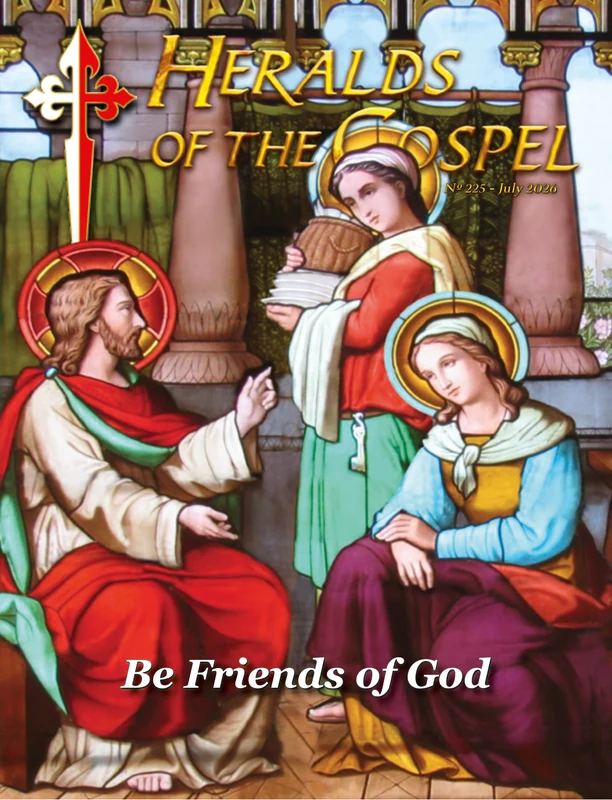 Heralds of the Gospel Magazine, Vol. 20, nº 225, July 2026
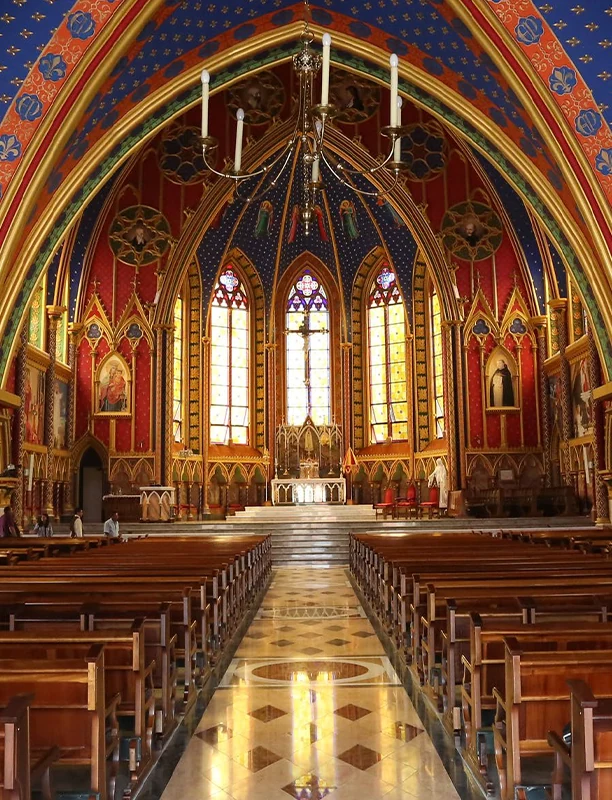 Who are the Heralds of the Gospel?
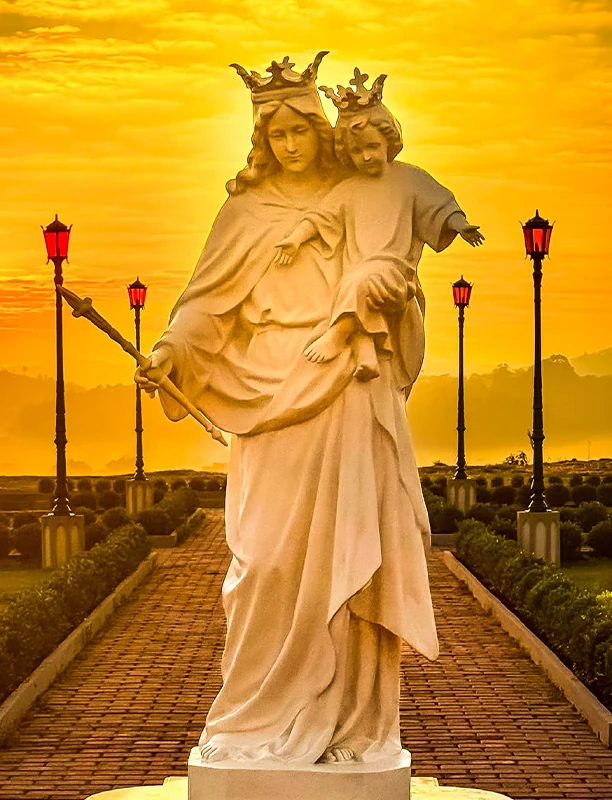 Help of Christians
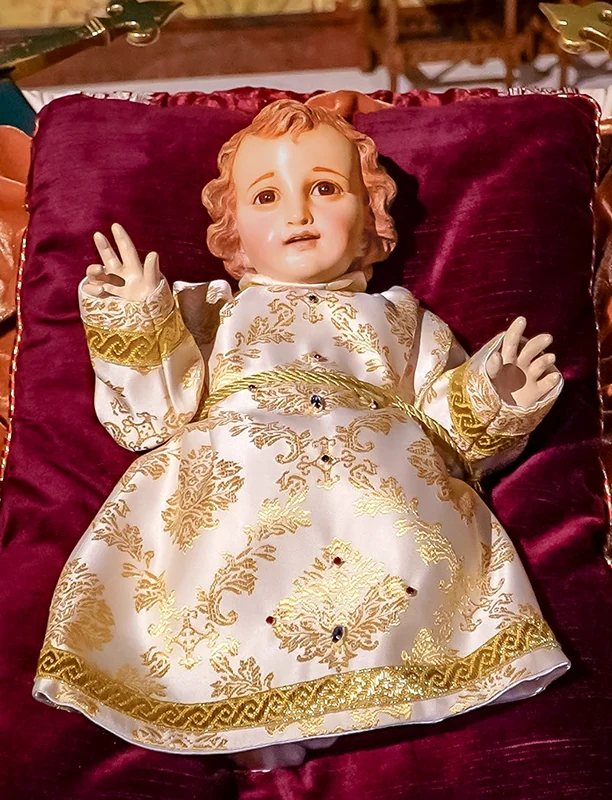 Christmas Carols








Gospel – 16th Sunday in Ordinary Time – Year B
30 The apostles gathered together with Jesus and reported all they had done and taught. 31 He said to them, “Come away by yourselves to a deserted place and rest a while.” People were coming and going in great numbers, and they had no opportunity even to eat. 32 So they went off in the boat by themselves to a deserted place. 33 People saw them leaving and many came to know about it. They hastened there on foot from all the towns and arrived at the place before them. 34 When He disembarked and saw the vast crowd, His heart was moved with pity for them, for they were like sheep without a shepherd; and He began to teach them many things (Mk 6:30-34).
I – What is More Important: Contemplation or Action?
The beginning of Our Lord’s public life was a complete apostolic success. His thaumaturgic charism had projected Him before the people as the Prophet sent by Yahweh to cure diseases and cast out demons. At a time when medicine was taking its first faltering steps, it is easy to understand how someone with Jesus’ powers would be sought after by the crowds. St. Mark, in particular, repeatedly emphasizes the eagerness of the people in seeking Him out and the constant work of the Master and His disciples to attend to them. In the pericope that concerns us, the Evangelist stresses this aspect once again when he says: “People were coming and going in great numbers, and they had no opportunity even to eat.” This continuous and intense action, although charitable in the extreme, is also exhausting. Our Lord therefore suggests: “Come away by yourselves to a deserted place and rest a while.” Solitude and rest are two necessary factors for good contemplation. Concrete labours prevent the spirit from rising to the consideration of eternal truths and the admiration of their beauty. This is why the Redeemer wanted to provide the Apostles with both a real and psychological retreat from the crowd, as well as from the wonders they performed in their mission. Up to here, it is easy to draw the conclusion that the contemplative life is superior to the active.However, the outcome of the episode leaves us with a question mark because, having failed in His attempt to find a secluded spot and seeing himself surrounded by people, Our Lord does not flee from the swarm that is eager to be with Him and listen to Him. Here is what St. Mark tells us: “When He disembarked and saw the vast crowd, His heart was moved with pity for them, for they were like sheep without a shepherd; and He began to teach them many things.” This would lead us to deduce the opposite of the above statement, namely that the active life is superior to the contemplative. How is this impasse resolved? Taking some principles from the theology of St. Thomas Aquinas,1 who is very much inclined to establish contemplation as the pinnacle of the spiritual life in the Church and, at the same time, to consider it the indispensable source from which good works of apostolate spring, we can try to clarify the question posed by the Gospel. This is not merely an exercise of intellectual dilettantism, but because we find ourselves at a time in history when pastoral action is given more importance than supernatural contemplation, subverting the hierarchy of values. As a result, efforts are being expended in helping people without taking into account the glory of God and the obedience owed to Him. Thus, the apostolic initiatives that multiply are increasingly devoid of the spirit of the Holy Gospel; their aim seems to be to adapt the Church’s teachings to the neo-pagan maxims of the world. This kind of decadence only becomes possible when the enthusiastic contemplation of the truth is neglected and activity is motivated by selfish personal interests.Contemplation can be understood as the pinnacle of the spiritual life, as well as the indispensable source of the good works of apostolate
II – Evangelical Harmony Between Apostolate and Recollection
In a human nature corrupted by original sin, man’s innate tendency to grasp at material and spiritual goods – including those that do not belong to him – is heightened to levels difficult to calculate. Supernatural gifts are freely given by the Father of Lights, but for those who receive them, the temptation to appropriate becomes enormous. This is why Our Lord, the wisest Teacher of the interior life, wanted to give the Apostles a favourable opportunity to reflect before God on everything they had accomplished, not by their own strength, but by the power imparted by Him. In this way, He urged them to consider the divine origin of their words and deeds, strengthening in them the virtue of unpretentiousness, through which one is convinced of human insufficiency for spiritual works and trusts solely in divine power, placing the merit where it is due, as the Psalm says: “Non nobis, Domine, non nobis, sed nomini tuo da gloriam – Not to us, O Lord, not to us, but to Thy name give glory” (115:1).The dangers of success
30The apostles gathered together with Jesus and reported all they had done and taught.
Although the Gospel text does clearly state it, we can imagine that the euphoria stirred up in the Apostles’ minds by the victory of their apostolic mission was somewhat at odds with the Heart of Jesus and more akin to a human optimism that predicted a rosy road ahead, a triumphal march without difficulties or stumbling blocks – probably headed towards the seizure of temporal power in Israel, freeing the chosen people from the Roman yoke. This was not the Redeemer’ way. After the flashes of success would come dramatic days that would culminate in Golgotha, the greatest failure in history by human appearances. This dissonance between the disciples and Our Lord would become even more manifest when He announced His Passion and Death, for the prospect so frightened and disheartened them that they did not ask a single question, although they did not understand what He meant when, after these painful events, He also mentions His Resurrection.Jesus wanted to give the Apostles a favourable opportunity to reflect on everything they had accomplished, not by their own strength, but by the power imparted by Him
The need for a favourable climate for reflection
31aHe said to them, “Come away by yourselves to a deserted place and rest a while.”

The oft-repeated “heresy of works”
31bPeople were coming and going in great numbers, and they had no opportunity even to eat.
This is when a dangerous spiritual deterioration begins, which can go so far as to replace the apostle’s initial intention, animated by charity, with a vile selfish interest fuelled by presumption. Agitation is the ideal breeding ground for the vice of appropriation to flourish, whereby the apostle comes to regard God’s works as his own, in the pretence that he is sufficient unto himself to carry them out. This is the beginning of a process of decadence that could end in apostasy from the Faith, if it is not stopped by some fulminating grace along the lines of humility. Hence the need to seek repose of the spirit by distancing oneself from events and devoting oneself to meditation and prayer as a means of strengthening the higher powers of the soul with the help of grace – available to everyone who sincerely seeks it. In silence, God’s presence is felt, comforting us and giving us the certainty of His omnipotence and mercy. Before Him, our spirit puts itself in its proper place, humbling itself with filial trust, so that the Lord will exalt it at the right time.Agitation is the ideal breeding ground for the vice of appropriation to flourish, whereby the apostle begins to regard God’s works as his own
True rest in the isolation of the waters
32So they went off in the boat by themselves to a deserted place.
Love moves
33People saw them leaving and many came to know about it. They hastened there on foot from all the towns and arrived at the place before them.
Divine compassion in face of the crowds
34aWhen He disembarked and saw the vast crowd, His heart was moved with pity for them, for they were like sheep without a shepherd…
The most sublime form of charity
34b …and He began to teach them many things.
The blessed recollection of the Apostles, which allowed them to absorb the graces that the Divine Master had poured out, favoured the conversion of the crowd. By the mere fact that they had withdrawn, grace had effectively worked on those souls, making them eager for the Lord’s words. On the other hand, we must recognize that the greatest work of charity consists in transmitting to others what one has contemplated in moments of isolation and prayer; “contemplata aliis trader,”3 as the Angelic Doctor stated. Our Lord spoke many words to them, imbued with heavenly blessings. They were authentic divine dew, capable of fertilizing the arid land, transforming it into a verdant garden.The key to true success is in the apostle’s sanctification, and the greatest work of charity consists in transmitting to others what one has contemplated in moments of isolation and prayer
III – The True Concept of the Apostolate
During the earthly pilgrimage of those who have faith, setbacks always work out for the good, as St. Paul states peremptorily: “in everything God works for good with those who love Him” (Rom 8:28). Considered in this light, the episode of Jesus’ public life narrated in today’s Gospel brings to light truths of crucial importance for those who dedicate themselves to the apostolate, whether in priestly ministry, consecrated life, the lay sphere or the family. First and foremost, contemplation must be given its prominent and indispensable place in the spiritual life. In fact, the pinnacle of perfection consists in the contemplation of God, understood as the enraptured and loving consideration of supernatural realities. One must love Him with all one’s intelligence, will and intensity; and one must love one’s neighbour for love of Him. Whoever does not place charity towards our Saviour at the pinnacle of their affections has a heart in disarray and is unable to seek the good of others.The disaster of apostolic works devoid of interior life
Therefore, launching into an apostolic work in a foolish way, without giving space to prayer, meditation and reflection, is spiritual suicide, which always ends in the ruin of the apostle and his apostolate, not infrequently to the scandal of those whom one wanted to win over to Christ. In order to preserve true love for God and make it grow continuously, it is essential to cultivate periods of recollection, isolation and contemplation. In this way, the works of the apostolate will be laden with blessings, like an altar anointed with aromatic balm. They will therefore be capable of attracting souls and uplifting them, like the disciples who, through a mysterious influence exerted in the sphere of the Communion of Saints, by fleeing from the crowds and gathering round Jesus, contributed to the spiritual progress of those people, who then approached them well disposed to listen to the teachings coming from the Lord’s lips. Works practised for their own sake, frantically and without supernatural motivation, end up causing exhaustion, deviation and disaster. Blinded by the excitement, the apostle tends to take ownership of what he does, as if it were a personal fulfilment and not an undertaking from God. From there, he creates doctrines to justify this deviation, going so far as to empty pastoral initiatives of spiritual content, which acquire a humanitarian, philanthropic or even socialist sense, devoid of any Catholic nuance. This gives rise to the “heresies of works” that abound in our times. This situation can only end in complete disaster: the soul of the false apostle and those who follow him are lost.Let us follow the example of the most sublime contemplative
Encouraged by the Divine Master’s teachings and the example of the Apostles who allowed themselves to be guided by Him, let us place the affectionate contemplation of the person of Our Lord above any other interest, and then we will be able to give our neighbour the bread of contemplated truths and good example, more valuable than any material work of charity.
Our Lady was a contemplative soul par excellence. The Gospel gives us few words from her virginal lips, but her holiness and maternal presence occupy an irreplaceable position in the Holy Church. Why is this so? Because She, the New Eve, the Coredemptrix of humanity alongside the Redeemer, took her loving contemplation to the most sublime holocaust, mystically immolating the Divine Son who was suffering on the Cross on the altar of her Immaculate Heart. For this immense work of charity, which would not have existed if She had not been a perfect contemplative, we are her very special children in the spiritual order. Let us imitate Mary Most Holy, who kept all the sayings and deeds of Jesus in her soul with utmost care and ardent zeal. This attitude enabled Her to make the greatest act of heroism performed by a mother in history. Thanks to her contemplation, She rose to divine heights, where She found the strength to love us all the way to the Cross. Let us follow her example: let us contemplate and only then act, taking our apostolate to the extreme of giving our lives for others. No one has ever carried out an apostolate more effective than that. ◊Let us imitate Mary Most Holy, who kept all the sayings and deeds of Jesus in her Heart with utmost care and ardent zeal
Notes
1 Cf. ST. THOMAS AQUINAS. Summa Theologiæ. II-II, q.182;188.
2 ST. AUGUSTINE. Confessionum. L.XIII, c.9, n.10.
3 ST. THOMAS AQUINAS, op. cit., q.188, a.6.