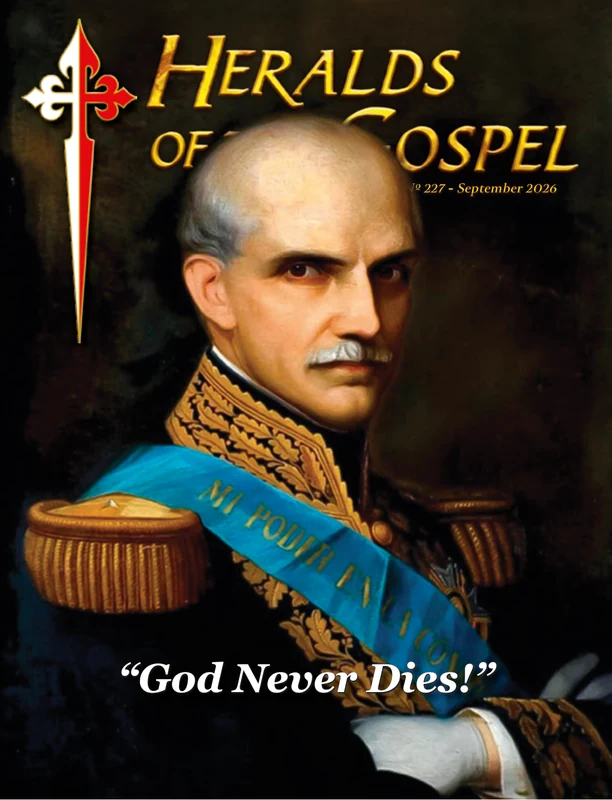
 Heralds of the Gospel Magazine, Vol. 20, nº 227, September 2026
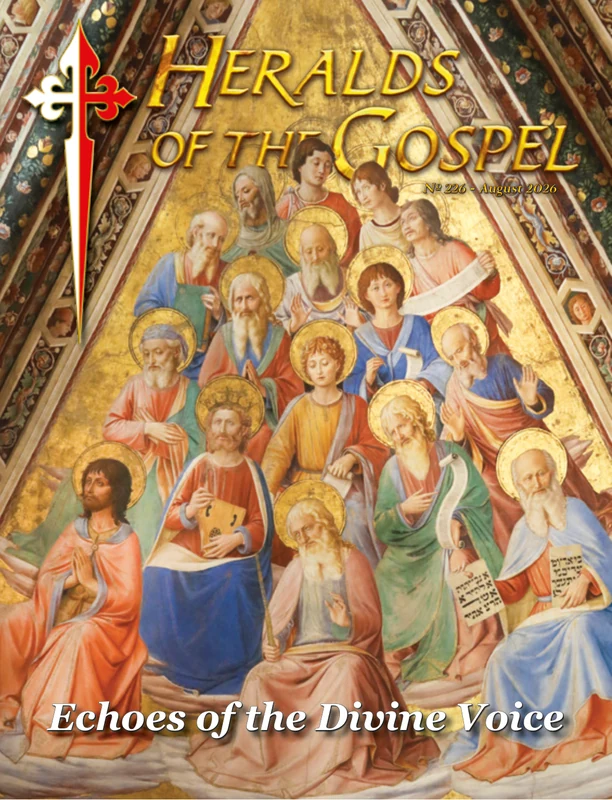 Heralds of the Gospel Magazine, Vol. 20, nº 226, August 2026
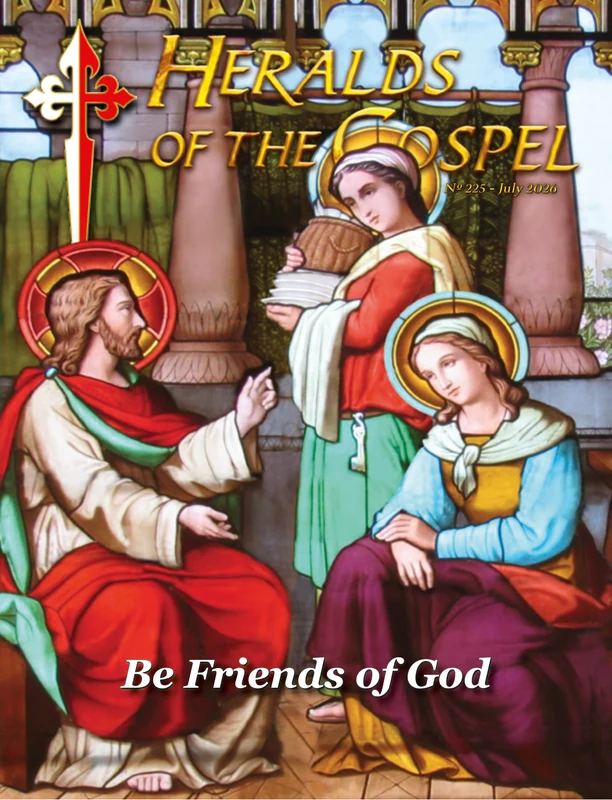 Heralds of the Gospel Magazine, Vol. 20, nº 225, July 2026
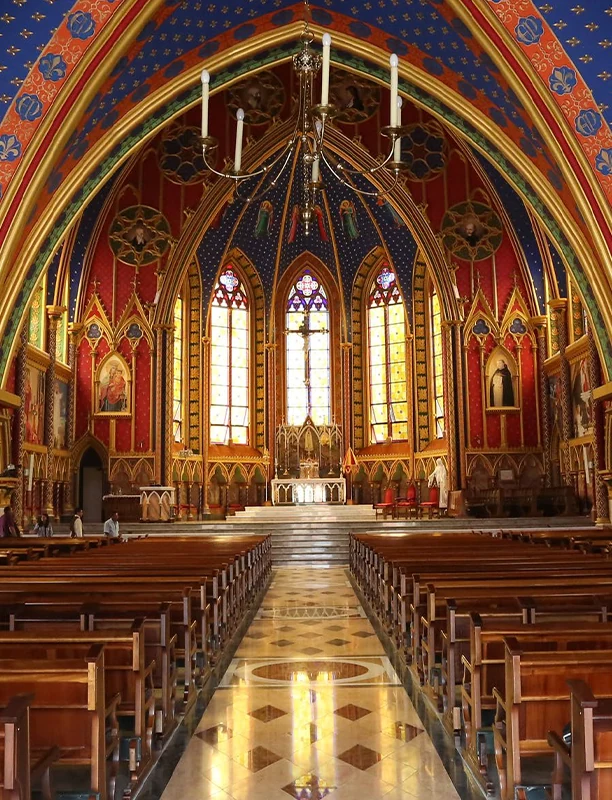 Who are the Heralds of the Gospel?
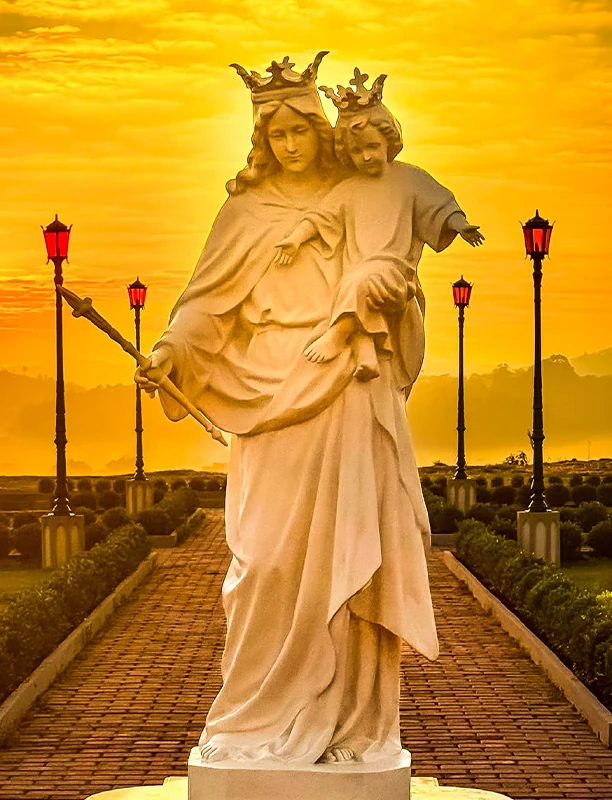 Help of Christians
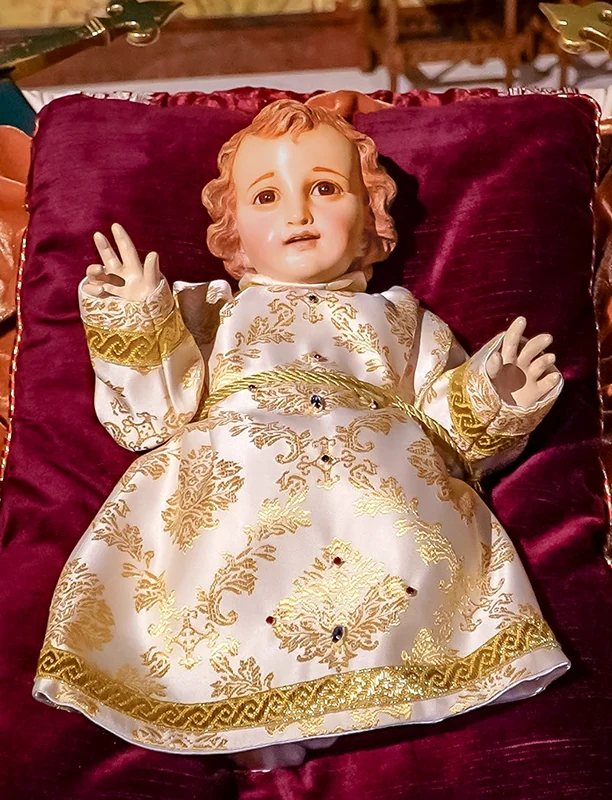 Christmas Carols







Perfect continence and celibacy
From the early centuries of the Church until today, the concept of continence has been fundamental in clearly designating the obligation of the sacred minister. In its Latin etymology, it denotes the faculty of containing or restraining oneself, of mastering one’s carnal inclinations and ruling oneself, reaffirming the primacy of the law of the spirit over that of the flesh. This is the word used by the Second Vatican Council when dealing with celibacy in the Decree Presbyterorum ordinis: “perfect and perpetual continence for the sake of the Kingdom of Heaven, commended by Christ the Lord.”1 However, it should be noted that the obligation of perfect continence – to which priests are bound – is even more profound than celibacy itself, since it implies the abstention from any act, internal or external, against the Sixth and Ninth Commandments of the Decalogue.2 This means that, while the law of celibacy is limited to an external impediment, continence consists in freely assuming a commitment to practise the vows also in the internal sphere, to be continent not only in the eyes of men but above all in the eyes of God.3A retrospective vision of celibacy
One of the most striking aspects of the Church’s teaching is its historical continuity, a phenomenon which reveals an important truth: despite the vicissitudes inherent to man’s condition on this earth after original sin, it is the Holy Spirit Himself who guides the People of God. Thus, the understanding of priestly celibacy adopted by the Second Vatican Council in no way contradicts what has been taught by the Magisterium down the centuries. The Mystical Body of Christ, in its “first steps”, undoubtedly encountered obstacles in establishing this new way of life, since the majority of candidates to priestly life in those days were married men. What to do? As an excellent Mother and most faithful Spouse, the Church was able to gently encourage and firmly guard this gift of Christ, Priest and Virgin, as we read in a document from the early fourth century, issued by the Synod of Elvira, in present-day Spain: “It has been fully resolved to impose on bishops, priests and deacons, as on all clerics in the exercise of the ministry, the following prohibition: that they should abstain from their wives and not bear children; those who nevertheless do so should be expelled from the clerical state.”4 However, this canon – the earliest legislation that has come down to us on the matter – does not mark the beginning of the history of celibacy: it more properly represented a remedy against decadence. As we read in an encyclical of Pius XI,5 everything indicates that celibacy was already a well-known traditional obligation at that time. The Synod, in fact, did nothing but recall it and add a sanction for those who did not fulfil it. What, then, is the origin of this praxis? According to a weighty theological opinion,6 a declaration formulated by the Second African Council of 390, and then repeated by the important Council of Carthage of 419 – attended by two hundred and forty bishops, including St. Augustine – sheds some light on the question. It reads: “It is fitting that the sacred bishops, the priests of God and the Levites, that is, all who serve in the divine sacraments, should be completely continent, so that they may obtain without difficulty what they ask of the Lord; that we also may guard what the Apostles taught and what the whole of the past has preserved.”7 St. Augustine in the Council of Carthage - Monastery of St. Augustine, Quito
The priest and his mission
Once the possible historical origins of ecclesiastical celibacy are known, let us now move on to consider its theological reasons. Why does the minister of the altar need to be continent? The fact is that the priestly mission itself urges him to be so. As the words of the Second Vatican Council, mentioned earlier, attest, the priest embraces this state – burdensome from a human point of view – “for the sake of the Kingdom of Heaven.” Indeed, married men have many concerns. But the priest is asked to have but one, which does not admit division: to love the Kingdom of God, that is, to let himself be consumed by the apostolic zeal that inflames the servants of Jesus, to save souls and to unite Heaven to earth as mediator between the Creator and humanity. The priest, like Christ, lives to present to the Father the requests for forgiveness and the supplications of the people. And nothing could be more in keeping with divine wisdom than to choose as intercessor, among human beings, someone who suffers from the same needs of nature, weakened by original sin, and who, precisely because of this, perfectly understands the weakness of others, since he himself feels weak.The sanctity of humanity depends on the sanctity of the priest
However, the verse of the poet Camões is also true: “A weak king makes a strong people weak.”9 In order to sanctify the people and to be pleasing to God in his prayers and sacrifices, the priest must not be the cause of comments which detract from the image of the Person of Christ, in which he acts, by allowing himself to be attached to bad habits which scandalize the little ones (cf. Mk 9:42). The priest must set himself as a model for the faithful by “integrity, gravity, and sound speech that cannot be censured, so that an opponent may be put to shame, having nothing evil to say of us” (Ti 2:7-8). After all, he represents Our Lord before men: “we are ambassadors for Christ, God making His appeal through us” (2 Cor 5:20). In this way, the fervent cleric shuns mediocrity and seeks to be respected by those around him, thus enabling his activity to have greater influence among the faithful. [gallery td_gallery_title_input="The priest must have an undivided love for God’s Kingdom" td_select_gallery_slide="slide" size="medium" columns="2" link="file" ids="15562,15563,15564"] One indispensable condition for all that is meant by this “for the sake of the Kingdom of Heaven” is to live in perfect and unassailable continence, like Christ who “remained throughout His whole life in the state of celibacy.”10 The integrity of priests must therefore be a weapon against evil tongues, since the holiness of all humanity depends on their holiness.“For your own benefit”
In fact, few men are called by God to configure themselves with His Son in the priesthood. This chosen group cannot lead a melancholy or self-centred existence, but must look at the magnitude of their mission and the dignity that derives from it. Only in this way will they be sufficiently aware that their soul must be purer than the rays of the sun, so that the Holy Spirit may never abandon them, as St. John Chrysostom affirms.11 And it is with immense friendship that the Paraclete says to them through the mouth of the Apostle: “I want you to be free from anxieties. The unmarried man is anxious about the affairs of the Lord, how to please the Lord; but the married man is anxious about worldly affairs, how to please his wife […] I say this for your own benefit, not to lay any restraint upon you, but to promote good order and to secure your undivided devotion to the Lord” (1 Cor 7:32-33, 35). But is not this commitment an unbearable burden? The priest is configured with Christ, but does not cease to be man, with his legitimate tendencies… This will certainly be the opinion of some who do not understand how God can give a counsel and the Church impose a rule at variance with the natural inclinations of the human being. They no doubt fail to consider that He who imposes the burden upholds with His hand, sending graces to the chosen one. Or, perhaps, they have grown accustomed to rely exclusively on the mere powers of nature. Far from seeking a chimerical compromise by which he can satisfy the demands of the flesh and the yearnings of the spirit, the sacred minister should seek support in the very ideal to which he dedicates his life, as Paul VI expressed it: “He who has chosen to belong completely to Christ will find, above all, in intimacy with Him and in His grace, the power of spirit necessary to banish sadness and regret and to triumph over discouragement. He will not be lacking the protection of the Virgin Mother of Jesus nor the motherly solicitude of the Church, to whom he has given himself in service.”12A sublime matrimony
 Our Lady and St. John the Evangelist at the foot of the Cross, detail of the “Crucifixion”, by Fra Angelico - San Marco Monastery, Florence (Italy)
Notes
1 SECOND VATICAN COUNCIL. Presbyterorum ordinis, n.16: AAS 58 (1966), 1015.
2 Cf. HORTAL, SJ, Jesús. Comentário ao cânon 277. In: CÓDIGO DE DIREITO CANÔNICO. 12ª edição revista e ampliada com a Legislação Complementar da CNBB. 20.ed. São Paulo: Loyola, 2011, p.151.
3 Having clarified the concepts, from now on we will use celibacy as a synonym for continence, since the two are inseparable in the life of a priest.
4 SYNOD OF ELVIRA, can. 33: DH 118-119.
5 “The law of ecclesiastical celibacy, whose first written traces pre-suppose a still earlier unwritten practice, dates back to a canon of the Council of Elvira, at the beginning of the fourth century, when persecution still raged. This law only makes obligatory what might in any case almost be termed a moral exigency that springs from the Gospel and the Apostolic preaching” (PIUS XI. Ad catholici sacerdotii: AAS 28 [1936], 25).
6 For more in-depth study, we recommend the well-reasoned work: STICKLER, Alfons Maria. Il celibato ecclesiastico. La sua storia e i suoi fondamenti teologici. Napoli: Chirico, 2010, p.36-42.
7 COUNCIL OF CARTHAGE. De continentia, 3: CCSL 259, 117-118.
8 As for the discipline in the Eastern Churches, in which deacons and priests may continue to partake in marriage after ordination, provided they meet certain requirements, Stickler explains that it was established at the Second Trullan Council, which was not ecumenical. According to the author, at this Council modifications were made to the authentic text of the aforementioned Canons of Carthage, by which it was possible to introduce the divergent praxis. Again, in his words, although Rome never gave approval to such determinations, she nobly respected the change in the ancient rule of continence (cf. STICKLER, op. cit., p.97; 110).
9 CAMÕES, Luís Vaz de. Os Lusíadas. Canto III, 138. In: Obras Completas. Porto: Imprensa Portuguesa, 1874, t.III, p.129.
10 ST. PAUL VI. Sacerdotalis cælibatus, n.21: AAS 59 (1967), 665.
11 Cf. ST. JOHN CHRYSOSTOM. Sur le sacerdoce, VI, 2: SC 272, 307.
12 ST. PAUL VI, op. cit., n.59, 680-681.
13 ST. JOHN PAUL II. Pastores dabo vobis, n.12: AAS 84 (1992), 676-677.
14 Idem, n.29, 704.