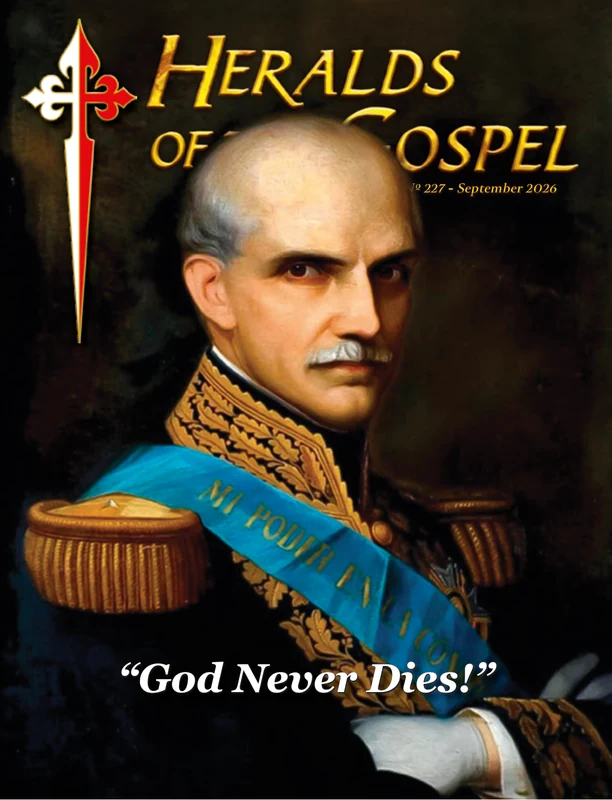
 Heralds of the Gospel Magazine, Vol. 20, nº 227, September 2026
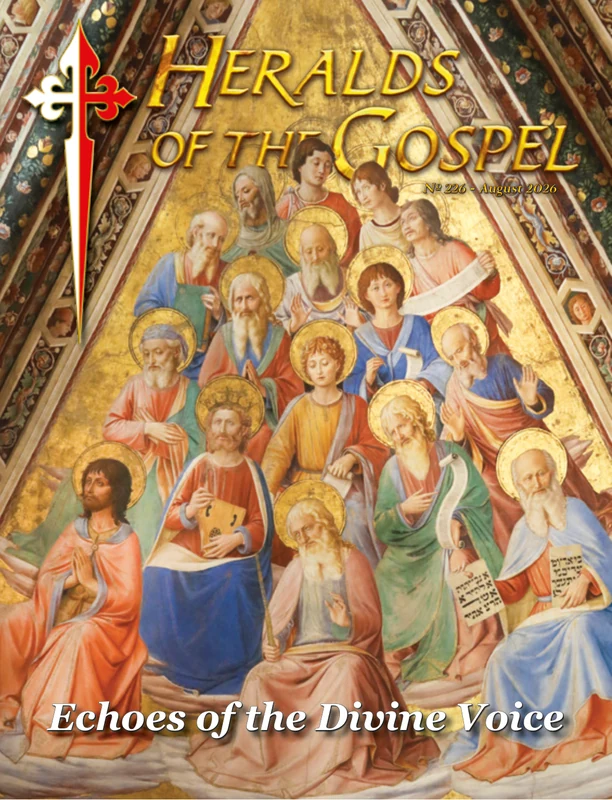 Heralds of the Gospel Magazine, Vol. 20, nº 226, August 2026
 Heralds of the Gospel Magazine, Vol. 20, nº 225, July 2026
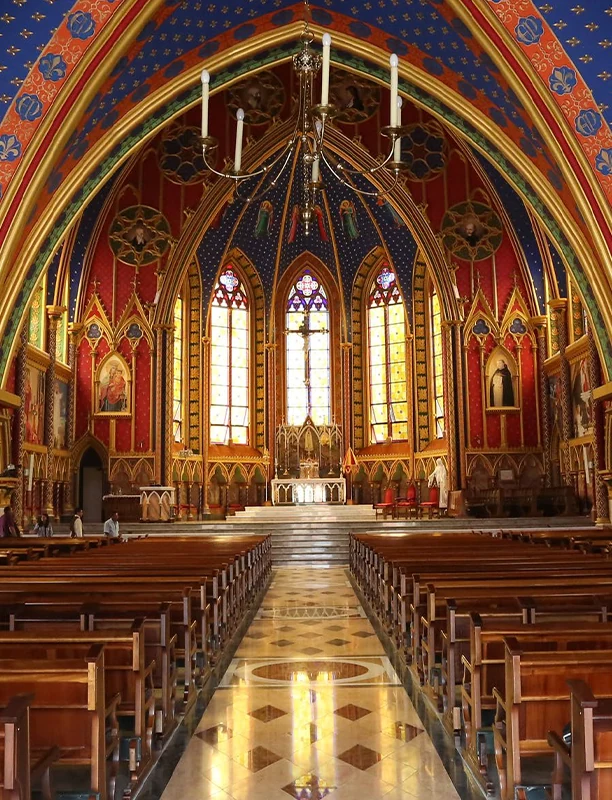 Who are the Heralds of the Gospel?
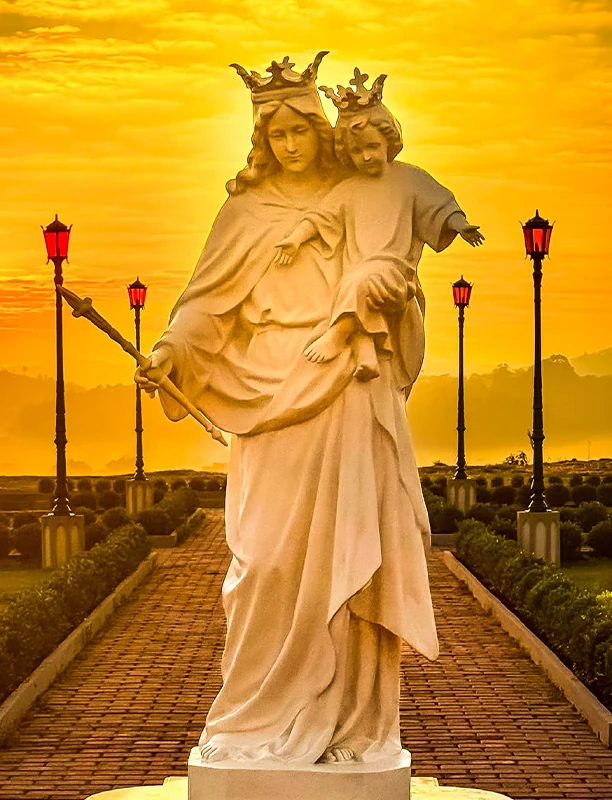 Help of Christians
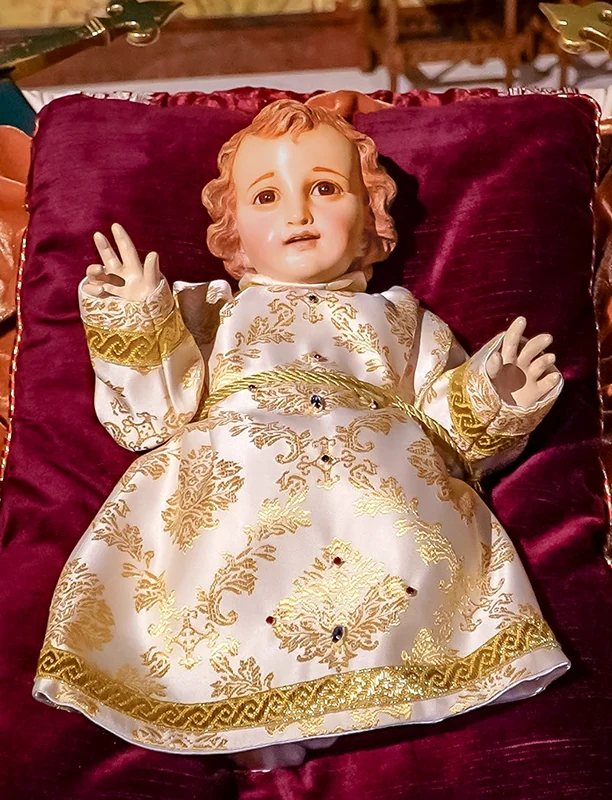 Christmas Carols








Peace between nations and the utopia of treaties
On the international level, there are those who would like to base peace above all on the omnipresent and increasingly invasive action of international organizations or on agreements made between nations. In this case, the origin of violence would be traced merely to a lack of organization and coordination between their leaders. Since the Second World War, the number of treaties and international organizations have multiplied. But, in practice, what do we see? According to the still-current analysis of the renowned Dominican theologian, Fr. Victorino Rodríguez, “the quarrels between nations, because of racial hatreds, border disputes, economic confrontations, national offences or historical claims […] generate all kinds of wars […]. The mere possibility of a generalized nuclear conflagration is an impediment to peace, to the tranquil freedom of peoples.”2 A close look at the events afflicting the world proves this. In the Middle East, the war – an endless war – continues with no prospect of ending. Terrorism is becoming increasingly aggressive: access to weapons and technologies which were once restricted to constitutional nations gives it a potential for action and destruction never before possible. Defeat and the humiliations inflicted by some upon others are the seeds of hatred and resentment. The vanquished are often oppressed, but not pacified, waiting for the opportune moment for revenge – witness the recent case of Afghanistan… It must be said that the Church recognizes the value that certain world bodies can have, and praises the treaties and agreements made with a view to peace, provided they safeguard law, truth and justice.3 Yet the facts demonstrate that social harmony resulting from mere agreements is a chimera. Authentic peace is not born only of ink and paper, but of hearts turned with integrity towards truth and goodness.There is neither domestic nor familial peace

And personal peace?
Yet it seems indisputable that all this chaos flows from a source, already pointed out by St. James: “What causes wars, and what causes fightings among you? Is it not your passions that are at war in your members?” (Jas 4:1). It is impossible for the world to be in harmony if each man does not virtuously govern his own appetites and inclinations. Lacking this control, there will be uneasiness about the future of a society in crisis, bitterness in dealing with others, and the tedium of a monotonous life due to the absence of hope in eternity. The proof of this is the drastic increase in cases of depression, psychiatric disorders and suicide today. This also gives rise to a spirit of insubordination against all forms of authority; to a lazy nature that despises work to the point of not fulfilling the duties of strict justice; and to a marked decline in modesty. How can one boast of peace when man is, in every way, a slave to vice and error?
From peace with God come personal and social peace
Up until now we have spoken at length about the “peace” of the world and the deceptive ways in which it leads men. We have done this purposely to highlight the abyss that lies between this reality and the genuine peace of Our Lord, an abyss that can be bridged with a simple outstretching of our arm: the peace of Christ is within our reach, and we shall see how much this is so. The condition for the tranquillity of order in the universe to be complete is the perfect concatenation of all the elements that compose it. The mineral, vegetable and animal kingdoms are already at peace, because they are necessarily ordered to the purpose for which they were created. However, man – the apex of material creation – differs from the other beings. Endowed with intelligence and will, he has the possibility of moving or not towards the end established by the Creator for him. Consequently, peace among human beings is more complex and must be achieved in three essential areas: the social, the interior and the relationship with God. These “dimensions” of peace are profoundly interconnected. Since society and nations are a collection of individuals, interior tranquillity of order has repercussions on the general order of peoples; for this reason, “without intrapersonal peace there can be no authentic social peace.”6 We must, then, ask ourselves: how can we personally find peace? According to the Angelic Doctor, “There can be no true peace except where the appetite is directed to what is truly good.”7 He says “truly good” because evil is capable of assuming appearances of goodness, but it is not capable of bringing peace to man, since it necessarily has “many defects, which cause the appetite to remain restless and disturbed.”8 Now the only absolute good, without any defect, is God Himself. Therefore, man attains genuine and complete quietude only through a relationship of friendship and obedience with Him, which is based on the observance of His laws and Commandments. It is clear, then, that peace with God is at the root of individual harmony, from which, in turn, social harmony largely follows.The most important of laws
We have mentioned the fulfilment of the Commandments as being the basis of a good relationship with God. Of all of them, however, the principal one is that most bound up with peace: “to love God above all things and one’s neighbour as oneself,” namely, the virtue of charity. Fr. Antonio Royo Marín, OP, explains that charity “impels one to give oneself totally to one’s neighbour, to the point of heroism and total self-denial.” 9 The more we love God, the greater our dedication to others will be, because love for God and love for neighbour are like two sides of the same coin. It is a mysterious and even paradoxical bond, but it is precisely in the willingness to sacrifice oneself for others, in the total abnegation of oneself and of one’s own interests, that peace is attained with all its gentleness and delight.The State must promote charity
The leaders of nations, for their part, must recognize in the interior peace of men the most solid bulwark for the acquisition of world harmony. The Church teaches that “to bring about and consolidate an international order that effectively guarantees peaceful mutual relations among peoples, the same moral law that governs the life of men must also regulate relations among States.”10 A government, for example, which coercively imposes justice but does not recognize God as Lord and Judge, establishes itself as an absolute principle, without a superior authority to judge and regulate it. What standard of justice will govern it? Its own benefit. In such a case, what value will respect for International Law have to a government motivated solely by personal interest? The greed or despotism of an unbalanced leader can easily distort such a government. If we add to this one of the worst forms of injustice, which is the disrespect for every man’s right to the whole truth, especially that ordered to eternal life, then we have totalitarianism in its full stature: “When a State monopolizes or manipulates the media for particular ends and interests, the right to the truth is transgressed; […] when, through information media, the moral values of society are attacked or even destroyed, leading especially young people to purely hedonistic goals in their in vital behaviour, the right to the truth is damaged and assaulted.”11 On the contrary, the observance of the moral law, of which the Church is the principal depository and interpreter, “should be inculcated and promoted by the public opinion of all the nations and of all the States with such a unanimity of voice and force that no one would dare to call it into question or to attenuate its binding force.”12 Respect for the absolute principles of Natural Law is at the basis of the aphorism “pacta sunt servanda” and is therefore fundamental for safeguarding the truthfulness and fidelity of international treaties and agreements.
The peace of Christ
Perfect peace for man and society can only come from the Lord of all goods, Jesus Christ. He, in taking on human nature, left us His peace and taught us how to attain it, insofar as it is possible in this life. Again in the wise words of Fr. Victorino Rodríguez, “He Himself is Peace, as He is the Way, the Truth and the Life, and He guarantees likeness with Himself to men who practice peace: ‘Blessed are the peacemakers, for they shall be called children of God.’”13 The peace of Christ is the fruit of His Blood, which has freed men from slavery to sin. It is the peace of the Holy Spirit, who fills the human heart with holy joy and hope in the possession of Heaven. It is the peace of a holy life, through the subjection of the passions to an intelligence enlightened by faith and through the adherence of the will to truth and to the eternal good; peace that comes from a nature that is upright and ordered by grace, which knows how to use all things without the exaggerations and intemperance that rob interior repose. It is the peace that does not see suffering as an element of frustration and despair, but knows how to find in it the invisible and mysterious hand of God, who does everything for the good of His chosen ones. From this profound action of grace upon human nature flows Christian peace, which gives rise in social life to the authentic virtues of harmony, respect, obedience and admiration. Under its influence, family life is ordered according to the model and hierarchy desired by Christ. The various levels of society agree among themselves through legitimate subordination: the inferiors recognize in the superiors the authority of God, and the superiors, in turn, discern in their condition a divine gift received for the benefit of others. Based on this peace, rulers apply justice, punishing the evil and promoting the good; nations, working together for the material and spiritual progress of their peoples, protect the innocence of childhood just as they protect the wisdom of old age. And all see in the Church, in the Sacraments and in morality, the most valuable aid for the maintenance of true concord.“Emitte Spiritum tuum et creabuntur”
How can we hope that the authentic peace of Christ will once again flourish in the world? When we examine the past, we see that material disorder and confusion in souls, originating in heresies and schisms, have frequently threatened true peace. The persecution by the Sanhedrin suffered by the Apostles after the Resurrection of Our Lord; the deaths of the first Christians, victims of the hatred of an entire Empire for almost three centuries; the heresies that have proliferated in Christendom, from the Gnostics of apostolic times to the Protestant sects, are some examples of this reality. However, on all these occasions of crisis, the Holy Spirit was able to awaken in souls a love for the truth and a desire to fight for it, so that order might be re-established and peace obtained. Today the situation seems much more serious, and perhaps the contemporary world is committing the most execrable apostasy: having known the beneficial and salutary influence of the Catholic Church, it turns its back on her. What is worse, it methodically and consciously strives to exclude from morals, culture and laws, anything that still retains the sweet odour of Christ More than ever we must ask for divine intervention. May the Holy Spirit repeat the miracle of Pentecost and revive the fire of charity in hearts so that justice and peace may reign in the universe. And may the formerly Christian world, now pagan again, return to the paths of the Divine Master. Let us ask for this grace and cooperate to make it effective, each in our own sphere of action – whether in family life and work, according to our proper state of life; whether by action, example or prayer – certain that to seek peace is not to desire a sterile pacifism, a syncretistic amalgam of all that can be the cause of division – even if legitimate – among men, for our “God is not a God of confusion but of peace” (1 Cor 14:33). ◊Did the Prince of Peace Come to Sow Division?
Since the first sin committed by Adam and Eve, a predominant power had established itself over the face of the earth until the Incarnation, which could be designated as the pole of evil. Although the divine promise of the Redemption still held true, and the Creator constantly exercised His solicitous favour over the Jews, there was, among the other peoples of Antiquity, a human consensus for evil that reigned in every setting, for the good lacked the means to carry out endeavours that were adequate to destroy the devil’s empire. Based on this pseudo-harmony produced by sin – a deceptively perfect unity – the infernal powers established the cohesion of evil. […]
CLÁ DIAS, EP, João Scognamiglio. New Insights on the Gospels. Città del Vaticano-Nobleton: LEV;Heralds of the Gospel, 2012, v.VI, p.292-294
Notes
* TUYA, OP, Manuel de. Biblia Comentada. Evangelios. Madrid: BAC, 1964, v.V, p.855.
Notes
1 ST. AUGUSTINE. De civitate Dei. L.XIX, c.13, n.1.
2 RODRÍGUEZ, OP, Victorino. Teología de la paz. Madrid: Aguirre, 1988, p.22-23.
3 Cf. PONTIFICAL COUNCIL FOR JUSTICE AND PEACE. Compendium of the Social Doctrine of the Church, n.440.
4 RODRÍGUEZ, op. cit., p.22.
5 Idem, ibidem.
6 Idem, ibidem.
7 ST. THOMAS AQUINAS. Summa Theologiæ. II-II, q.29, a.2, ad 3.
8 Idem, ibidem.
9 ROYO MARÍN, OP, Antonio. Teología Moral para seglares. Moral Fundamental e Especial. 7.ed. Madrid: BAC, 1996, v.I, p.856.
10 PONTIFICAL COUNCIL FOR JUSTICE AND PEACE, op. cit., n.436.
11 RODRÍGUEZ, op. cit., p.35-36.
12 PIUS XII. Christmas radio message, 24/12/1941.
13 RODRÍGUEZ, op. cit., p.13.