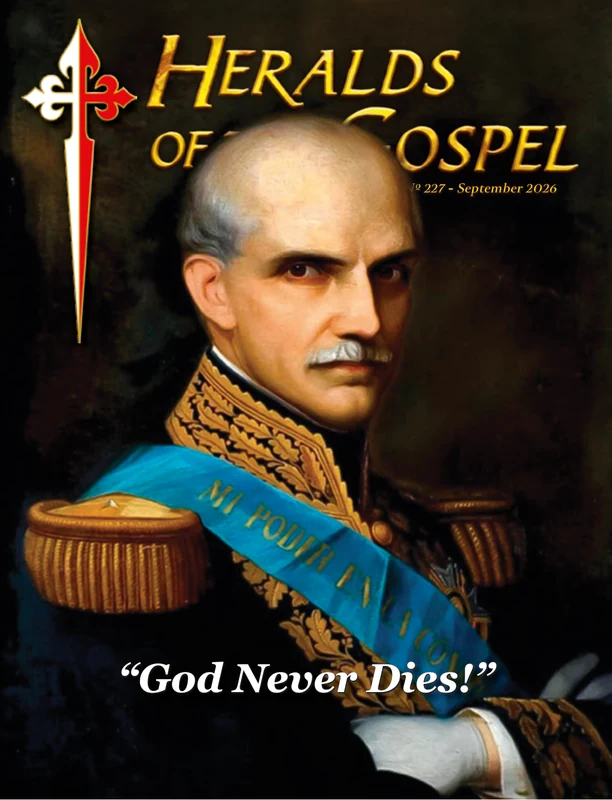
 Heralds of the Gospel Magazine, Vol. 20, nº 227, September 2026
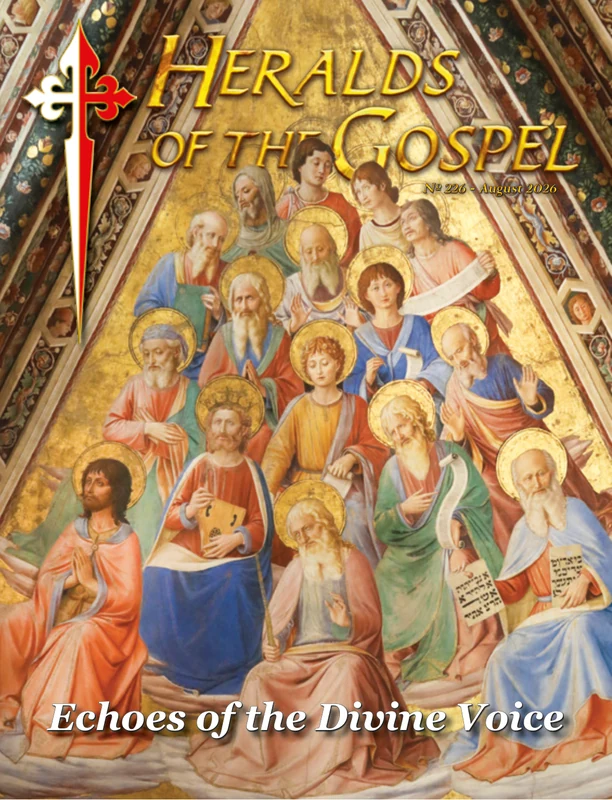 Heralds of the Gospel Magazine, Vol. 20, nº 226, August 2026
 Heralds of the Gospel Magazine, Vol. 20, nº 225, July 2026
 Who are the Heralds of the Gospel?
 Help of Christians
 Christmas Carols








In this paragraph, the Catechism teaches that the Saviour exercises His prophetic mission not only through ordained ministers, but also through the laity, who, through Baptism, are incorporated into Our Lord and participate in His threefold office: the priestly, the prophetic, and the royal.
What does it mean to participate in Christ’s prophetic office? Following the example of the ancient prophets and the supreme model of the Divine Redeemer, the layperson exercises this office in two complementary ways.
First, it is their responsibility to proclaim God’s rights and the full obedience due to Him. By exhorting their contemporaries to conversion, they promote the reign of Christ in hearts and throughout society.1
Second, to achieve these goals, this mission is carried out by denouncing the obstacles, particularly sin.
As the Catechism itself emphasizes, “to the eyes of faith no evil is graver than sin and nothing has worse consequences for sinners themselves, for the Church, and for the whole world.”2
It is necessary to dispel the misconception that a prophet is merely a predictor of the future; in reality, as the Scriptures and hagiographies attest, the essence of prophecy consists in translating the “voice of God” into the present, pointing out error and calling men to conversion.
This is a true and authentic program for life. Although the circumstances of action in the world are innumerable, two areas reveal themselves to be of paramount importance in the “prophetic” life of the laity:
1) The witness of coherence in the social setting: laypeople glorify God by observing the Commandments in the fabric of their daily interactions.
The most eloquent proclamation is integrity, that is, harmony between speech and conduct, as St. John exhorts: “Little children, let us not love in word or speech but in deed and in truth” (1 Jn 3:18).
2) The witness in the domestic Church: within the family, laypeople exercise their prophetic role by building a home imbued with faith and piety.
Mutual charity between spouses should reign there, from which a good example will emanate to the children, so that they may learn to be the salt of the earth and the light of the world (cf. Mt 5:13-14).
The prophets, as the chosen messengers of the Most High, were above all men of profound prayer. In intimate communion with the Lord, they received light to discern the truth and strength to proclaim it.
Likewise, only through assiduous supplication – especially through the intercession of the Queen of Prophets – and frequent reception of the Sacraments will the laity receive the graces necessary to make secular life consistent with their prophetic calling, as an authentic echo of the Word of God.