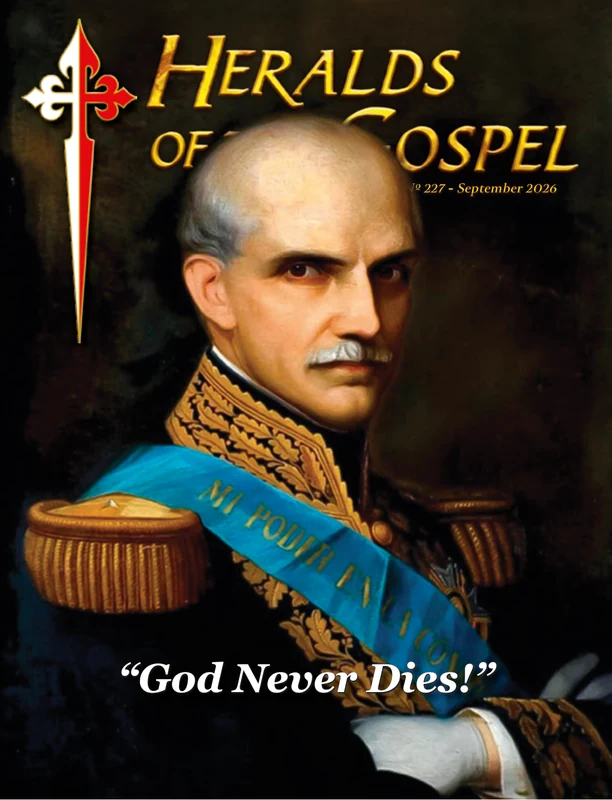
 Heralds of the Gospel Magazine, Vol. 20, nº 227, September 2026
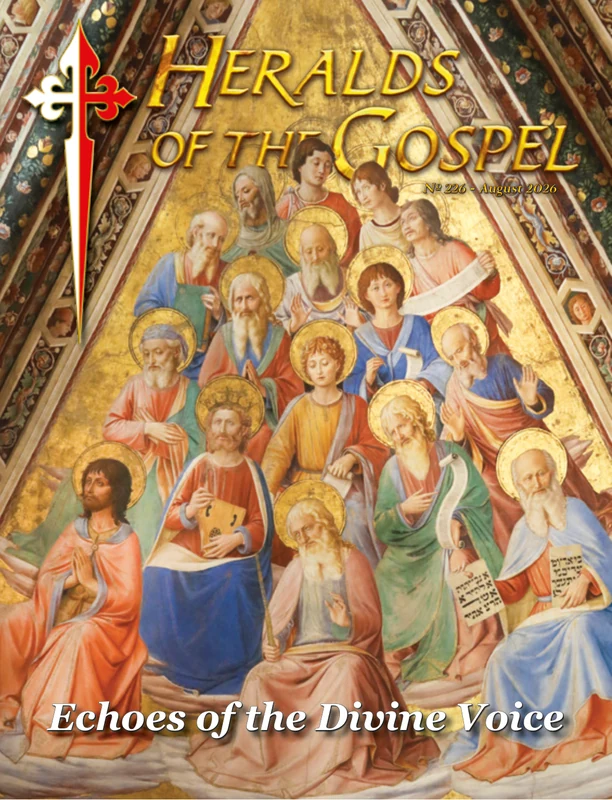 Heralds of the Gospel Magazine, Vol. 20, nº 226, August 2026
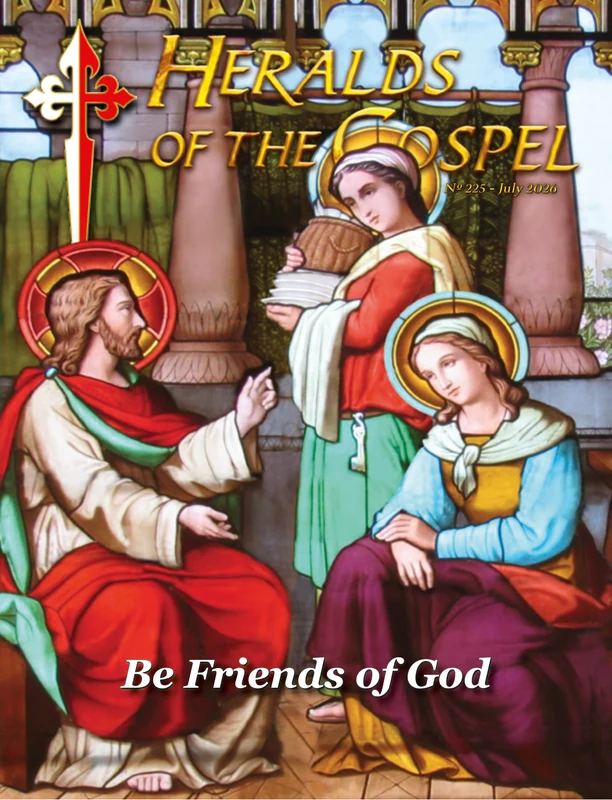 Heralds of the Gospel Magazine, Vol. 20, nº 225, July 2026
 Who are the Heralds of the Gospel?
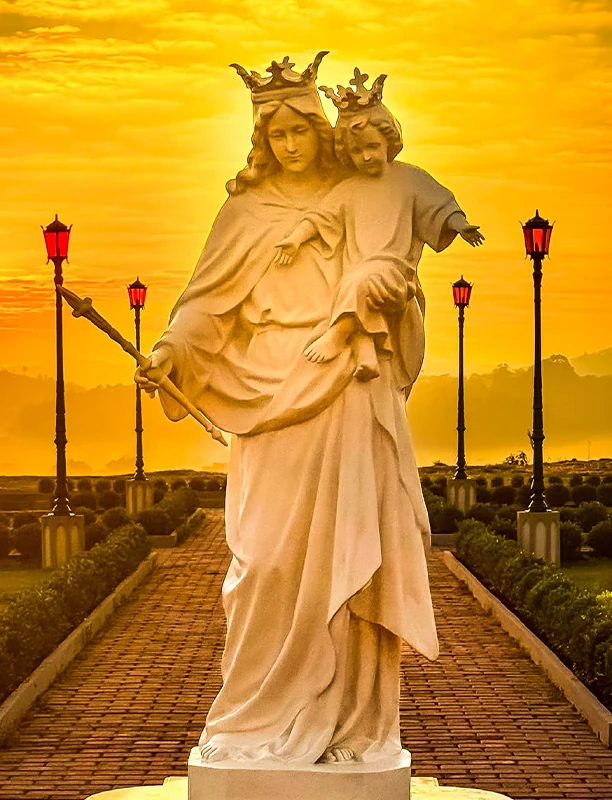 Help of Christians
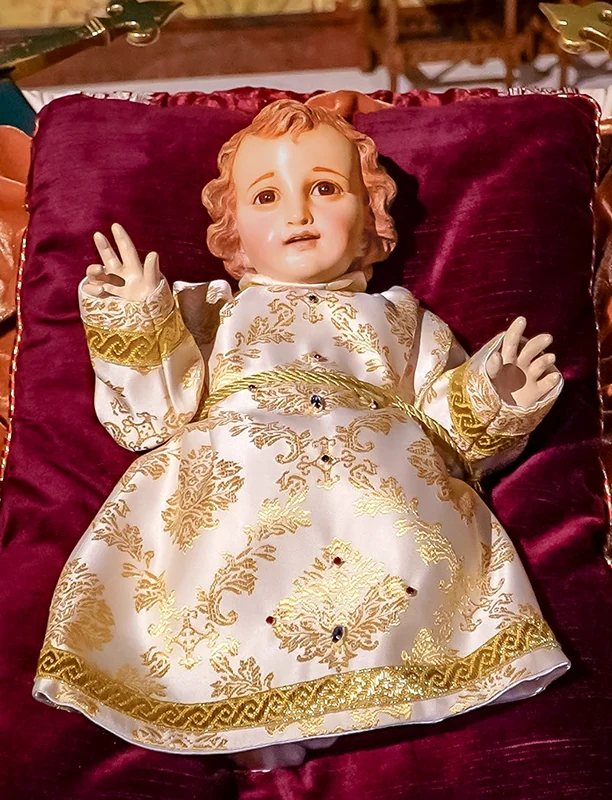 Christmas Carols
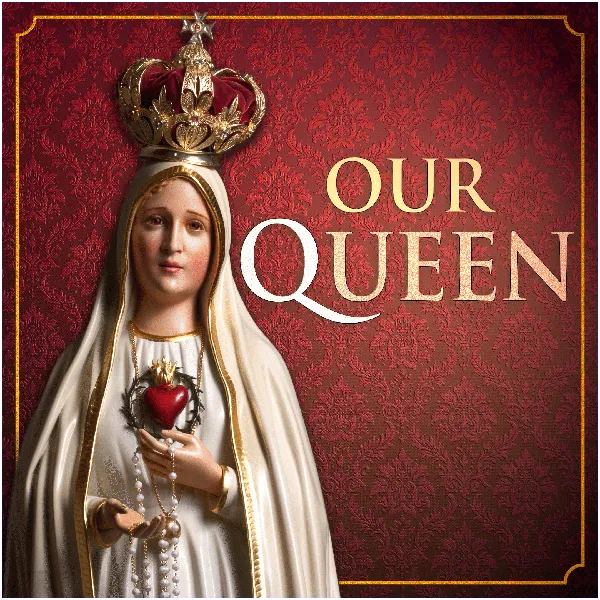







Those who love are not content merely to provide what is necessary, what is indispensable; they give in superabundance, even to the point of excess.
A father or mother who loves their child does not merely provide them with the food essential for survival, but, as far as they are able, also provides refreshing drinks, tasty sweets – in short, enjoyable food.
It is not enough for the child merely to survive; rather, it is fitting that they should live happily, surrounded by their parents’ affection, which will be evident in every detail of their existence, including delightful and wholesome food. Why? Simply out of love.
Now, as the Apostle John stated so beautifully, “God is love” (1 Jn 4:16).
And although He has granted us everything we need through the Incarnation of the Word and His Revelation – of which the Magisterium of the Church is the faithful interpreter – He, the “First and the Last” (Rev 1:17), has chosen to accompany us throughout history with certain manifestations of love, in a very special way through the apparitions of the Blessed Virgin Mary.
Are they strictly necessary? No, but… what a loss it would be to our Faith not to have them!
The Catechism of the Catholic Church teaches that “even if Revelation is already complete, it has not been made completely explicit”.1 And the Church will always draw from her treasure – the deposit of Faith (cf. 1 Tim 6:20) – “what is new and what is old” (Mt 13:52).
The Immaculate Conception of Our Lady, for example, was already implicitly present in the deposit of Faith, and there were Catholics who did not accept it until the dogma was proclaimed.
However, after December 8, 1854, when Pope Pius IX dogmatically proclaimed the Immaculate Conception of the Virgin Mary, everyone must give their full adherence to this truth, which was brought to its fullness only in the nineteenth century.
Furthermore, the Holy Church teaches that
Throughout the ages, there have been so-called ‘private’ revelations, some of which have been recognized by the authority of the Church.
They do not belong, however, to the deposit of the Faith. It is not their role to improve or complete Christ’s definitive Revelation, but to help live more fully of it in a certain period of history.
Guided by the Magisterium of the Church, the sensus fidelium knows how to discern and welcome in these revelations whatever constitutes an authentic call of Christ or His saints to the Church.2
Mariophanies – manifestations of Our Lady – do not, of course, constitute a “new revelation” that would supplant the Revelation of Christ, but rather a renewed way in which the Holy Spirit leads the faithful of all ages to the fullness of truth, “To bring about an ever deeper understanding of revelation”.3
Thus, Marian apparitions throughout history have served to guide the faithful in the struggles they face, offer consolation in life’s hardships, and provide direction for the children of light in every age.
To mention only the most recent examples, how much have we learned from Our Lady’s apparitions to St. Catherine Labouré at Rue de Bac, to St. Bernadette in Lourdes and to the little shepherds in Fatima!
Could these apparitions be superfluous? We might well respond with the French saying: “The superfluous: a very necessary thing!…”